28 Feb 2017 | Index Reports, Mapping Media Freedom, Press Releases
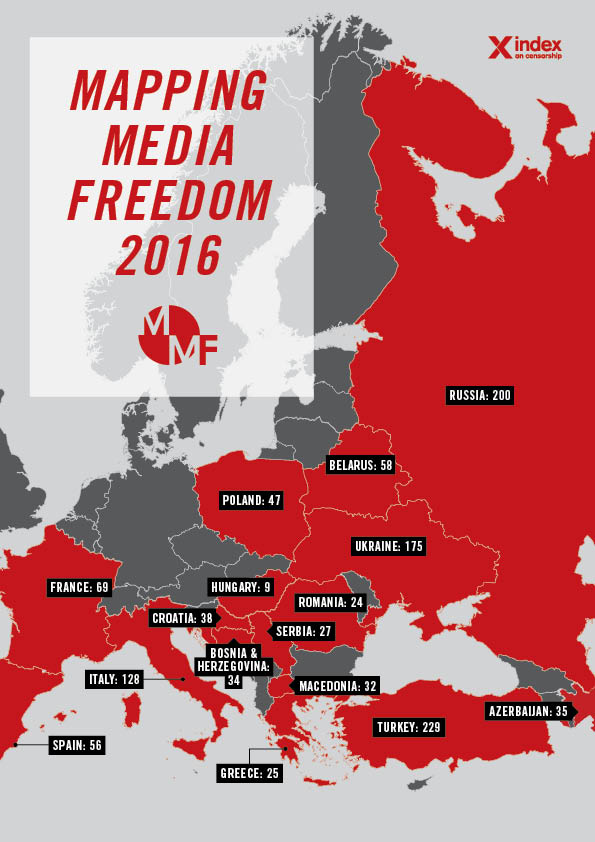 Freedom of expression campaign group Index on Censorship launches Media Freedom Month in March with the release of its annual report into media freedom in Europe. The report shows journalists face regular harassment, legal sanctions and even jail for doing their job – even in supposed democracies. Index’s Media Freedom Month aims to raise awareness of and funding for its work campaigning on press freedom.
“Right now, journalists and journalism are threatened from all directions: UK journalists who travel to the US are being told they need to hand over their mobile phone contacts and Facebook passwords. US journalists are being labelled as peddlers of ‘fake news’ over any articles the President dislikes and reporters across Europe face a host of laws that hamper their ability to work,” said Index chief executive Jodie Ginsberg.
Media Freedom Month will begin with the launch on Tuesday of the latest Mapping Media Freedom report on Europe and will end with an exclusive study of media freedom in the United States that goes well beyond the current focus on Donald Trump and his relationship with the press.
“A country without a free media is not a free country: Journalism provides a vital check on corruption and abuse of power and we must fight to protect it,” said Ginsberg.
Between 1 January and 31 December 2016, Mapping Media Freedom’s network of correspondents, partners and other journalists submitted a total of 1,387 verified threats to press freedom in 42 European countries.
“The precarious state of press freedom across the globe is underlined by the volume of verified incidents added to Mapping Media Freedom in 2016. The spectrum of threats is growing, the pressure on journalists increasing and the public right to transparent information is under assault. People who are simply trying to do their job are being targeted like never before. These trends do not bode well for 2017,” Hannah Machlin, Mapping Media Freedom project officer, said.
Some of the major themes in the data – and which journalists should be wary of in 2017 – include:
- Violence from right-wing groups
- Dangers faced when reporting on protests and demonstrations organised across the political spectrum
- Impunity: Physical attacks on journalists not properly investigated; government officials intimidating reporters without fear of punishment
- Difficulties reporting on refugees, including being denied access and violence
- Silencing journalists by arresting them on ties to terrorist or extremist groups
- Criminalised libel laws subjecting media outlets to high fines
- Economic difficulties leading to the closure or restructuring media outlets and buyouts by wealthy businesspeople, often leading to job cuts and dismissals
- State of emergency laws being used to detain journalists without charge
- Death threats and smear campaigns disseminated online
The 2016 report is available in web and pdf format at https://mappingmediafreedom.org/plus/
For more information, please contact Hannah Machlin, Mapping Media Freedom project officer at [email protected]
About Mapping Media Freedom
Mapping Media Freedom – a major Index on Censorship project and a joint undertaking with the European Federation of Journalists and Reporters Without Borders, partially funded by the European Commission – covers 42 countries, including all EU member states, plus Bosnia, Iceland, Kosovo, Macedonia, Montenegro, Norway, Serbia, Turkey, Albania along with Ukraine, Belarus and Russia in (added in April 2015), and Azerbaijan (added in February 2016). The platform was launched in May 2014 and has recorded over 2,700 incidents threatening media freedom.
About Index on Censorship
Index on Censorship is a freedom of expression charity that campaigns against censorship and promotes free expression worldwide. Founded in 1972, Index has published some of the world’s leading writers and artists in its award-winning quarterly magazine, including Nadine Gordimer, Mario Vargas Llosa, Samuel Beckett and Kurt Vonnegut. It also has published some of the greatest campaigning writers from Vaclav Havel to Elif Shafak.
27 Feb 2017 | Mapping Media Freedom, News
[vc_row][vc_column][vc_column_text]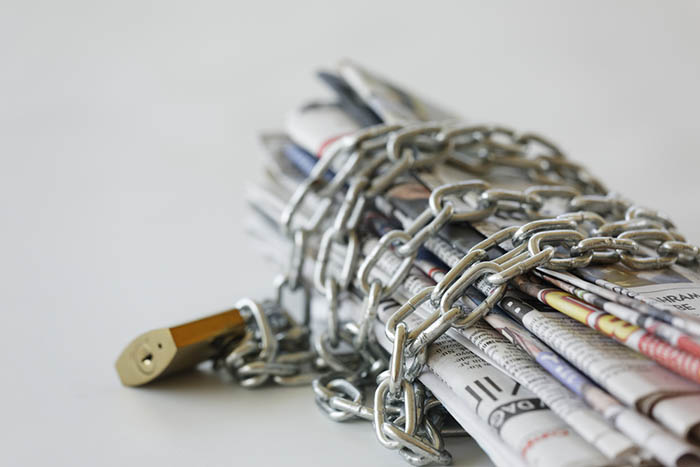
Each week, Index on Censorship’s Mapping Media Freedom project verifies threats, violations and limitations faced by the media throughout the European Union and neighbouring countries. Here are recent reports that give us cause for concern.
Independent journalist Elchin Ismayilli, who used to contribute to Cumhuriyet newspaper and Azerbaijani Saadi, was detained on 17 February on charges of extortion through intimidation and abuse of power, reported Azadliq Radio.
According to the journalist’s lawyer, Ismayilli is being charged for threatening an employee of the local culture and tourism department.
The journalist says the allegations are not true.
A month before, Ismayilli asked to borrow 1000AZN from the person who is allegedly accusing him of extortion. He was detained when picking up the money.
During a meeting with his lawyer, he explained he had known this individual since 2003 and that they had good relations.
In September he received a warning from the police on was called into questioning for allegedly assaulting an officer.
The journalist ties both incidents to his work.
The French police prevented freelance journalist Alexis Kraland from accessing a demonstration in Place de la République, in Paris, on 18 February, the journalist reported on Twitter and confirmed to Mapping Media Freedom.
Kraland was intending to cover a protest in solidarity with a young man called Theo, who was allegedly raped during a violent police arrest.
The police asked the journalist for his press card which is not necessary to cover a demonstration as a journalist, Kraland told Mapping Media Freedom.
The Federal Migration Service won its case against Demyan Kudryavtsev, owner of Independent Media, on 21 February, Vedomosti reported.
“It has been established that false data was deliberately submitted in this citizenship application. The Supreme Court acknowledged this”, the court’s press service stated.
FMS did not receive all the necessary data in the application submitted in 2009, Kudryavtsev told Novaya Gazeta.
The President or FMS is now able to deprive him of his citizenship based on the court decision.
New amendments to a 2014 law by the State Duma prohibit foreigners from establishing and owning more than 20 per cent of any Russian media outlet. If Kudryavtsev is deprived of his Russian citizenship, he will not be able to continue owning Vedomosti and other outlets under the Independent Media umbrella.
Hannah Machlin, project officer of the Mapping Media Freedom project, said: “The decision to take away Kudrayastev’s passport will affect the legality of his ownership of media outlets Vedmosti and the Moscow Times, making it a clear violation to press freedom”.
Özgür Gelecek daily’s Newsroom Editor Aslı Ceren Aslan was arrested on 21 February in Şanlıurfa province, Cumhuriyet newspaper reported.
Aslan, who was detained on 18 February, was allegedly subjected to physical violence and strip searched twice during her detention and arrest. Özgür Gelecek reported that Aslan was in Şanlıurfa to report on the recent developments in Syria at the time of her detention.
According to reports, the journalist was arrested on charges of “belonging to a terrorist organisation” and “violating Turkish borders.”
Her arrest brings the number of journalists in Turkish prisons to 154.
Boris Pejovic, a photographer for daily newspaper Vijesti, was insulted and pushed during a brawl on 15 February between MPs from the ruling Democratic Party of Socialists and the opposition Democratic Front in the Parliament of Montenegro, daily newspaper Vijesti reported.
As Vijesti reported, MPs and Parliament security pushed and insulted Pejovic.
Opposition leaders and supporters protested in front of Montenegro’s parliament after the ruling majority stripped two MPs of their immunity from prosecution over their alleged involvement in a coup attempt, Balkan Insight reported.
The incident was strongly condemned by the Trade Union of Media of Montenegro (SMCG).[/vc_column_text][/vc_column][/vc_row][vc_row][vc_column][vc_column_text]
Click on the bubbles to view reports or double-click to zoom in on specific regions. The full site can be accessed at https://mappingmediafreedom.org/
[/vc_column_text][/vc_column][/vc_row]
20 Feb 2017
[vc_row][vc_column][vc_column_text]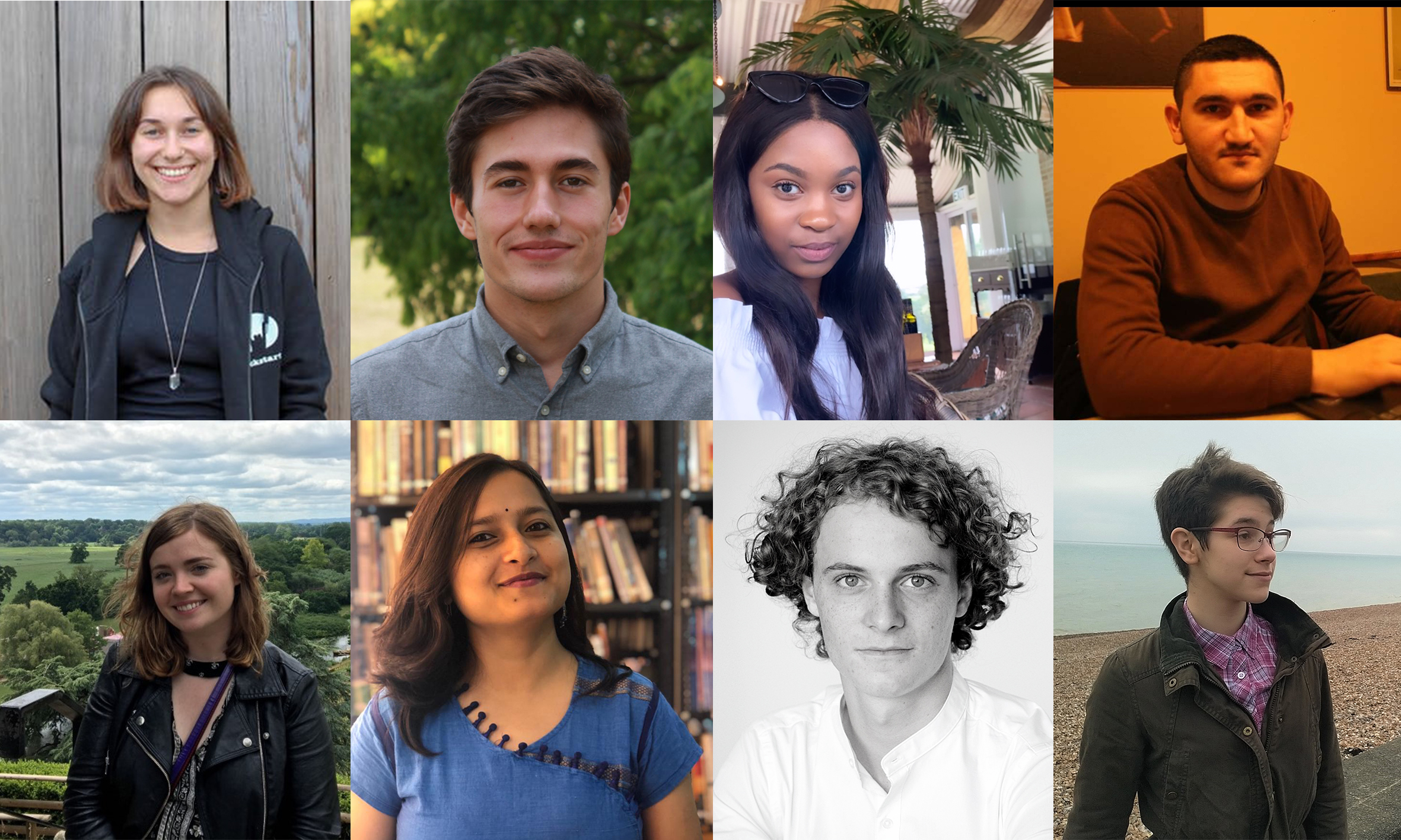 [/vc_column_text][vc_custom_heading text=”Youth Advisory Board” font_container=”tag:h1|text_align:center|color:%230a0a0a” use_theme_fonts=”yes”][vc_column_text]
The youth advisory board is Index on Censorship’s project aimed at engaging with young people aged 16-25 from around the world and gathering their views on freedom of expression issues.
What is the youth advisory board?
The youth board is a specially selected group of young people aged 16-25 who advise and inform Index on Censorship’s work, support our ambition to fight for free expression around the world and ensure our engagement with issues with tomorrow’s leaders. The current members are sitting from January to June 2020.
Why does Index have a youth board?
Index on Censorship is committed to fighting censorship not only now, but also in future generations, and we want to ensure that the realities and challenges experienced by young people in today’s world are properly reflected in our work.
Index is also aware that there are many who would like to commit some or all of their professional lives to fight for human rights and the youth board is our way of supporting the broadest range of young people to develop their voice, find paths to freely expressing it and potential future employment in the human rights, media, and arts sectors.[/vc_column_text][/vc_column][/vc_row][vc_row disable_element=”yes”][vc_column][vc_column_text css_animation=”none”]
Applications now open!
We are looking for enthusiastic young people, aged between 16-25, who must be committed to taking part in monthly meetings, which are held online with fellow participants. Applicants can be based anywhere in the world. We are looking for people who are communicative and who will be in regular touch with Index.
Each youth advisory board sits for six months, has the chance to participate in monthly video conferencing discussions about current freedom of expression issues from around the world, which sometimes include guest speakers. There are exciting opportunities to be interviewed for the podcast and contribute to Index’s Instagram page.
The next youth board is currently being recruited, and will sit from July to December 2020.
How to apply
Please send us the following:
- Cover letter
- CV
- A 250-word blog post about any free speech issue
Applications can be submitted to Orna Herr at [email protected]. The deadline for applications is 26 July at 11:59pm GMT.
What is the youth advisory board?
The youth board is a specially selected group of young people aged 16-25 who advise and inform Index on Censorship’s work, support our ambition to fight for free expression around the world and ensure our engagement with issues with tomorrow’s leaders. The current members are sitting from July to December 2019.
Why does Index have a youth board?
Index on Censorship is committed to fighting censorship not only now, but also in future generations, and we want to ensure that the realities and challenges experienced by young people in today’s world are properly reflected in our work.
Index is also aware that there are many who would like to commit some or all of their professional lives to fight for human rights and the youth board is our way of supporting the broadest range of young people to develop their voice, find paths to freely expressing it and potential future employment in the human rights, media, and arts sectors.[/vc_column_text][vc_row_inner disable_element=”yes”][vc_column_inner width=”1/4″][staff name=”Shini Wang” title=”USA” profile_image=”108370″]Shini Wang is a poet, journalist, and BA student of philosophy at the University of Texas at Austin. She is a member of her university’s liberal arts council, the editor of The Liberator Magazine, and a host of open discussions on campus. Interested in how freedom of expression plays into the creative and imaginative process of international writers and artists who witness injustice, her research investigates censorship and its effects during our post-truth political era.[/staff][/vc_column_inner][vc_column_inner width=”1/4″][staff name=”Nikhil Singh” title=”India” profile_image=”108371″]Nikhil Singh is a law student based in Kolkata, India. He has a keen interest in advocating the right to free speech and often spends his free time promoting it. In the past he has interned with senior advocates in the Supreme Court of India, and has worked on cases involving violation of the right to free speech, civil liberty, and human rights. After graduating from college, Singh intends to work in the legal industry, to fight for people’s rights.[/staff][/vc_column_inner][vc_column_inner width=”1/4″][staff name=”Charles Terroille” title=”France” profile_image=”108373″]Charles Terroille is a French dual degree student in political science and international relations at Sciences Po (Lille) and the University of Kent. His field of work covers media and journalism. After directing his first TV documentary about Dharavi in India at 16 years old, he continued to report in different types of newsrooms in France and the UK. Terroille also specialises in the issue of whistleblowers and has worked on the Luxleaks and Football Leaks cases. He collaborated with the Signals Network Foundation for advocacy and research on the leaks. Terroille is also the founder and director of the International Consortium of Student Journalism (ICSJ).[/staff][/vc_column_inner][vc_column_inner width=”1/4″][staff name=”Emma Quaedvlieg” title=”Serbia” profile_image=”104865″]Emma Quaedvlieg is a Master’s graduate from the Institute of Development Studies, where she focused on popular movements and inequality. She also holds a BA (Hons) in politics and international relations from the University of Nottingham. She has actively campaigned for various gender issues and was elected women’s officer for the student’s union in Nottingham. Her research largely focuses on the western Balkans, where she is contributing to freedom of expression and wider development in local government. Quaedvlieg has also worked in various (international) human rights organisations.[/staff][/vc_column_inner][/vc_row_inner][vc_row_inner disable_element=”yes”][vc_column_inner width=”1/4″][staff name=”Arpitha Desai” title=”India” profile_image=”104862″]Arpitha Desai is a lawyer based in New Delhi, India. As an avid student of constitutional law, she is passionate about civil liberties with a keen interest in censorship, surveillance, and digital rights. Keeping in mind the ever-evolving nature of technology and the needs of the government, industry, and common man, Desai believes that law and policy must strike a holistic balance between conflicting rights.[/staff][/vc_column_inner][vc_column_inner width=”1/4″][staff name=”Krzysztof Katkowski” title=”Poland” profile_image=”108374″]Krzysztof Katkowski is a student of Czacki High School in Warsaw. He is a young activist and journalist cooperating with “Krytyka Polityczna” where he focuses on youth’s community-minded engagement and education. Passionate about science, literature, and philosophy, he wants to popularise the idea of free speech and dialogue between different environments. In the future, Katkowski wants to fight for open society and tolerance which is endangered in recent years, especially in Poland.[/staff][/vc_column_inner][vc_column_inner width=”1/4″][staff name=”Elyse Popplewell” title=”Australia” profile_image=”108372″]Elyse Popplewell is the social media editor at The Australian, the most widely circulated national newspaper in Australia. After attaining a bachelor of communications (journalism) at the University of Technology, Sydney, she began her career at the Institute for Economics & Peace, the think tank that publishes the Global Peace Index annually. Popplewell focuses on the issue of Australian defamation laws gagging important journalism and movements like #MeToo.[/staff][/vc_column_inner][vc_column_inner width=”1/4″][/vc_column_inner][/vc_row_inner][/vc_column][/vc_row][vc_row disable_element=”yes”][vc_column][three_column_post title=”Recent posts” full_width_heading=”true” category_id=”6514″][/vc_column][/vc_row][vc_row][vc_column][vc_column_text]
Meet the Board
The current board is sitting from July to December 2020.[/vc_column_text][vc_row_inner][vc_column_inner width=”1/4″][staff name=”Aliyah Kaitlyn Orr” profile_image=”112187″]Aliyah Kaitlyn Orr (pen name A.K. Nephtali) is a college student in Britain. Orr has been inspired by the power of words ever since a novel helped them realise their gender-neutral identity. Orr writes inclusive fiction that aims to empower LGBTQ+ people around the world. One of their short stories will be published in a digital anthology by the end of 2020. [/staff][/vc_column_inner][vc_column_inner width=”1/4″][staff name=”Subhan Hasanli” profile_image=”114478″]Subhan Hasanli is a 25 year old lawyer, who works with local and international human rights organisations in Azerbaijan. He holds a bachelor’s degree in law from Nakhichevan State University. His goal is to promote the rule of law and human rights, and he hopes to achieve changes in these fields. Hasanli’s hobbies include catching fish, playing chess and reading books about science, politics, and philosophy. His favourite book is Diplomacy by Henry Kissinger. [/staff][/vc_column_inner][vc_column_inner width=”1/4″][staff name=”Carmen Ferri” profile_image=”114479″]Carmen Ferri is a digital rights activist based in Canada. She obtained an undergraduate degree in cultural studies and sociology at Maastricht University, Netherlands, and a master’s degree from the University of Amsterdam in new media and digital culture. During her studies, she worked on projects related to disinformation, hate speech and subcultural expression on digital platforms. Ferri has completed two internships with the Association for Progressive Communications. She worked as a policy analyst intern researching counter-hate speech movements in Asia, then as a communications research intern where she implemented a project examining actors and discourses within digital rights spaces on social media.[/staff][/vc_column_inner][vc_column_inner width=”1/4″][staff name=”Sneha” profile_image=”114480″]Sneha graduated from the Asian College of Journalism with a postgraduate diploma in journalism (new media) and is now a journalist for The Times of India. She previously worked as a reporter for the International Business Times. Sneha is concerned about the issues around press freedom in her country. She is an advocate for open discourse in the hope that it will lead to solutions. Sneha has an avid interest in governance, ecology, environment and urban planning.[/staff][/vc_column_inner][/vc_row_inner][/vc_column][/vc_row][vc_row][vc_column width=”1/4″][staff name=”Pablo Aguera” profile_image=”114481″]Pablo Aguera is a research fellow for Research ICT Africa working on digital rights, data justice and internet access and use. Aguera has produced creative multimedia projects and worked with social enterprises and youth movements across multiple countries. He holds a BSc in philosophy, politics and economics from the University of Warwick, and is currently completing a dual master’s degree in global media and communications at the London School of Economics and the University of Cape Town.
[/staff][/vc_column][vc_column width=”1/4″][staff name=”Siphesihle Fali” profile_image=”114482″]Siphesihle Fali is in her final year studying English literature & language, and media and writing at the University of Cape Town, South Africa. Fali is passionate about expanding her knowledge on societal constructs and the definitions of freedom. She aspires to create real conversations around the right to freedom of expression for the most censored and vulnerable communities, to safeguard and protect their rights. Fali’s interests lie mostly with the rights of women and children, and she intends on dedicating her career to being a voice for those who are denied one.[/staff][/vc_column][vc_column width=”1/4″][staff name=”Claes Kirkeby Theilgaard” profile_image=”114483″]Claes Kirkeby Theilgaard works as the editor-in-chief of the Danish online newspaper 180Grader. He is set to begin his studies in business and communications at the Copenhagen Business School. Theilgaard has worked in journalism and in various political organisations with the aim of furthering democracy and freedom, which has resulted in violent threats and other forms of intimidation. These experiences have made him more motivated to fight for the cause of free speech. Theilgaard is currently working to launch a campaign against “hate speech” laws in Denmark, as well as an organisation to fight censorship and work for free speech both in Denmark and abroad.[/staff][/vc_column][vc_column width=”1/4″][staff name=”Cecily Donovan” profile_image=”114484″]Cecily Donovan graduated from Boston University with degrees in International Relations and Political Science in 2019. She currently lives in New York City working in economic development for Invest Northern Ireland, a UK government agency. She has a background in state government, French language and politics, and European affairs. Donovan is passionate about women’s rights, LGBTQ+ rights, the Black Lives Matter movement and the impact of authoritarianism on freedom of expression globally.
[/staff][/vc_column][/vc_row]
6 Feb 2017 | Mapping Media Freedom, News
[vc_row][vc_column][vc_column_text]
Each week, Index on Censorship’s Mapping Media Freedom project verifies threats, violations and limitations faced by the media throughout the European Union and neighbouring countries. Here are recent reports that give us cause for concern.
Three journalists working for Quotidien, a daily current affairs show, were violently ejected from of a conference at Palais des Congrès on 1 February after attempting to ask a question to leader of the National Front party Marine Le Pen, newspaper Libération reported.
Journalist Paul Larrouturou, who had an accreditation allowing him to be present during the Salon des Entrepreneurs, attempted to ask Le Pen about claims she had misused European parliament funds to pay her body guards.
Larrouturou asked Le Pen: “Was your bodyguard really your parliamentary assistant or…”.
The journalist was grabbed from behind before finishing the question. He and two of his colleagues were then prevented from coming back inside by security.
The National Front told French newspaper Le Parisien that it did not take responsibility for the actions of the security guards, saying: “It’s not us. There were no instructions [from us]. We don’t run the Palais.”
However, the journalists said it was a member of Le Pen security who gave the order to expel them.
This is not the first incident where the three journalists encountered problems with the Front National. They were assaulted by Front National supporters during the 1 May 2015 party march.
Turkish journalist Arzu Demir was sentenced to six years in prison on charges of spreading propaganda for a terrorist organisation through two books she has authored, independent news website T24 reported.
The İstanbul 13th High Criminal Court handed down a three year sentence for each book in a trial session held on 26 January.
Demir was being tried on charges of “spreading propaganda for a terrorist organisation,” “praising a crime and a criminal” and “inciting the public to commit a crime” in her books Dağın Kadın Hali, meaning The Female State of the Mountain and Devrimin Rojava Hali, meaning The Rojava State of Revolution.
Dağın Kadın Hali features interviews with 11 women who are Kurdistan Workers’ Party (PKK) fighters, which is considered a terrorist organisation by the Turkish government. A Turkish court had banned the book and ordered it to be pulled from bookstore shelves on 15 March 2016.
The Rojava State of Revolution, banned in April 2016, investigates the current attempts to rebuild in the Syrian Kurdish city of Rojava.
In an interview with independent news website Bianet, Arzu Demir said: “I have always said, since the start of these trials, that the case is a political trial based on the current conditions. This ruling is proof of that. All I did, as I said in my statement, was journalism.”
“I am glad that I’ve written [these books] and I am continuing to write,” she added.
The court did not introduce any possible reductions to the journalist’s sentence on the grounds that she had shown “no regret” for the alleged crime.
The Security Service of Ukraine (SBU) raided the flat of former editor-in-chief of Vesti.Reporter magazine, Inna Zolotukhina, in Kharkiv around 7.30 AM on 27 January, Detector Media reported.
“I opened the door and a crowd of men entered the apartment. There were seven people, three of them from Kyiv’s Security Service of Ukraine, two from Kharkiv’s Security Service of Ukraine and two witnesses”, Zolotukhina told Detector Media.
At the same time, another search was conducted at the journalist’s mother’s house in Brovary near Kyiv.
Later Zolotukhina wrote on her Facebook page that she had been interrogated by the SBU as a witness on 30 January. According to the journalist, the questioning lasted from 10.00 to 18.30.
“I have signed a non-disclosure agreement, so now I can’t say anything”, the journalist wrote.
The search and interrogation were linked to a criminal case on separatism brought against unidentified persons at Media Invest Group holding which publishes Vesti Newspaper and Vesti.Reporter Magazine. Many journalists and employees of the holding have been interrogated in connection to the case.
On 25 January a court in Baku sentenced journalist Fuad Gahramanli to 10 years in prison, Institute for Reporters’ Freedom and Safety reported.
The case is related to the armed incident between religious group, Muslim Union Movement, and police officers in the village of Nardaran where six people died, including two police officers.
Fuad Gahramanli is not a member of the religious group but was accused of promoting them on Facebook, where he urged people not to abandon the MUM’s leader and to continue protesting, IRFS reported.[/vc_column_text][/vc_column][/vc_row][vc_row][vc_column][vc_column_text]
Click on the bubbles to view reports or double-click to zoom in on specific regions. The full site can be accessed at https://mappingmediafreedom.org/
[/vc_column_text][/vc_column][/vc_row]
