28 Mar 2014 | News, Politics and Society, Religion and Culture, United Kingdom, Young Writers / Artists Programme
(Illustration: Shutterstock)
“The media tells you what to think!”
That’s a basic criticism of Western journalism, whether it’s of the “CNN controls your mind” or “Left Liberal Elites have monopolised the agenda” variety. Most people reject this, rightly, as a straw-man. We pride ourselves on our ability to sift information, reject weak arguments and come to our own points of view.
A more worrying criticism is that the news directs what you think about. Decisions to give Story X prominence and headlines, and to bury or spike Story Y, mean most of us can only encounter X. Newsworthy stories become obscure if drowned out by others or omitted entirely. We’re denied investigation or campaigning on vital issues because nobody knows they exist.
In Britain this is not what we typically mean by ‘censorship’, not the recourse of despots or prudes. Nevertheless, self-censorship with market and readership in mind denies all but the most devout news-addict important stories. And without the news we can’t have comment pieces, columns, Twitter debates and opinion blogs.
Consider the EuroMaidan protests in Kiev through spring. Coverage gave the impression of a pro-EU crowd led by a heavyweight champion, with a worrying fringe of violent nationalists – Svoboda and Right Sector. This followed the ‘mainstream-extremist’ simplification presented in Egypt, Syria and Libya. Other crucial groups were ignored: LGBT activists set up the protest’s hotlines, feminists ran the makeshift hospitals, Afghan war veterans defended them.
The world’s focus on Kiev and Crimea drove other issues from the spotlight. The Syrian civil war has hardly featured recently, but that conflict has far more casualties, worse upheaval and more immediate consequences for Britain. Refugees are currently en route to claim asylum – this is the last we heard. Similarly, the Philippines dominated the winter’s news after Typhoon Haiyan. Now it’s forgotten in favour of flight MH370 despite the catastrophic ongoing humanitarian crisis, again with more lives at stake.
The Arab Spring is itself a good example of one narrative deafening public consciousness. How many of us knew that at the same time as protests ignited Yemen and Syria in July 2011, Malaysia’s government gassed peaceful crowds and arrested 1,400 protesters after tens of thousands marched for electoral reform? It’s tempting to wonder whether greater coverage, and greater international pressure, could have supported the democratic reforms demanded.
Closer to home, consider the brief uproar caused by the 2013 UK policing bill, drafted to outlaw ‘annoyance and nuisance’ and give police arbitrary powers to ban groups from protest areas. Although the drafts were publicly available, and campaign groups voiced outrage swiftly, left-wing papers took notice only after the bill had passed the Commons. The bill was softened, not by popular pressure or national debate, but by a few conscientious Lords.
Readers could forgive the media for prioritising other stories if they are more pressing. When headlines are crowded by non-events, however, this seems a poor excuse. The British news spectrum was recently obsessed with Labour politicians Harriet Harman and Patricia Hewitt, who worked for the National Council for Civil Liberties (now ‘Liberty’) in the 1970s. That council granted affiliate status to the now-banned Paedophile Information Exchange (PIE). The Daily Mail made a huge splash about its PIE investigation in February, despite uncovering no new information. That paper alone had reported the same story in 1983, 2009, 2012 and 2013. Eventually the BBC, online world and print media all covered the controversy, meaning more worthy issues lost precedence.
Madeleine McCann has dominated countless front pages, reporters chewing over the barest scraps of Portuguese police leaks. No real progress has been made for years. Pundits admit the story retains prominence largely because the McCanns are photogenic, and similar stories would have fallen off the agenda. There are hundreds of similar unsolved child disappearances, just from the UK. Drug scares, MMR vaccine hysteria, celeb gossip and royal gaffes (not to mention Diana conspiracies) complete the non-story roster.
If this seems regrettable but harmless, consider sexual violence. Teacher-child abuse, violent assaults and gang attacks deserve coverage, but their sheer news monopoly perpetuates the public’s false idea of ‘real rape’. Most sexual abuse is between couples or acquaintances: campaigners have shown the myth that ‘real rape’ must involve a violent stranger impedes both prosecution and victim support.
There is no silver bullet, just as no one news organisation can really be blamed for censorship by omission. Few people want or need constant updates on upheaval in South Sudan or Somalia – but we could be reminded they’re happening at all. Editors will always reflect on what is vogue, what will sell, and a diverse free press ensures a broad range of stories. Perhaps the rise of online citizen-reporting can bridge the gap. Nevertheless, the danger of noteworthy events falling into obscurity should niggle at the back of the mind – for those who know enough to think about it.
This article was posted on March 28, 2014 at indexoncensorship.org
21 Mar 2014 | Awards, News
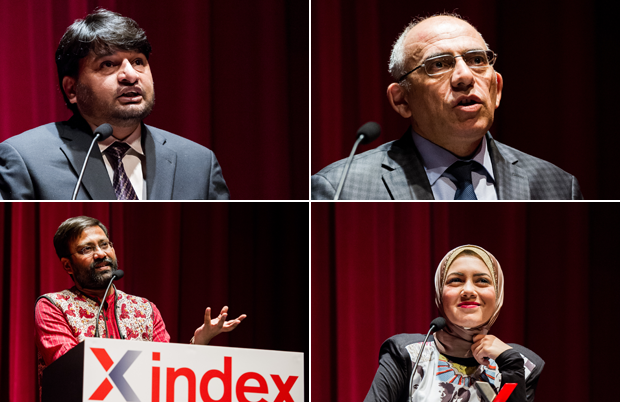
From upper left: Shahzad Ahmad, Rahim Haciyev, Shu Choudhary, Mayam Mahmoud. (Photos: Alex Brenner for Index on Censorship)
This year’s Freedom of Expression Awards 2014 were awarded to a diverse group of remarkable individuals and organisation from the young female Egyptian Rapper to a Pakistani internet campaigner, from an Indian digital pioneer to an Azerbaijani newspaper.
The Freedom of Expression Awards 2014 took place this evening at the Barbican Centre in London and saw 18 year old, Egyptian rapper, Mayam Mahmoud win the Arts Award; Pakistani internet freedom fighter, Shahzad Ahmad pick up the Advocacy Award; Shu Choudhary, the Indian journalist who has created an egalitarian news platform receive the Digital Activism Award; and the Azeri newspaper, Azadliq, win the Journalism Award.
The Freedom of Expression Awards recognise the bravest journalists, artists and activists from around the world. From Edward Snowden to FreeWeibo and David Cecil to Colectivo Chuhcan, their remarkable true stories remind us that the right to free expression must be defended at all costs. Index is proud to bring these voices to London and shine a light on their work for the world to see.
Index Arts award: Mayam Mahmoud, Egyptian Hip-hop Artist
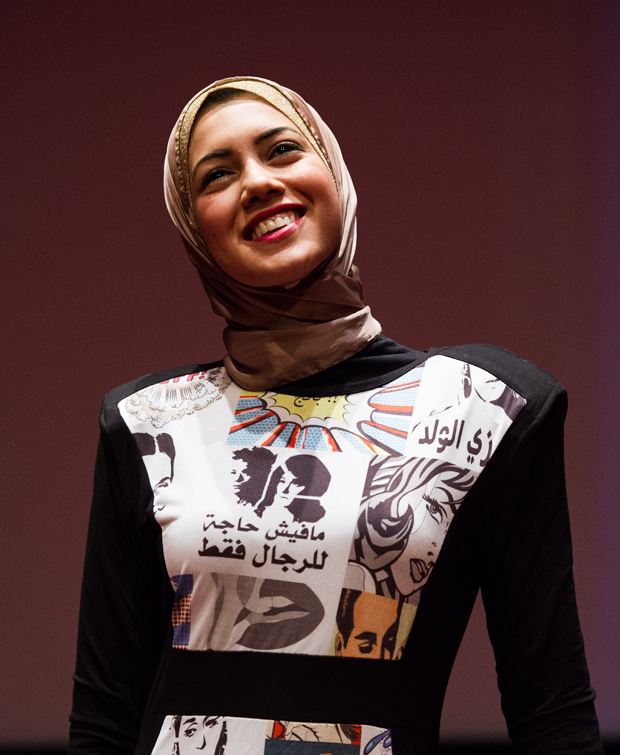
Mayam Mahmoud, Egyptian Hip-hop Artist, accepting her award (Photo: Alex Brenner for Index on Censorship)
A finalist on Arab’s Got Talent, hijab wearing Egyptian rapper Mayam Mahmoud uses hip-hop to address issues such as sexual harassment and to stand up for women’s rights in the country that, after the hope of Tahrir Square, is slipping back into authoritarianism.
Google Digital Activism award: Shubhranshu Choudhary, Indian Journalist
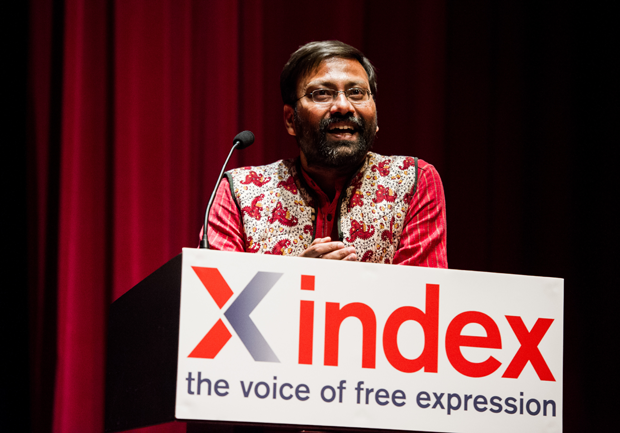
Shubhranshu Choudhary at the Index awards (Photo: Alex Brenner for Index on Censorship)
Shubhranshu Choudhary is the brains behind CGNet Swara, a mobile-phone based news service that allows some of India’s poorest citizens to upload and listen to hyper-local reports in their own dialect, no smartphone required! CGNet Swara is both circumventing India’s strict radio licencing laws and creatively providing an outlet for those overlooked people on the wrong side of the digital divide.
The Guardian Journalism award: Azadliq, Azerbaijani independent Newspaper
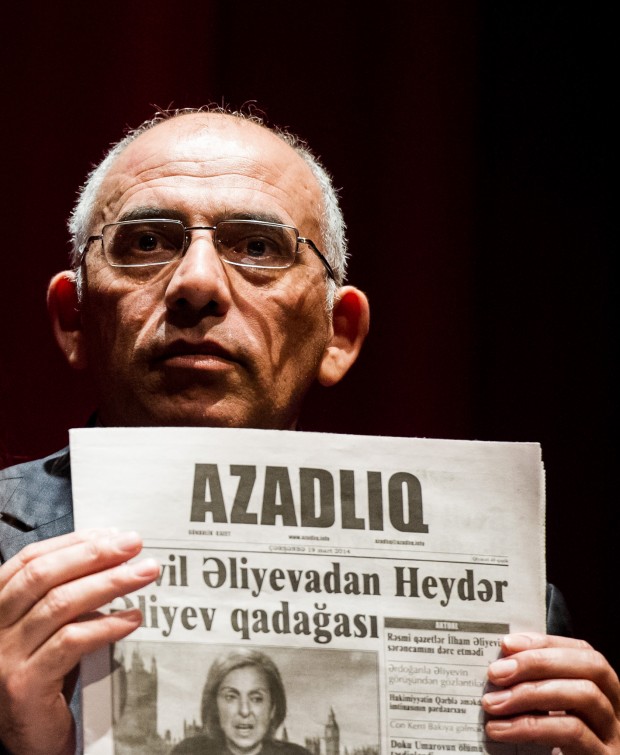
Rahim Haciyev, deputy editor-in-chief of Azerbaijani newspaper Azadliq (Photo: Alex Brenner for Index on Censorship)
One of the last independent media outlets in Azerbaijan, Azadliq has continued to report on government corruption and cronyism in spite of increasing pressures and a financial squeeze enforced by the authorities.
Doughty Street Advocacy award: Shahzad Ahmad, Pakistani Campaigner
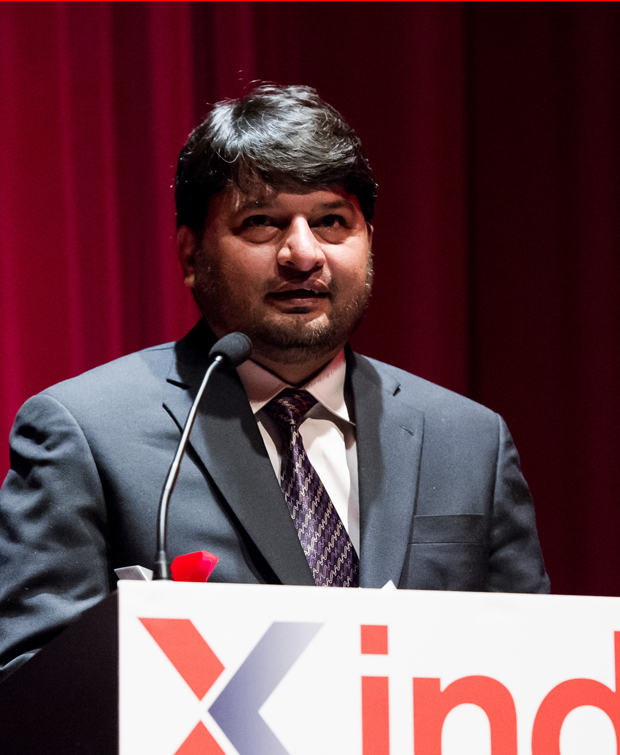
Shahzad Ahmad at the Index awards (Photo: Alex Brenner for Index on Censorship)
Shahzad Ahmad leads the fight against online censorship in Pakistan. He has sued the Pakistani government over their suspected use of surveillance software, FinFisher, and he is suing the government over its ongoing blocking of YouTube which is depriving his people of one of the world’s most popular video channels.
#IndexAwards2014: The Doughty Street Advocacy Award winner Shahzad Ahmad from Index on Censorship on Vimeo.
21 Mar 2014 | News, Politics and Society, Qatar
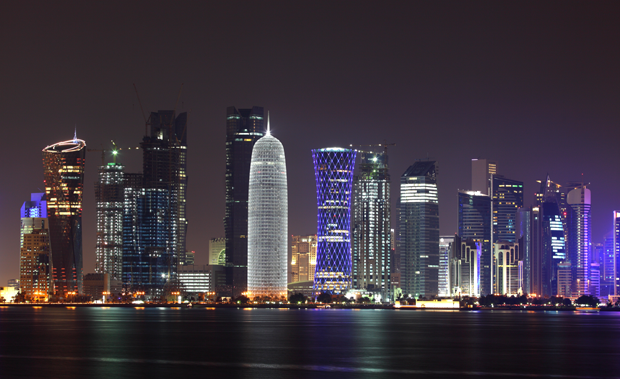
Freedom of speech clashing with commercial concerns has been an ongoing theme for many media and internet companies operating on an international stage, but it’s rare that a country’s liberal approach to expression is presented, in itself, as a prime investment opportunity.
Now Qatar, the richest country in the world, is positioning itself as a liberal alternative to the other resource-rich Gulf states – as revealed in an op-ed by the CEO of a premier London-listed Qatari investment fund.
The chairman of the Qatar Investment Fund PLC, Nick Wilson, authored an article this week on ArabianBusiness.com, claiming the country “has a habit of pushing its progressive agenda, to the irritation of its more conservative neighbouring states elsewhere in the Gulf Co-operation Council.”
Qatar Investment Fund manages approximately £200m in assets – investing into Qatari equities and employing dozens of fund managers. Its website trumpets Qatar as one of the worlds fastest growing economies, as well as pointing to its hugely lucrative gas exports.
But in this piece, the investment managers emphasised a different aspect of Qatar – the the “liberal minded” Al Jazeera TV network and an apparent commitment to free speech, especially when compared with its Gulf neighbours.
“We’ve seen the consequences of blocking access to information in other countries of the region.”
“Qatar is a bastion of free speech – and the flow of information should help to create a benign environment for investors.” he added.
The piece also pointed towards progressive women’s rights in Qatar, noted the political unpredictability of the region, but concluded that Qatar was “less frightened of change,” and “safe for business.”
As Wilson mentioned, Qatar now faces an unprecedented rift with the other GCC members – in particular Saudi Arabia, Bahrain and UAE who dramatically withdrew their envoys from Doha recently. He noted that Qatar had not withdrawn their envoys in retaliation, suggestive of their “liberal” tendencies.
But Qatar’s support for the Muslim Brotherhood both in Egypt and the Gulf, has set it contrary to GCC security policy – with UAE and Saudi Arabia having designated the Brotherhood “a terrorist organisation.”
And Yusuf al-Qaradawi, a provocative Islamist preacher and key Muslim Brotherhood member, is based in Doha. He presents a weekly show and sermon on the Arabic version of Al Jazeera, reportedly watched by 20 million viewers.
The outspoken preacher recently incensed the UAE by denouncing the Emirates political policies as “un-Islamic,” in response to an Islamist crackdown orchestrated by UAE’s sophisticated state security apparatus.
Qatar, as Wilson noted in his article, has irked its neighbours by allowing al Jazeera, al Qaradawi and the Muslim Brotherhood to be supported by Qatar’s extensive financial resources.
It now faces potential sanctions from Saudi Arabia, and Bahrain has even called for the GCC to be split up – unless Qatar shuts down the al-Jazeera TV network, ejects al-Qaradawi and stops support for Islamists.
While secretive Qatar is keen to maintain its supportive stance of the Brotherhood, it’s unclear whether freedom of expression comes into play or if there are wider geopolitical considerations at play.
More likely it is the latter – analysts reaction to the Qatar Investment Fund’s glowing appraisal of Qatar’s “liberal” values has been muted.
“Qatar may be a freer society than some of it’s neighbours, but this is hardly a useful measure,” says David Wearing, a PhD candidate and Gulf Expert at SOAS University in London.
“Objectively, it is an autocratic monarchy; not liberal, and certainly not democratic. Some space exists in Qatar for criticism of other regional governments, but not of the Doha regime itself.”
Wearing pointed to the case of Mohammed al-Ajami who was sentenced to fifteen years imprisonment in October 2013, for “insulting the emir.”
Nader Hassan, a professor at the University of South Alabama, thinks the op-ed may fit into a broader PR narrative which is sanitising Qatar’s human rights reputation.
“Qatar has been playing a very skillful public relations game,” he told Index, “portraying itself as a beacon of free speech and press freedom in the region.”
“Compared to its more powerful neighbor, Saudi Arabia, this may be true. However, there are significant restrictions on press freedom in Qatar.
“Al Jazeera, for example, almost never carries any critical pieces on Qatar, such as the abuse of migrant workers.”
Hassan admitted that some Al Jazeera pieces favoured openness and journalistic professionalism- but concluded that calling the network “liberal” was “far from the truth.”
This article was posted on 21 March 2014 at indexoncensorship.org
20 Mar 2014 | Awards, Egypt, News
Mayam Mahmoud, award winning Egyptian Hip-hop Artist (Photo: Alex Brenner for Index on Censorship)
Rapper Mayam Mahmoud uses hip-hop to address issues such as sexual harassment and to stand up for women’s rights in Egypt. The 18-year-old rose to prominence through her appearances on the popular TV show Arabs Got Talent. Aged 12, she was introduced to poetry by her mother. She began writing her own work, which soon turned into rap — still a male dominated music genre across the world.
From her song:
Girls in our society are divided
Into those who wear the niqab, those who wear the veil
And those who are in between
There are a lot of cases that depend on the girl
How she dresses
And how she looks
But this is not the rule
How can you judge me
By my hair or by my veil?
If one day you look at me
I am not going to be the one
Hiding her/my embarrassment
You cat call and you harass
Thinking this is right not wrong
Even if these are words
This is not the kind of treatment
These are stones
It is not her clothing that is inappropriate or wrong
It’s this way of thinking which is
Sometimes the clothing is too much
But you are the one to blame
One look can be could hurt
And it is not right of you to be staring
You deserve to be slapped twice on the face
Femininity in Egypt is divided into two parts
There is a difference between what men and women consider
And both are wrong
Who said that femininity is about dresses
Femininity is about intelligence and intellect
It is also about the way she was raised
And her religiosity
Girls have lost confidence in themselves
Now she puts in makeup
And dresses in different colours on top of each other
The problem is not with the girl
The problem is with the society that influences the girl every second
If you ask girls if they have good taste in dressing
They will say yes we have
But our lives can not be described
Our lives have become very materialistic
And everyone wants something that would endure
You get what you pay for
The expensive things are better than the cheap.
— Mayam Mahmoud
Read more about Mayam Mahmoud
This article was originally posted on 20 March 2014 at indexoncensorship.org
