David Carr recently reported in the New York Times that journalist Barrett Brown could face a 100-year prison term if he’s found guilty for linking to stolen information. He didn’t steal this information himself, nor did he post it online. He simply linked to it.
Brown is a dogged journalist who has done important and revealing reporting on the business of surveillance. His work has appeared in BusinessWeek, the Guardian, the Huffington Post and Vanity Fair. He has also served at times as a self-appointed spokesman for Anonymous, the leaderless Web collective of hackers and activists.
As a victim, he’s imperfect, Carr writes. Brown has struggled with substance abuse and by all accounts hasn’t always been easy to get along with. For example, he threatened an FBI agent and his family by name in a video he posted to YouTube.
Brown came to the government’s attention when he linked in a chat room to material Anonymous had posted online.
In recent years, Anonymous has hacked into the computer systems of a number of intelligence and surveillance firms who contract with the government and the biggest corporations. These firms helped craft elaborate campaigns to attack and discredit activists and journalists on behalf of corporate clients and have received huge government contracts for other projects.
By all accounts, Brown doesn’t have the technical ability or knowhow to have participated in the hacking that exposed these documents. But once they were released, Brown set up a research organization, Project PM, to sort through the documents and report on what they contained.
“The files contained revelations about close and perhaps inappropriate ties between government security agencies and private contractors,” Carr writes. But they also contained credit-card information and private emails.
When Brown linked to these files in a chat room, he “provided access” to stolen information, the government says. Prosecutors charged him with 12 counts related to identity theft.
The notion that linking to stolen material makes the linker a party to the original crime is absurd. And the severity of the charges is clearly meant to send a message to journalists and whistleblowers everywhere. Viewed in light of the Chelsea Manning case and the Edward Snowden leaks, the Brown case appears part and parcel of the government’s crackdown on activists who leak information and the journalists who report on them.
Carr reminds us that journalists frequently link to stolen documents. The Times’ most recent articleon the Snowden documents did so. The Electronic Frontier Foundation also points to a leak of congressional staffer passwords that many news organizations linked to. And this practice is only likely to expand.
“News organizations in receipt of leaked documents are increasingly confronting tough decisions about what to publish,” Carr writes, “and are defending their practices in court and in the court of public opinion, not to mention before an administration determined to aggressively prosecute leakers.”
The Committee to Protect Journalists responded in more forceful terms, arguing that the government’s handling of this case “threatens the nature of the Web, as well as the ethical duty of journalists to verify and report the truth.”
When Brown posted the link to the Anonymous documents in a chat room, the government tracked him down at his mother’s home and tried to seize his laptop. When he and his mother refused to hand over the computer, the FBI threatened to throw Brown’s mother in jail. Here’s how the Guardian’s Glenn Greenwald describes the harassment:
Over the next several months, FBI agents continued to harass not only Brown but also his mother, repeatedly threatening to arrest her and indict her for obstruction of justice for harboring Brown and helping him conceal documents by letting him into her home.”
Brown’s mother eventually pled guilty but has yet to be sentenced. Brown lashed out at the FBI, threatening one agent by name, in the video he posted to YouTube. Those threats gave the FBI cause to arrest Brown and he has been in custody ever since.
The New York Times story on Barrett Brown is important because it comes on the heels of a gag order that prohibits people involved in his case from speaking to the press. The legal fees for the case are expected to exceed $200,000 and an activist has established a defense fund.
Links are the connective tissue of the Internet. They enable us to share news, discover new information, dig deeper into issues and give credit to sources. The government’s effort to criminalize linking is akin to rewiring how the Internet works. It will have a chilling effect on how journalists report on sensitive government matters.
This case also has a bearing on all of us who post links to Facebook, tweet articles or blog about the news of the day.
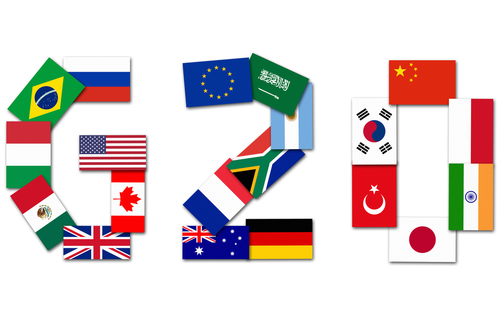
As global power starts to shift both South and East, and the G20 overshadows the G8, will freedom of speech and broader human rights still receive support around the summit tables?
While the BRICS – Brazil Russia, India, China, and South Africa – range from active democracies to repressive authoritarian states, none are keen to take lectures from western countries on free speech.
And whistleblower Edward Snowden’s still unfolding NSA and GCHQ revelations are surely weakening the US and UK’s credibility in promoting rights internationally. Mass surveillance of digital communications undermines free speech online: monitored conversation is not free, as anyone from Iran or China can attest.
Nor are the democratic BRICS yet taking any international lead on free speech and other rights.
If free speech is to be actively defended in the multipolar order, both the emerging democratic powers and the older western powers must stand up, however imperfectly, for rights, at the UN, the G20 or in bilateral dialogues, and not let economic interest, security priorities, and diplomatic convenience hold sway.
Some European diplomats confidently see the EU, US and Japan as the prime defenders of free speech, while Brazil, India and South Africa are “swing” states to bring on side against China and Russia. But from digital to media freedom to transparency and corruption, the picture is more blurred.
The Snowden revelations risk seriously weakening the US’s credibility in pushing for digital freedom and an open internet against a joint Russia-China quest for top down global internet control. The geopolitics of internet governance were exposed at an international telecommunications summit in Dubai last December – Russia and China pulling almost 90 countries including Brazil and South Africa behind them in a test vote. India wobbled before joining the US, EU and Japan.
But efforts to get democratic BRICs to support an open internet may now falter. ‘Do as we say, not as we do’ is never the most convincing of arguments.
Digital freedom may retreat further if the NSA scandal prompts a more rapid fragmentation of the internet as some fear. While Iran and China already seek to segment their national internets, if the EU and others respond with moves to insulate their networks more from the US then fragmentation may gather speed.
Yet direct censorship of the internet – imposing blocks and filters – is much more common in authoritarian regimes – with China and its great firewall targeting free speech extensively in ways not seen in the multipolar democracies.
But there are some troubling trends. Both the UK and India criminalise ‘grossly offensive’ comment on social media – with arrests for Facebook posts and tweets in both countries . And Brazil and India often top the lists in Google’s regular transparency reports on takedown requests for online content.
On press freedom, the picture for western democracies is fairly positive: they are ahead of the democratic BRICS who are, unsurprisingly ahead of Russia then China. But it’s a varied picture – Germany and the US are substantially ahead of the UK and France, with South Africa coming in just ahead of Japan according to Reporters without Borders press freedom index – and then Brazil and India trail behind. And such indicators cannot reflect the granular reality of Obama’s prosecution of media sources, or the UK debate on statutory press regulation.
At the international level, western countries are often seen as readier to challenge individual countries’ human rights records, than India, Brazil and South Africa. Yet Brazil and India voted with the US criticising Sri Lanka’s record earlier this year while Japan abstained. And the EU and US can hesitate too in the face of economic interests not least in dealings with China.
Transparency and corruption is where western countries do best. The US, Japan, Germany, France and the UK all score fairly high up on Transparency International’s annual ranking, while Brazil and South Africa languish in the middle, India is behind China, and Russia scores even below China (and India) too. But the US and UK’s transparency record will surely be reassessed given Snowden’s leaks.
With this mixed record of the democratic powers, will we hear less about free speech and human rights in the multipolar, digital world? At least, with whatever flaws and double standards, the majority of the G20 are democracies with robust debates on free speech at home. But the revelations of mass digital surveillance now cast a long shadow.
Perhaps one more positive outcome of the US’s stumbling over mass surveillance will be if it gives India, Brazil and South Africa the confidence to speak out strongly on the international stage including holding western players more to account on free speech. If so the multipolar democracies would then have more, not less, credibility in pointing the finger at authoritarian regimes.
Madras Cafe is a Bollywood film, a fictional feature based on real events – in this case, the Liberation Tigers of Tamil Eelam (Tamil Tigers) role in the assassination of former Indian prime minister Rajiv Gandhi, on his comeback trail. (The LTTE assassinated former Indian Prime Minister Rajiv Gandhi in 1991, on his comeback trail, later saying it was “a blunder”.)
I haven’t seen the film because UK cinema chains Cineworld, Odeon and Vue, won’t let me. Apparently in response to protests from the local Tamil community, Cineworld issued an anodyne statement, saying: “Our policy is to show a wide range of films for different audiences. However, following customer feedback and working with the film distributors, we have decided to not show Madras Café. We apologise for any inconvenience.”
Customer feedback? Press reports suggested that some Tamils had complained that the film was anti-Tamil. The Facebook page of the Tamil Youth Organisation UK has been full of agitation against the film, but I was curious about the basis of the chain’s decision, so I asked them what kind of feedback they had received. Was it in writing or a phone call? Had the customers giving such feedback seen the film? (How, considering that the film was being released simultaneously worldwide on 23 August?) I also asked if it was normal practice for Cineworld to see customer feedback before showing each film. I’m not sure if Cineworld had shown any of the following films, so I wanted to know if they had sought prior customer feedback from any of the communities that may have been offended by films like “Borat” (Kazakhs), “LOC Kargil,” “Gadar: A Love Story”, or “Zero Dark Thirty” (Pakistanis), “Bruno” (gay people), “Waltz With Bashir” (Israelis), or the many American films critical of US foreign policy and Vietnam war? If not, why not? A Cineworld official sent me, again, the press release about customer feedback.
True, protests in the Indian state of Tamil Nadu has also led to the film being withdrawn from most cities there. Ransacking and attacking theatres is not unusual in India. But this is Britain. I wanted to know if there had been a violent threat, and if so, did the theatre seek police protection. But we didn’t reach that far.
Have we learned nothing? A quarter century ago, Muslims in Bradford burned copies of Salman Rushdie’s novel, The Satanic Verses because the Iranian leader Ayatollah Khomeini declared a fatwa on the novelist. At that time, some in Britain didn’t want anything to do with the problem. Outraged by the intellectual acquiescence of some, Hanif Kureishi wrote the fine novel, The Black Album ridiculing the fundamentalists and the fair-weather free speech defenders.
At that time of The Satanic Verses protests, while some bookshops caved in to pressure, as Rushdie has noted later, many brave booksellers insisted on displaying the novel and selling it, reinforcing freedom of expression, and keeping the idea of unfettered imagination alive.
That was then. It is different now.
In 2004, when Gurpreet Kaur Bhatti wrote a play, Behzti (Dishonour) which dealt with rape and abuse in a gurdwara (the Sikh place of worship), the Birmingham Repertory stopped performances because some members of the local Sikh community threatened violence. Later, “Behzti” could have readings in London, and Bhatti even wrote another play in 2010 – “Behud” (Beyond Belief) – which examined the state of censorship and artistic freedom in Britain.
And now? Madras Cafe can’t be shown, and much of the British media has ignored the story, except industry publications. That reflects the underlying paternalism of the media towards the politics within Britain’s minorities. Like female genital mutation, which was initially considered a quaint ritual among immigrants, and forced marriage, which was confused with arranged marriages among Britain’s Asians, intolerance by young hotheads is seen as a cultural characteristic of specific immigrant groups, and being good multicultural people, we should all accept that. Rights – of equality, of expression – are seen as the privileged majority’s heirloom. Since loud individuals within a minority don’t want it, why impose “our” values on them?
But those values are universal, not western. Madras Cafe may be a terrible film – who knows? – but that should be for the viewers and audiences to decide. The aggrieved Tamils have no obligation to see it; indeed, they have the right to picket peacefully outside theatres. They also have the right to tell their story and broaden our understanding of the Sri Lankan conflict, so that the British leaders who go to the Commonwealth Heads of Government Meet in Sri Lanka in November know the kind of hosts whose hands they will shake.
The Sri Lankan story is complex, with neither the government nor the LTTE coming out looking good. The many victims of that conflict – Sinhala and Tamil alike – deserve better. Madras Cafe won’t tell that story – that was never its aim. But that doesn’t mean it can’t be shown.
Cinema chains need to rise to the challenge, and screen the film, with police protection, if necessary. Far more is at stake than a Bollywood blockbuster’s box office returns.
Though it has a reasonably good freedom of expression environment, the United Kingdom is wrestling with the fallout from mass surveillance leaks, press regulation, web filtering and social media guidelines. With an unwritten constitution, the right to freedom of expression comes from the practice of the common law, alongside the UK’s accession to international human rights instruments.
There have been positive developments in the UK on free speech in the last year with reform to defamation law and reform of section 5 of the Public Order Act.
The law of libel has been reformed by the Defamation Act which received Royal Assent on 25 May 2013. The reformed law, when enacted will restrict “libel tourism”, bring in a hurdle to prevent vexatious claims, update the provisions on internet publication, force corporations to prove financial loss and introduce a reasonable public interest defence. This reform will strengthen freedom of expression protections for academics, journalists and bloggers, scientists and NGOs.
Free speech is also enhanced by the United Kingdom’s strong Freedom of Information laws. Information requests are on the whole free with over 90% of requests receiving a response on time.
The recent Justice and Security Act can be used to exclude the media from hearings to consider whether a secret evidence procedure is to be used. This may cover cases where claimants have been subject to extra-judicial detention, torture and extraordinary rendition, affecting the media’s ability to perform its watchdog function.
The UK has tough state secrecy legislation. The public interest defence in the Official Secrets Act was removed in 1989 and has not been replaced.
While the freedom to protest is well-established, the use of “kettling” to deter protestors and the prosecution of “offensive” protest including the burning of military symbols and homophobic street preaching is of concern. Scotland’s recent anti-sectarian laws have criminalised “offensive” speech at football matches.
Media freedom
The publication of mass surveillance revelations by The Guardian’s Glenn Greenwald has had reverberations around the world. The UK government has moved toward confrontation with the news organisation by forcing the destruction of hard drives that contained documents leaked by former NSA contractor Edward Snowden. The recent developments around the detention of David Miranda and the seizure of material he was carrying under Section 7 of the Terrorism Act has raised concerns over press freedom.
The UK fares well internationally for media plurality with 23 independent national newspapers, as well as several hundred regional and local papers. The main TV stations are all available with every station provider. While Index believes there is strong media plurality in the UK at present, the legal framework may not be sufficient to ensure plurality in the future, as demonstrated by News Corporation’s attempted takeover of BskyB.
The phone hacking scandal exposed criminality in the British media, yet the response to the scandal has imperilled media freedom. The creation of a Royal Charter drawn up by the three main political parties to create a media regulator warranted the first government interference into the process of press regulation since 1695. Considerable confusion remains since no newspaper has agreed to be part of the new regulator. This leaves the possibility of independent regulation in the near-future.
Digital freedom
The UK upholds online freedom in comparison with other comparable democracies, but there are worrying trends on the criminalisation of social media, mass surveillance and proposals to introduce web filters.
The Regulation of Investigatory Powers Act 2000 increased the powers of the police to intercept communications. In 2012, the government attempted to extend this surveillance with its draft Communications Data Bill. The Bill would have made the surveillance and storage of UK citizens’ communications data the norm allowing an intrusion into the privacy of British citizens that would have chilled free expression. The Bill was dropped after a parliamentary committee criticised the scope of the legislation, but the Home Secretary has indicated she would like to bring forward a similar law.
Revelations of cooperative relationships between the United State’s National Security Agency and the UK’s Government Communications Headquarters as part of the mass surveillance programmes has raised serious concerns around digital freedom of expression. At the same time it is surveilling citizens’s online communications, the country is in the initial stages of possibly instituting opt-out web filters to block pornography with a consultation set to begin on 27 Aug.
The framework for copyright also has the ability to impede freedom of expression. The Digital Economy Act contains provisions allowing the government to order internet service providers (ISPs) to block websites and suspend accounts for customers accused of downloading copyrighted material.
The UK has high levels of take-up of social media and internet access. However, access is still not universal with exclusion from the internet for marginalised individuals a barrier to free speech. The recently launched Web Index report shows that the UK leads in the use of online citizen e-petitioning.
The police and executive bodies make a significant number of takedown requests to remove content according to Google’s transparency reports.
There have been an increasing number of arrests and prosecutions for ‘offensive’ comments on social media after public complaints. The Crown Prosecution Service has produced guidelines to limit the number of arrests and prosecutions. The legal framework has also been reformed with Section 5 of the Public Order Act no longer criminalising insulting behaviour or content. However, restrictive laws still apply with Section 127 of the Communications Act criminalising “grossly offensive” comments.
Artistic freedom
The UK continues to produce challenging art in a free environment for artistic freedom of expression but a chill remains around social, religious and cultural pressures on the arts and inconsistent policing of art deemed to be offensive.
A lack of guidance on the policing of culture has on occasion created significant problems for artistic freedom of expression. Large demonstrations outside performances of Gurpreet Kaur Bhatti’s play Behzti led to the play being closed down after guidance from the police. Her play about this situation, Behud – Beyond Belief was treated as a potential threat to public order with the police in Coventry asking for a fee of £10,000 per night. Policing can also be arbitrary. In 2012, a police officer told a Mayfair art gallery to remove a photo-montaged image of ancient myth Leda and the Swan from its window, despite the fact no one had complained.
While direct censorship of the Arts remains uncommon, self-censorship by artists is more routine. Artists self-censor for a number of reasons including fear of causing controversy or offence combined with special interest group campaigns that put pressure on artists to censor, financial pressures with artistic institutions not wanting to court controversy, cultural diversity policies that may encourage self-censorship and a habit of risk aversion that leads cultural institutions to focus on worst case scenarios of what might happen when taking artistic risks.

 As global power starts to shift both South and East, and the G20 overshadows the G8, will freedom of speech and broader human rights still receive support around the summit tables?