2 Aug 2013 | Digital Freedom, News, Politics and Society, Religion and Culture
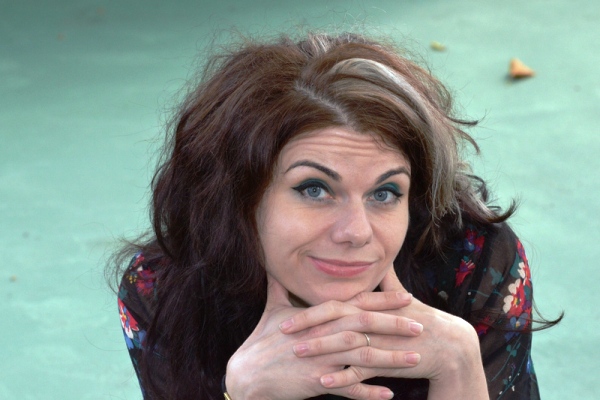
Writer Caitlin Moran (Image Demotix/Ken Jack)
Times columnist Caitlin Moran’s blog post on Twitter, threats and free speech this morning has gone viral. As I type, the page has crashed due to traffic overload, and apparently taken the entire Random House website with it.
The past week, online at least, has been dominated by discussions of misogynist abuse and threats on Twitter. I’m fighting a losing battle here in trying not to refer to this behaviour as “trolling”, but I think it’s still important to call abuse and threats what they are, rather than giving them a whole new category because they occur online. Calling it “trolling” undermines both trolling itself, in some ways a noble tradition, and what’s actually happening, which is women being threatened with rape by strangers.
Moran explains the exhausting and scary feeling of being attacked on Twitter, and the despair of being told that nothing can be done about it.
She goes on to quote Telegraph tech blogger Mic Wright, who earlier this week suggested that “This isn’t a technology issue – this is a societal issue”, suggesting he was simply dismissive of the idea that something should be done about misogyny online. Mic’s a friend, and a thoughtful writer. I don’t think he’s nearly as off-hand as Moran suggests, but I’ll leave it to you to read what he actually wrote. (While you’re at the Telegraph site, read Marta Cooper’s excellent piece as well)
Moran suggests “a fairly infallible rule: that anyone who says ‘Hey, guys – what about freedom of speech!’ hasn’t the faintest idea what ‘freedom of speech’ actually means.”
This, I’m afraid, is where it gets personal. As someone who may as well change his name by deed poll to “Hey, guys – what about freedom of speech!”, I can’t help feel Moran’s talking about me. And I think I’ve been a bit more considered, even while shouting about free speech.
Moran says:
“There is no such thing as ‘freedom of speech’ in this country. Since 1998, we’ve had Article 10 of the European Convention on “freedom of expression”, but that still outlaws – amongst many things – obscenity, sedition, glorifying terrorism, incitement of racial hatred, sending articles which are indecent or grossly offensive with an intent to cause anxiety or distress, and threatening, abusive or insulting words like to cause harassment, alarm or distress.”
Well, kind of. Article 10 of the European Convention on Human Rights says this:
1. Everyone has the right to freedom of expression. This right shall include freedom to hold opinions and to receive and impart information and ideas without interference by public authority and regardless of frontiers. This article shall not prevent States from requiring the licensing of broadcasting, television or cinema enterprises.
2. The exercise of these freedoms, since it carries with it duties and responsibilities, may be subject to such formalities, conditions, restrictions or penalties as are prescribed by law and are necessary in a democratic society, in the interests of national security, territorial integrity or public safety, for the prevention of disorder or crime, for the protection of health or morals, for the protection of the reputation or rights of others, for preventing the disclosure of information received in confidence, or for maintaining the authority and impartiality of the judiciary.
(Part 2 is kind of depressing, isn’t it?)
What Moran categorises as being outlawed by Article 10 are in fact various other laws, most of which have been around in some form or other long before the 1998 Human Rights Act which established the ECHR in UK law. Laws such as the Communications Act and the Public Order Act which, Lord knows, have their problems, not least for social media users. Ask Paul Chambers.
Moran then says:
“As you can see, if you are suggesting that you are allowed to threaten someone on Twitter with rape or death under “freedom of speech”, then you do not – as predicted – have any idea what “freedom of speech” means. Because it’s prosecutable.”
Two things: One, I’m not sure anyone really has been shouting “free speech for rape threats”. Two, it is possible to shout “freedom of speech” even when things are prosecutable. In fact, it’s what free speech campaigners such as Index, English PEN and Article 19 spend most of our time doing. All governments protect free speech “within the law”. Usually, the law is the problem, as we’ve seen with issues from England’s libel laws right up to Russia’s brand new anti “gay propaganda” law.
Moran identifies a certain cynicism in people who say abuse and threats are simply part and parcel of the web (“NOTHING CAN CHANGE. THE INTERNET JUST IS WHAT IT IS!”) saying what they really mean is that they don’t want things to change.
This strand certainly exists. The old-style keyboard warrior who thinks the web is strictly for arguing and not cat videos and getting strangers to help you with the crossword, or generally doing nice things and learning more about other people and places. The internet, for them is SERIOUS BUSINESS, and girls and pansies who can’t take the heat should get out of the kitchen. Or go back to the kitchen. Definitely something about kitchens.
But there is also a good reason to be wary, or at least hesitant, about calls for changing the web. A lot of time spent defending free speech is not actually about defending what people say, but defending the space in which they can say it (I’ll refrain from misquoting Voltaire here). It may be idealistic, but we genuinely believe that given the space and the opportunity to discuss ideas openly, without fear of retribution, we’ll figure out how to do things better. Censorship holds society back. In fact, it’s the litmus test of a society being held back.
When the cry goes up that “something must be done”, it’s normally exactly the right time to put the brakes on and think very hard about what we actually want to happen. The web is wonderful, and possibly the greatest manifestation of the free speech space we’ve ever had, but it’s also susceptible to control. Governments such as those in China and Iran spend massive resources on controlling the web, and do quite a good job of it. Other states simply slow the connection, making the web a frustrating rather than liberating experience. Some governments simply pull the plug. The whole of YouTube has been blocked in Pakistan for almost a year now, because something had to be done about blasphemous videos. Last month David Cameron announced his plans to take all the bad things away, after the Daily Mail ran a classic something-must-be-done campaign against online porn.
There are, as Moran rightly points out, laws against threatening people with rape. Perhaps the police and the CPS should take these threats more seriously (I only say “perhaps” because I don’t know exactly what the various police forces have been doing about the various threats in the past week, not because I think it’s arguable that the police and CPS should take rape threats less seriously), but I’m wary of demanding more action on things that are already illegal. Some of the proposed Twitter fixes are interesting, but their implications need to be thought through, particularly how they could be used against people we like as well as people we don’t like.
After outlining her support for a boycott of Twitter on Sunday 4 August, Moran concludes:
“The main compass to steer by, as this whole thing rages on, doubtless for some months to come, is this: to maintain the spirit that the internet was conceived and born in – one of absolute optimism that the future will be better than the past. And that the future will be better than the past because internet is the best shot we’ve had yet for billions of people to communicate equally, and peacefully, and with the additional ability to post pictures of thatched houses that look ‘surprised.’”
On this, I agree absolutely. In fact, I pretty much wrote the same thing last week:
The current debate in the UK portrays the web overwhelmingly as the habitat of trolls, predators, bullies and pornmongers. And that, plus the police are watching too, ready to arrest you for saying the wrong thing.
I can’t help feeling that all this doom-mongering could be self fulfilling. If we keep thinking of the web as the badlands, that’s how it will be, like a child beset by endless criticism and low expectations. We need to talk more about the positive side of life online – the conversations, the friendships, the opportunities – if we’re going to get the most out of it.
We do need to protect and promote the good parts of life online. But we should be very careful of the idea that we can simply block out the negative aspects without having a knock-on effect. We’re in uncharted territory. The wrong turn could be very, very costly.
25 Jul 2013 | Turkey, Turkey Uncensored, Volume 42.02 Summer 2013
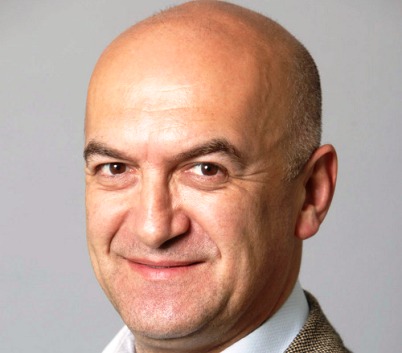
Journalist Yavuz Baydar has been fired by Turkish daily newspaper Sabah, after articles he wrote criticising the government were censored
In the latest report, Freedom in the World 2013, Freedom House defines Turkey as ‘partly free’.
Authorities in Ankara – both the government and bureaucrats – refute these claims, although the Ministry of Justice openly admits that there are serious shortcomings when it comes to providing for freedom of expression, both in law and implementation.
Some international organisations, such as the Organization for Security and Co-operation in Europe (OSCE) and the European Federation of Journalists (EFJ), meanwhile, help build the myth that Turkey tops the world rankings for one of the worst ‘oppressive’ states because of the number of jailed journalists there. The Committee to Protect Journalists reports that there are 49 journalists in prison, while Reporters Sans Frontières put the number at 72, if the number of people includes all jailed media professionals. But claims that the country is entirely free or grossly oppressive are both wrong. These extreme views must be taken with a pinch of salt; the truth is somewhere in between.
The complexities of Turkey today make it a unique case, demanding careful examination so that clichés can be dispersed, particularly those deriving from the perception that the country remains a police state, as it was prior to the late 1990s.
Turkey today is exactly as Freedom House says it is: not ‘free’, nor ‘not free’, but ‘partly free’.
In this context, Turkey’s problems are already out in the open.
Thousands of Kurdish activists connected to the Koma Civakên Kurdistan network – affiliated with the Kurdistan Workers’ Party (PKK) – as well as around 200 students and 72 other journalists and activists (mainly Kurdish) are in detention.
According to the monitoring site engelliweb.com, internet access is blocked to approximately 9000 websites, mostly on an arbitrary, non-transparent basis.
Prime Minister Recep Tayyip Erdog˘an regularly files libel charges against journalists and cartoonists, a move that singles him out because other powerful figures do not engage in similar practices. He has developed a habit of lashing out at the media in public, which has had dire consequences.
The so-called ‘mainstream media’, in other words, the 85 per cent of it controlled by proprietors who are for the most part engaged in vast business activities other than media (and therefore dependent on the government for economic interests), is suffocated and distinctly lacking in freedom and editorial independence.
In big media outlets, fierce censorship and self-censorship are practised on a daily basis.
They are severely crippled in their pursuit of journalism, unable or unwilling to cover corruption and abuse of power or to allow critical voices and dissent to be heard. When it comes to particular topics, such as criticism of the government, corruption or abuse of power, news stories are either filtered or unpublished; direct censorship – the actual blacking out of text – is exercised when material is found to be ‘too sensitive’ for the government’s or newspaper owners’ interests. But at the same time, there is little problem with pluralism and diversity, as opposed to countries like Iran, China, Azerbaijan or Belarus. With more than 40 national dailies (including a few independent newspapers and a vital partisan, antigovernment press), 2500 local papers, 250 private TV channels (of which 18 broadcast news seven days a week, 24 hours a day), 1300 radio stations and more than 150 news websites and online portals, Turkey has a big, competitive sector. Internet access is increasing at a huge rate, with access passing the 50 per cent mark recently. Because of the internet, despite attempts to command control, this is a milieu in which no story or comment is missed.
Anti-terror law and Ergenekon
The state of Turkey’s media freedom has been oversimplified, looking only at the number of journalists incarcerated without distinction, without looking closely at the specifics for those detentions. It’s a remnant of Cold War mentality. ‘Turkey is an undemocratic country’ has become almost like a slogan, concealing far deeper problems that extend throughout many sectors and structures within Turkish society.
This article is from the current edition of Index on Censorship Magazine. | Subscribe
It is true that people are in jail for voicing dissent, among them journalists. Almost all of them are Kurds who, because of the very nature of the Kurdish cause they pursue, combine publishing and self-expression with activism. This means their activity falls inside the boundaries of the utterly problematic Anti-Terror Law, which makes it extremely difficult to distinguish between those who
are members of terrorist groups that commit acts of violence or praise acts of terrorism and those who are simply exercising their right to express opinion. Dissidents, including journalists, have faced detention and prosecution because the law makes it practically impossible to make these important distinctions. The Anti-Terror Law must, at the very least, be revised so that it conforms to the European Convention on Human Rights (ECHR) or, better still, abolished altogether.
Around 10 per cent or so of those jailed are Turkish journalists whose imprisonment relates to the Ergenekon case – a clandestine, undemocratic, politically motivated mafiastyle network that, among other acts over a number of years, plotted a series of coups to oust the government and parliament. Since 2008, dozens of journalists have been arrested in connection with Ergenekon plots, together with hundreds of military officers.
Yet, in these cases, the most obvious clash with ECHR directives has to do with the extremely lengthy detention periods and trial procedure (take, for example, the case of Özkan vs Turkey). Needless to say, Turkey should have determined these periods of incarceration in line with international standards, including EU human rights legislation, releasing journalists while they awaited their trials. But apart from these cases, the European Court of Human Rights has rejected many appeals lodged by the accused, undercutting the assumption held by many that journalists should enjoy immunity even when charged with serious crimes such as conspiracy.
In addition to anti-terror laws, there are dozens of articles – in the Penal Code, in Turkey’s Internet Law, the Press Law and Turkish Radio and Television Law – that restrict freedom of expression and freedom
of the press. Some are implemented on a regular basis and some remain dormant, though still on the books. These punitive measures threaten freedom in Turkey, applying not only to media but also to academia, NGOs, political parties and ordinary citizens across the country.
The rise of independent media and the threat to public interest
Paradoxically, Turkish ‘glasnost’ under the ruling Justice and Development Party (AKP) over the past decade, with the immense help of the EU accession process, has meant, for the most part, that there are no longer many taboo subjects. National mass hypnosis is over. Tiny but independent news outlets – like the dailies Taraf and Zaman or the weekly Nokta – have helped broaden debate about the country’s murky past, untangle myths about the army being the guardian of the system and expose crimes against humanity.
In a pluralist and hugely diverse environment such as Turkey’s, it would be a lie to claim that news dissemination has been fully blocked. Take the case of the Uludere bombing in 2011, when a group of Kurdish villagers were attacked by Turkish fighter jets as they travelled from Iraq along a well-known smugglers’ route, resulting in 34 deaths. Main media group outlets failed to report on the killings for almost a day, but minor papers and those using social media began reporting on the incident
within minutes of it happening.
It could be argued that Turkey has one of the most independent medias in the world – it is truly a phenomenon.
Many countries in democratic transition after the end of the Cold War have had complex changes in their media environment, particularly in southeastern Europe, the Black Sea region and the North Caucasus. From the late 1980s on, this environment has been marked by the emergence of a new type of media proprietor who often – as in some Balkan countries as well as in Russia – entered the media sector with other businesses in tow, with mafia-like habits and connections, with the aim of money laundering, or with enormous greed. For the most part, these players aimed to use media outlets as a tool for keeping government and bureaucracy in check because they became fearful of what might be reported in this new, thriving media landscape, but these people and companies only had personal business gains in mind. Turkey has been part of this reality, and those coming to it from wellestablished, high-standard media environments in the West either do not understand or do not consider the considerable threats to media freedom to be important.
In some countries, for example, Albania, Serbia and Ukraine, media conglomerate proprietors operate in alliance with the ruling powers, establishing politics-media cooperation in the service of their mutual interests, rather than allowing media to serve the public interests.
This addictive system is the primary source of censorship and self-censorship in the wider region, and the blame for destroying the prospects of good journalism must be shared equally between politicians and media owners. In Turkey, in most cases, proper coverage of corruption and any investigative journalism are completely dead. Because this proprietor prototype is in essence non-transparent, Turkey’s media has never bothered to or been in a position to demand transparency or accountability from those in control of the news. In this context, nowhere in the world is the self-destructive role of media proprietors more visible, more irrational or more aggressive than in Turkey
On 19 October 2011, Prime Minister Erdog˘an assembled media proprietors in Ankara to ask for ‘help’ regarding ‘terror coverage’. It’s a call the media should have rejected, but instead they went beyond even what the prime minister had desired: they openly begged him to tell them exactly how long he thought TV dispatches on funerals connected with terrorism should be and shamelessly offered to set up a ‘censorship committee’ by themselves! If created, it would be tasked with ‘filtering’ news prior to publication, particularly when it pertained to clashes between the military and the PKK and political statements issued by them and other Kurdish activists.
In a more recent case, on 18 March 2013, there were reports that the proprietor of the daily newspaper Milliyet, Erdog˘an Demirören, forced veteran pundit Hasan Cemal to resign after he wrote a column defending the right to publish accurate stories, no matter how ‘disturbing’ they would be for the government or media owners. The article was never published, a breach of the journalist’s contract with his employer. Accused of causing the departure of Cemal, Prime Minister Erdog˘an, in his blunt manner some days later, explained that the very same proprietor had visited him to ask whom he should appoint as editor-in-chief for the newspaper.
The uphill struggle: how to solve Turkey’s media dilemmas?
These episodes speak volumes about how polluted Turkey’s media corporate culture is today. Media professionals – by which I mean real, decent journalists, and not those who either defend the government no matter what, or those who condemn it outright under the false belief that all journalism must be oppositional and not critical – face two rather hopeless challenges.
The first frontline for journalists is the political executive and the legislature. Unless the current government amends all laws in favour of freedom of expression and the press, these problems will keep reappearing. In general, the current parliament is a forum of intolerance for freedom of the press, opinion and dissent. In the mindset of the current parliament, the ‘old Turkey’ still rules.
Secondly, media proprietors represent a real challenge to free speech: most of them have no clue about the role and nature of good journalism.
I have long argued that unless these media owners are challenged, one cannot simply go on blaming everything on the political powers. But how do we challenge media owners? Because this is the key to enhancing freedom and independence in Turkey.
It is an uphill struggle. Journalists in Turkey have been forced to live under the ‘unholy alliance’ between governments and big media owners. It is a vicious cycle and very tough to break. We must persuade owners not to interfere in editorial decisions and let us be; we must encourage them to ct transparently in their businesses. Currently, none of them has the civil courage or the wisdom to be on the side of journalists’ fight for freedom.
We could try to persuade the government to ban media owners from entering public tenders, restrict cross-ownership, support local media and allow high share investments for foreign capital owners, with the aim of giving much more autonomy to the national broadcaster, Turkish Radio and Television.
And, of course, we can pressure the government to ensure union activities and memberships in all media outlets are protected by law.
Although their cases are of course the most urgent, problems regarding media freedom in Turkey will not cease to exist when all the journalists in jail – detained or sentenced – are released and pardoned. Turkey can never be part of the democratic league as long as it insists on suppressing and punishing dissent and free speech. But if we limit our professional struggle to these cases only, and introduce minimal amendments to some of the worst laws, we will continue to affect only the tip of the iceberg. If we do only this, held back by a sector that is bleeding spiritually, ruled by owners who are insensitive to the profession, operating without independence, we will continue to operate in appalling conditions, where newsrooms resemble open air prisons.
Freedom must be coupled with true professional independence.
©Yavuz Baydar
Yavuz Baydar is a columnist for Today’s Zaman and was, until he published a piece criticising media ownership in The New York Times, the news ombudsman for the daily newspaper SABAH
This article is from the current edition of Index on Censorship Magazine. | Subscribe
Turkey Uncensored is an Index on Censorship project to publish a series of articles from censored Turkish writers, artists and translators.
12 Jul 2013 | Digital Freedom
Whatever happens to the NSA whistleblower, the repercussions of his actions will endure
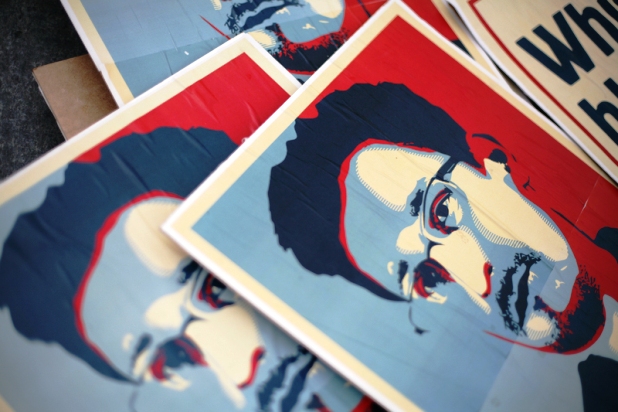
Edward Snowden placards at a protest in Berlin (David von Blohn/Demotix)
This is a guest post by Daniel Keane
Edward Snowden’s leaks have exposed an ideological chasm between the partisans of free information and liberty and the guardians of state security. They have also asked demanding questions of the public at large: when does intelligence gathering become an unwarranted intrusion into private lives? Is the first responsibility of an intelligence agent to the country he serves or to a — self defined — greater good? Can we have a free society without people who do dirty work like spying on our emails?
Public reaction in the polls remains mixed, with a Huffington Post/YouGov’s poll this week finding that 38 per cent of Americans believe Snowden did the wrong thing, while 33 per cent believing the contrary. However a survey released by Quinnipiac showed that 55 per cent of Americans believed Snowden was a whistle blower rather than a traitor.
Snowden also denied in interviews published that he gave any information to the Russian or Chinese governments while in transit there. Allegations of leaking information to these authorities arose from the New York Times, which claimed China had ‘drained the contents of Snowden’s laptops’. Snowden claimed he “never gave any information to either government.”
Snowden also declared in an interview given before he left his home in Hawaii with German newspaper ‘Der Spiegel’ that the NSA is “in bed together with the Germans the same as with most other Western countries” and that the USA and Israel co-wrote Stuxnet, the malicious computer virus utilised against an Iranian nuclear site.
These revelations made by Snowden come as a shock to the public consciousness and this is certainly reflected in the activities of pressure groups in the US and the UK. The Electronic Privacy Information Center, based in Washington DC, has filed an emergency petition to the US Supreme Court in order to halt the NSA’s logging of the nation’s telephone records.
Meanwhile in the UK, human rights group Liberty has filed a claim to the Investigatory Powers Tribunal against the British Intelligence Services for their role in the PRISM or Tempora surveillance programmes. It remains to be seen, however, whether both of these attempts to halt or impair mass surveillance will be successful: the US Supreme Court is unlikely to do away with a programme seen as vital to domestic security, while the IPT makes its decisions in private leaving any reform in Britain largely improbable.
If he reaches asylum, possibly in Nicaragua, Venezuela or Bolivia, Snowden could continue to leak crucial information regarding the NSA. The Obama administration finds itself in a crisis should he evade extradition: the inevitable slew of secrets weakening their international credentials.
Furthermore as Snowden reveals more regarding the collaboration of the US with Western European states, countries like Britain and France face a public dilemma as we learn more about the undermining of our personal liberties. These governments risk being whisked into undesirable public debate regarding the legitimacy of organisations such as GCHQ.
Even if Snowden returned to America to face trial the issue would not disappear. People will want to hear what he will say in court.
Many governments probably wish Edward Snowden was condemned to perpetual Limbo in Sheremetyevo Airport. But whatever happens, the repercussions of his actions are sure to endure for a long time as the debate between liberty and security rages ever on.
9 Jul 2013 | In the News
INDEX EVENTS
18 July New World (Dis)Order: What do Turkey, Russia and Brazil tell us about freedom and rights?
Index, in partnership with the European Council on Foreign Relations, is holding a timely debate on the shifting world order and its impact on rights and freedoms. The event will also launch the latest issue of Index on Censorship magazine, including a special report on the multipolar world.
(More information)
FROM INDEX ON CENSORSHIP MAGAZINE
Global view: Who has freedom of expression?
Freedom of expression is a universal, fundamental human right. But who actually has access to free expression? Index CEO Kirsty Hughes looks at the evidence.
(Index on Censorship)
Global view: Who has freedom of expression?
Freedom of expression is a universal, fundamental human right. But who actually has access to free expression? Index CEO Kirsty Hughes looks at the evidence.
(Index on Censorship)
The multipolar challenge to free expression
As emerging markets command influence on the international stage, Saul Estrin and Kirsty Hughes look at the impact on economics, politics and human rights.
(Index on Censorship)
News in monochrome: Journalism in India
The media’s infatuation with a single narrative is drowning out the country’s diversity, giving way to sensationalist reporting and “paid for” news. But, says Bharat Bhushan, moves towards regulation could have a chilling effect too
(Index on Censorship)
Censorship: The problem child of Burma’s dictatorship
Writer and artist Htoo Lyin Myo gives his personal account of working under government censorship in Burma
(Index on Censorship)
BURMA
Burma’s Press Council Threatens Resignation Over Media Rules
Members of Burma’s interim Press Council say they will resign if the newly minted Printing and Publishing Enterprise Bill is passed into law in its current guise.
(The Irrawaddy)
CHINA
State of the artist in China
“What can they do to me?” asks Ai Weiwei. “Who is afraid of Ai Weiwei?” sprays a young woman on city buildings in Hong Kong. You can hate him or love him but you can’t ignore Ai Weiwei.
(The Hindu)
GLOBAL
All the ways Google is asked to censor the web, in one handy chart
Google recently released statistics on all the legal requests it gets to censor the Web via its many services, from Search to YouTube. Now Sebastian Sadowski has created some handy visualizations of all the ways information is being censored — perhaps without you even realizing it.
(io9)
INDIA
To free the press or not to: the Indira govt debate?
The Indira Gandhi government feared Emergency and its various aspects, including the controversial family planning programme, would see the government “severely criticised” if press censorship was lifted in the run-up to the March 1977 Lok Sabha elections.
(Indian Express)
‘India has a strong culture for cinema’
Cinema is a movement that lets you enter the personal space of subjects without disturbing them and the art lies in then knitting a story around them, acclaimed French filmmaker Claire Denis said on Monday while addressing a news conference at the Film and Television Institute of India (FTII).
(Times of India)
IRAN
Iran’s Rouhani Set to Revamp Censorship?
Iranian President-elect Hassan Rouhani may be set to revamp the country’s censorship, according to a speech he delivered in Tehran.
(Israel National News)
MOROCCO
Free speech sidelined in Morocco
Despite promising reform and introducing a new constitution in 2011, Morocco’s treatment of dissidents indicates the changes were just window dressing, Samia Errazzouki writes
(Index on Censorship)
NEW ZEALAND
Critic claims censorship on Collins Wiki
Justice Minister Judith Collins’ office has become embroiled in a Wikipedia war with ministry critic Roger Brooking. Brooking is an outspoken critic of Collins and the Justice Ministry and was a prolific Wikipedia editor – now banned – under the username Offender9000.
(Southland Times)
RUSSIA
Guest Post: International solidarity with Russian civil society is crucial
Global action is needed to counter Putin’s crackdown on civil society, says Yuri Dzhibladze, president of the Center for the Development of Democracy and Human Rights
(Index on Censorship)
Russia to Develop ‘Code of Ethics’ for Film Industry
Veteran Russian directors Karen Shakhnazarov and Marlen Khutsiyev have been included in a working group charged with developing a code of ethics for the Russian film industry, an idea originally suggested by President Vladimir Putin.
(The Hollywood Reporter)
SINGAPORE
US ‘deeply concerned’ by Singapore Internet rules
The United States said Monday it was “deeply concerned” by what it called a “new restrictive” law in Singapore for licensing online news websites.
(Inquirer)
TUNISIA
Hollande’s Tunisia Visit Upsets
Some Civil Society Advocates
While many observers expected the visit of French President Francois Hollande to Tunisia to be postponed, others believed that its timing was counterproductive in the sense that it signaled indirect support for the ruling troika.
(Al Monitor)
UNITED STATES
Top Attorney Floyd Abrams Has Defended Free Speech For Over 40 Years
Floyd Abrams is an ardent defender of free speech and a passionate proponent of the First Amendment. Except for the time that his 12-year-old daughter, now a federal judge, told her dad that she and some friends were going to an R-rated movie.
(NY1)
Coalition calls for veto of NJ media violence ‘disinformation bill’
The National Coalition Against Censorship, American Booksellers Foundation for Free Expression and the Center for Democracy and Technology sent a letter to New Jersey Governor Chris Christie today asking him to veto Senate Bill 2715, which would require the state’s Department of Education “to prepare and distribute informational pamphlets on how parents can limit a child’s exposure to media violence,” which includes video games, according to the text of the bill.
(Polygon)
Previous Free Expression in the News posts
July 8 | July 5 | July 4 | July 3 | July 2 | July 1 | June 28 | June 27 | June 26 | June 25
