18 Jan 2013 | Brazil
One of Brazil’s largest daily newspapers claims that it has now faced censorship for 1,200 days, due to a court ruling prohibiting it from publishing news about a police operation that could incriminate a media tycoon — who is also the son of a former President of the country.
In 2009, daily newspaper O Estado de. S.Paulo had access to information and tape recordings related to a Federal Police investigation the previous year in the northeastern state of Maranhão, one of Brazil’s poorest areas. The newspaper alleged that business people from the region were involved in various crimes, including money laundering, tax evasion, and corruption. One of the individuals investigated was Fernando Sarney, who was head of a media conglomerate at the time, as well as the son of former President José Sarney — one of Brazil’s most influential politicians, who currently serves as president of Brazil’s Senate.

Brazilian daily newspaper O Estado de. S.Paulo claims that it has been censored
Fernando Sarney was indicted by federal police on 15 July 2009, and accused of favouring private businesses in contracts firmed with state companies. He was accused of being behind the scheme, but he denies all allegations. On 31 July 2009, a Federal District judge forbid Estado from publishing any more news about the police operation, because of a lawsuit filed by Sarney against the newspaper. His lawyers claimed that Estado committed a crime and damaged Sarney’s family reputation by publishing their taped conversations, even if they were made with the consent of the Judiciary.
The ruling drew harsh criticism from other newspapers and media-related organisations including Associação Brasileira de Imprensa (Brazilian Press Association), with most of them claiming that the ruling violated Brazil’s constitution.
At the same time, Sarney issued a statement where he claimed that publishing news about an ongoing police investigation was an “injustice” and “a violent act” against him and his family. He also denied that the press was censored, and claimed to be defending his rights as guaranteed by the constitution.
In December 2009, Sarney said he would drop the lawsuit. However, the newspaper decided not to accept desistance, and requested that Sarney also relinquished his right to represent the complaint — meaning that the lawsuit would go on even without him as the suing party. Estado also expressed its preference to have the case judged by the Supreme Court, in order to generate a legal precedent that would apply to all similar cases in the future. However, the case was sent back to the Federal District state court, which has yet to set a date for the trial. Since a final verdict has yet to be reached in the suit, Estado is barred to this day from publishing any news about the police investigation in Maranhão, or its consequences.
Roberto Gazzi, the newspaper’s director of Editorial Development says that this is a clear-cut case of censorship.
The information published by the newspaper at the time — and that have been prevented to be published ever since — were not of a private sort. These were facts involving public money and public agents, inside the limits of which we consider to be the right of the free press to publish, standing for society’s interest.
Estado had its 138th anniversary on 4 January last year, and has an average daily circulation of 260,000.
Sarney could not be reached for comment, and his lawyers had no comment on the case.
Rafael Spuldar is a journalist based in São Paulo
17 Jan 2013 | Awards
Kostas Vaxevanis, Greek journalist
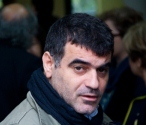 The arrest of Greek investigative journalist Kostas Vaxevanis on 28 October 2012, just days after he published a list of more than 2,000 suspected tax evaders, drew international condemnation.
He was found not guilty of breaking data privacy laws in November 2012, but the Athens public prosecutor subsequently ordered a retrial. If he is sentenced, he faces up to two years’ imprisonment or a fine.
Vaxevanis published the so-called “Lagarde List” of wealthy Greeks with Swiss bank accounts in his weekly magazine Hot Doc in October 2012. The list is named after IMF head Christine Lagarde, who handed it over to her Greek counterpart in 2010 when she was French finance minister.
Successive Greek governments have failed to prosecute a single person on the list or any other high-profile individual for tax evasion. Vaxevanis argues that publication of the list was in the public interest. He told the Guardian: “The country is governed by a poisonous combination of politicians, businessmen and journalists who cover one another’s backs … Had it not been for the foreign media taking such an interest in my own story, it would have been buried.”
Dimitris Trimis, head of the Athens Newspaper Editors Union, told the BBC that the pressure on press freedom in Greece was the most intense of his career. Before Vaxevanis’ arrest two state TV presenters were taken off air after discussing a minister’s response to claims by anti-fascist demonstrators that they had been tortured by the police.
Soon after Vaxevanis’ arrest, journalist Spiros Karatzaferis was detained after announcing he would leak damaging documents about the country’s faltering economy. “The government feels insecure,” Trimis said. The only way it feels it can convince society of its policies is to try to manipulate the media through coercion.
Photo: Demotix / Kostas Pikoulas
Mosireen, Egyptian citizen media collective
 Founded in Egypt in early 2011, the Mosireen Collective sought to support and promote the growing wave of citizen journalism that had emerged in the lead-up to the ousting of Hosni Mubarak, when members of the public captured the protests and police brutality on their mobile phones.
Working as facilitators, producers and archivists, Mosireen provide both online and offline space to share this wave of citizen news and people’s perspectives with the wider world.
Whilst none of the Mosireen founders were journalists by profession – they come from a variety of other disciplines, from urban planning to graphic design and mechanics – they recognised the importance of the independent media voices emerging from the revolution.
Mosireen’s media centre in Cairo is a community-supported space, and although professionals also use the centre, the focus is on providing ordinary people with skills, equipment, and know-how. The collective has since trained several hundred people with the output of their work available to download, stream, screen and distribute for free on a non-commercial basis. Footage from the archive is also regularly screened at Tahrir Cinema, a free open-air cinema off Tahrir Square (pictured). It continues to film the on-going discontent to this day.
Mosireen – a play on the Arabic words for “Egypt” and “determined” – also holds regular public events and talks in its workspace in downtown Cairo. The opportunity for the public to get involved in all aspects of production allows for an unprecedented level of interactivity in the creation of Egyptian history. All of which is in line with another of Mosireen’s objectives: to counter the narratives put forward by state-owned media through the presentation of multiple viewpoints.
Ta Phong Tan, imprisoned Vietnamese blogger
 Ta Phong Tan is one of three Vietnamese bloggers, collectively calling themselves the ‘Club for Free Journalists’, at the centre of a draconian clampdown by the country’s authorities. Vietnam is one of the world’s most restrictive countries for freedom of speech and the press. Only China, Eritrea and North Korea come lower on RSF’s press-freedom index.
Tan (pictured) and her fellow bloggers were arrested in September 2012 and charged with ‘conducting propaganda against the state’ in articles that allegedly ‘distorted and opposed’ the Vietnamese government.
In fact in over 700 articles on Tan’s blog Cong Ly va Su That (‘Justice and Truth’) she exposed the extent of corruption in the country. She covered a broad range of social issues, including the maltreatment of children, corruption, unfair taxation and illegal land confiscations by local party officials.
Before becoming a journalist, Tan worked as a police woman in Hanoi, giving her an insight into the workings of the system. On 4 October 2012, after a trial lasting just one day, Tan was sentenced to spend the next ten years in jail, with an additional five years of house arrest upon release. She refused to plead guilty.
This month a court in Vinh in Nghe An province, northern Vietnam, sentenced 14 activists, many of them bloggers, to up to 13 years in jail followed by several years of house arrest. The BBC reported that their convictions relied on loosely worded national security laws — in this instance article 79 of the penal code, which vaguely prohibits activities aimed at overthrowing the government. The Committee to Protect Journalists reported that state officials had beaten and stripped online reporter Nguyen Hoang Vi while detained by Ho Chi Minh City police.
“These shocking prison sentences confirm our worst fears — that the Vietnamese authorities have chosen to make an example of these bloggers, in an attempt to silence others,” Rupert Abbott, Amnesty’s researcher on Vietnam, told the New York Times, adding that freedom of expression in the country was “dire and worsening.”
Before the trial began, Tan’s mother killed herself in a self-immolation protest against the treatment of her daughter, and the violence, harassment and threats of deportation levelled against the family.
Sadiye Eser and Turkey’s imprisoned journalists
 Sadiye Eser (pictured) who writes for the leftist daily Evrensel (Universal) Newspaper, was arrested on 10 December and is still being held. The most recent reports claimed she is now likely to be being held at Bakirkoy Women’s prison.
Police asked Eser about political rallies she had covered as a journalist, as well as the notes she had kept on them, according to a statement by the Journalists’ Union of Turkey.
Broadly worded anti-terror and penal code statutes allow the authorities to conflate coverage of banned groups and special investigations with outright terrorism or other anti-state activity.
These statutes ” make no distinction between journalists exercising freedom of expression and [individuals] aiding terrorism,” said Mehmet Ali Birand, an editor with the Istanbul-based station, Kanal D, speaking to Committee to Protect Journalists (CPJ).
Censorship in Turkey remains endemic. CPJ estimated that Eser’s detention brought to 50 the number of people in jail for journalistic activity in the country. Other organisations suggest the number is even higher. Turkey currently is ahead of even Iran and China in the number of journalists it is known to have in prison.
There is also more widely a chilling atmosphere for free expression and press freedom in Turkey leading to sackings of journalists and self-censorship: as the European Commission said in its 2012 progress report on Turkey: “On a number of occasions journalists have been fired after signing articles openly critical of the government. All of this, combined with a high concentration of the media in industrial conglomerates with interests going far beyond the free circulation of information and ideas, has a chilling effect and limits freedom of expression in practice, while making self-censorship a common phenomenon in the Turkish media.” They also point out that 16641 cases in total were pending against Turkey at the European Court of Human Rights in September 2012. In March 2012, Orhan Pamuk, a Turkish writer and Nobel laureate, was charged and fined for a statement in a Swiss newspaper that “we have killed 30,000 Kurds and one million Armenians.”
17 Jan 2013
Kostas Vaxevanis, Greek journalist
The arrest of Greek investigative journalist Kostas Vaxevanis on 28 October 2012, just days after he published a list of more than 2,000 suspected tax evaders, drew international condemnation.
He was found not guilty of breaking data privacy laws in November 2012, but the Athens public prosecutor subsequently ordered a retrial. If he is sentenced, he faces up to two years’ imprisonment or a fine.
Vaxevanis published the so-called “Lagarde List” of wealthy Greeks with Swiss bank accounts in his weekly magazine Hot Doc in October 2012. The list is named after IMF head Christine Lagarde, who handed it over to her Greek counterpart in 2010 when she was French finance minister.
Successive Greek governments have failed to prosecute a single person on the list or any other high-profile individual for tax evasion. Vaxevanis argues that publication of the list was in the public interest. He told the Guardian: “The country is governed by a poisonous combination of politicians, businessmen and journalists who cover one another’s backs … Had it not been for the foreign media taking such an interest in my own story, it would have been buried.”
Dimitris Trimis, head of the Athens Newspaper Editors Union, told the BBC that the pressure on press freedom in Greece was the most intense of his career. Before Vaxevanis’ arrest two state TV presenters were taken off air after discussing a minister’s response to claims by anti-fascist demonstrators that they had been tortured by the police.
Soon after Vaxevanis’ arrest, journalist Spiros Karatzaferis was detained after announcing he would leak damaging documents about the country’s faltering economy. “The government feels insecure,” Trimis said. The only way it feels it can convince society of its policies is to try to manipulate the media through coercion.
Photo: Demotix / Kostas Pikoulas
Mosireen, Egyptian citizen media collective
Founded in Egypt in early 2011, the Mosireen Collective sought to support and promote the growing wave of citizen journalism that had emerged in the lead-up to the ousting of Hosni Mubarak, when members of the public captured the protests and police brutality on their mobile phones.
Working as facilitators, producers and archivists, Mosireen provide both online and offline space to share this wave of citizen news and people’s perspectives with the wider world.
Whilst none of the Mosireen founders were journalists by profession – they come from a variety of other disciplines, from urban planning to graphic design and mechanics – they recognised the importance of the independent media voices emerging from the revolution.
Mosireen’s media centre in Cairo is a community-supported space, and although professionals also use the centre, the focus is on providing ordinary people with skills, equipment, and know-how. The collective has since trained several hundred people with the output of their work available to download, stream, screen and distribute for free on a non-commercial basis. Footage from the archive is also regularly screened at Tahrir Cinema, a free open-air cinema off Tahrir Square (pictured). It continues to film the on-going discontent to this day.
Mosireen – a play on the Arabic words for “Egypt” and “determined” – also holds regular public events and talks in its workspace in downtown Cairo. The opportunity for the public to get involved in all aspects of production allows for an unprecedented level of interactivity in the creation of Egyptian history. All of which is in line with another of Mosireen’s objectives: to counter the narratives put forward by state-owned media through the presentation of multiple viewpoints.
Ta Phong Tan, imprisoned Vietnamese blogger
Ta Phong Tan is one of three Vietnamese bloggers, collectively calling themselves the ‘Club for Free Journalists’, at the centre of a draconian clampdown by the country’s authorities. Vietnam is one of the world’s most restrictive countries for freedom of speech and the press. Only China, Eritrea and North Korea come lower on RSF’s press-freedom index.
Tan (pictured) and her fellow bloggers were arrested in September 2012 and charged with ‘conducting propaganda against the state’ in articles that allegedly ‘distorted and opposed’ the Vietnamese government.
In fact in over 700 articles on Tan’s blog Cong Ly va Su That (‘Justice and Truth’) she exposed the extent of corruption in the country. She covered a broad range of social issues, including the maltreatment of children, corruption, unfair taxation and illegal land confiscations by local party officials.
Before becoming a journalist, Tan worked as a police woman in Hanoi, giving her an insight into the workings of the system. On 4 October 2012, after a trial lasting just one day, Tan was sentenced to spend the next ten years in jail, with an additional five years of house arrest upon release. She refused to plead guilty.
This month a court in Vinh in Nghe An province, northern Vietnam, sentenced 14 activists, many of them bloggers, to up to 13 years in jail followed by several years of house arrest. The BBC reported that their convictions relied on loosely worded national security laws — in this instance article 79 of the penal code, which vaguely prohibits activities aimed at overthrowing the government. The Committee to Protect Journalists reported that state officials had beaten and stripped online reporter Nguyen Hoang Vi while detained by Ho Chi Minh City police.
“These shocking prison sentences confirm our worst fears — that the Vietnamese authorities have chosen to make an example of these bloggers, in an attempt to silence others,” Rupert Abbott, Amnesty’s researcher on Vietnam, told the New York Times, adding that freedom of expression in the country was “dire and worsening.”
Before the trial began, Tan’s mother killed herself in a self-immolation protest against the treatment of her daughter, and the violence, harassment and threats of deportation levelled against the family.
Sadiye Eser and Turkey’s imprisoned journalists
Sadiye Eser (pictured) who writes for the leftist daily Evrensel (Universal) Newspaper, was arrested on 10 December and is still being held. The most recent reports claimed she is now likely to be being held at Bakirkoy Women’s prison.
Police asked Eser about political rallies she had covered as a journalist, as well as the notes she had kept on them, according to a statement by the Journalists’ Union of Turkey.
Broadly worded anti-terror and penal code statutes allow the authorities to conflate coverage of banned groups and special investigations with outright terrorism or other anti-state activity.
These statutes ” make no distinction between journalists exercising freedom of expression and [individuals] aiding terrorism,” said Mehmet Ali Birand, an editor with the Istanbul-based station, Kanal D, speaking to Committee to Protect Journalists (CPJ).
Censorship in Turkey remains endemic. CPJ estimated that Eser’s detention brought to 50 the number of people in jail for journalistic activity in the country. Other organisations suggest the number is even higher. Turkey currently is ahead of even Iran and China in the number of journalists it is known to have in prison.
There is also more widely a chilling atmosphere for free expression and press freedom in Turkey leading to sackings of journalists and self-censorship: as the European Commission said in its 2012 progress report on Turkey: “On a number of occasions journalists have been fired after signing articles openly critical of the government. All of this, combined with a high concentration of the media in industrial conglomerates with interests going far beyond the free circulation of information and ideas, has a chilling effect and limits freedom of expression in practice, while making self-censorship a common phenomenon in the Turkish media.” They also point out that 16641 cases in total were pending against Turkey at the European Court of Human Rights in September 2012. In March 2012, Orhan Pamuk, a Turkish writer and Nobel laureate, was charged and fined for a statement in a Swiss newspaper that “we have killed 30,000 Kurds and one million Armenians.”
15 Jan 2013 | Uncategorized
The European Court of Human Rights deemed today (15 January) that a woman working for British Airways was unfairly discriminated against for her religion. Nadia Eweida was fired by BA in 2006 for refusing to stop wearing her crucifix visibly. Judges ruled that Eweida’s rights under Article 9 of the European Convention on Human Rights were violated. Three other Christians who had taken their employees to court lost their cases. Shirley Chaplin, whose employer also stopped her wearing crucifix necklaces, Lillian Ladele, disciplined after refusing to conduct same-sex civil partner ceremonies — and Gary McFarlane, a marriage councillor fired for saying he might object to offering sex advice to gay couples.

Aaron Swartz’s suicide prompted calls for cyber law reform
The suicide of US activist Aaron Swartz on 11 January has prompted calls to reform computer crime laws in America. The 26 year old was awaiting trial, charged with 13 felony counts of wire fraud and hacking two years ago. Swartz had downloaded millions of academic papers from online archive JSTOR and was due to face trial in April, for which he could have been jailed for decades and faced massive fines. Calls for amendments to The Computer Fraud and Abuse Act have been widespread, with critics alleging that certain internet hacking laws are too vague and broad, and impose overly harsh penalties.
On 9 January, Iran’s Supreme Court ratified the death penalty of five Ahwazi (Arab-Iranian) human rights defenders. Hadi Rachedi, Hashim Shabani Nejad, Mohammad Ali Amuri Nejad, Jaber Al-Bushoke and his brother Mokhtar Al-Bushoke were arrested by Iran’s Ministry of Intelligence and National Security in the spring of 2011. They were charged with spawning mischief, threatening national security and inciting propaganda against the Islamic Republic. The activists had been protesting for their right to speak Arabic, rather than the national language of Persian – a right that is written into Iranian constitution. They were allegedly tortured into giving false confessions in detention.
App developers Tencent have apologised to users of social media app WeChat, after the programme appeared to be censoring controversial terms globally. Tencent, China’s most widely used internet portal, blamed a “technical glitch” after it had blocked terms such as Southern Weekend and Falun Gong, a banned group in China often referred to as a sect. Activists have voiced concern that authorities are hacking the app, in order to increase surveillance on some of its 200million users. WeChat has subscribers in the UK and America, and will soon be launched across Asia.
US Vice President Joe Biden met with the president of the Entertainment Software Association on Friday, to discuss the gaming industry’s influence over violence, following a school shooting in Connecticut that prompted calls for reforms on gun policy. Biden’s White House meeting aimed to establish whether America was undergoing a “coarsening of our culture”, discussing how to eliminate the culture of violence, a happening the gaming industry is frequently blamed for. The National Rifle Association (NRA) had accounted the rate of gun crime in America to media and video game violence, which the gaming industry refuted, expressing fears that they could become a scapegoat in the Connecticut debate.
