20 Sep 2017 | Campaigns -- Featured, Press Releases
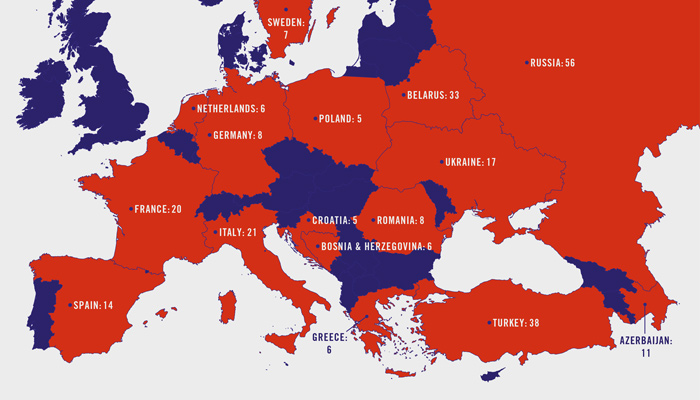
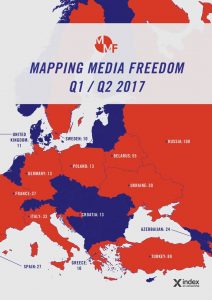 Index on Censorship’s database tracking violations of press freedom recorded 571 verified threats and limitations to media freedom during the first two quarters of 2017.
During the first six months of the year: three journalists were murdered in Russia; 155 media workers were detained or arrested; 78 journalists were assaulted; 188 incidents of intimidation, which includes psychological abuse, sexual harassment, trolling/cyberbullying and defamation, were documented; 91 criminal charges and civil lawsuits were filed; journalists and media outlets were blocked from reporting 91 times; 55 legal measures were passed that could curtail press freedom; and 43 pieces of content were censored or altered.
“The incidents reported to the Mapping Media Freedom in the first half of 2017 tell us that the task of keeping the public informed is becoming much harder and more dangerous for journalists. Even in countries with a tradition of press freedom journalists have been harassed and targeted by actors from across the political spectrum. Governments and law enforcement must redouble efforts to battle impunity and ensure fair treatment of journalists,” Hannah Machlin, Mapping Media Freedom project manager, said.
Q1 2017
During the first quarter the MMF database registered several trends that can be recognised as acute challenges to media freedom. A total of 299 incidents were reported to the project by MMF correspondents and other journalists between 1 January and 31 March 2017.
Some European governments clearly interfered with media pluralism. Other governments harassed, intimidated and detained journalists. The net effect of these interventions have been to debase and devalue the work of the press and undermine a basic foundation of democracy.
Throughout Q1: one journalist was murdered; 42 incidents of assault were confirmed; there were 89 verified reports of intimidation; media professionals were detained in 69 incidents; 38 criminal charges and civil lawsuits were filed; and journalists were barred from reporting in 54 verified incidents.
The full Q2 report is available on the web or in a combined Q1/Q2 PDF.
Q2 2017
The crackdown on media freedom throughout Europe — even within those countries perceived to be more democratic — continued in Q2 2017. A total of 272 incidents were reported to the project by MMF correspondents and other journalists between 1 April and 30 June 2017.
While the number of reports recorded during the second quarter declined nearly 10 per cent from the first quarter, this does not indicate an improvement in the overall state of media freedom. The situation for journalists across Europe remained extremely concerning. For example, the number of arrests decreased during the quarter, but hundreds of journalists were in detention or were forced into exile. In addition, based on the severity of the second quarter reports, inhumane treatment of media workers actually increased.
Throughout Q2: two journalists were killed; 36 incidents of physical assault and injury were reported; 53 criminal charges and civil lawsuits were filed; 99 instances of intimidation, which includes psychological abuse, sexual harassment, trolling/cyberbullying and defamation, took place; journalists were blocked from covering stories 54 times; 20 legal measures were passed that curtail press freedom; and 19 works were censored/altered by the state or editorial teams.
The full Q2 report is available on the web or in a combined Q1/Q2 PDF.
For more information, please contact:
For further information, please contact Hannah Machlin, project manager, Mapping Media Freedom on [email protected]
About Mapping Media Freedom
Mapping Media Freedom – an Index on Censorship-lead project with partner European Federation of Journalists and Turkey-based P24, Platform for Independent Journalism, partially funded by the European Commission – covers 42 countries, including all EU member states, plus Bosnia, Iceland, Kosovo, Macedonia, Montenegro, Norway, Serbia, Turkey, Albania along with Ukraine, Belarus and Russia and Azerbaijan. The platform was launched in May 2014 and has recorded over 3,300 incidents threatening media freedom by the end of Q2 2017.
Search reported incidents throughout Europe at https://mappingmediafreedom.org.
18 Aug 2017 | News, Youth Board
[vc_row][vc_column][vc_column_text]Index on Censorship has recruited a new youth advisory board to sit until December 2017. The group is made up of young students, journalists and researchers from four continents.
Each month, board members meet online to discuss freedom of expression issues around the world and complete an assignment that grows from that discussion. For their first task the board were asked to write a short post about a pressing freedom of expression issue from their countries of residence.
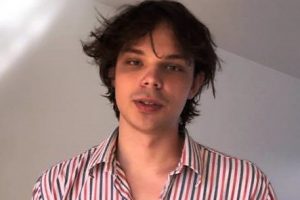
Sean Eriksen – Brisbane, Australia
Eriksen is a 21-year-old Arts/Law student majoring in history and international relations
Notwithstanding the aphorism that ‘if free expression is to mean anything then it must protect unpopular opinions’, censorship is most tolerable at the fringes; and it is a mark of social progress that bigotry is considered so unpopular that many countries have tried to legislate it out of existence. But the suggestion that hate speech laws represent a positive cultural development does not endear them to those who believe free expression is inherently sacrosanct.
Section 18C(1)(a) of Australia’s federal Racial Discrimination Act 1975 prohibits acts that are reasonably likely to ‘offend, insult, humiliate or intimidate another person or group of people’ based on their race, colour, or national or ethnic origin. This allows administrative review and ultimately litigation, giving judges a wide capacity to make rulings on acceptable public discourse.
Defenders of the law claim that sufficient legislative exemptions protecting artists, commentators and academics exist elsewhere in the legislation, but in practice the standard for offence has not been particularly high. Most famously in Eatock v Bolt, articles by a conservative columnist were prohibited from further publication because he had suggested that many people were identifying as indigenous solely because it had become trendy to do so. This is perhaps a crass point to make, but not one that adults cannot reasonably be exposed to.
Though it may be meant well, the censorship of ugly or even disturbing speech is still censorship. Bad ideas do exist and the only harm is in hiding them.
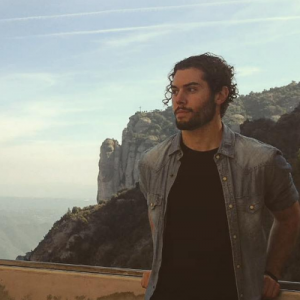
Adam Rossi, youth advisory board, July-December 2017
Adam Rossi – Vancouver, Canada
Rossi is a Canadian student pursuing an MA in International Relations. He recently spent a year teaching English in Barcelona, Spain
Seven years after Catalonia’s government outlawed bullfighting in the autonomous region, its officials now find themselves back in the ring. They’ve been thrown in with a great bull, the Spanish government, which has been trying to skewer any Catalan public figure expressing pro-independence views as if they were matadors clad in red.
They have already suspended, fined, and barred from office the former Catalan prime minister, some of his cabinet members, and city councillors for organising a mock referendum back in 2014 and for continually speaking publicly about their belief in the need for real independence. Joan Coma, a leftist city councillor of the Catalan CUP party, now faces an eight-year prison sentence with his passport confiscated for saying, “To make an omelet, you must break some eggs,” in a discussion on independence. Spanish authorities claim that this was a call for political violence. Meanwhile, Spanish President Manuel Rajoy has even threatened to use force to stop the referendum. Not allowing the vote to happen would be undemocratic, essentially ignoring the voice of the people. In addition, these targeted shots at individual citizens such as Joan Coma only serve to drag Spain back to a dark past of civil oppression. They are even using the Francoist penal code to charge Coma. However, these acts only seem to be fuelling the hearts of Catalans, as street demonstrations and “si” vote flags begin to fly proudly outside people’s homes. The current Catalan president, Carles Puigdemont, says the vote will happen regardless, and that the Catalan government will be prepared for immediate separation if the result is a “yes.”
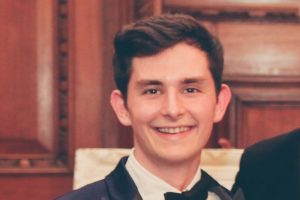
Huw Roberts, youth advisory board, July-December 2017
Huw Roberts – Hampshire, UK
Roberts graduated from Durham University in June 2017 with a BA in Politics. He has been granted a scholarship to study Public Administration at Shanghai Jiao Tong University
In May 2016 major social media firms, including Facebook and Twitter, signed up to a voluntary code of conduct aimed at combating illegal hate speech. This agreement, in partnership with the European Commission, required the signees to remove hate speech posted on their platform within a twenty-four hour period. Since this deal, the pressure placed on these companies to remove hate speech has been increasing, with proposals forwarded by European Union member states for binding legislation and punitive fines. Undoubtedly, the scope for the facilitation and proliferation of hate speech on these platforms requires a response, however, the current demands being placed on social media firms are fostering policies which often lack refinement and curtail legitimate free speech.
Leaked documents from earlier this year revealing Facebook’s hate speech policies typify the problems censorious practices can raise for free expression. The leading headline from these documents was that white men (as a group) were considered a protected category, yet, black children were not. As such, under Facebook guidelines attacks directed against white men were required to be removed, whilst those targeted at black children were permissible. This policy would not only seem discriminatory towards those most vulnerable within society, but has also proven detrimental to discourse. For example, campaigners from social justice groups such as Black Lives Matter have found their accounts blocked due to criticising structural privileges held by white men. Without an overhaul of the current guidelines in place and a more nuanced approach to censoring hate speech, those most marginalised within society risk having a vital outlet for raising debate and challenging inequalities shut down.
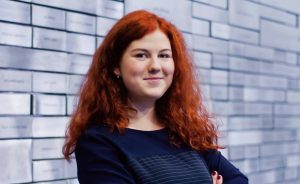
Madara Melnika, youth advisory board, July-December 2017
Madara Melnika – Riga, Latvia
Madara is a law student at University of Latvia. She has also studied in Salzburg and Berlin
At the beginning of July 2017 one of the most popular sports commentators in Latvia, Armands Puče, was dismissed from covering the Latvian Kontinental Hockey League club Dinamo Riga’s games. Although he was dismissed by the private media enterprise MTG TV Latvia, this case is noteworthy as the journalist claims that the decision on his dismissal was taken after the company received an ultimatum from the KHL bureau in Moscow, threatening to end the KHL’s broadcasting agreement with MTG TV unless Puče was removed.
His colleagues hinted that “just like in Soviet times”, all of the articles written by Puče in his parallel work as a journalist, in which he criticised the political ideology of the KHL and its impact on Dinamo Riga, had been translated into Russian and sent to the KHL main bureau in Moscow. It is important to stress that the mentioned articles were not connected to his hockey broadcasts.
After some time, the media enterprise claimed that its cooperation with Puče was ended due to plans for a new show concept, which would include also changing the anchor of the broadcast. Thus Puče, who had led the Hockey studio ever since the first season of the renewed hockey club Dinamo Riga, had to be let go.
Of course, the commentator is connected to his media employer and represents it. However, can the fate and work opportunities of a sports commentator absolutely depend on his ideology and activities done outside work – and will the teams suddenly play better, if their games are covered by loyal commentators?
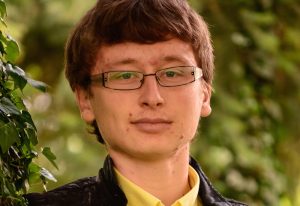
Daniel Penev, youth advisory board, July-December 2017
Daniel Penev – Kyustendil, Bulgaria
Penev is a Bulgarian freelance journalist and a member of the Association of European Journalists
Valentin Todorov is a journalist from Novi Iskar, a town in western Bulgaria, who owns the local news website www.noviiskar.bg. He registered the website under this name in 2010. In June, Todorov learned that Daniela Raycheva, the mayor of the district since 2011, had challenged his right to use this domain. According to the general terms set out by Register BG Ltd., which administrates web domains in Bulgaria, the names of municipalities and regions are reserved for domains registered by the respective administrations. However, when the name is already in use, the parties wanting to use it must either choose another name or wait until it becomes vacant. Here comes the gist of the struggle: when he registered his website, Todorov secured a declaration in which Valentin Kotov, then mayor of Novi Iskar, explicitly states that he will not claim the name while it is active.
“There arises the question as to whether the public administration may, whenever it wishes, make claims in relation to something it has given away and which a citizen owns and has invested in for years,” the Association of European Journalists – Bulgaria wrote in July. “Trust is a media outlet’s greatest capital and it is inseparably connected to its name.”
Todorov suspects that the district mayor resorted to such actions because of the website’s more critical reporting on the various problems in the district. Notably, the mayor only decided to challenge his use of the domain six years after she took office. The administration also already has its own website, www.novi-iskar.bg. Todorov is optimistic about the outcome of the dispute, due by the end August, but if the Register BG commission rules in favour of the mayor, this will set worrying a precedent for all media outlets in Bulgaria.
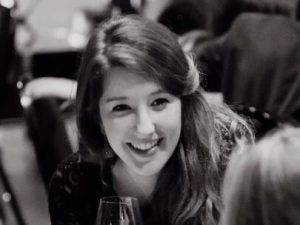
Sophie Baggott, youth advisory board, July-December 2017
Sophie Baggott – London, UK
Baggott is a journalist focused on promoting human rights
Another resounding voice has blasted proposed changes to the regime protecting official information in the UK, which would deem anyone who communicates information seen ‘to prejudice the United Kingdom’s safety or interests’ or anyone who ‘obtains or gathers’ such information as having committed an offence, potentially resulting in a jail sentence of up to 14 years. To what extent will our government listen to the outcry?
“The proposals threatened would be ‘both retrograde and repressive’”, said the News Media Association (NMA) in a 20-page document released at the end of July. The NMA, which speaks for national and regional UK news media, has highlighted the industry’s concerns about consultative proposals for changes to the Official Secrets Acts and the Data Protection Act, as well as to other unauthorised disclosure offences.
The proposed reforms would lead to ‘damaging and dangerous inroads into press freedom by making whistle-blowers, journalists and media organisations prime targets for state surveillance and criminal prosecution’, the NMA warned. The association said the changes would ‘extend and then entrench official secrecy’, adding: ‘It would be conducive to official cover up. It would deter, prevent and punish investigation and disclosure of wrongdoing and matters of legitimate public interest’.
Investigative journalism could endure a ‘chilling effect’, said the NMA, from how the changes would make it easier for the government to prosecute anyone involved in obtaining, gathering and disclosing information, even if no damage were caused, and irrespective of the public interest. The proposed reforms might also precipitate a more widespread use of state surveillance powers against the media under the guise of suspected media involvement in offences. This would pose a threat to confidential sources and whistle-blowers, the NMA noted.
Is the government going to reconsider or restrict? Either way, the media industry will certainly have to remain on high alert for the foreseeable future.
Dan Bateyko, youth advisory board, July-December 2017
Dan Bateyko – Sarasota, Florida
Bateyko is an internet rights researcher from Sarasota, Florida. He is currently travelling on a Watson Fellowship, a one-year purposeful grant for global independent study
U.S. Twitter users blocked by their twit president might have a remedy. On July 11, the Knight First Amendment Institute filed a lawsuit arguing that US President Donald Trump violated the First Amendment rights of dissenting citizens when he blocked them from reading his tweets and contributing their own. Speaking to Index, Katie Fallow, senior staff attorney at Knight Institute, distilled the issue:
“The president may be using social media in a new way, but the First Amendment principles at stake are longstanding. When the government sets up a public forum, whether on Twitter in a town hall, it can’t exclude people just because it doesn’t like what they have to say.”
But whether Trump’s Twitter account can be considered a public forum is a point of contention. As the Knight Institute argues, Trump’s account has all the hallmarks of a public forum; the account tweets news on policy and provides a platform for public debate. However, in a recent statement, the justice department rejoined that Trump’s editorial control over who to follow and block on his private account is not a constitutional issue.
I chose to highlight this case in my first blog post as a member of Index’s youth advisory board because social media is an incredible tool for giving citizens a voice, granting them a platform to exchange views and petition their public officials. But where and how free speech rights extend online is still far from clear—as Lyrissa Lidksy, dean of Missouri’ School of Law, writes, determining whether comment removal on government-sponsored pages is constitutional “requires close examination of the U.S. Supreme Court’s public forum and government speech doctrines, both of which are lacking in coherence – to put it mildly.” With clarity, public officials once reticent to tackle the thorny issue of public accounts could feel comfortable with more online civic engagement. And by establishing further precedent, the Knight Institute’s defense of Twitter users will hopefully protect people’s hard-fought rights to free expression online.
Isabela Vrba Neves youth advisory board, July-December 2017
Isabela Vrba Neves – Stockholm, Sweden
Vrba Neves is a journalist and writer based in Sweden, and a graduate from Kingston University London
Sweden is known for having a good track record when it comes to freedom of expression, and is regarded as being an example in democracy and equality. However, the Nordic country has recently been faced by a wave of threats by far-right groups attacking journalists and media organisations. In February 2017 journalist Evelyn Schreiber received hundreds of death threats and threats of sexual violence after questioning a Facebook post by Peter Springare, a police officer who heavily criticised immigrants for violent crimes.
Springare received support by far-right groups who went after Schreiber with messages and phone calls. In a radio interview Schreiber explained how she believed the threats were “organised” as she would receive a large amount of messages every time a far-right group shared her article on Facebook.
She also described how at first the groups mostly criticised her article, but then progressed to personal vulgar and sexist attacks towards her. The newspaper, Nerikes Allehanda, which published her article, reported the threats to the police.
An issue that Schreiber brings up with these kinds of incidents is that journalists may self-censor for their own safety, which in turn can threaten freedom of expression. To combat this, the Swedish government announced in July 2017 an action plan which aims to strengthen the preventative work towards hate and threats against journalists, artists and elected representatives.
The Swedish Victim Support and the Swedish Crime Victim Compensation and Support Authority have been commissioned to develop material that will provide knowledge and support to those who have been under threat for participating in public conversations, in order to strengthen free speech and freedom of expression.[/vc_column_text][/vc_column][/vc_row][vc_row full_width=”stretch_row_content”][vc_column][three_column_post title=”More from the youth advisory board” category_id=”6514″][/vc_column][/vc_row]
17 Jul 2017 | Digital Freedom, Mapping Media Freedom, Media Freedom, media freedom featured, News, Ukraine
[vc_row][vc_column][vc_column_text]
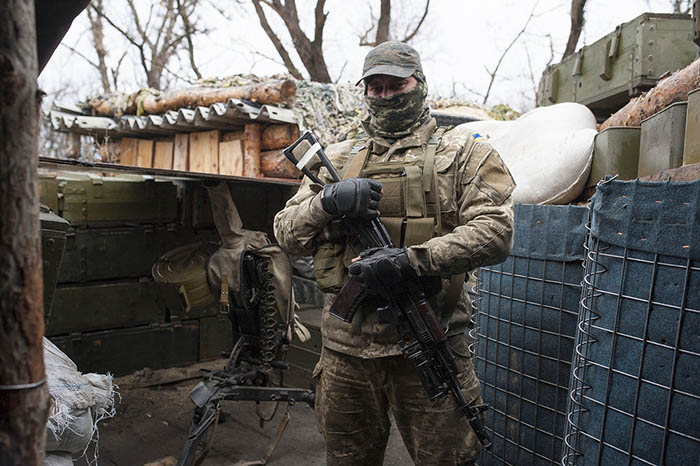
Ukrainian post control before separatist zone (Credit: Geoffrey Froment/Flickr)
Soon after the annexation of Crimea by the Russian Federation, full-scale fighting began between Ukrainian troops and separatists supported by Russia in the east of Ukraine. During active fighting in 2014, it was relatively easy for journalists to access to territories controlled by separatists.
“Accreditation was given quickly and without delay,” a Ukrainian producer who worked with international TV channels said. The producer, who requested anonymity because of ongoing work in the area, admits the risk for journalists was high because of the chaotic situation on the frontline and many of them faced detention by separatist militants. “I, like many, was detained and placed in a basement, but, fortunately, it only lasted for several hours,” he added.
Anna Nemtsova, a correspondent for Newsweek magazine and The Daily Beast, told Mapping Media Freedom that in 2014 she was abducted twice – firstly in the Luhansk region and secondly in the city of Donetsk.
“These were classic abductions,” Nemtsova said. “In Luhansk region, near Krasny Luch, armed militia wearing masks took our cell phones away from us and drove us in an unknown direction. In Donetsk, it happened near the morgue, where, according to our information, the militia had brought some of the bodies of passengers of the downed Boeing MH-17. Both detentions lasted for a few hours.”
Soon the situation with journalists’ access to uncontrolled territories would change for the worse. In February 2015, the Minsk agreements were signed and a ceasefire was established. The ceasefire agreement prompted the authorities of the two self-proclaimed republics to start monitoring journalists’ reports from the Donetsk People’s Republic and Luhansk People’s Republic.
“If they did not like the angle of coverage or some term, for example ‘separatist republics’, the name of a journalist was immediately added to the list of undesirable persons. The press service began to summon such journalists to ‘talks’ to express their dissatisfaction,” source who works as a local TV producer told MMF.
Nemtsova also faced similar difficulties. In summer 2015 she was told that the DPR press service did not like her reports and threatened to ban her, which later they said they did. “Their complaints were unreasonable, they were not about any errors in my report, but about the term ‘separatists’, which they claimed I used in my stories,” she said.
Thus, the monitoring of publications about the separatist zone in the media has led to the fact that from the summer of 2015 many journalists who tried to obtain accreditation from the self-proclaimed authorities began to receive refusals. Some reporters who managed to enter the territory of the self-proclaimed republics were detained and deported. On 16 June 2015, separatists from DPR captured Novaya Gazeta special correspondent Pavel Kanygin and handed him over to Russian security services (FSB). According to the journalist, they checked his documents and released him “in the middle of a field.”[/vc_column_text][/vc_column][/vc_row][vc_row][vc_column][vc_separator color=”black” align=”align_left”][vc_row_inner][vc_column_inner width=”1/2″][vc_custom_heading text=”Ukraine” font_container=”tag:p|font_size:24|text_align:left” use_theme_fonts=”yes” link=”url:https%3A%2F%2Fmappingmediafreedom.org%2F|||”][vc_column_text]Index on Censorship monitors press freedom in Ukraine and 41 other European area countries.
As of 17/07/2017, there were 282 verified reports of violations connected to Ukraine in the Mapping Media Freedom database.[/vc_column_text][/vc_column_inner][vc_column_inner width=”1/2″][vc_single_image image=”94239″ img_size=”full” alignment=”center” onclick=”custom_link” link=”https://mappingmediafreedom.org/”][/vc_column_inner][/vc_row_inner][vc_separator color=”black” align=”align_left”][/vc_column][/vc_row][vc_row][vc_column][vc_column_text]Over the past year, arbitrary refusals to enter the territory of the self-proclaimed republics have been quite frequent. In December 2016, Deutsche Welle’s correspondent Christian Trippe and his crew were barred from entering the territory of the self-proclaimed DPR. Journalists were trying to get to the territory controlled by DPR at a checkpoint near Marinka. Journalists had to wait an hour in a neutral zone between two fronts, while they were not allowed to return to the territory controlled by Ukrainian forces. The crew had received an authorisation from DPR press centre and had scheduled an interview with a spokesperson for the separatists. The journalists planned to visit Donetsk with Principal Deputy Chief Monitor Alexander Hug of the OSCE Special Monitoring Mission to Ukraine. However, the militants did not let them through the checkpoint with the OSCE, citing the decision of DPR special services.
In 2016, the self-proclaimed authorities continued the practice of detentions and expulsions of journalists. In November, special forces of the self-proclaimed Donetsk People’s Republic detained and expelled two journalists working for Russian TV channel Dozhd. Correspondents Sergei Polonsky and Vasiliy Yerzhenkov were detained by intelligence agencies on the evening of 25 November in Donetsk. Polonsky said that members of the self-proclaimed Ministry of State Security went to their apartment and took them to the main building of the ministry where they were interrogated. “Three employees of the Ministry of State Security were involved in the interrogation. They watched videos and deleted them. They also blocked Polonsky’s phone, broke Yerzhenkov’s phone and destroyed his notebook,” Dozhd reported. According to Dozhd, the journalists were not physically abused. “We experienced psychological abuse, but nothing more,” Polonsky said. Later, employees of the Ministry of State Security explained to the correspondents that their detention was a consequence of “false information” in the accreditation, which turned out to be a wrong phone number.
The Dozhd crew were accredited to work in Donetsk by the Security Service of Ukraine and by the Ministry of information of DPR. Journalists entered the DPR border on 24 November from Russia to interview Alexey Khodakovsky, former secretary of DPR’s Security Council. Previously, the self-proclaimed Ministry of State Security of DPR said the cause of the journalists’ expulsion was “biased” and “provocative” coverage of the situation in the DPR.
Local journalists and bloggers often find it even more risky to work in the separatist territories. In 2014, many journalists were forced to leave the territory, and are now working elsewhere in Ukraine. Over the past year, a number of arrests by separatists have been reported. The latest one is an incident with blogger and writer Stanyslav Aseev who disappeared in Donetsk. The blogger was reportedly detained by militants of the self-proclaimed DPR. Aseev uses the alias Stanislav Vasin and contributes to a number of news outlets including Radio Liberty Donbass Realities project, Ukrayinska Pravda, Ukrainian week and Dzerkalo Tyzhnya. He also runs a prominent blog via Facebook.
Donbass Realities project editor-in-chief Tetyana Jakubowicz said their contact with Aseev was lost on 2 June. That day, Aseev filed the latest report from territories held by separatists for Radio Liberty. Aseev’s relatives and friends confirmed that they also lost contact with the blogger. They questioned the self-proclaimed Ministry of Public Security of the DPR, but didn’t receive any answers. The journalist’s mother found evidence that his flat was broken into in Donetsk and noticed that some of his belongings were missing, including a laptop. On 12 July, Amnesty International reported that it learned that Aseev was being held by the de-facto “ministry of state security”.
Recently, several bloggers have been arrested in the self-proclaimed LPR. In October 2016 Vladislav Ovcharenko, a 19-year old blogger, who runs the Twitter account Luhansk Junta, was detained by separatists. Later, armed representatives of the self-proclaimed Ministry of the State Security raided his parents’ apartment, taking his mother’s computer. In December 2016, Facebook blogger Gennadiy Benytskiy was arrested in Luhansk. The blogger, who is known for his pro-Ukraine views, was accused of distributing of “extremist materials” online.
Journalists take risks even when they get accreditation from the separatist authorities. A leak by the website Myrotvorets in May 2016 led to the personal data of more than 5,000 journalists becoming available online. The link to the leak was published by some Ukrainian politicians, calling journalists who received accreditation “traitors.” Some of the journalists then received threats.[/vc_column_text][/vc_column][/vc_row][vc_row][vc_column][vc_column_text]
Mapping Media Freedom
Click on the bubbles to view reports or double-click to zoom in on specific regions. The full site can be accessed at https://mappingmediafreedom.org/[/vc_column_text][/vc_column][/vc_row]