Turkey: A long line of press freedom violations
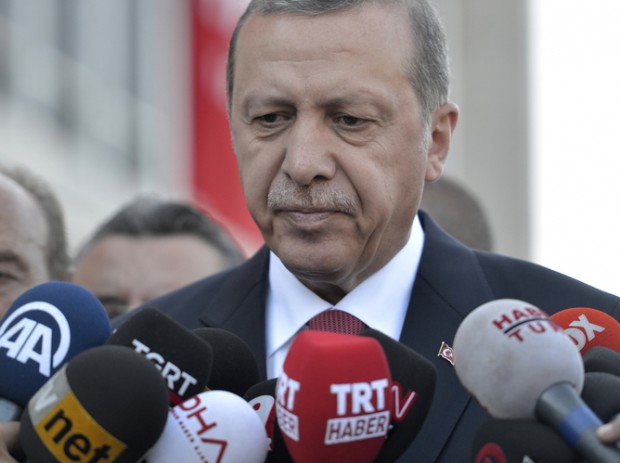
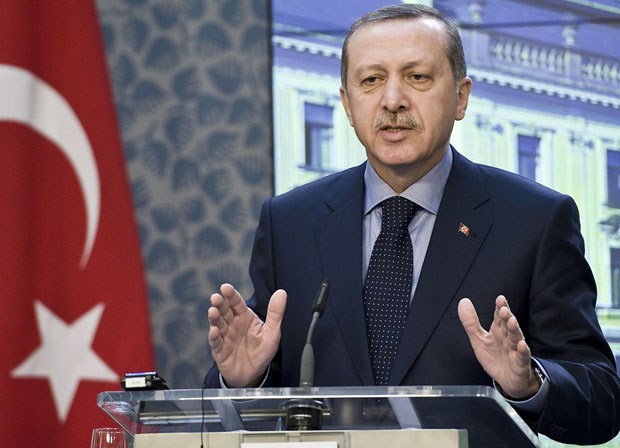
Turkish President Recep Tayyip Erdogan speaks at a rally in Istanbul, 20 September 2015. Credit: Orlok / Shutterstock
Turkey’s government and courts have demonstrated their unwillingness to adhere to basic values on press freedom and media pluralism. From judicial harassment and seizing media companies to silencing Kurdish and critical media, Turkey’s government has been used by President Recep Tayyip Erdogan to silence critical voices in the country.
The European Charter on Freedom of the Press is a non-binding guideline on press freedom, signed on 25 May 2009 in Hamburg by 48 editors-in-chief and leading journalists from 19 European countries. It consists of 10 articles on media freedom, and if we take it as an ideal for which countries should operate, we see no country in the EU is perfect. However, Turkey finds itself in a unique position of being consistently in breach of every single one on an almost weekly basis.
- Article 1
Freedom of the press is essential to a democratic society. To uphold and protect it, and to respect its diversity and its political, social and cultural missions, is the mandate of all governments.
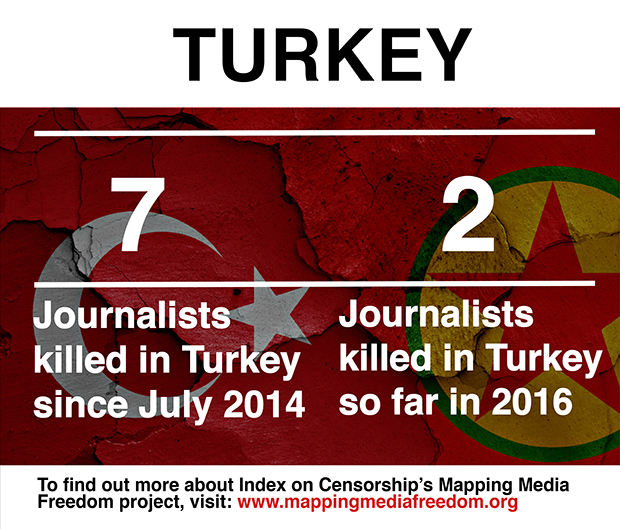
Index on Censorship’s Mapping Media Freedom has verified over 200 violations of media freedom in Turkey since the project began in May 2014. The seizure of the Zaman Media Group, which owns Zaman and Today’s Zaman, on 4 March was just the latest in a long line of assaults against media diversity in the country. Any respect for diversity seemed to be dispersed like the crowds of supporters who gathered at Zaman’s headquarters, who were then set upon by police with water cannons and tear gas.
- Article 2
Censorship is impermissible. Independent journalism in all media is free of persecution and repression, without a guarantee of political or regulatory interference by government. Press and online media shall not be subject to state licensing.
A day after the takeover of Zaman, trustees were appointed by the authorities to Cihan News Agency in another bid to silence criticism of Erdogan. Cihan said on its website late on Monday 7 March that an Istanbul court would appoint an administrator to run the agency on a request from a state prosecutor. Interference by the government is now systemic in the Turkish media.
- Article 3
The right of journalists and media to gather and disseminate information and opinions must not be threatened, restricted or made subject to punishment.
Opposition journalists are routinely punished in Turkey. Barış İnce, a former editor of Birgün who still writes for the leftist daily, was sentenced on 8 March to 21 months in prison for “insulting” Turkish President Recep Tayyip Erdoğan. A week previously, on 2 March, journalist Arzu Yıldız attended a hearing at Ankara criminal court for “insulting” Erdogan, former Justice Minister Kenan İpek and Justice Minister Undersecretary Basri Bağcı. Yıldız explained that she is being tried for a retweet, and not for something that she personally wrote.
- Article 4
The protection of journalistic sources shall be strictly upheld. Surveillance of, electronic eavesdropping on or searches of newsrooms, private rooms or journalists’ computers with the aim of identifying sources of information or infringing on editorial confidentiality are unacceptable.
On 9 February, Claus Blok Thomsen, a Danish journalist working for daily newspaper Politiken, was detained by Turkish authorities at the Istanbul airport and then barred from entering Turkey. He was travelling to the country to report on refugees at the Turkish-Syrian border. At the airport, Thomsen allegedly identified himself as a journalist and then the police forced him to open his phone and computer, undermining the confidentiality of his sources.
- Article 5
All states must ensure that the media have the full protection of the law and the authorities while carrying out their role. This applies in particular to defending journalists and their employees from harassment and/or physical attack. Threats to or violations of these rights must be carefully investigated and punished by the judiciary.
Rather than having the full protection of the law, Turkish journalists often find themselves at its mercy. Nineteen journalists have so far been arrested or detained in the country this year alone, many of them on terror-related charges. This includes Nazım Daştan, a reporter for Dicle News Agency (DİHA), which reports in Kurdish, who was charged with spreading terrorist propaganda on Facebook in February.
- Article 6
The economic livelihood of the media must not be endangered by the state or by state-controlled institutions. The threat of economic sanctions is also unacceptable. Private-sector companies must respect the journalistic freedom of the media. They shall neither exert pressure on journalistic content nor attempt to mix commercial content with journalistic content.
Threats to the economic livelihood of the media are commonplace in Turkey. On 3 November 2015, 58 journalists were dismissed from İpek Media Group when it was unlawfully seized in a government-led police operation in late October. Sound familiar? When Zaman was taken over, editor-in-chief Abdülhamit Bilici was fired without remuneration by the new trustees. Many other members of staff were let go also.
- Article 7
State or state-controlled institutions shall not hinder the freedom of access of the media and journalists to information. They have a duty to support them in their mandate to provide information.
Mapping Media Freedom routinely reports on instances where journalists have been denied access to information. Most recently, German reporter Frank Nordhausen, a correspondent for the Berlin-based Berliner Zeitung, was arrested while covering the takeover of Zaman. Other journalists exercising their right to report were set on by police.
- Article 8
Media and journalists have a right to unimpeded access to all news and information sources, including those from abroad. For their reporting, foreign journalists should be provided with visas, accreditation and other required documents without delay.
Turkish authorities rejected a permanent press accreditation application filed by Norwegian daily Aftenposten’s correspondent Silje Rønning Kampesæter, on 9 February 2016. Turkish authorities have not issued any written statement on the reason for the rejection. The application also affects her residence permit in Turkey.
- Article 9
The public of any state shall be granted free access to all national and foreign media and sources of information.
Over the past two decades, right to know laws have become commonplace in the European Union. In Turkey, the principle has yet to catch on. In the wake of the bomb that ripped through Ankara killing 37 people on Monday, Erdogan’s government moved to block Facebook and Twitter as part of a media ban. Domestically, blanket media bans are becoming more common in Turkish media. On 17 February, the government rushed out a temporary broadcast ban after another deadly blast in Ankara. Similar measures were taken the month previously as well.
- Article 10
The government shall not restrict entry into the profession of journalism.
This week, Erdogan has claimed the definition of a terrorist should be changed to include terrorist “supporters”. It was clear who the president had in mind: “Their titles as an MP, an academic, an author, a journalist do not change the fact they are actually terrorists.” By treating critical journalists like terrorists, Erdogan is effectively redefining their profession.
Recent examples include the holding of Cumhuriyet newspaper editor Can Dundar and Ankara bureau chief Erdem Gul in pre-trial detention on charges of revealing state secrets and attempting to overthrow the government. This was not an isolated incident.
Sign Index on end Turkey’s crackdown on press freedom.
Verified incidents against the media and journalists reported to Mapping Media Freedom between May 2014 and 9 March 2016:
March 2016
- Bengü Türk TV is suspended
- Journalist appears in court for retweet
- Zaman newspaper seized by authorities
- Government appoints trustee to Cihan News Agency
- Journalist sentenced to 21 months in jail for insulting Erdogan
February 2016
- Jiyan press correspondent arrested
- Turkey: DİHA reporter arrested in Malatya
- Politiken journalist detained and barred from entering country
- Press accreditation of Norwegian correspondent rejected
- Molotov cocktails thrown and shots fired at Yeni Safak and Yeni Akit headquarters
- DİHA reporter arrested on terror charges
- Kurdish news journalist detained by police
- DİHA journalist arrested on terror charges
- DİHA journalist detained at protest
- Journalist Gülsen Yildiz killed in Ankara attack
- Satellite provider drops independent channel IMC TV
January 2016
- DİHA news website censored for 28th time
- JINHA student reporter arrested on terror charges
- Journalist for Kurdish news agency arrested on propaganda charges
- Reporter and cameraman detained while covering death of 13 in clash
- Reporter arrested while covering women’s rights protest
- 3 reporters for Kurdish news agency DİHA detained
- State media agency bans coverage of suicide attack
- Two journalists for German media arrested
- Cameraperson injured by gunfire and detained by police
- News editor shot in Cizre, dead body identified
December 2015
- Danish journalist beaten by Turkish soldiers at Syrian border
- Journalist arrested on terror charges in Kurdistan
- Syrian journalist reporting on ISIS killed
November 2015
- Nokta editors arrested over post-election cover, magazine taken from shelves
- 58 journalists from İpek Media Group dismissed
- Police attempt to arrest journalist during protest
- Journalist Cengiz Çanda charged with “insulting the president”
- Daily newspapers Zaman and Sözcü banned from covering G-20 summit
- Journalist faces 23 years in prison for corruption investigation
- Investigative journalist detained by police
- Journalists violently arrested in the Eastern city of Van
- Prosecutor demands arrests of two journalists for intelligence report
- Anadolu correspondent wounded during attack in Diyarbakir
October 2015
- Journalist Ahmet Hakan attacked
- Journalist under investigation for piece on refugee smuggling
- Today’s Zaman journalist arrested for “insulting president” on Twitter
- Finnish journalist labelled terrorist for questioning president Erdoğan
- Journalist detained over article about Islamic school
- Nokta magazine website blocked after reporting on political party meeting
- Government moves to seize independent media group Koza İpek
- Police storm offices of Koza İpek, interrupting broadcast
- Syrian citizen-journalist murdered
September 2015
- Police raid independent media group on terrorist financing charges
- Journalist Yavuz Baydar charged with “insulting” Turkey’s President
- Hürriyet daily offices attacked
- Dutch Reporter detained and deported near Iranian border
- Daily offices damaged by protesters in second attack
- Nokta magazine office raided by police
- Court launches investigation into journalist
- Columnist arrested on terror charges
- Kurdish media outlets raided by Turkish police
August 2015
- 18 journalists threatened with imprisonment for publishing photo
- Access to data journalism website blocked by government
- Special operations police attack journalists, wounding two
- Kurdish website blocked by government authority
- Journalist’s home searched as part of larger raid by police
- Vice News journalists detained on terror charges
July 2015
- Journalist fined for insulting president
- Local officials banned from making press statements
- Journalist Kadri Gürsel dismissed from Milliyet for his criticism on Suruç Explosion
- Deputy prime minister calls media “criminal machines”
- Journalist wounded during clash between police and protesters
June 2015
- Zaman journalist beaten and detained by police
- Journalist arrested for insulting president
- President vows to punish editor over article
- LGBT journalist beaten by police officers
- President seeks up to five years in prison for journalist Özgür Mumcu
- Journalist Bekir Coşkun stands trial for defamation while in hospital
- Journalist Ender İmrek’s defamation case postponed until October
- TV show host let go
- Recently fired journalist sued by public prosecutor
- Journalists injured during clashes in Dikarbakir
- Journalist fired due to controversial stories
- Today’s Zaman editor sentenced to 21 months in prison
- German and Turkish reporters detained after asking critical questions at government press conference
- Journalist faces libel charges for book on President Erdogan
- Four foreign journalists deported after illegally crossing border to Syria
- Journalist faces 23 years in prison for insulting judges
- Journalists detained and kept from photographing police at Istanbul Gay Pride Parade
- Journalists covering labour issues are attacked and kidnapped across the country
- Journalist jailed for insulting President Erdogan on Twitter
May 2015
- Journalist Shabtai Gold injured by police at May Day rally
- Prosecutor’s office urges efforts to hamper media outlets linked to Gulen movement
- Journalists denied accreditation to cover airport opening
- Newspaper raided and journalist detained
April 2015
- Media outlets banned from prosecutor’s funeral
- Journalist detained during hostage standoff
- Investigation into four newspapers for terrorism
- Access restored to YouTube, Twitter and Facebook
- Journalist given suspended prison sentence for liking Facebook post about president
- Journalist faces six year prison sentence for insult
- Journalist detained over alleged slander
- Cihan reporter barred from event attended by president’s wife
- Journalist Osman Özsoy detained for remarks on TV show
March 2015
- Journalist arrested in connection with coup plot
- Journalist’s accreditation canceled over “insulting” question
- President’s son presses charges against journalist for defamation
- Journalist fined for insulting governing political party
- Anchorwoman faces 5 years in jail for tweet
- Journalist given five month suspended prison sentence for insulting president
- Cartoonists sentenced for insulting president
- Ankara mayor sues journalist for insult
- Instagram shuts down account of journalist Ahmet Şık over picture complaints
- Photojournalist on assignment for Der Spiegel barred from entering country
- Media gag order issued during hostage standoff
February 2015
- Dutch journalist Frederike Geerdink indicted on charges of spreading terrorist propaganda
- Columnist detained by police for fifth time in recent months
- Journalist arrested for participating in protest
- Newspaper editor given suspended jail sentence
- Journalists face trials for insulting president
January 2015
- Dutch journalist Frederike Geerdink interrogated
- Journalist Mehmet Ülger detained at Istanbul airport
- 94 journalists denied official press cards by government commission
- Fox TV broadcast vehicle vandalised in Ankara
- Police raid Cumhuriyet presses
- Court, media watchdog shut down reporting on intelligence agency
- Court orders block on sites showing Charlie Hebdo cover
- Court orders dozens of journalists’ tweets to be blocked
- Journalist indicted for insulting President Erdogan
December 2014
- Economist and Taraf correspondent threatened on Twitter
- Journalists assaulted, prevented from photographing
- BirGün newspaper to undergo investigation for critical coverage
- EU project overshadowed by arbitrary media ban
- Raid on media offices, critical journalists detained in major crackdown
- TV anchor fired
- Newspaper editor fined for criticizing minister of culture
- Akşam newspaper to lay off 170 employees
November 2014
- Reporter charged with insulting police officer
- Broadcasting watchdog fines TV station for degrading Atatürk
- Influential blogger shot dead
- Wall Street Journal Türkiye to be discontinued
- Foreign ministry bars journalist from conference
- Public prosecutor suing journalist for insult
- Two reporters given prison sentences for covering government corruption
- Reporting on parliamentary corruption probe banned
- BirGün newspaper editors and owner fined for blasphemy
- Halk TV editor indicted for broadcasting insult to former PM
- Journalist sentenced to community service for insult
October 2014
- President’s security guards attack journalists
- Karşı newspaper office raided by police
- Note left at news office threatens assassination of journalists
- Journalist given prison sentence for reporting on insult
- Journalists wounded at protest against ISIS
- Azeri journalist receives threats
- Curfew and restrictions for journalists prevent reporting at Syrian border
- German photojournalists detained for 31 hours
- Kurdish newspaper vendor gunned down
- Journalist receives death threat via Facebook
- Reporter for Press TV killed in car crash at Syrian border
- Journalist detained by police
- Cartoonist acquitted of charges he insulted former Prime Minister Erdogan
- Telecommunications authority blocks access to gay.com
September 2014
- Habertürk fires reporter
- Trans TV reporter laid off
- Pro-government media target New York Times reporter
- Twitter account of Today’s Zaman editor faces closure
- CNN Türk cancels interview show
- Journalist given prison sentence for defamation of president
- Journalists injured, kept from reporting at Turkish-Syrian border
- Journalists targeted with altered imagery
August 2014
- Greek daily newspaper in Istanbul closes
- Newspaper Agos, film director threatened on Twitter
- News crew told to leave public event attended by minister
- Prime minister tells journalist to “know her place”
- Prime minister accuses German magazine of meddling in Turkish elections
- Editor of Hürriyet resigns after prime minister’s criticism
- Journalist beaten and detained on defamation charges
- Cihan news agency’s election coverage limited by police
- CNN Türk fires social media editor over tweet
- Hürriyet columnist resigns over censorship
- Radikal fires journalist who reported on government corruption
- Several media organisations denied accreditation to AK Party congress
- Report shows media use of hate speech increased in early 2014
- Journalist kidnapped by PKK
July 2014
- Columnist laid off by newspaper Milliyet
- CNN Türk lays off veteran journalist
- Police sent letter to newspaper asking for removal of article
- Website of Agos newspaper hacked
- Media monitoring agency says state broadcasting favoring Erdogan in election campaign coverage
- Prime Minister files legal complaint against newspaper editor
- Media monitoring agency revokes license for Germany-based broadcaster
- Physical assaults on journalists increase
- Broadcaster threatens to stop covering presidential candidate
June 2014
- CNN correspondent harassed on camera and detained by police in Istanbul
- Journalist fined for insulting public official
- Access to YouTube banned
- Agreement reached between newspaper owner and laid off journalists
- Government-friendly media receive payments
- Radikal newspaper to end print edition on June 21
- Ankara court bans media coverage of hostage crisis in Iraq
- Journalists’ union reaches wage agreement with Evrensel newspaper
- ECHR orders government to pay damages to journalists
- Government-friendly newspaper fires two columnists
- Court decision rejects lawsuit against Duruş newspaper
- Taraf newspaper fined 1.9 million euros by government
May 2014
- Founder of satirical forum receives prison sentence
- Journalists detained and injured during May 1 protests in Istanbul
- Pro-government newspaper censors column “testing” press freedom
- Journalist faces up to 52 years in prison over classified report
- Columnist gets 1-year jail term for insulting Ataturk’s memory
- Foreign media correspondents receive threats in wake of Soma mine disaster