6 Nov 2013 | Digital Freedom, Europe and Central Asia, News
In a defeat for Google, a French court has ordered the search engine to pre-filter nine images of former Formula One chief Max Mosley, the company said today. Mosley was also awarded €1 in damages.
“In a troubling ruling, a French court held today that Google must build a filter to remove nine of Mr Mosley’s images from our search results. This decision should worry those who champion the cause of freedom of expression on the Internet. Our existing removal process represents an effective way of helping Mr. Mosley,” Daphne Keller, Associate General Counsel, said in a statement.
The company said in a blog post that the case was not just about Google.
Any start-up could face the same daunting and expensive obligation to build new censorship tools — despite the harm to users’ fundamental rights and the ineffectiveness of such measures.
More information on the case can be found here.
12 Aug 2013 | Digital Freedom, India, News
The New Delhi High Court has given Facebook and Google one month to submit suggestions on how minors can be protected online in India.
This move is in response to a Public Interest Litigation (PIL) filed by KN Govinacharya, a senior member of the right wing political party, the Rashtriya Swayamsevak Sangh.
The PIL seeks to protect citizens of India from cyber crimes, which according to the government, has cost the exchequer $4 billion last year. Some of the highlights include the PIL pointing out that despite guidelines given by the government for companies to follow the KYC normal (“know your customer”), social networking companies do not follow them. The PIL believes that Facebook is not verifying its users, and instead allowing minors to set up accounts because it uses them for marketing, advertising, and data mining purposes.
Under Indian law, children under 13 are incompetent to enter into any legal contract, yet it states that Facebook allows children to sign into its website unverified because it seeks to make revenue from them through online gaming – and this is a direct reference to a contract between Facebook and Zynga to provide gaming applications to kids that accounts for 12.5% of Facebook revenue. The PIL stipulates that through incessant data mining through the unauthorized use of emails, photographs, passwords, chats, and so on, Facebook is infringing on the right to privacy of the Indian subscriber.
The bench of the Delhi High Court took the PIL seriously in light of the allegation that minors are entering into social media networking sites and are then being lured into illegal activities, either knowingly or unknowingly. According to reports the court’s direction came after counsel for Facebook 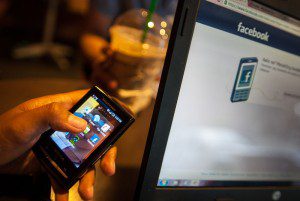 submitted that the site operated under the US law Children’s Online Privacy Protection Act (COPPA) as per which a child below 13 is not allowed to open an account. The Court expressed unhappiness that there is no mechanism that currently exists to verify the age of a child online, and that while children were protected in the US, what of the children in India.
Facebook filed a counter-affidavit to the PIL and argued that limiting social media can limit an individual’s freedom of speech and expression. Drawing on the UN Human Rights Council’s resolution that internet is a human right, Facebook has argued that the “internet is increasingly becoming a platform for citizens including minors to interact and voice their opinions and, therefore, a meaningful interpretation of the right to freedom of speech and expression would include the freedom to access social media.”
However, cyber lawyer Pavan Duggal points out that despite the freedom of expression argument, “the issue still remains that a minor doesn’t have the capacity to act under the Contract Act.” Others have pointed out that users enter into agreements with Facebook and social networking sites, not contracts. Further, law professor Saurav Datta feels that the PIL’s suggestion that all users be verified itself impinges on their privacy, and that it, “the goal of the PIL is wrong. We need to protect children, not keep people out.”
Moving ahead, it remains to be seen what social networking sites can suggest for protecting minors online. At the same time, it seems educating minors about the dangers of the internet is a good way forward as well. Facebook has joined the Internet and Mobile Association of India to bring an Internet Safety Education programme for children between the ages of 13-17. Even though this was not designed as a response to the PIL, it certainly seems a step in the right direction, regardless of the Court’s decision.
25 Jun 2013 | Digital Freedom, Europe and Central Asia
Should search engines be forced to block results that link to newspaper articles? No, the Advocate General of the European Court of Justice said earlier today, deciding Google need not block “legal and legitimate information that has entered the public domain”. Brian Pellot writes
(more…)
30 Apr 2013 | Digital Freedom
Washington DC was awash this weekend with some of the biggest names in journalism, technology, civil society and government — and not just for the star-studded White House Correspondents’ Dinner.
On Friday, Google hosted its first Big Tent event in DC with co-sponsor Bloomberg to discuss the future of free speech in the digital age.

Each panel was guided by hypothetical scenarios that mirrored real current events and raised interesting free speech questions around offence, takedown requests, self-censorship, government leaks, national security and surveillance. The audience anonymously voted on the decision they would have made in each case, but as Bill Keller, former executive editor at the New York Times, acknowledged, “real life is not a multiple choice question”. Complex decisions are seldom made with a single course of action when national security, privacy and freedom of expression are all at stake.
The first panel explored how and when news organisations and web companies decide to limit free speech online. Google’s chief legal officer David Drummond said that governments “go for choke points on the internet” when looking to restrict access to particular content, meaning major search engines and social media sites are often their first targets regardless of where the offending content is hosted online. Drummond said that Google is partially blocked in 30 of the 150 countries in which it operates and cited an OpenNet Initiative statistic that at least 42 countries currently filter online content. Much of this panel focused on last year’s Innocence of Muslims video, which 20 countries approached Google to review or remove. Drummond questioned whether democracies like the US, which asked Google to review the video, are doing enough to support free expression abroad.
Mark Whitaker, a former journalist and executive at CNN and NBC, said staff safety in hostile environments is more important in deciding whether to kill a story than “abstract issues” like free speech. Security considerations are important, but characterising freedom of expression as “abstract” and endorsing self-censorship in its place can set a worrying precedent. Bill Keller argued that publishing controversial stories in difficult circumstances can bring more credibility to a newsroom, but can also lead to its exile. Both the New York Times and Bloomberg were banned in China last summer for publishing stories about the financial assets of the country’s premier. This reality means that news organisation and web companies often weigh public interest and basic freedom of expression against market concerns. Whitaker acknowledged that the increased consolidation of media ownership in many countries means financial considerations are being given even greater weight.
The second panel debated free speech and security, with Susan Benesch of the Dangerous Speech Project standing up for free speech, former US Attorney General Alberto Gonzales coming down hard on the side of security, and current Deputy Secretary of Homeland Security Jane Holl Lute backing up Gonzales while recognising the vital role free speech plays in a functioning society.
In the first scenario posed to this panel, audience members were split on whether mobile networks should be shut down when a clear and imminent threat, such as the remote detonation of a bomb, arises. Lute said, “the first instinct should not be to shut down everything, that’s part of how we’ll find out what’s going on,” whereas Benesch focused on the civil liberties rather than surveillance implications of crippling communications networks.
In cases of extremism, which the panel agreed is often more easily and quickly spread via digital communications, Benesch endorsed counter speech above speech restrictions as the best way to defend against hate and violence. 94 percent of the audience agreed that social media should not be restricted in a scenario about how authorities should react when groups use social media to organise protests that might turn violent.
Google’s executive chairman Eric Schmidt closed the event by highlighting what he considers to be key threats and opportunities for digital expression. Schmidt believes that the world’s five billion feature phones will soon be replaced with smartphones, opening new spaces for dissent and allowing us “to hear the voices of citizens like never before”. Whether he thinks this dissent will outweigh the government repression that’s likely to follow is unclear.
Big Tent will make its way back to London next month where Google hosted the first event of its kind two years ago. The theme will focus on “innovation in the next ten years” with Ed Milliband, Eric Schmidt and journalist Heather Brooke as featured speakers.
Google is an Index on Censorship funder.
