13 Jul 2022 | FEATURED: Martin Bright, News, Ukraine, Uncategorized
Anatoly Kuznetsov is the author of Babi Yar: A Document in the Form of a Novel. His memoir is a masterpiece of Ukrainian literature and a testament to the 30,000 Jews massacred at Babyn Yar (the Ukrainian spelling), Kyiv in September 1941. Today it would probably be called “autofiction”, a form of writing where autobiography borrows from the techniques of narrative fiction. However, for Kuznetsov, it is only the form which is novelistic, nothing in the book is fictionalised.
“I am writing it as though I were giving evidence under oath in the very highest court and I am ready to answer for every single word. This book records only the truth – AS IT REALLY HAPPENED.”
The book records the events following the German invasion of Ukraine in 1941 up until Soviet forces recaptured Kyiv at the end of 1943. But it also discusses the Soviet rewriting of history after the end of World War II and the terrible disaster in 1961 that followed the literal burying of the site of the atrocity in sludge and mud.
We only have the full text of this remarkable book because Kuznetsov defected to the UK in 1969 after finally losing faith in the Soviet Union after the invasion of Czechoslovakia the previous year. He smuggled the manuscript out in films hidden in his clothing and this was later translated by the Daily Telegraph journalist David Floyd, who had helped him defect.
Kuznetsov is buried in Highgate Cemetery, two plots up from actor Sir Ralph Richardson and just across from artist Patrick Caulfield and deserves to be just as celebrated. And yet, the grave is unmarked. Pilgrims to the monument to Karl Marx walk past this anonymous plot every day without realising that they are passing the last resting place of one of the most eloquent witnesses to the horrific human cost of totalitarian ideology.
There is now a crowdfunder to raise a headstone for Anatoly Kuznetsov, which has already received wide support.
Luke Harding, the Guardian foreign correspondent and author of several books on Russia recently described Kuznetsov’s book as “a brilliant documentary novel”… “a vivid, terrible and authentic account”.
Babi Yar: A Document in the Form of a Novel is presently only available in English in an old American edition from 1970, but it is surely only a matter of time before an enterprising publisher does this great book justice.
There is a fascinating piece in the Index on Censorship archive on Kuznetsov from 1981, two years after the writer died in London. The article, written by film critic Jeanne Vronskaya, discusses two films that were adapted from Kuznetsov short stories in the 1960s: We Two Men and Dawn Meeting. Each, in very different ways, was destroyed by the Soviet censor.
The first was a slice of 1960s neo-realism about a drunken driver who reassesses his life after an encounter with an orphan. The film showed gritty scenes of rural life and included real country people as extras. The film initially avoided the attention of the authorities and was due to be celebrated at a gala event during the 1963 Moscow film festival. But on the day of the screening the film was pulled.
Kuznetsov characterised the attitude of the Communist Party to the film in his interview for Index: “How can we represent the USSR with a picture that shows women dressed in terrible headscarves, snotty-nosed children, rough roads, privately owned geese, illegal private work, and without so much as a mention of the leading role of the Party?”
The film was shelved and a more suitable example of Soviet film making shown in its place. (By way of a sidenote, Fellini’s 8 1/2 won the gold medal at the festival, although the great Italian director’s masterpiece was never distributed in the Soviet Union).
The second attempt at adapting a Kuznetsov story was even more of a fiasco. Dawn Meeting was the story of a milkmaid struggling to survive in the collective farm era. When the censor saw the film, cuts were demanded to make the film more upbeat and patriotic. When Kuznetsov saw the final result he was horrified: “I sat there watching a film that was completely strange to me: about the raising of the standard of living in a progressive, prosperous collective farm, first class houses, excellent clothes, collective farm songs from Moscow Radio’s record library, fields heavy with wheat, and happily smiling collective farmers all over the place.” In a final twist, Dawn Meeting was on billboards all over Moscow when Kuznetsov left for the UK in 1969.
If these short stories are half as good as Kuznetsov’s masterpiece, Babi Yar, then they also deserve a wider readership. But it is his memoir that will act as his testament.
“I wonder if we will ever understand that the most precious thing in this world is a man’s life and his freedom? Or is there still more barbarism ahead?” Kuznetsov wrote those words in 1969. He did not need to answer his own question.
9 Sep 2020 | Events
[vc_row][vc_column][vc_single_image image=”114632″ img_size=”large”][vc_column_text]Banned Books Week 2020 (27 September–3 October) takes place four months after George Floyd’s murder led to a global resurgence of the Black Lives Matter movement, and three months after the publication of the Rethinking Diversity in Publishing report, which demonstrated the particular challenges writers of colour still encounter.
Taking Banned Books Week’s theme as its starting point – a celebration of the freedom to read – our panel take stock of the commitments to inclusion and representation that have been made in publishing over the last few months. With representatives from the books industry – from editors to heads of writers’ organisations – this webinar will explore how we work together to celebrate marginalised voices in literature.
Adam Freudenheim is the Publisher and Managing Director of Pushkin Press. He has worked in publishing since 1998 and was Publisher of Penguin Classics, Modern Classics and Reference from 2004 to 2012. Adam joined Pushkin in May 2012, where he has launched the Pushkin Children’s Books, Pushkin Vertigo and ONE imprints, and he is particularly proud to have published the first translation of The Letter for the King by Tonke Dragt and Jakob Wegelius’s dazzlingly original The Murderer’s Ape; as well as to have introduced the acclaimed American short story writer Edith Pearlman to British readers (with Binocular Vision) and Israeli writer Ayelet Gundar-Goshen (her most recent novel is Liar).
Sharmaine Lovegrove is the Publisher of Dialogue Books, the UK’s only inclusive imprint, part of Little, Brown Book Group and Hachette UK. Dialogue Books is a home for a variety of stories from illuminating voices often missing from the mainstream. Sharmaine was the recipient of the Future Book Publishing Person of the Year 2018/19 and is inspired by innovative storytelling, and has worked in public relations, bookselling, events management and TV scouting. She was the literary editor of ELLE and set up her own bookshop and creative agency when living in Berlin. Sharmaine serves on the boards of The Black Cultural Archives, The Watershed and is an founding organiser of The Black Writers Guild. Home is London, she lives in Berlin and her roots are Jamaican – Sharmaine is proud to be part of the African diaspora and books make her feel part of the world.
Claire Malcolm is the founding Chief Executive of the literary charity New Writing North where she oversees flagship projects such as the David Cohen Literature Award, Gordon Burn Prize, the Northern Writers’ Awards and Durham Book Festival and award-winning work with young people. She works with partners from across the creative industries and charity and public sectors including Penguin Random House, Hachette, Faber and Faber, Channel 4 and the BBC to develop talent in the North. Claire is a trustee of the reading charity BookTrust, the Community Foundation Tyne and Wear and a board member of the North East Cultural Partnership.
Aki Schilz is the Director of The Literary Consultancy, which runsediting services, mentoring and literary events. At TLC Aki co-ordinates partnerships and programmes, including running the Quality Writing for All campaign which focuses on inclusivity and diversity. In 2018 Aki was named as one of the FutureBook 40, a list of people innovating the publishing industry, and was also nominated for an h100 Award for her work with the #BookJobTransparency campaign. In 2019 she was shortlisted for the Kim Scott Walwyn Prize for women in publishing, and in 2020 was named as one of INvolve’s Top 100 Ethnic Minority Future Leaders.
In partnership with the Royal Society of Literature, English PEN, the British Library and the Black Writers’ Guild.
This event is FREE for all. Please register here.[/vc_column_text][vc_single_image image=”114627″ img_size=”large”][/vc_column][/vc_row][vc_row][vc_column][vc_column_text]Banned Books Week is an annual event celebrating the freedom to read.[/vc_column_text][/vc_column][/vc_row][vc_row][vc_column][vc_column_text][/vc_column_text][/vc_column][/vc_row]
9 Sep 2020 | Events
[vc_row][vc_column][vc_single_image image=”114628″ img_size=”large”][vc_column_text]In the wake of George Floyd’s murder and the resultant global Black Lives Matter protests, it has been clearer than ever before that the voices of some are prioritised to the exclusion of others.
As part of Banned Books Week 2020 – an annual celebration of the freedom to read – Index is partnering with the Royal Society of Literature, the British Library and English PEN, bringing together a panel of writers who have committed to sharing their stories, to creating without compromise, and to inspiring others to do the same. We ask what ‘freedom’ means in the culture of traditional publishing, and how writers today can change the future of literature.
Urvashi Butalia is Director and co-founder of Kali for Women, India’s first feminist publishing house. An active participant in India’s women’s movement for more than two decades, she holds the position of Reader at the College of Vocational Studies at the University of Delhi.
Rachel Long is a poet and founder of Octavia Poetry Collective for Womxn of Colour, based at the Southbank Centre. Her first collection My Darling from the Lions, shortlisted for the Forward Prize for Best Collection 2020, explores the intersections of family, love, and sexual politics. She is co-tutor on the Barbican Young Poets programme.
Elif Shafak is an award-winning British-Turkish novelist, whose work has been translated into 54 languages. She is the author of eighteen books; her latest, 10 Minutes 38 Seconds in this Strange World, was shortlisted for the Booker Prize and the 2020 RSL Ondaatje Prize. She holds a PhD in political science and she has taught at various universities in Turkey, the US and the UK. She was elected an RSL Fellow in 2019.
Jacqueline Woodson is the author of more than two dozen award-winning books. She is a four-time National Book Award finalist, a four-time Newbery Honor winner, a two-time NAACP Image Award winner, a two-time Coretta Scott King Award winner, recipient of the 2018 Astrid Lindgren Memorial Award, the 2018 Children’s Literature Legacy Award and the 2020 Hans Christian Andersen Award.
Public tickets can be booked through the British Library (£5).[/vc_column_text][vc_single_image image=”114627″ img_size=”large”][/vc_column][/vc_row][vc_row][vc_column][vc_column_text]Banned Books Week is an annual event celebrating the freedom to read.[/vc_column_text][/vc_column][/vc_row][vc_row][vc_column][vc_column_text][/vc_column_text][/vc_column][/vc_row]
20 Sep 2013 | Africa, News, Uganda
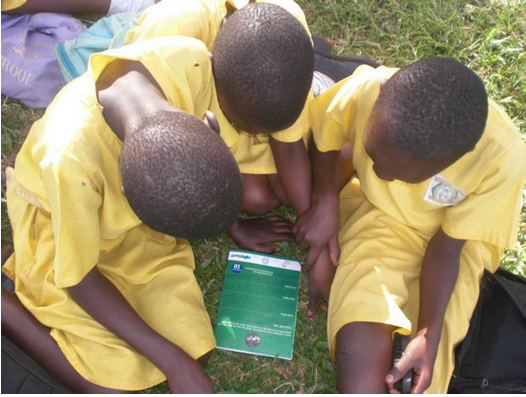 The heroine of The Little Maid, Viola, is an eight-year-old Ugandan girl who lives with her destitute grandmother and dreams of going to school. Instead, she is sent to live with her aunt, who promises to pay her school fees if Viola works for her first. Viola becomes a maid, forced to wash clothes, scrub the bathroom, cook and live in servants’ quarters. But every day when her cousins’ tutor arrives, she crawls underneath the dining room table to eavesdrop on the lessons. Eventually Viola learns to read and write and escapes the clutches of her evil aunt, who is found guilty of child abuse and child slavery and ordered to school her niece.
It could be a true story. In Uganda there are an estimated 2.75 million children engaged in work, although not many of those will have the happy ending. But The Little Maid is a work of fiction, written by Oscar Ranzo, a Ugandan social worker turned author who has penned five children’s books. Now, The Little Maid is being distributed to schools across the country low-cost (5,000 Ugandan shillings or $1.90 each) through his Oasis Book Project. The project aims to improve the reading and writing culture in Uganda and provide school-children with entertaining but educational stories to which they can relate. Ranzo sells most of his books to schools, with the proceeds used to publish more titles. However, he also donates copies to more impoverished areas.
In 1969, Professor Taban Lo Liyong, one of Africa’s best-known poets and fiction writers, declared Uganda a ‘literary desert’. “What we want to do with this project is create an oasis in the desert,” explains Ranzo. “That’s why I called it the Oasis Book Project.”
The small print
Excluding textbooks, there are only about 20 books published in Uganda annually. According to a study last year by Uwezo, an initiative aimed at improving competencies in literacy and numeracy among children aged six to sixteen years in East Africa, more than two out of every three pupils who had finished two years of primary school failed to pass basic tests in English, Swahili or numeracy. For children in the lower school years, Uganda recorded the worst results.
Growing up in the 1970s and 1980s, Ranzo was privileged to have a grandfather who had a library and attended a private school that held an after class reading session. He was a particularly avid fan of Enid Blyton’s Famous Five series.
“But Mum was a nurse and she wanted me to be a doctor. I wanted to pursue literature and she told me ‘no you can’t do that’, so I did sciences,” says Ranzo, stressing that literature, which remains optional in secondary school, is not taken seriously in Uganda.
Furthermore, many local publishers do not see writing fiction as profitable. “They’d rather publish textbooks and get the government to buy them,” Ranzo explains.
His books are available in two central Kampala bookshops for 8,000 shillings ($3). But in the past 15 months fewer than 20 have moved from the shelves, while he has sold over 3,000 to 20 schools in three districts.
Fiction imitating life
Saving Little Viola, his first book in which the female protagonist, Viola, was introduced, was published in 2011 by NGO Lively Minds. The story ends with Viola being saved by her best friend from two men who want to use her for a ritual sacrifice. UNICEF funded its distribution to 36 primary schools across Uganda as part of a child sacrifice awareness programme.
The primary aim of the Oasis Book Project is to encourage reading, although Ranzo admits he would like people to discuss his stories, which have themes close to his heart. Children being forced into work, the theme of The Little Maid, is something he has witnessed himself.
“Many kids are brought from villages to work as maids in homes in towns or cities, and the treatment they are subjected to is terrible in many cases,” says Ranzo.
His next book, The White Herdsman, which will be released in 2014, deals with the impact of oil production on communities, a timely subject for Ugandans with oil production expected to start in 2016. The book tells the story of a village where water in the well has turned black after an oil spill. A witchdoctor blames the disaster on an albino child.
Ranzo’s stories have been welcomed at Hormisdallen Primary, a private school in Kamwokya, Kampala. English teacher Agnes Kasibante, speaking to Think Africa Press, praises the book’s impact. “It’s actually a big problem in Uganda, most children don’t know how to read. At least those books give them morale to continue loving reading,” she says.
Ranzo has also penned Cross Pollination, a collection of fictional stories for adults about the spread of HIV in a community. According to a recent report, Uganda may not meet its target to increase adult literacy by 50% by 2015.
“I’ve worked in a big multinational company where people have jobs but they can’t write. Reading can help develop this,” says Ranzo, who is currently attending the University of Iowa’s 47th annual International Writing Program (IWP) Fall Residency.
Uganda’s literary comeback
Jennifer Makumbi, 46, a Ugandan doctoral student at Lancaster University, is one of a new generation of Ugandan authors. She won the Kwani Manuscript Project, a new literary prize for unpublished fiction by Africans, for her novel The Kintu Saga. She said Taban Lo Liyong’s description of Uganda as a literary desert was “heartbreaking, especially as in the 1960s Uganda seemed to be poised to be a leading literary producer”.
“But perhaps it is exactly this description that is pushing Ugandans to write in the last ten years,” she continues. “Yes, we have not caught up with West Africa yet but… there are quite a few wins.” In recent years, two female Ugandan authors, Monica Arac de Nyeko and Doreen Baingana, won the Caine Prize for African Writing and the Commonwealth Writers’ Prize respectively. Makumbi’s Kwani prize adds her to a list of eminent Ugandan authors.
Makumbi is optimistic about the future of Ugandan literature: “These I believe are indications that Uganda is on its way.”
This article was originally published on 17 Sept 2013 at Think Africa Press and is reposted here by permission.
