CPS and police to apologise to film makers
The Crown Prosecution Service and West Midlands Police will today formally apologise to the makers of Undercover Mosque, a Channel 4 documentary highlighting inflammatory speech in UK mosques.
(more…)

The Crown Prosecution Service and West Midlands Police will today formally apologise to the makers of Undercover Mosque, a Channel 4 documentary highlighting inflammatory speech in UK mosques.
(more…)
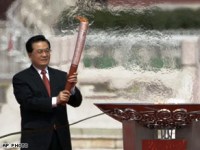 The estimated 30,000 journalists expected to converge on Beijing for the 2008 Olympiad need to prepare themselves well in advance before they blunder across one of the world’s least understood and most volatile domestic political stages, writes Rohan Jayasekera
The XXIX Olympiad in Beijing will be covered by an expected 20,000 accredited sports media workers — and another 10,000 unaccredited. That’s more than three journalists for every athlete. How will China react to this influx of independent opinion if the focus comes off sport and on to politics?
January 2008 rules introduced for the Games theoretically allow foreign journalists to report freely on Chinese ‘politics, economy, society, and culture’ until next October.
This promised liberalisation came to a sharp halt following the outbreak of violent protests in the Tibetan capital of Lhasa on 10 March. Beijing responded with a news blackout, expelling foreign reporters from Beijing, Tibet and its neighbouring provinces of Gansu, Qinghai, and Sichuan.
The Foreign Correspondents Club of China has recorded more than 230 abuses of the new rules. Until March things were getting better, BBC World News Editor Jon Williams told a conclave of Chinese and Western journalists and media rights activists in Paris in April. ‘Now they’re as difficult as they’ve been for a long time.’
(more…)
 The Russian authorities are taking a heavy-handed approach to web monitoring, writes Maria Eismont
‘Error. The website you’ve requested either doesn’t exist, or is overloaded.’ This announcement greeted visitors to the electronic version of Russian independent regional weekly Vyatskiy Nablyudatel, a Kirov newspaper well known for its editorial independence and investigative enterprise, after its website was closed by its Internet provider on April 22. Khostingoviye telesistemi, the Moscow-based ISP, claimed it received an official letter from the Kirov regional police department saying the website contained ‘extremist’ opinion in the readers’ forum, insulting the vice-governor and the government of the region. ‘If you are the owner of this site and think this is a mistake please contact the technical support service,’ continued the announcement on the website.
The law on ‘counteracting extremist activity’ has broadened the definition of extremism to include media criticism of public officials, and carries a custodial sentence of up to three years for journalists, along with the suspension or closure of their publication. It was passed by parliament despite protests from human rights groups, who claimed that the vague language of the law would allow public officials to interpret it widely and use it to target their critics. The Russian prosecutor’s office is currently calling for the Internet to be placed under the same rules as print media.
(more…)
London local paper the Hackney Gazette has decided not to allow the British National Party to advertise in its pages.
(more…)