5 Jun 2014 | News, Religion and Culture, United Kingdom
Poets, we all agree, are terribly misunderstood and undervalued. If it were not for poets, how would we know what things were like other things. How would we live! How would we love! How would we die! They are a priestly class, helping us to mark out our minutes with prayers in pentameter.
But as with any priestly class, they deal in mystery. And demands to decode that mystery are heretical.
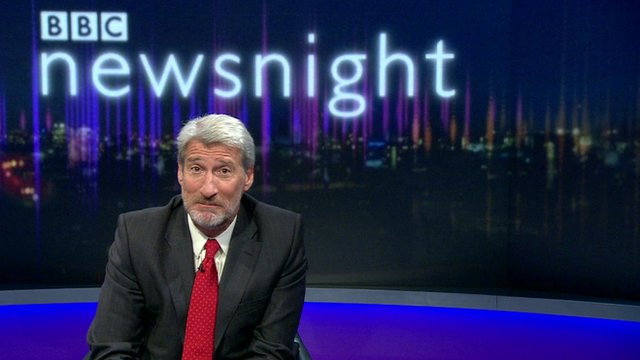
This is certainly the impression one would get judging from the reaction to Jeremy Paxman’s comments on poetry and public engagement this week.
Launching the shortlist for the Forward Prizes for poetry, the judging panel of which he chaired, Paxman, with a nod and a wink so heavy that he would have been in serious trouble if the wind changed, suggested that contemporary poetry had “connived in its own irrelevance” by failing to engage with the everyday lives of “ordinary people”. “It’s the general public that poets have to start engaging with,” said Paxman. “And that, I’m, sure, is why the people at Forward said ‘will you join the judging panel’”.
Translation: “The people at Forward knew that me saying something even slightly controversial about poetry would get their prize column inches, and I’m happy to oblige.”
Paxman went on to suggest, whimsically, a public inquisition where poets would explain their work to members of the public, rather than just to other poets.
Frankly, good on Paxman for recognising his use to the Forward Prize. That is not to say he is an man with little to say about poetry; indeed, he’s contributed greatly to the cause of poetry by wheeling out his “Jeremy Paxman” act free of charge for it. He was also, of course, in very careful to praise contemporary poetry and the marvellous books he’d read as a judge.
But that praise was as naught to some poets, who instead chose to pick up on his idea of a people’s panel to judge poetry, and his naughty use of the word “inquisition”.
For people who deal mostly in metaphor, the poets who rose to the bait took the Newsnight presenter’s words remarkably literally.
Todd Swift, a poetry publisher who runs the Eyewear Imprint, wrote that an inquisition was “a strange thing to ask for in an anti-clerical democracy – the idea of burning unrepentant poets at the stake after torturing them is only barely witty in a world where in many many nations, poets really are tortured and silenced.”
Oh Todd. He didn’t mean an actual inquisition.
Swift goes on to say, with an apparent lack of irony that would have horrified the more famous poet of his name: “Only in middle-class (upper class?) London could a white man think interrogating and potentially killing poets was a clever and useful corrective trope. It smacks of easy intellectual arrogance. I find many journalists despise, or fear, or dislike poetry, mainly because poetry is the best-written and most compressed form of language, and is smarter than journalism.”
You tell those journos and their easy intellectual arrogance, Todd!
Swift finishes off by saying “it becomes clear [Paxman] didn’t really read any of the 175 books he was meant to judge”, a statement that is almost certainly defamatory, as any journalist would have told him if he’d asked.
George Szirtes, a poet well respected by his peers, went down a slightly different route. Szirtes, a refugee from the Soviet tanks that rolled over his native Hungary in 1956, compared Paxman’s suggestion to Stalin’s demands for socialist realism from the USSR’s artists.
Szirtes makes some good points writing for the Guardian, but unfortunately they all follow from a sly trick he plays writing that Paxman’s fanciful inquisition would be a place where “poets would be required to explain themselves and, presumably, answer for their failure to be simpler.”
That “presumably” appears to give Szirtes a license to put words in Paxman’s mouth. Suggesting people explain their work is not at all the same as demanding it be simpler, merely that they be capable of (and interested in) talking about their work to non poets.
As another poet, Katy Evans-Bush, put it, writing about the furious condemnations of Paxman on Facebook (Facebook is where poets go to fight; no one is quite sure why). “Heaven forfend that someone from the wider world should look into your ‘cave of making’, see your ‘pellety nest’, and remark on it. ”
This all matters because poetry matters. Poetry is where we learn to play with words, to deal in metaphor, wordplay, the non-literal, the non-prosaic. How often have you heard someone say they’re “not into” or “don’t get” poetry. It’s frustrating, but poets should see that as a challenge, rather than turning in on themselves. That’s not a call to dumb down; it’s a call to act up. When you’re egged on to do so, it’s simply not enough to cry “Stalin!” and retreat further. That’s exactly the hyperbole and self regard that puts people off. If you care about an art form, you should want people to know about it. Otherwise it is youv-vnot Jeremy Paxman or the Forward prize or anyone else – who is censoring poetry.
This article was published on June 5, 2014 at indexoncensorship.org
25 Apr 2014 | Americas, News, United States, Young Writers / Artists Programme

(Image: Bplanet/Shutterstock)
(a list poem)
Because if you’re an artist, you never know where you’ll go.
Because you need a personal identity number to send a package.
Because an IP address is not a perfect proxy for someone’s physical location, but it is close.
Because I do most of my research online.
Because there hasn’t been a proper rain in California in over three years, and this year may be the driest in the last half millenium.
Because the burning of fossil fuels is destroying our atmosphere.
Because persistent cookies are stored on the hard drive of a computer until they are manually deleted or until they expire, which can take months or years.
Because tracking cookies are commonly used as ways to compile long-term records of individuals’ browsing histories.
Because server farms require massive amounts of energy.
Because the friend who wanted to send the email “Photos from Taksim Square” couldn’t until she changed the subject to “Paris Vacation Photos”.
Because the line between “public” and “private” is tenuous at best.
Because the ACLU is doing its best.
Because a webcam’s images might be intercepted without a user’s consent.
Because a surveillance program code named “Optic Nerve” was revealed to have compiled and stored still images from Yahoo webcam chats in bulk in Great Britain’s Government Communications Headquarters’ databases with help from the United States’ National Security Agency, and to be using them for experiments in automated facial recognition.
Because it’s sketchy to be a Communist.
Because the Defending Dissent Foundation is all kinds of busy.
Because the U.S. army actively targeted nonviolent antiwar protestors in Washington in 2007.
Because I saw it on Dronstagram.
Because everything will or might end up on the internet.
Because the internet is a wormhole full of parasites.
Because I am trying to connect all of the dots.
Because free speech is a tinted mirror.
Because all mediated information is processed, edited, and altered.
Because Wally Shawn had to bring his play to Glenn Greenwald since the journalist who broke the story about Edward Snowden can’t return to the United States.
Because the author risked his freedom and physical security for the truth.
Because artistic solidarity is framed as criminal complicity.
Because how could I forget that language is always political?
Because Chelsea Manning is still being misgendered.
Because the personal is always political.
Because it’s not just the major political players.
Because of the metadata collection.
Because a local surveillance hub may start out combining video camera feeds with data from license plate readers, but once you have the platform running, police departments could plug in new features, such as social media scanners.
Because the Domain Awareness Center’s focus has been not on violent crime, but on political protests.
Because the collapse of the economy and the devastation of the environment are two sides of the same coin.
Because of the NSA’s presence at UN climate talks.
Because of the vested interests in the oil industry.
Because tell me something I don’t know.
Because my personal information is probably being used not just for advertising purposes.
Because despite Facebook’s rights and permissions policies, I still want to share with my friends.
Because Pussy Riot was imprisoned.
Because the Trans-Pacific Partnership would rewrite rules on intellectual property enforcement, giving corporations the right to sue national governments if they passed any law, regulation, or court ruling interfering with a corporation’s expected future profits.
Because I don’t know who is making money off of my information.
Because Abstract Expressionism was funded by the CIA.
Because of the time-honored tradition of governments keeping tabs on artists.
Because we don’t want jobs, we want to live.
This poem was posted on April 25, 2014 at indexoncensorship.org
17 Mar 2014 | News, Religion and Culture, Young Writers / Artists Programme
A few weeks ago, 13,000 writers swarmed Seattle for the annual Association of Writers and Writing Programs conference. In the seaport city known for its ideal reading (and writing) weather — and home to poet Maged Zaher — writers filled hotel rooms and bars. On official panels they debated the state of contemporary literature, and at offsite readings and parties, they celebrated the written word.
The song of the nightingale / Is not up for sale
Ziba Karbassi, Gravequake
On the other side of the hemisphere, Ziba Karbassi doesn’t need to attend a conference to know what contemporary literature looks like. Born in 1974 in Tabriz, Iran, this rising star of Persian poetry, who also writes in her first language of Azeri Turkish, has been living in exile in London since leaving her country in 1989. Karbassi has published eight books of poetry in Persian, and with Stephen Watts, she has translated much of her work into English.
Taken from an incident close to the author’s family in the 1980s, her poem “Death by Stoning” depicts a young pregnant woman taken to prison, tortured, and stoned to death:
I am not a scaffold to be toppled
not a felled tree to be sunk in the flood
I am only a bag of bones and skin
smashed about
The heavy consonants in the nouns and adjectives and the scattered form of the poem demonstrate the mother-to-be’s “anguished, loving, and crazed” state of mind. “Death by Stoning” shows how poetry can give us a view into worlds distant from — but not entirely unlike — our own. Poetry can also play a part in shaping our world.
After the US invasion of Iraq by the Bush administration in 2003, over 13,000 poets rallied in the global movement Poets Against the War. During Occupy Wall Street in the autumn of 2011, poets from around the world contributed to the People’s Library in Zuccotti Park to form a living, breathing, inclusive anthology of the moment. At Occupy Oakland’s Port Shutdown on 2 November, 2011, there was a strong poets’ contingent, and when protestors in Cairo marched on Tahrir Square in solidarity with Occupy Oakland, the meme “Don’t Afraid” from one protestor’s sign quickly became a poetic rallying cry for Oaklanders.
But for artists as for whistleblowers — especially those working against repression, colonialism, and the destruction of the environment by big business — exercising free speech, online or off, can still lead to worst-case scenarios of exile, as in Karbassi’s case, and execution, as friends, relatives, and fans of Arab-Iranian poet Hashem Shaabani can attest to.
What! Graveyard? Fear? Are you kidding? You’re kidding, right?
Gravequake
Karbassi, however, is not afraid of expressing herself, and poets continue to organise, as manifested at the Revolution and/or Poetry conference in the San Francisco Bay Area in October 2013.
Our poetry is not exactly our politics, and our politics are not necessarily our poetry, but the line between them is blurry and easily crossed. Poetry remains a relatively free space: there are plenty of freely accessible journals on the internet; house and salon-style readings are growing in and around urban centres; anyone could submit to the Occupy Wall Street anthology, and all submitted poems were accepted. The art form remains a hopeful space for full participation in cultural and everyday life, whether we gather at conferences or in the streets — or both.
This article was posted on March 17, 2014 at indexoncensorship.org
27 Nov 2013 | Denmark, Europe and Central Asia, News
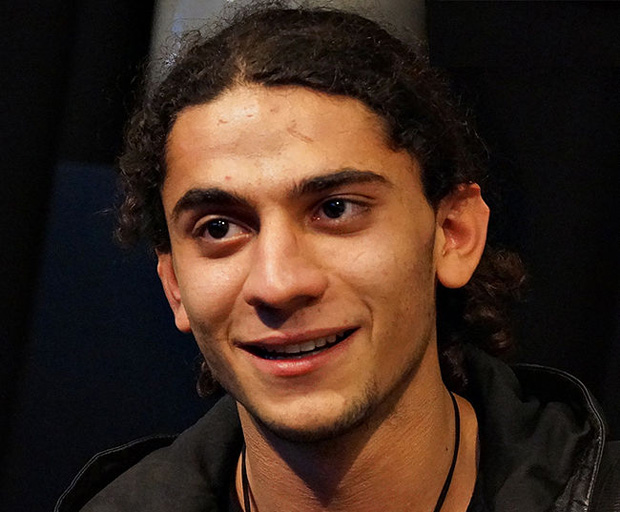
Yahya Hassan at the Copenhagen Book Fair “BogForum 2013” (Photo: Mogens Engelund)
Against the backdrop of nationwide debate and with tight security, Danish poet Yahya Hassan yesterday took to the stage at H.C. Andersen School in the Vollsmose area of the city of Odense, for a much anticipated reading of his controversial work.
While the reading took place without serious disruption, a 19 year-old man was arrested “to keep the peace”. A group of protesters had also gathered outside, telling newspaper Extra Bladet Hassan was “trampling on our culture”, and a car from the broadcaster TV2 also had its tyres slashed. The police said they had turned several people away from the premises in the days leading up to the event, and a group of about 10-15 young men were also stopped from attending. Hassan himself was smuggled out of premises by the police after the event.
Hassan, a Palestinian-Danish 18 year old, rose to fame following an interview in daily Politiken in October, where he criticised his parents’ generation for, in his words, letting their children down. The interview was in connection with the release of his self titled debut poetry collection, which is heavily critical of Islam and parts of the Danish immigrant community. It builds on his experienced growing up in the deprived area of Gellerup in Aarhus.
He has been praised for adding a new voice to the debate on integration in Denmark, but there have been worries that the far right will use his work to their advantage. Hassan has also received a number of threats, and on 19 November, he was attacked while waiting for a train in Copenhagen.
The build-up to yesterday’s reading has not been free from controversy. It was initially to take place in Vollsmose Library, but was cancelled as police said it would pose a security risk and a threat to public order. The police wanted to move it to Odense City Hall, but Hassan and the organiser refused. Vollsmose, like Gellerup, is a deprived area and Hassan reportedly did not believe he would reach his intended audience in the city hall.
Finally, it was decided the event should go ahead after all, and took place yesterday, as planned, but at the H.C. Andersen School. There was a heavy police presence and even a flying ban over Vollsmose from 10 am on Tuesday, to 2 am today. There were reports of a £110000 price tag on the security measures, but Justice Minister Morten Bødskov said this was not an issue of police resources, adding that is the job of the police and county administration to ensure that the “framework for free and open debate” is in place.
This article was posted on 27 Nov 2013 at indexoncensorship.org
