Middle East and North Africa

Syria: Foreign journalists killed in Homs

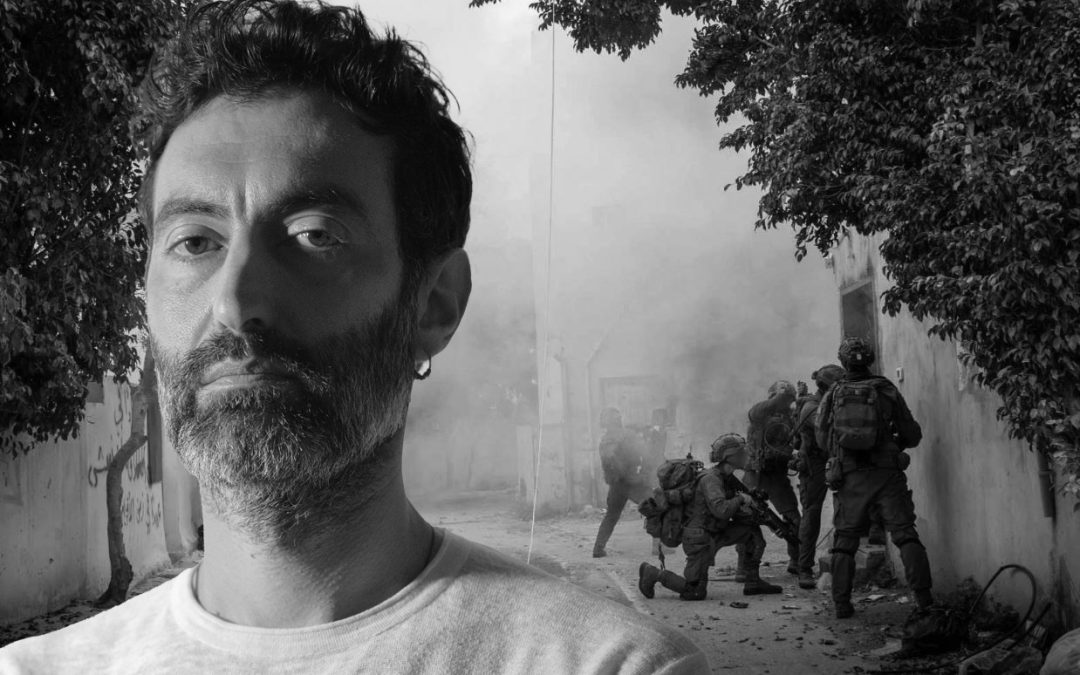
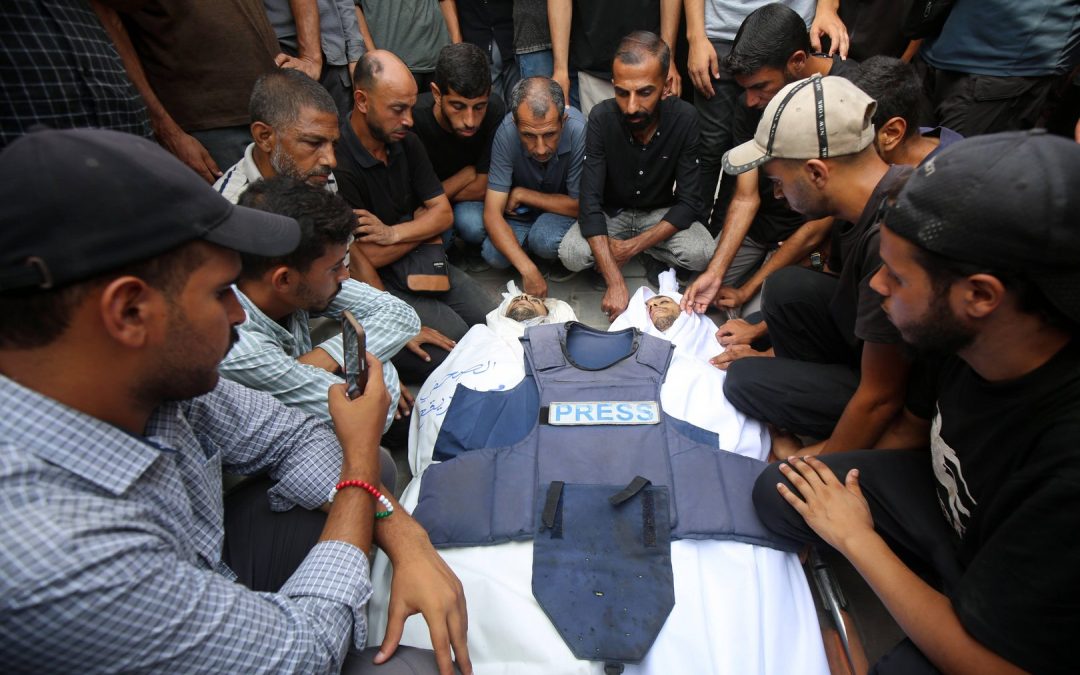
Marie Colvin, veteran war reporter for the Sunday Times, was killed this morning with French photojournalist Remi Ochlik when a shell hit a makeshift media centre in the besieged Syrian city of Homs. Two other journalists are reportedly wounded, named as British freelance photographer Paul Conroy, who was working with Colvin, and Edith Bouvier of French newspaper Le Figaro.  Citizen journalist Rami al-Sayed, who streamed live video footage from Homs, was also killed this week in the shelling of the Baba Amr district of the city.

The mysterious case of Hamza Kashgari

In deporting Saudi journalist Hamza Kashgari for his blasphemous tweets, the Malaysian government acted in its own interests and prioritised diplomacy, even if it might ultimately cost the columnist his life, argues Malik Imtiaz Sarwar

A version of this piece was first published in The Edge on 18 February

Hamza Kashgari TwitterOn 12 February Malaysia deported a young Saudi journalist named Hamza Kashgari where he is to face charges of blasphemy, an offence that carries the death sentence.

Kashgari fled Saudi Arabia after a controversy erupted after he used to social network Twitter to imagine a conversation with the Prophet Mohammed. Kashgari apologised and deleted the tweets in the hope that this would calm the situation. His efforts were insufficient and a directive was issued for his arrest for blasphemy. Kashgari fled the country, he hoped to secure political asylum in New Zealand but was arrested in Kuala Lumpur while in transit.

It seems that the Malaysian authorities would have rather kept the arrest and deportation off the radar. However, the news began to spread. The authorities began trying to justify themselves and their intended actions. It was suggested that the arrest was part of an Interpol initiative, though Interpol denied any knowledge of the matter.  Attempts were then made to characterise the affair as being part of an extradition exercise but Malaysia does not have an extradition treaty with Saudi Arabia.

Lawyers were appointed and began efforts to meet their client and to secure his release. They appear to have been given the run-around or kept in the dark about the fact that the authorities had already unilaterally decided to return Kashgari to Saudi Arabia. The procuring of an injunction from a High Court judge on Sunday to temporarily restrain the deportation came to nought; Kashgari had been deported earlier that morning despite awareness of the intended legal challenge.

One cannot help but question the manner in which the Malaysian authorities conducted themselves. Malaysia was under no legal obligation to return the journalist to Saudi Arabia and the two countries are not bound by an extradition treaty, meaning what Kashgari has done in Saudi Arabia is not of relevance in Malaysia. Kashgari had not committed any offence in Malaysia and had entered the country on a valid travel document. He was not intending to stay in Malaysia; his final port of call was New Zealand.

There is a more fundamental question: what was Kasghari arrested for? That has not been made clear by the authorities; all they have said is that he is wanted in Saudi Arabia. Under Malaysian law a person is guaranteed life and liberty and can only be arrested for having committed a crime. Kashgari did not commit a crime here, he was entitled to contest the legality of his arrest. This is why his lawyers ultimately filed a habeas corpus application.

The situation is ironic. The Home Minister has attempted to justify the deportation as an extradition. But were this to be the case, the person sought to be extradited would be entitled to challenge the validity of the extradition order. Those who have been following the extradition proceedings concerning Julian Assange would have seen how aggressively he has opposed extradition. In the same way, General Augustus Pinochet had fought his extradition to Spain. In such cases it is open to the person sought to be extradited to show that were he to be extradited, he would face consequences that were harsher than those permitted in the deporting country.

Where Kashgari is concerned, this was clearly the case. He is facing a death sentence for having done something that would either not have been an offence in Malaysia or would not have carried a death sentence.

The very real possiblity of Kashgari being sentenced to death has been studiously avoided by the Malaysian authorities. They take the position that this is an internal Saudi matter. Curiously, the Home Minister has gone on to say that Malaysia is not to be seen as a haven for terrorists; the offence Hamza is said to have committed does not concern an act of terrorism.

And underlying all of this is the fact that the Malaysian authorities did not have to intervene at all. Kashgari could have been left to take his flight to New Zealand and the problem would have been New Zealand’s.

All of this marshals into one inescapable conclusion. The Malaysian government acted only in its own interests and chose to prioritise diplomatic expediency over the lawful rights of Hamza Kashgari, even though this may ultimately cost the columnist his life. In doing so, the government acted in complete defiance of legal obligations it was under.

I am not alone in this view. The National Human Rights Commission (SUHAKAM) has condemned the authorities for having acted as they did.

For all its talk about moderation,  progress and commitment to the fundamentals of the international human rights framework, it is regrettable that the Malaysian government appears to be willing to uphold human rights only where it is politically convenient to do so. Put more plainly, it just does not seem to care.

Were it otherwise, Hamza Kashgari would have had his day in court.

Malik Imtiaz Sarwar is a practising lawyer and the president of the Malaysian National Human Rights Society. He tweets at @malikimitiaz

Syria: Razan Ghazzawi and female colleagues released

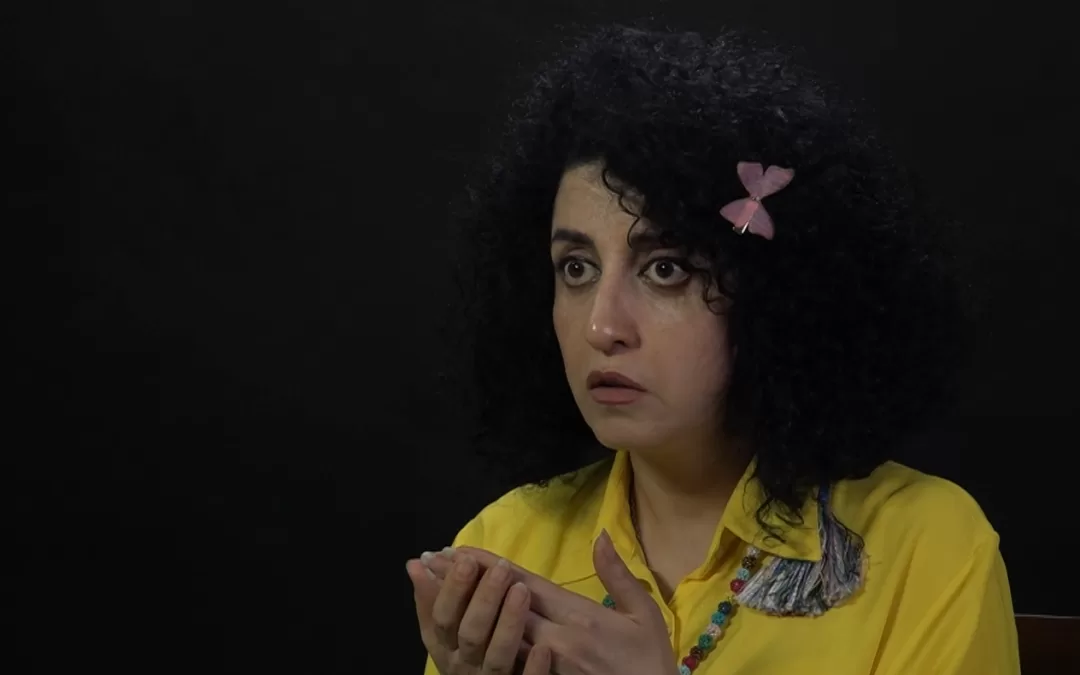
Blogger and free speech activist Razan Ghazzawi was released on Saturday along with her female colleagues, after being arrested and detained last Thursday following a raid on the Syrian Center for Media and Freedom of Expression in Damascus. Ghazzawi’s sister tweeted that Razan had returned home but was not allowed to leave the country. Razan’s male colleagues remain detained.

Bahrain: Four foreign activists deported

Bahrain announced the deportation of four foreign activists for “taking part in illegal demonstrations” on 18 February, bringing the number of those expelled over the past week to 12. The official BNA news agency reported on Friday that the four — including one American and one Briton — were deported for “lying on immigration forms”, as their “visas were issued for the purposes of tourism but all were participating in illegal demonstrations.”  

Tunisia: Journalists arrested in morality dispute

Three Tunisian journalists have been arrested on charges of offending public morality following the publication of a nude photograph. The Attounissia newspaper printed a photograph of Real-Madrid footballer Sami Khedira covering the breasts of his otherwise naked girlfriend, model Lena Gercke. The photograph drew an angry response from the country’s public prosecutor, resulting in the arrest of the newspaper’s publisher Nasreddine Ben Said, Habib Guizani, its editor-in- chief, and its world editor Hedi Hidhri. The photo was a reprint of a 2012 cover of the German edition of GQ Magazine.  

Syria: Free expression activists arrested

Activists in Syria have reported that the Syrian Center for Media and Freedom of Expression in Damascus was raided today. Between 12 and 14 people were arrested, with blogger Razan Ghazzawi said to be among them. Ghazzawi was arrested in December last year while travelling to a press freedom conference in Jordan, but was released 15 days later after a robust online campaign.

Bahrain: Hunger strike activist collapses

Bahraini activist Abdulhadi Alkhawaja collapsed last night while on hunger strike. Alkhawaja, who went on hunger strike ahead of the February 14 anniversary of mass protests in Bahrain, was taken to the hospital where he was given IV treatment without his consent. The activist’s lawyer reported Alkhawaja showed serious signs of fatigue and had difficulty moving and walking. His daughter, Zainab, continues to be detained and his younger brother, Salah Alkhawaja, who is also imprisoned has joined the hunger strike.

Syria: Protesters’ text messages blocked using Irish equipment

The Syrian government has ordered text messages containing politically sensitive words to be blocked. Sources familiar with the country’s filtering system say that Irish technology is being used to prevent the delivery of text messages including  words such as “ revolution” or “demonstration”. The country’s largest mobile phone company Syriatel Mobile Telecom SA have allegedly used blocking equipment from Cellusys Ltd, a privately-held company based in Dublin. Since public unrest in Syria erupted last year, text messages have been a crucial tool for protesters.