Apologies for another newsletter hitting your inbox that opens on the US election results, but it feels remiss not to talk about something that could have large implications for global free expression. Donald Trump is not a free speech hero. As I wrote on Wednesday here his attacks will start with the media. Where they will stop is anyone’s guess. To say we are unnerved by the prospect of another four years of Trump is to understate. With him at the helm the USA could become a hybrid regime, a country merging autocratic features with democratic ones.
While our concerns are first for the people in the USA, we are also worried about what this means globally. Who will criticise China, Russia, Saudi Arabia and the like for their gross attacks to free expression with the same clout as the USA? What terrible things will happen while we are all distracted by the clown in the White House?
But on the note of distraction, I want to end there in terms of Trump and instead talk about other things of import from the world of free expression this week.
First up, Cop29. It starts on Monday and it is keeping to tradition, namely being held in a country that thrives on both oil and the suppression of human rights – in this case Azerbaijan. The Azerbaijan government has long engaged in a crackdown on civil society, which has only heightened over the last few years. Azerbaijan authorities claim they are “ensuring everyone’s voices are heard” at Cop29. This is a lie. Prominent activists, journalists and government critics have recently been jailed, including key voices on the climate crisis. In April, for example, they arrested prominent climate justice activist Anar Mammadli and placed him in pre-trial detention, where he remains.
Such harassment has forced many local activists to leave Azerbaijan. Those who remain risk prosecution and retaliation if they dare voice criticism during Cop29. One person who is not deterred is Danish artist Jens Galschiøt (the artist behind the Tiananmen Pillar of Shame). He and his team are currently transporting three sculptures to Baku to highlight climate injustice. We will be watching closely what happens next.
Beyond Baku, we were disturbed to read this week of a Papuan news outlet, Jujur Bicara (also known as Jubi), which was attacked with a bomb. The bomb damaged two cars before staff at the paper were able to put out the fire. Jubi editor Victor Mambor said that he’s been the victim of a string of attacks, which he believes relate to his work.
As we approach the year’s end we’re reflecting on just what a brutal year it has been for media freedom. Ditto protest rights. Those protesting Mozambique’s election last month can attest to this – at least 18 have been killed since the 9 October vote, with police firing tear gas at protesters this week in the capital Maputo, while in Belarus around 50 people were recently detained, all of whom were connected to peaceful protests around the 2020 elections.
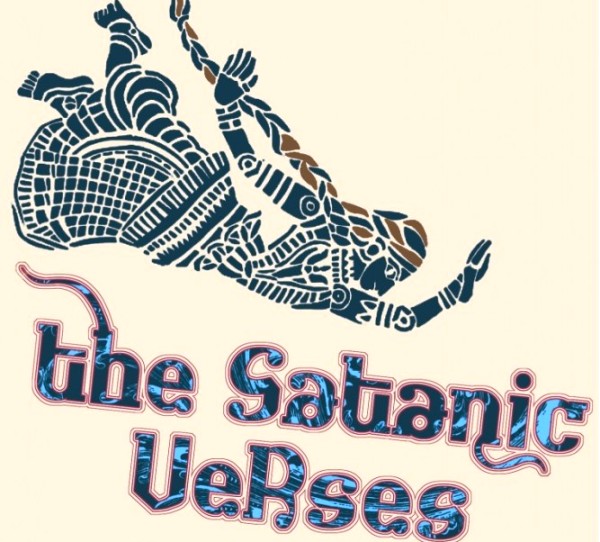
Finally, a good news story, of sorts. The Satanic Verses is no longer banned in India. A court in the country overruled a decades-long import ban on the book. I say good news of sorts because lifting the ban seems to be down to an administrative error. A petition was filed in 2019 on the grounds that the ban violated constitutional rights to freedom of speech and expression. The man who filed the petition, Sandipan Khan, requested a copy of the notification that banned the import of the book back in 1988. When he was informed that the document could not be located, the Delhi High Court ruled that it had “no other option except to presume that no such notification exists”. It’s not every day we get wins in the free speech world so we’ll take this one.
On the note of Salman Rushdie, who was our 2023 Trustees Award winner at our annual Freedom of Expression Awards, we’ve just announced the shortlist for our 2024 awards. Click here to see the amazing individuals and organisations who are holding the line on free expression today. And if you value free expression and you have been rattled by the events of this week please do consider donating to Index. We’re a small charity with big ambitions and a lot of that is down to the support of people like you.
On 12 August 2022, Salman Rushdie, the author of the book The Satanic Verses, was attacked as he prepared to give a lecture at the Chautauqua Institution, an arts and education centre in New York state. He was stabbed in the neck, face and abdomen and remains in a critical condition in hospital. His family issued a statement saying that despite his “life-changing injuries” being severe, “his usual feisty and defiant sense of humour remains intact”.
Index on Censorship has long been a supporter of Salman Rushdie and fully support his right to freedom of expression, as we do for other authors and artists. Supporting those who are silenced, threatened and attacked is at the heart of Index’s 50-year-long history. Index condemns this cowardly attack on the author.Index CEO Ruth Smeeth said, “We are still in shock after the brutal attack on Salman Rushdie last week. While we are relieved to hear he survived, we know the path to recovery will be long and our thoughts go out to him and his family. We consider Salman part of the Index community. We were instrumental in the campaign against the fatwa and Salman has in turn written regularly for our magazine. He is a fierce defender of free expression and his writing, which is beloved by so many, is a testament to the power of words themselves.”
She added, “The violence committed against him is an awful reminder that the fight for freedom of expression continues and we are as committed as ever to campaigning for a world in which acts such as these never happen.
Your messages of support
[smartslider3 slider=”43″][/vc_column_text][vc_cta h2=”Support our work with other authors who face being silenced” h2_font_container=”tag:h2|text_align:left” txt_align=”center” color=”black” add_button=”bottom” btn_title=”Make a donation today” btn_color=”inverse” btn_size=”lg” use_custom_fonts_h2=”true” btn_link=”url:https%3A%2F%2Fwww.peoplesfundraising.com%2Fdonation%2Findex-on-censorship|title:Support%20Index%2C%20Donate%20Now”][/vc_cta][/vc_column][/vc_row][vc_row][vc_column][vc_column_text]
Share your message
We call on all others who believe in his right not to be silenced to leave a message of support, using the form below, which we will share with him and publish here. You can also sign up to receive our weekly newsletter to receive updates on the campaign. It also features news relating to freedom of expression issues around the world. You do not need to sign up to this to send a message of support.
Inna Lillahi wa inna ilaihi raji’un. I am informing all brave Muslims of the world that the author of The Satanic Verses, a text written, edited, and published against Islam, the Prophet of Islam, and the Qur’an, along with all the editors and publishers aware of its contents, are condemned to death. I call on all valiant Muslims wherever they may be in the world to kill them without delay, so that no one will dare insult the sacred beliefs of Muslims henceforth. And whoever is killed in this cause will be a martyr, Allah Willing. Meanwhile if someone has access to the author of the book but is incapable of carrying out the execution, he should inform the people so that [Rushdie] is punished for his actions. Rouhollah al-Mousavi al-Khomeini.”
On 14 February 1989, 25 years ago today, the supreme leader of the Islamic Republic of Iran handed down a death sentence not just on British author Salman Rushdie, but on anyone associated with the publication of his novel the Satanic Verses.
It’s always worth writing down exactly what happened. A medievalist tyrant decided a novelist and his editors and publishers should die, because he was offended by a book he could not claim to have read.
Rushdie went into hiding. Hitoshi Igarashi, the novel’s Japanese translator, was murdered. Because he had translated a novel.
The controversy did not begin with Khomeini – he merely attempted to capitalise on it. No, the first countries where the book stoked the ire of Islamists were South Africa and India, both countries whose divide-and-rule laws (the Indians’ law inherited from British colonial law, the South Africans’ in a diabolical league of its own) meant it paid to promote communal grievance.
Khomeini’s fatwa seems, in hindsight, a desperate bid to distract the people of Iran, and the rest of the Muslim world, from the fact that his reign, about to end, had been a disaster. Iranians had hoped their 1979 revolution would deliver them from the oppression of the Peacock Throne. Instead they just found their oppressors had simply grown beards.
The disaster was not entirely of Khomeini’s own making, perhaps. He could not be blamed for having the equally psychopathic Saddam Hussein as a neighbour, but nonetheless, he had sent hundreds of thousands of Iranians to their death, promised martyrdom as they marched into Saddam’s poisoned gas during the Iran-Iraq war that raged for almost the whole of the 1980s.
The Iran Iraq War ended in 1988. Neither side could legitimately claim victory. The Islamic Republic had not swept all before it. And Khomeini needed something new to establish his Shia theocracy as the leader of the Islamic world. He found it in harnessing the mounting anger over Rushdie’s book.
In Britain, this was the moment for political Islam. Young second generation South Asian Islamists exploited their parents’ folk memories of anti-Muslim violence during the torturous period before and after partition in 1947 (the subject of Rushdie’s great work, Midnight’s Children) to mobilise Muslims against Rushdie.
Inayat Bunglawala of the Muslim Council of Britain wrote in 2007:
So on February 14 1989, when the Iranian Islamic leader, Imam Khomeini delivered his fatwa calling for Salman Rushdie’s death, I was truly elated. It was a very welcome reminder that British Muslims did not have to regard themselves just as a small, vulnerable minority; they were part of a truly global and powerful movement. If we were not treated with respect then we were capable of forcing others to respect us.
Yusuf Islam, formerly known as cuddly hippy musician Cat Stevens, told a television audience at the time that he felt Rushdie deserved to die. Some on the British right were pleased, seeing the death sentence as comeuppance for a man who was a vicious critic of the racist establishment.
Khomeini is dead and Rushdie is a knight of the realm (though some, such as Shirley Williams, considered that elevation in 2007 unwise). But it is perhaps on those grounds only that victory can be claimed for free speech. As Kenan Malik has suggested, writing for Index on Censorship, we live still in the “shadow of the fatwa”.
Religious sensitivity has become an excuse for threats. “Offence” is something to be taken greedily, and then pumped back out with a mixture of aggression and self pity.
And the shadow of that fatwa does not only fall on Islam. Every zealot of every creed will now offer up special pleading for their right to be protected from mockery, debate and challenge with the line “You wouldn’t say that about Islam.” What they mean, always, is “We want you to be scared. We want you to be as scared as Salman Rushdie was when he received that threat. We want you to be so scared that you will never question our literalism, our version of events. Truth is ours and ours alone.”
Rushdie’s friend, the late Christopher Hitchens, wrote that the fatwa represented “an all out confrontation between the ironic and the literal mind: between every kind of commissar and inquisitor and bureaucrat and those who know that, whatever the role of social and political forces, ideas and books have to be formulated by individuals”.
Writer and broadcaster Kenan Malik and art historian and educator Nada Shabout on one of the art world’s most contentious debates
Mark Boardman/www.mark-boardman.com
Dear Nada,
I regard free speech as a fundamental good, the fullest extension of which is necessary for democratic life and for the development of other liberties. Others view speech as a luxury rather than as a necessity, or at least as merely one right among others, and not a particularly important one. Speech from this perspective needs to be restrained not as an exception but as the norm.
The answer to whether religious and cultural sensibilities should ever limit free expression depends upon which of these ways we think of free speech. For those, like me, who look upon free speech as a fundamental good, no degree of cultural or religious discomfort can be reason for censorship. There is no free speech without the ability to offendreligious and cultural sensibilities.
For those for whom free speech is more a luxury than a necessity, censorship is a vital tool in maintaining social peace and order. Perhaps the key argument made in defence of the idea of censorship to protect cultural and religious sensibilities is that speech must necessarily be less free in a plural society. In such a society, so the argument runs, we need to police public discourse about different cultures and beliefs both to minimise friction and to protect the dignity of individuals, particularly from minority communities. As the sociologist Tariq Modood has put it, “if people are to occupy the same political space without conflict, they mutually have to limit the extent to which they subject each others’ fundamental beliefs to criticism”.
I take the opposite view. It is precisely because we do live in a plural society that we need the fullest extension possible of free speech. In such societies it is both inevitable and important that people offend the sensibilities of others. Inevitable, because where different beliefs are deeply held, clashes are unavoidable. And they should be openly resolved, rather than suppressed in the name of “respect” or “tolerance”.
But more than this: the giving of offence is not just inevitable, but also important. Any kind of social change or social progress means offending some deeply-held sensibilities. Or to put it another way: “You can’t say that!” is all too often the response of those in power to having their power challenged. The notion that it is wrong to offend cultural or religious sensibilities suggests that certain beliefs are so important that they should be put beyond the possibility of being insulted or caricatured or even questioned. The importance of the principle of free speech is precisely that it provides a permanent challenge to the idea that some questions are beyond contention, and hence acts as a permanent challenge to authority. The right to “subject each others’ fundamental beliefs to criticism” is the bedrock of an open, diverse society, and the basis of promoting justice and liberties in such societies. Once we give up such a right we constrain our ability to challenge those in power, and therefore to challenge injustice.
The question we should ask ourselves, therefore, is not “should religious and cultural sensibilities ever limit free expression?” It is, rather, “should we ever allow religious and cultural sensibilities to limit our ability to challenge power and authority?”
Best wishes,
Kenan
Mark Boardman/www.mark-boardman.com
Dear Kenan,
I too regard free speech as a fundamental good and as necessary. On the surface, thus, the simple and direct answer to the question of whether religious and cultural sensibilities should ever limit free expression should be an unequivocal NO! However, the reality is that the question itself is problematic. While free expression, and let’s think of art in this specific case, will always push the limits and “reveal the hidden”, consideration and sensitivity, including religious and cultural sensibility, should not be inherently in opposition. By positioning it as such, the answer can only be reactive. I thus disagree with your argument.
A quick note on “censorship”. Yes, we all hate the word and find it very offensive. It is a word loaded with oppression, but the reality is that censorship in some form exists in every facet of life, personal and public. It is not that one needs to restrict speech in a plural society but that this plurality needs to find a peaceful way of co-existing with respect and acceptance, as much as possible — not tolerance; I personally abhor the word tolerance and find that it generally masks hatred and disdain. No belief is above criticism and nothing should limit our ability to challenge power and authority.
I suppose one needs to decide first the point of this criticism/free expression. Does it have a specific message or reason, and how best to deliver it — or is it simply someone’s personal free expression in the absolute? And if it is someone’s right to free expression, then why is it privileged above someone else’s right — religious and cultural sensibility being someone’s right to expression as well?
For example, and I will use art again, there is a problem when art/the artist is privileged as “genius”, with rights above other citizens — except not really, since the artist is subject to other limitations that may not be religious or cultural, like those of the tradition of expression, funding, law and so on. This is not to say that a religion should dictate expression. We should remember, though, that the marvel of what we call Islamic art was achieved within full respect of Islamic religious sensibilities, but also pushed the limits and critiqued simplicity in interpreting these sensibilities.
Perhaps my view here is less idealistic and more practical, but I see many unnecessary attacks on all sides that do not accomplish anything other than insult and inflame. All I’m saying is that expression is always achieved through negotiations, including limitations.
All the best,
Nada
Dear Nada,
I’m afraid that I was no clearer at the end of your letter than I was at the beginning about your actual stance on free speech. You say you ‘regard free speech as a fundamental good’ and that the answer to “whether religious and cultural sensibilities should ever limit free expression should be an unequivocal NO!” You then, however, go on seemingly to qualify that unequivocal stance but without actually specifying what it is that you wish to qualify. Where should the line be drawn when it comes to the issue of what is and is not legitimate free speech? Who should draw that line? And on what basis? These are the critical questions that need answering. You write: “It is not that one needs to restrict speech in a plural society but that this plurality needs to find a peaceful way of co-existing with respect and acceptance”. It’s a wonderful sentiment, but what does it actually mean in practice? Should Salman Rushdie not have written The Satanic Verses so that he could find “a peaceful way of coexisting with respect and acceptance”? Was the Birmingham Rep right to drop Gurpreet Kaur Bhatti’s play Behzti after protests from Sikhs? Should Jerry Springer: The Opera ever have been staged (or broadcast)?
You suggest that “one needs to decide first the point of this criticism/free expression. Does it have a specific message or reason, and how best to deliver it — or is it simply someone’s personal free expression in the absolute?” Again, I am unclear as to the point you’re making here. Are you suggesting here that speech is only legitimate if it has “a specific message or reason”? If so,who decides whether it does? During the controversy over The Satanic Verses, the philosopher Shabbir Akhtar distinguished between “sound historical criticism” and “scurrilously imaginative writing”, and insisted that Rushdie’s novel fell on the wrong side of the line. Do you agree with him? If not, why not? You ask: “If it is someone’s right to free expression, then why is it privileged above someone else’s right — religious and cultural sensibility being someone’s right to expression as well?” This seems to me a meaningless question. A “sensibility” is not a “right”, still less a “right to expression”. If your point is that all people, whatever their religious or cultural beliefs, should have the right to express those beliefs, then I agree with you. That is the core of my argument. What they do not have is the “right” to prevent anybody expressing their views because those views might offend their “sensibilities”.
A final point: to defend the right of X to speak as he or she wishes is not the same as defending the wisdom of X using speech in a particular fashion, still less the same as defending the content of his or her speech. Take, for instance, The Innocence of Muslims, the risibly crude and bigoted anti-Muslim video that provoked so much controversy and violence last year. I would defend the right of such a film to be made. But I would also question the wisdom of making it, and would strongly challenge the sentiments expressed in it. There is a distinction to be drawn, in other words, between the right to something and the wisdom of exercising that right in particular ways. It is a distinction that critics of free speech too often fail to understand.
Best,
Kenan
Dear Kenan,
Nicely said! I believe we are ultimately saying the same thing. It is that “distinction” that you outline in your last paragraph that I call a negotiation between all sides, cultures, etc. My answer is not clear because the issue is not simple! I am saying that it is not a black and white binary divide nor can one “draw a line”. And yes, “who should draw that line? and on what basis?” is critical and essential. I believe that should be reached through negotiation. The “wisdom” of something to exist is as important as its right to exist. But there is also the question of responsibility. Free speech cannot be “inherently good” or bad. The person who utters that speech must claim responsibility for its use and effects. The examples you cite above are not all equal. Yes, they all have the right to exist. But let’s think a bit about the Danish cartoons about the Prophet Mohammed as another example. Were they not an attack aimed to inflame Muslim communities? Was it not part of Islamophobia?
Was the aim not to ridicule and play off people’s fears and prejudices? How were they a critique of Islam? What was the point? It is not that “it is morally unacceptable to cause offence to other cultures” as you once said, but the how and why are just as important as the right to cause that offence. I agree with you that the fear of consequences has become a limitation, but that isperhaps because free speech has been abused.
Perhaps I am looking at this from a different point of view. As an educator, I often face the situation, equally here in the US and in the Middle East, of how to argue a point that has become of specific cultural/religious/political sensitivity to my students. If I offend them here, they will stop listening; in the Middle East, I will not be allowed to continue. What would I gain by doing that? By negotiation I test the limits and push gently. At least in academia, I think we are at a point where we have to teach our students to not get offended by an opposing opinion and to be able to accept various opinions and to be able to accept criticism. I don’t think I can achieve that through shock alone!
Best, Nada
Dear Nada
You write that your “answer is not clear because the issue is not simple”. Perhaps. But surely, if the answer is not simple, that only places a greater imperative to make one’s answers as clear as possible?
You believe that we are “ultimately saying the same thing”. I am not so sure that we are. So, let us try to work out where we do agree and where we don’t.
There are two questions we are debating. The first is about the legal limits to free speech. My view is that the law should not in any way protect cultural or religious sensibilities. All speech should be legal except where it directly incites violence. I assume that is your position, though you have never actually stated it as such. Do we agree on that?
The second question is about how we can define speech that is legally acceptable but morally distasteful. You say that where we draw the moral line “should be reached through negotiation”. But negotiation with whom? And on what basis?
You raise a series of questions about the Danish cartoons, and imply that the cartoons were not legitimate speech but created merely to provoke, and hence should not have been published. You don’t, however, actually say that. So, to clarify, is that your view?
Exactly the same questions were, as I pointed out in an earlier letter, asked about The Satanic Verses, and many came to the same conclusions about Rushdie’s novel: that it was Islamophobic, designed to provoke and inflame Muslim communities, that it ridiculed Islam and played off people’s fears, and so on. The philosopher Shabbir Akhtar described it as an “inferior piece of hate literature”. The liberal Ziauddin Sardar wrote that reading the novel felt like being “raped”. The novelist Rana Kabani insisted that it played upon ancient Islamophobic stereotypes.
In the case of both The Satanic Verses and the Danish cartoons, the majority of Muslims, certainly initially, stayed indifferent to the issue. A vocal minority transformed both into global controversies. So, what does “negotiation” mean in this context? Muslim objection to The Satanic Verses was as deep and as broad as that to the Danish cartoons. Yet, you seem to think that it was right to publish the novel but not the cartoons. Why? And please don’t say “My answer can’t be clear because the issue is not simple”.
In any case, the questions that you raise — Is it Islamophobic? Is the aim merely to ridicule? etc — are different from the question that we are actually addressing: “Should religious or cultural sensibilities ever limit free speech?”. There is, in my view, a moral imperative on free speech advocates to challenge racist and other bigoted speech. I certainly do not that think that about speech that offends cultural or religious sensibilities. On the contrary, the moral imperative is often to transgress such boundaries. It is the conflation of racism and bigotry, on the one hand, and of cultural and religious sensibilities, on the other, that is the problem. Opponents of free speech often conflate these two issues in an attempt to establish a spurious legitimacy for their arguments against the giving of offence.
Best wishes,
Kenan
Kenan Malik is a writer and broadcaster. His latest book is From Fatwa to Jihad: The Rushdie Affair and its Legacy (Atlantic Books)
Nada Shabout is associate professor of art education and art history at the University of North Texas and director of the Contemporary Arab and Muslim Cultural Studies Institute