18 Dec 2017 | Journalism Toolbox Spanish, Volume 46.01 Spring 2017 extras
[vc_row][vc_column][vc_custom_heading text=”Los periodistas mexicanos son objeto de amenazas por parte de un gobierno corrupto y cárteles violentos, y no siempre pueden confiar en sus compañeros de oficio. Duncan Tucker nos lo cuenta.”][vc_row_inner][vc_column_inner][vc_column_text]
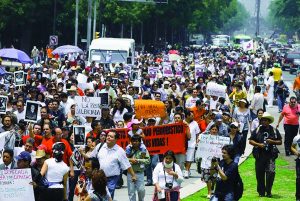
Cientos de periodistas marchan en silencio en 2010 como protesta contra los secuestros, asesinatos y violencia ejercida contra los periodistas del país, John S. and James L. Knight/Flickr
[/vc_column_text][/vc_column_inner][/vc_row_inner][/vc_column][/vc_row][vc_row][vc_column][vc_column_text]
«Espero que el gobierno no se deje llevar por la tentación autoritaria de bloquear el acceso a internet y arrestar a activistas», contaba el bloguero y activista mexicano Alberto Escorcia a la revista de Index on Censorship.
Escorcia acababa de recibir una serie de amenazas por un artículo que había escrito sobre el reciente descontento social en el país. Al día siguiente, las amenazas se agravaron. Invadido por una sensación de ahogo y desprotección, comenzó a planear su huida del país.
Son muchas las personas preocupadas por el estado de la libertad de expresión en México. Una economía estancada, una moneda en caída libre, una sangrienta narcoguerra sin final a la vista, un presidente extremadamente impopular y la administración beligerante de Donald Trump recién instalada en EE.UU. al otro lado de la frontera están generado cada vez más presión a lo largo de 2017.
Una de las tensiones principales es el propio presidente de México. Los cuatro años que lleva Enrique Peña Nieto en el cargo han traído un parco crecimiento económico. También se está dando un resurgir de la violencia y de los escándalos por corrupción. En enero de este año, el índice de popularidad del presidente se desplomó al 12%.
Para más inri, los periodistas que han intentado informar sobre el presidente y sus políticas han sufrido duras represalias. Por ejemplo, 2017 comenzó con agitadas protestas en respuesta al anuncio de Peña Nieto de que habría un incremento del 20% en los precios de la gasolina. Días de manifestaciones, barricadas, saqueos y enfrentamientos con la policía dejaron al menos seis muertos y más de 1.500 arrestos. El Comité para la Protección de los Periodistas ha informado que los agentes de policía golpearon, amenazaron o detuvieron temporalmente a un mínimo de 19 reporteros que cubrían la agitación en los estados norteños de Coahuila y Baja California.
No solo se han silenciado noticias; también las han inventado. La histeria colectiva anegó la Ciudad de México a consecuencia de las legiones enteras de bots de Twitter que comenzaron a incitar a la violencia y a difundir información falsa sobre saqueos, cosa que provocó el cierre temporal de unos 20.000 comercios.
«Nunca he visto la ciudad de esa manera», confesó Escorcia por teléfono desde su casa en la capital. «Hay más policía de lo normal. Hay helicópteros volando sobre nosotros a todas horas y se escuchan sirenas constantemente. Aunque no ha habido saqueos en esta zona de la ciudad, la gente piensa que está sucediendo por todas partes».
Escorcia, que lleva siete años investigando el uso de bots en México, cree que las cuentas falsas de Twitter se utilizaron para sembrar el miedo y desacreditar y distraer la atención de las protestas legítimas contra la subida de la gasolina y la corrupción del gobierno. Dijo que había identificado al menos 485 cuentas que constantemente incitaban a la gente a «saquear Walmart».
«Lo primero que hacen es llamar a la gente a saquear tiendas, luego exigen que los saqueadores sean castigados y llaman a que se eche mano del ejército», explicó Escorcia. «Es un tema muy delicado, porque podría llevar a llamamientos a favor de la censura en internet o a arrestar activistas», añadió, apuntando que la actual administración ya ha pasado por un intento fallido de establecer legislación que bloquee el acceso a internet durante «acontecimientos críticos para la seguridad pública o nacional».
[/vc_column_text][/vc_column][/vc_row][vc_row][vc_column width=”1/4″][/vc_column][vc_column width=”3/4″][/vc_column][/vc_row][vc_row][vc_column][vc_column_text]
Días después de que el hashtag de «saquear Walmart» se hiciera viral, Benito Rodríguez, un hacker radicado en España, contó al periódico mexicano El Financiero que le habían pagado para convertirlo en trending topic. Rodríguez explicó que a veces trabaja para el gobierno mexicano y admitió que «tal vez» fuera un partido político el que le dio dinero para incitar al saqueo.
La administración de Peña Nieto lleva mucho tiempo bajo sospecha de utilizar bots con objetivos políticos. En una entrevista con Bloomberg el año pasado, el hacker colombiano Andrés Sepúlveda afirmaba que, desde 2005, lo habían contratado para influir en el resultado de nueve elecciones presidenciales de Latinoamérica. Entre ellas, las elecciones mexicanas de 2012, en las que asegura que el equipo de Peña Nieto le pagó para hackear las comunicaciones de sus dos rivales principales y liderar un ejército de 30.000 bots para manipular los trending topics de Twitter y atacar a los otros aspirantes. La oficina del presidente publicó un comunicado en el que negaba toda relación con Sepúlveda.
Los periodistas de México sufren también la amenaza de la violencia de los cárteles. Mientras investigaba Narcoperiodismo, su último libro, Javier Valdez —fundador del periódico Ríodoce— se dio cuenta de lo habitual que es hoy día que en las ruedas de prensa de los periódicos locales haya infiltrados chivatos y espías de los cárteles. «El periodismo serio y ético es muy importante en tiempos conflictivos, pero desgraciadamente hay periodistas trabajando con los narcos», relató a Index. «Esto ha complicado mucho nuestra labor. Ahora tenemos que protegernos de los policías, de los narcos y hasta de otros reporteros».
Valdez conoce demasiado bien los peligros de incordiar al poder. Ríodoce tiene su sede en Sinaloa, un estado en una situación sofocante cuya economía gravita alrededor del narcotráfico. «En 2009 alguien arrojó una granada contra la oficina de Ríodoce, pero solo ocasionó daños materiales», explicó. «He recibido llamadas telefónicas en las que me ordenaban que dejase de investigar ciertos asesinatos o jefes narcos. He tenido que suprimir información importante porque podrían matar a mi familia si la mencionaba. Algunas de mis fuentes han sido asesinadas o están desaparecidas… Al gobierno le da absolutamente igual. No hace nada por protegernos. Se han dado, y se dan, muchos casos».
Pese a los problemas comunes a los que se enfrentan, Valdez lamenta que haya poco sentido de la solidaridad entre los periodistas mexicanos, así como escaso apoyo de la sociedad en general. Además, ahora que México se pone en marcha de cara a las elecciones presidenciales del año que viene y continúa peleándose con sus problemas económicos, teme que la presión sobre los periodistas no haga más que intensificarse, cosa que acarreará graves consecuencias al país.
«Los riesgos para la sociedad y la democracia son extremadamente graves. El periodismo puede impactar enormemente en la democracia y en la conciencia social, pero cuando trabajamos bajo tantas amenazas, nuestro trabajo nunca es tan completo como debería», advirtió Valdez.
Si no se da un cambio drástico, México y sus periodistas se enfrentan a un futuro aún más sombrío, añadió: «No veo una sociedad que se plante junto a sus periodistas y los proteja. En Ríodoce no tenemos ningún tipo de ayuda por parte de empresarios para financiar proyectos. Si terminásemos en bancarrota y tuviésemos que cerrar, nadie haría nada [por ayudar]. No tenemos aliados. Necesitamos más publicidad, suscripciones y apoyo moral, pero estamos solos. No sobreviviremos mucho más tiempo en estas circunstancias».
Escorcia, que se enfrenta a una situación igualmente difícil, comparte su sentido de la urgencia. Sin embargo, se mantiene desafiante, como en el tuit que publicó tras las últimas amenazas que recibió: «Este es nuestro país, nuestro hogar, nuestro futuro, y solo construyendo redes podemos salvarlo. Diciendo la verdad, uniendo a la gente, creando nuevos medios de comunicación, apoyando a los que ya existen, haciendo público lo que quieren censurar. Así es como realmente podemos ayudar».
[/vc_column_text][/vc_column][/vc_row][vc_row][vc_column][vc_column_text]
Escucha la entrevista a Duncan Tucker en el podcast de Index on Censorship en Soundcloud, soundcloud.com/indexmagazine
Duncan Tucker es un periodista freelance que vive y trabaja en Guadalajara, México.
Este artículo fue publicado en la revista de Index on Censorship en primavera de 2017.
Traducción de Arrate Hidalgo.
[/vc_column_text][/vc_column][/vc_row][vc_row content_placement=”top”][vc_column width=”1/3″][vc_custom_heading text=”The big squeeze” font_container=”tag:p|font_size:24|text_align:left” link=”url:https%3A%2F%2Fwww.indexoncensorship.org%2F2017%2F12%2Fwhat-price-protest%2F|||”][vc_column_text]The spring 2017 issue of Index on Censorship magazine looks at multi-directional squeezes on freedom of speech around the world.
Also in the issue: newly translated fiction from Karim Miské, columns from Spitting Image creator Roger Law and former UK attorney general Dominic Grieve, and a special focus on Poland.[/vc_column_text][/vc_column][vc_column width=”1/3″][vc_single_image image=”88803″ img_size=”medium” alignment=”center” onclick=”custom_link” link=”https://www.indexoncensorship.org/2017/12/what-price-protest/”][/vc_column][vc_column width=”1/3″ css=”.vc_custom_1481888488328{padding-bottom: 50px !important;}”][vc_custom_heading text=”Subscribe” font_container=”tag:p|font_size:24|text_align:left” link=”url:https%3A%2F%2Fwww.indexoncensorship.org%2Fsubscribe%2F|||”][vc_column_text]In print, online. In your mailbox, on your iPad.
Subscription options from £18 or just £1.49 in the App Store for a digital issue.
Every subscriber helps support Index on Censorship’s projects around the world.
 SUBSCRIBE NOW[/vc_column_text][/vc_column][/vc_row]
18 Dec 2017 | Journalism Toolbox Arabic
[vc_row][vc_column][vc_custom_heading text=”
يواجه الصحفيون في المكسيك تهديدات من حكومة فاسدة وكارتيلات المخدّرات العنيفة، كما أنهم لا يمكنهم دائما الوثوق ببعض زملائهم الصحفيين، يكتب دنكان تاكر
“][vc_row_inner][vc_column_inner][vc_column_text]
شارك المئات من المتظاهرين في مسيرة صامتة في عام ٢٠١٠ لإدانة أعمال القتل والخطف ضد الصحفيين في المكسيك, John S. and James L. Knight/Flickr
[/vc_column_text][/vc_column_inner][/vc_row_inner][/vc_column][/vc_row][vc_row][vc_column][vc_column_text]
“آمل أن لا ترضخ الحكومة إلى إغراء التسلّط فتحجب خدمة الانترنت وتبدء في اعتقال النشطاء ” يقول المدوّن والناشط المكسيكي ألبرتو ايسكورسيا لمجلة “اندكس أون سنسورشيب” (مؤشر الرقابة). كان إيسكورسيا قد تلقّى للتو سلسلة من التهديدات بعد كتابة مقال عن الاضطرابات الأخيرة في البلاد. في اليوم التالي، تصاعدت التهديدات ضده، فبدأ يخطّط للفرار من البلاد، بعد أن شعر أنه محاصر ولا يوجد من يحميه من الخطر.
يشعر كثيرون بالقلق إزاء حالة حرية التعبير في المكسيك. فالركود الاقتصادي، وانهيار قيمة العملة الوطنية، والحرب الدموية ضد تجّار المخدّرات التي لا يبدو أن لها نهاية في الأفق، ووجود رئيس لا يحظى بشعبية كبيرة في الداخل بالإضافة الى صعود إدارة دونالد ترامب العدائية مؤخرّا الى سدّة الرئاسة في الولايات المتحدة الأمريكية، جارة المكسيك الى الشمال، كل هذا قد ولّد ضغوطات عديدة على البلاد في عام 2017.
يظل أحد أكبر مصادر التوّتر في المكسيك هو رئيس البلاد. فلقد جلبت السنوات الأربعة التي أمضاها إنريكه بينيا نييتو في منصبه تباطؤا في النمو الاقتصادي، وتصاعدا في العنف، وسلسلة من الفضائح المتعلّقة بالفساد. في يناير/ كانون الثاني من هذا العام، انزلق مستوى التأييد له إلى 12 نقطة مئوية فقط.
ولكن عندما حاول الصحفيون تغطية أخبار الرئيس ومفاعيل سياساته، تمت مواجهتهم بالقمع والترهيب. ففي بداية عام 2017، اندلعت احتجاجات واسعة بعد إعلان بينيا نييتو رفع سعر البنزين بنسبة 20 بالمئة. خلّفت المظاهرات التي استمرّت عدّة أيام، والتي تخلّلها مواجهات مع الشرطة وأعمال نهب وقطع الطرقات ما لا يقل عن ستة قتلى وأكثر من 1500 معتقل. وذكرت لجنة حماية الصحفيين أن الشرطة ضربت أو هددت أواعتقلت لفترة وجيزة ما لا يقل عن 19 صحفيا، كانوا يقومون بتغطية الاضطرابات في ولايات الشمال، مثل كواويلا وباخا كاليفورنيا.
في خضم هذه الأحداث، لم يتم حجب الأخبار فحسب، بل تم أيضا تلفيقها وفبركتها. انتشرت الهستيريا الجماعية في مدينة مكسيكو، فيما قامت أعداد هائلة من البوتات والحسابات المزيّفة على تويتر بالتحريض على العنف ونشر تقارير كاذبة عن مزيد من أعمال النهب، مما تسبب في إغلاق ما يقرب من 20 ألف من الشركات والمحلّات الصغيرة، وإن بشكل مؤقت.
[/vc_column_text][/vc_column][/vc_row][vc_row][vc_column width=”1/4″][/vc_column][vc_column width=”3/4″][/vc_column][/vc_row][vc_row][vc_column][vc_column_text]
“لم أر مدينة مكسيكو في مثل هذه الحالة، في حياتي”، يقول ايسكورسيا عبر الهاتف من منزله في العاصمة. “عدد قوّات الشرطة كان أكثر من المعتاد. كانت هناك طائرات هليكوبتر تحلق فوقنا كل ساعة وكان يمكنك سماع صفارات الانذار باستمرار. على الرغم من أنه لم تكن هناك أية أعمال نهب في هذا الجزء من المدينة، فان الناس كانوا يعتقدون بأنها تحدث في كل مكان “.
قام إيسكورسيا، بالتحقيق في استخدام بوتات التويتر في المكسيك على مدى السنوات السبع الماضية، وهو يرى أنه تم استعمال عددا من حسابات تويتر الوهمية لنشر الخوف ولتشويه صورة الاحتجاجات المشروعة ضد رفع أسعار البنزين والفساد الحكومي. فلقد حدّد ما لا يقل عن 485 حسابا وهميا قامت بتحريض الناس مرارا وتكرارا على “نهب أحد أفرع سوبرماركت وول مارت”، باستخدام وسم خاص.
“في البدء، تدعوا (الحسابات الوهمية) الناس لنهب المحلّات التجارية، ثم تطالب بأن يعاقب اللصوص وتدعوا الى نشر الجيش”، يوضح إيسكورسيا. ويضيف: “هذه قضية حساسة جدّا لأنها يمكن أن تؤدي إلى دعوات لفرض رقابة على الإنترنت أو اعتقال الناشطين”، مشيرا إلى أن الحكومة الحالية قد سبق وأن حاولت ولكن فشلت بتمرير تشريعات لحجب خدمة الإنترنت خلال “الأحداث التي تشكّل خطرا على الشعب أو الأمن القومي”.
بعد أيام من انتشار وسم “إنهب وول مارت”، كشف بينيتو رودريجيز، وهو هاكر مقيم في اسبانيا، لجريدة الفينانسيرو بأنه كان قد تلقّى أموالا لقاء استعمال مهاراته لنشر الوسم على شبكة الانترنت. وقال رودريجيز انه يعمل أحيانا لصالح الحكومة المكسيكية واعترف بأن الحكومة المكسيكية “ربما” كانت أحد الأطراف التي دفعت له لقاء التحريض على النهب.
لقد حامت الشبهات منذ وقت طويل حول إدارة بينيا نييتو بما يتعلّق باستخدام البوتات والحسابات الوهمية لأغراض سياسية. في مقابلة مع بلومبرغ في العام الماضي، كشف الهاكر الكولومبي أندريس سيبولفيدا أنه تلقى أموالا لقاء العمل على التأثير على نتيجة تسعة انتخابات رئاسية عبر أمريكا اللاتينية منذ عام 2005 والتي شملت انتخابات المكسيك عام 2012، حيث ادّعى ان فريق عمل بينيا نييتو كان قد دفع له لاختراق اتصالات مرشحيّن هما من أشد منافسي بينيا نييتو وقيادة جيش من 30 ألف من بوتات التويتر للتلاعب بالمواضيع الأكثر تداولا ومهاجمة المرّشحين الآخرين. اصدر مكتب الرئيس بينيا نييتو لاحقا بيانا نفى فيه وجود أي علاقة له مع سيبولفيدا.
يتعرّض الصحفيون المكسيكيون للتهديد من الكارتيلات العنيفة أيضا. أثناء قيامه بجمع المعلومات من أجل كتابه “ناركوبيريوديسمو” (الصحافة المتمحورة حول كارتيلات المخدّرات) فوجئ مؤسس صحيفة ريودوس، خافيير فالديز، بكم هو شائع أن تقوم الكارتيلات باختراق غرف الأخبار في الصحف المحلية وزرع جواسيس ومخبرين فيها.
وقال فالديز لإندكس “ان الصحافة الجادة والحفاظ على الأخلاقيات هي مسألة مهمة جدا في أوقات الصراع، ولكن للأسف نجد هناك صحفيين متورطين مع الناركوس”، في إشارة الى كارتيلات المخدّرات. “لقد جعل هذا عملنا أكثر تعقيدا، والآن علينا أن نحمي أنفسنا من السياسيين والناركوس وحتى الصحفيين الآخرين”.
يعرف فالديز تماما مخاطر تهديد الأقوياء المتنفّذين والعصابات المسيطرة. يقع مقر صحيفة ريودوس في سينالوا، وهي ولاية مضطربة حيث ينهض الاقتصاد على تجارة المخدرات. وأضاف “في عام 2009 القى شخص ما قنبلة يدوية على مكتب ريودوس، لكنها لم تسبب سوى أضرار مادية. وتلقّيت مكالمات هاتفية تأمرني بأن أتوقف عن التحقيق في بعض جرائم القتل أو في جرائم زعماء عصابات المخدرات. واضطررت الى حجب معلومات هامة من النشر لأنه كان من المحتمل بأن يقوموا بقتل عائلتي لو قمت بالإشارة اليها. وبالفعل فقد قتلت مصادر أعرفها أو تم خطفهم واخفائهم … الحكومة لم تكترث اطلاقا. إنها لا تفعل شيئا لحمايتك. لقد كان هناك الكثير من هذه الحالات وهي لا زالت تحدث “.
على الرغم من أن الصحفيين المكسيكيين يواجهون العديد من المشاكل المشتركة، يأسف فالديز لقلّة الشعور بالتضامن بينهم وضعف الدعم الذي يحظون به من المجتمع الأوسع. ويخشى فالديز بأن تتكثّف الضغوط على الصحفيين فيما تستعد المكسيك للانتخابات الرئاسية في العام القادم، في خضم أزمة اقتصادية مستمرّة، مما سيكون له عواقب خطيرة على البلاد كما يقول.
ويحذر فالديز بأن “المخاطر التي تواجه المجتمع والديمقراطية هي خطيرة للغاية.” ويضيف: “للصحافة تأثير كبير على العملية الديمقراطية والوعي الاجتماعي، ولكن عندما نعمل تحت كم هائل من التهديدات فلا يكون عملنا أبدا على الوجه الأكمل المطلوب”.
يقول فالديز أنه اذا لم يحدث تغيير جذري، فستواجه المكسيك والصحفيون فيها مستقبلا مظلما، وأضاف: “لا أرى المجتمع يتعاضد مع الصحفيين أو يحميهم. في ريودوس لا نتلقى أي دعم من قبل أصحاب الأعمال لتمويل المشاريع. إذا أفلسنا وأغلقنا أبوابنا فإن أحدا لن يفعل أي شيء [للمساعدة]. ليس لدينا حلفاء. نحن بحاجة إلى مزيد من الدعايات والاشتراكات والدعم المعنوي ولكننا الآن متروكون لوحدنا.ولن نستطيع أن نستمر لفترة طويلة في هذه الظروف.”
يتشارك إسكورسيا، الذي يواجه حالة صعبة مماثلة، هذا الشعور بالخطر الداهم، ولكنه قرّر التحدّي. بعد التهديدات الأخيرة الموّجهّة ضده، كتب على حسابه على تويتر: “هذا هو بلدنا، ووطننا، ومستقبلنا، وفقط من خلال بناء الشبكات يمكننا الحفاظ عليه. قول الحقيقة، وتوحيد الناس، وخلق وسائل إعلامية جديدة ودعم تلك منها القائمة، ونشر ما يريدون التكتّم عليه، هذه هي الطريقة الحقيقية التي يمكننا أن نساعد من خلالها. “
[/vc_column_text][/vc_column][/vc_row][vc_row][vc_column][vc_column_text]
يمكنكم الاستماع إلى مقابلة مع دنكان تاكر من خلال بودكاست “اندكس أون سنسورشيب” (مؤشر الرقابة) على سوندكلود،
soundcloud.com/indexmagazine
دنكان تاكر هو صحفي مستقل يقيم في غوادالاخارا، المكسيك
*ظهر هذا المقال أولا في مجلّة “اندكس أون سنسورشيب” بتاريخ ١٢ أبريل/نيسان ٢٠١٧
[/vc_column_text][/vc_column][/vc_row][vc_row content_placement=”top”][vc_column width=”1/3″][vc_custom_heading text=”The big squeeze” font_container=”tag:p|font_size:24|text_align:left” link=”url:https%3A%2F%2Fwww.indexoncensorship.org%2F2017%2F12%2Fwhat-price-protest%2F|||”][vc_column_text]The spring 2017 issue of Index on Censorship magazine looks at multi-directional squeezes on freedom of speech around the world.
Also in the issue: newly translated fiction from Karim Miské, columns from Spitting Image creator Roger Law and former UK attorney general Dominic Grieve, and a special focus on Poland.[/vc_column_text][/vc_column][vc_column width=”1/3″][vc_single_image image=”88803″ img_size=”medium” alignment=”center” onclick=”custom_link” link=”https://www.indexoncensorship.org/2017/12/what-price-protest/”][/vc_column][vc_column width=”1/3″ css=”.vc_custom_1481888488328{padding-bottom: 50px !important;}”][vc_custom_heading text=”Subscribe” font_container=”tag:p|font_size:24|text_align:left” link=”url:https%3A%2F%2Fwww.indexoncensorship.org%2Fsubscribe%2F|||”][vc_column_text]In print, online. In your mailbox, on your iPad.
Subscription options from £18 or just £1.49 in the App Store for a digital issue.
Every subscriber helps support Index on Censorship’s projects around the world.
SUBSCRIBE NOW[/vc_column_text][/vc_column][/vc_row]
15 Jun 2017 | Digital Freedom, Mapping Media Freedom, Netherlands, News
[vc_row][vc_column][vc_column_text]
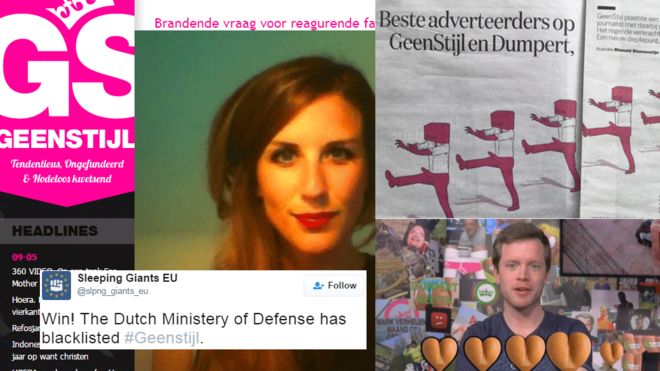
Dutch journalists launched a campaign to pressure advertisers into reconsidering advertising on sites that denigrate women.
A petition urging advertisers to withdraw their ads from provocative right-wing blog GeenStijl, shook up The Netherlands last month. About 150 women journalists and celebrities signed an open letter after a post that lead to a storm of sexual harassment and rape threats towards a female journalist. A few large companies and government institutions have so far pulled out their adverts.
The first time Loes Reijmer’s picture appeared on the front page of GeenStijl, in March 2017, she had just written a piece for her newspaper De Volkskrant about the reasons behind and the consequences of online sexual harassment of women.
In the article, she explained how blogs and social media groups are increasingly harassing women, for example by posting nude photos without their consent. She mentioned GeenStijl as the one Dutch example of a website thriving on sexist, racist and humiliating content.
GeenStijl, a popular and controversial website owned by Telegraaf Media Group, was quick to answer to Reijmer’s critical article. The next day her headshot appeared on the front page, accompanied by the text: ‘This is Loes Reijmer. Would you do her?’ A storm of sexist comments followed, including rape threats.
In April, daily NRC-columnist Rosanne Herzberger added fuel to the fire by writing a column questioning GeenStijl’s credibility. She went one step further and urged GeenStijl’s advertisers, some of the biggest companies in the country, to rethink spending their money on the site.
“The question is, which companies are making content like this possible?” Herzberger wrote. She mentioned companies like TUI travels, McDonald’s, Renault, Rabobank, Dutch theme park De Efteling and even the Dutch tax service and the Ministry of Defense.
GeenStijl has a reach of 1.2 million unique viewers per month, which makes it one of the biggest online media outlets in the country. Its videoblog Dumpert.nl has an even wider reach, 2.2 million views per month.
“Humiliating women is big business,” Herzberger stated firmly. Her column was widely spread and shared on social media, and lead to many companies to actually reconsider their advertising choices.
A couple of days later GeenStijl reposted the picture of Loes Reijmer with now the text: “Would you do her? Tell us how!”, followed by even more threatening comments by GeenStijl readers.
This is when dailies Volkskrant and NRC joined forces and published an open letter addressed to the advertisers. “Dear advertisers,” it read. “You are paying for a website where sexism and racism is the norm, not the exception.” About 150 women, from celebrities to journalists, signed the letter.
The campaign was inspired by the American organisation Sleeping Giant that keeps track of companies whose adverts appear on the alt-right website Bartbreit.
Journalists in The Netherlands are increasingly experiencing harassment and threats, a recently published investigation by the Dutch Union for Journalists (NVJ) showed. More than half (61 percent) of all (638) questioned Dutch journalists have been threatened physically or via social media at some point in their career, 22 percent even on a monthly basis. Amnesty International called the Dutch numbers “worrying”.
Volkskrant’s own ombudswoman, Annieke Kranenberg, believes it is a worrying trend. In an op-ed in De Volkskrant she stated that being a target of sexual intimidation and threats online could lead to self-censorship.
She asked several Volkskrant journalists about their experiences and many admitted they are suffering from self-censorship. “I always expect to receive negative comments, but the comments on GeenStijl are the worst, the most hateful you can get,” one journalist, who remained anonymous, told her. “The reality is that I do think twice before I write about something sensitive.”
Even the journalists that don’t have experience with self-censorship find themselves obstructed in doing their jobs. When they have been smeared by GeenStijl, they notice the articles in which they have been portrait negatively, keep coming up in the search engines. “I’m bothered by that,” one journalist said. “People Google your name before they say yes to an interview request.”
Online harassment against female journalists and women, in general, is not just a problem in The Netherlands, ombudswoman Annieke Kranenberg argued. “Worldwide it has an effect on press freedom,” she wrote. She referred to an essay by the American journalist Amanda Hess in 2014: Why women aren’t welcome on the internet. The amounts of sexist and threatening messages women receive online “are an assault on women’s careers, their psychological bandwidth, and their freedom to live online,” Hess stated.
OSCE’s media freedom spokesperson Dunja Mijatovic published a report on the topic in 2015. She concluded that female journalists are disproportionately affected by online hate speech. Mijatovic recommended that media companies themselves could play a role in changing this discourse by working on better on equality on the work floor. Media companies should also publicly stand up more against online hate speech, and they must ensure psychological and legal support for their journalists, Mijatovic argued.
GeenStijl has fired back to the open letter. They argue that dailies De Volkskrant and NRC have crossed a line by publishing such a threat and that by doing so they are themselves restricting freedom of expression.[/vc_column_text][/vc_column][/vc_row][vc_row full_width=”stretch_row_content_no_spaces” content_placement=”middle”][vc_column][vc_single_image image=”91122″ img_size=”full” alignment=”center” onclick=”custom_link” link=”https://www.indexoncensorship.org/2017/05/stand-up-for-satire/”][/vc_column][/vc_row]
12 Apr 2016 | Awards, mobile
Indonesian comedian Sakdiyah Ma’ruf, a nominee for the 2016 Index on Censorship Freedom of Expression Award for arts, was born to conservative Muslim family in Java and went on to become one of very few female stand-up comedians in the country to appear on national TV.
British comedian Shazia Mirza, the host of this year’s awards, talks to her about tackling no-go subjects, trying to win family approval, and how the stand-up scene is growing for women in Indonesia.
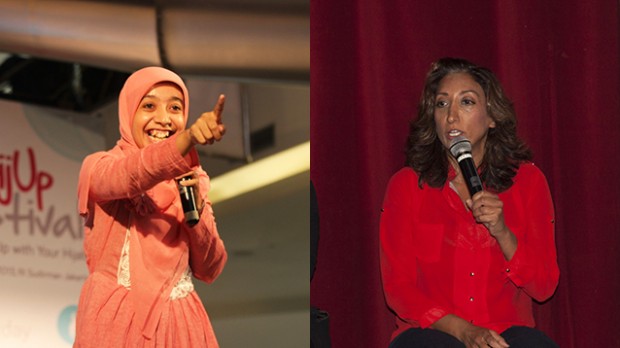
Sakdiyah Ma’ruf (left) and Shazia Mirza (right)
SHAZIA: Have your parents come to watch you do stand-up?
SAKDIYAH: My parents came to one of my shows once. It was in 2012 in one of the biggest theatres in Jakarta. I invited them to the show because it was held in a “dignified” building. I wanted to help my parents, and especially my dad, see that I was doing a “dignified” job.
I was very nervous. It was a full house. But I didn’t care whether the audience liked me or not, as long as I could get at least silent approval from my dad.
Since the show, my dad has supported me in my career as a comedian – not fully perhaps – but from this moment on, he knew that stand-up was something I did and would continue to do – in addition to the other “real jobs” I have.
I remember my parents saying they were pretty nervous about how the audience would respond to me. Perhaps my dad thought he could accept what I was doing if I gained approval from at least half of the audience.
The truth is that it isn’t always easy to get out of the house to perform. In June 2015 I was invited to open for a good friend of mine who is one of the biggest stand-up comics in Indonesia. He called me in April for the gig and it took me almost a month just to craft the right sentence to ask for my dad’s permission to perform.
SHAZIA: Do you say exactly what you want to? Or do you think: “No I can’t say that, people might get upset”
SAKDIYAH: The truth is that I rarely say exactly what I want to. I mean, can you imagine expressing all those voices in your head to the audience?
I say what I believe in; what I have experienced; what I am concerned about; what I like; what I don’t like; what I’m angry about… For me, comedy is always about telling the truth. You can’t be genuinely funny without being completely honest with yourself and your audience.
But I do self-censor, I self-censor all the time! I’m not afraid to talk about taboo topics like religion, race relation, a bit of sex etc – but only if it helps me to be honest with myself and my audience to be honest with themselves. I make sure I craft my jokes on these topics in a way that is truly funny; otherwise I’ll just sound like another girl complaining about how unfair life is.
I also make sure I’m being fair. I fact-check before I talk about something, so that I don’t just make things worse.
SHAZIA: Are you the only woman in Indonesia doing stand-up?
SAKDIYAH: No, of course not. I was the first, but the number is now growing. Every year there are new female stand-up comics performing on TV or participating in competitions.
SHAZIA: Do you feel pressure to talk about “heavy” subjects, like Islamophobia and terrorism, in your comedy? Or do you prefer to talk about lighter things sometimes – like shopping, dating, going on holidays.
SAKDIYAH: I want to talk about the issues that matter to me, things I can relate to, things that are part of who I am and what I have experienced.
I love talking about Muslims and the way they practice and interpret their religion. I talk about Islamophobia, violence towards women, the idea and construction of femininity and masculinity, my ethnicity.
Yeah, sometimes I feel such pressure to talk about “heavy” topics, but for what it’s worth, I think there is no such thing as a “light” topic in comedy. With a great comedian, even jokes about a refrigerator can bring new insights on humanity.
And I guess this is what is so beautiful about comedy: it helps us get to know who we are who others are as well. Every individual has multiple identities. I have been perceived as this Muslim girl fighting against fundamentalism through her comedy. While this is true, I do not want to just be seen as some kind of a “comedy jihadist” fighting against fundamentalists. I have layers to my identity, just like everybody else.
SHAZIA: Do you receive letters and emails from people who have seen your performances? What kind of things do they say? What do women say?
SAKDIYAH: Yes, I do. A woman once asked me whether I am a “true” Muslim. Perhaps she considered my jokes too daring or inappropriate for a Muslim woman to tell. She asked me all these questions about whether I really wear the hijab every day and whether I pray five times a day.
I like getting these kinds of responses. I feel like these people genuinely care about me or at least about Muslim women in general.
