25 Feb 2011 | Events
Index on Censorship will be taking part in two events at London’s Jewish Book Week, which runs from 26 February to 6 March.
Index is sponsoring journalist Dorian Lynskey’s talk about protest songs, based on his new book 33 Revolutions Per Minute: A History of Protest Songs. More details on the 27 February event here.
Jo Glanville, editor of Index on Censorship magazine, will be interviewing award-winning Palestinian writer and lawyer Raja Shehadeh on Sunday 6 March.
More details here
Jewish Book Week is offering a special ticket discount to support Index’s association with the Dorian Lynskey and Raja Shehadeh events. Buy a ticket for one Index event, and get one for the second event at half price!
To take advantage of this offer, book online at jewishbookweek.com or call 0844 847 2274 and quote “Index on Censorship”
25 Feb 2011 | Index Index, Middle East and North Africa, minipost
The first independent TV station in Northern Iraq, Naliya Radio and Television (NRT), was forced off air after up to 50 masked gunmen stormed its headquarters, destroying all broadcasting equipment and setting the building on fire. The TV station, which had only started broadcasting on 17 February, had already received numerous threatening messages over its coverage of protests in the city of Sulaymaniyah in which three demonstrators were killed and another 100 wounded. NRT TV had broadcast footage of police firing on the demonstrators.
24 Feb 2011 | Uncategorized
An attempt to sue a Ukrainian newspaper for libel in London has been refused in the Royal Courts of Justice today.
Master Leslie allowed an appeal of the libel action against Public Media, publishers of the Kyiv Post. He declined to accept jurisdiction in the UK, saying that the claimant, Mr Firtash, had no substantial connection to the country.
“The claim form and service thereof shall be set aside and proceedings dismissed and declared that [the] court will not exercise any jurisdiction to try this claim,” he said.
Whereas Boris Berezovsky’s libel case had shown “real and substantial connections with this country” he saw “no such evidence in this case”.
While Master Leslie recognised the claimant’s right to access to justice, he said it had no place in the English courts and that the connections were “tenuous in the extreme”.
Firtash had no residence in the country, no active business pursuits and had “erroneously” cited a business colleague’s Knightsbridge address for the claim.
Leslie had seen no evidence to show his property or shares in this country, or information about the frequency of his visits to this country.
“There’s no evidence before me to show that there is any such business interest or floatation being planned,” he said. It was not, but “almost” an abuse of process, he said.
The defendant lawyer suggested the article had only been viewed 21 times from the UK. While Leslie refused to “play the numbers game” when assessing the extent of internet publication, he said “it was plain it [publication] was limited”.
Index on Censorship and the Libel Reform campaign welcomed today’s decision. Jonathan Heawood, Director of English PEN, said:
“This is obviously good news for free speech, but the libel chill still remains. This phenomenon of libel tourism is a form of legal harassment, which discourages responsible investigative journalists from speaking the truth to power.
“This is not a problem we can fix by tinkering with legal procedures: Parliament needs to overhaul our the entire system.”
Late last year, following the dispute, the Kyiv Post blocked all access to UK internet users to its website, “in protest of the draconian libel laws there that hinder legitimate free speech and threaten the work of independent journalists, authors, scientists and others worldwide.”
24 Feb 2011 | Index Index, minipost, News
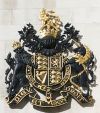
A judge ruled today that the High Court in London is not the best place to hear a libel dispute between billionaire Ukrainian businessman Dimitry Firtash and the Kyiv Post, a Ukrainian newspaper.
Whilst only 21 people downloaded the article about Firtash’s business practices in the UK, the libel action was pursued in London’s High Court.
Master Leslie threw the case out, saying the claimant’s connections to the UK were “tenuous in the extreme.” He added: “There is no substantial connection to this jurisdiction.”
The Libel Reform Campaign, as well as groups such as Article 19 and the Media Legal Defence Initiative, has long argued that wealthy claimants are using the High Court in London to stifle criticism of their behaviour overseas. In July 2010, President Obama signed into law legislation to protect US journalists, writers and publishers from “libel tourists” — litigants who sue Americans in foreign jurisdictions which place a lower emphasis on free speech.
Late last year, the Kyiv Post blocked access from Britain in protest at English defamation laws. Upon visting kyivpost.com visitors would instead be directed to a plain white page with this message:
“The Kyiv Post, effective Dec. 14, 2010, is blocking access to all web traffic originating from the United Kingdom in protest of the draconian libel laws there that hinder legitimate free speech and threaten the work of independent journalists, authors, scientists and others worldwide.”
Welcoming the ruling, Conservative MP Sir Peter Bottomley urged reform of England’s libel laws:
“Parliament should without delay make the law clear. The costs should be limited to half the estimate damage if the words are potentially untrue, damaging and not privileged. Additionally, the subject of the complaint should have a statute right to show that the UK is not the relevant court for one of a list of clear reasons. Also, the limit of costs and damages combined should not be higher than the number of listeners or readers multiplied by say 50 pence. Twenty readers creates the combined limit of ten pounds; two million copies might lead to a calculation of £1 million.”
