30 Sep 2013 | News, Politics and Society, Sudan
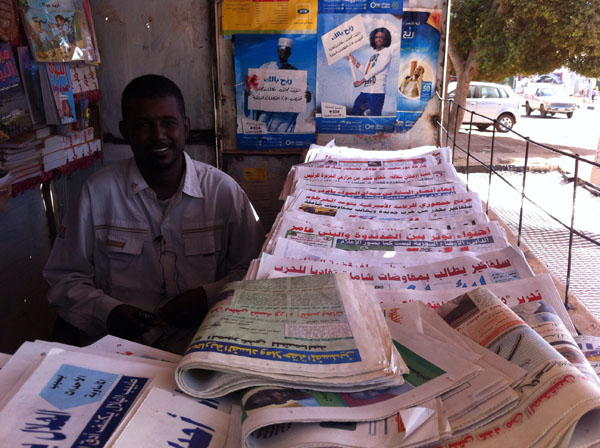
The two most influential independent newspapers in Sudan, Al-Sahafa and Al-Kartoum, have recently been bought by the National Intelligence
Security Service (NISS).
The NISS now owns 90% of all the independent newspapers in the country, according to Alnoor Ahmed Alnoor, the ex-editor in chief of Al-Sahafa.
The NISS purchased 65% of Al-Sahafa’s stock from a company called Bayader and a further 25% from Sideeq Wadaa, a businessman and member of the ruling NCP Party (with the remainder retained by the paper’s founder, Taha Ali Albashir). This follows the purchase of 80% of the stock of Al-Khartoum from its owner, Albagir Abdellah, five months ago.
Ownership represents the final stage in the Sudanese government’s campaign to silence independent voices in the media. Newspapers that refused to tow the NCP line or implement its agendas faced harassment, and fifteen newspapers were forcibly closed following the independence of South Sudan in 2011. Punitive taxes were also imposed, as was the case with the Al-Sudani between 2006 to 2011, which eventually forced the paper’s owner to sell it to a member of the NCP.
Khalid Abdelaziz, a one-time editorial manager of Al-Sudani says: “They used to demand about US$400,000 a year in their campaign against us while leaving their own newspapers paying little tax. They also used regulations to prevent us from the advertising. They gave us a choice, to implement their agendas or to sell our newspaper. We took the second choice”.
The new ownership has been followed by the resignation of key journalist. Interference led to Mozdalfa Osman to step down as editorial manager at Al-Khartoum: “I resigned because of the negative influence on my job and the implementing of NISS’s agenda, which contradicted my professionalism”.
Those that remain face increasing harassment, such as Al-Khartoum’s Mohamed Salih, winner of this year’s Peter Mackler prize, who faces pressure from his new editor-in-chief: “He calls me four times weekly asking to change some of the ideas in my column. I have never worked under such conditions before”.
Independent reporting in Sudanese has had a checkered history. The free press thrived for 57 years from 1903 to 1960 when first dictatorship came to the power. After the revolution of October 1964 independent newspapers once more operated until the second dictatorship in 1969, which nationalized all newspapers considered to have had a socialist orientation. With the second period of democracy, following the revolution of March 1985, another tranche of independent newspapers came into existence. However this once more came to an end when the current regime came to power in a military coup in June 1989.
Before the peace agreement with Sudan people liberation movement (SPLM) in 2005, NCP created shell companies to buy stakes in the newspapers, such as Alrai Alaam one of the oldest newspapers in Sudan. It has been published since 1948. The shell companies began buying stakes in 2002. The same process has been used with Alsahafa and Alkhartoum.
Hayder Almukashfi, who is responsible for the opinion pages on Al-Sahafa, said the newspaper has been greatly influenced by the new owners: “All the pages have been affected by the new polices and the opinion pages have been affected the most. The new owners sacked the previous editor in chief, who had been in the job for years, and have brought another one is a member of ruling NCP. This is an awful situation for freedom of speech in Sudan. The government can now claim there’s no censorship of the press because now the government is the press”.
This article was originally posted on 30 Sept 2013 at indexoncensorship.org
30 Sep 2013 | Digital Freedom, Guest Post, News, Pacific Standard
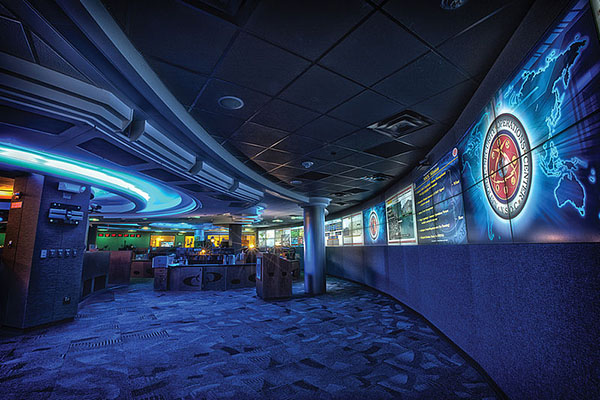
NSA operations center in 2012 (Photo: Public Domain)
A few days ago the European Parliament’s Office of Citizens’ Rights and Constitutional Affairs released a notably pointed briefing paper arguing for Europe to stop trusting American Internet services. The briefing and the committee are the latest forum tosuggest that European states create domestic cloud computing capacities to provide member states legal protection for NSA data surveillance. The report has the not-at-all-subtle title “The US National Security Agency Surveillance Programmes (PRISM) Foreign Intelligence Surveillance (FISA) Activities and Their Impact on EU Citizens’ Fundamental Rights.” Among the findings:
Prominent notices should be displayed by every US web site offering services in the EU to inform consent to collect data from EU citizens. The users should be made aware that the data may be subject to surveillance (under FISA 702) by the US government for any purpose which furthers US foreign policy.
The argument there being that people will have an incentive to find other websites to use. Particularly for e-commerce. Companies like Amazon, and U.S. airlines and ticketing agencies—Expedia and the like—won’t be pleased, and that in turn will create economic pressure to alter surveillance strategy, the report argues.
A consent requirement will raise EU citizen awareness and favour growth of services solely within EU jurisdiction. This will thus have economic impact on US business and increase pressure on the US government to reach a settlement.
That isn’t all. The report argues for the European Union to simply swear off U.S.-based cloud computing, and to develop local capacity. Again, the argument is largely economic.
Such a policy would reduce US control over the high end of the Cloud e-commerce value chain and EU online advertising markets. Currently European data is exposed to commercial manipulation, foreign intelligence surveillance and industrial espionage. Investments in a European Cloud will bring economic benefits as well as providing the foundation for durable data sovereignty.
Further along, the report notes the different ways the NSA scandal has been understood inside and outside the US. Inside the U.S. a key issue was whether the NSA has been spying domestically, on U.S. citizens, and the implications of that question for domestic data security. Abroad, the report notes, people are understandably more interested in their own ability to protect personal data from the NSA. The briefing suggests E.U.-U.S. negotiations on data security, though efforts at such negotiations have failed previously.
…a casual reader would not understand that the intended target of surveillance was non-Americans, and that they had no rights at all. It seems that the only solution which can be trusted to resolve the PRISM affair must involve changes to the law of the US, and this should be the strategic objective of the EU. Furthermore, the EU must examine with great care the precise type of treaty instrument proposed in any future settlement with the US. [boldface as printed] Practical but effective mechanisms are also needed to verify that disclosures of data to the US for justifiable law enforcement investigations are not abused.
In sum, Europe’s still upset, and talking seriously and in public about how to protect itself from American eavesdropping. Yesterday, Slate‘s Ryan Gallagher flagged a want ad for a counterintelligence professional posted on a Parliament website last July, shortly after the Edward Snowden affair broke. The same body is housed in a Brussels building ID’d as an NSA target in the Snowden papers, according to the Slate report.
This article originally appeared at Pacific Standard. Pacific Standard is an arm of the nonprofit Miller-McCune Center for Research, Media and Public Policy.
27 Sep 2013 | Digital Freedom, Middle East and North Africa, News, Sudan
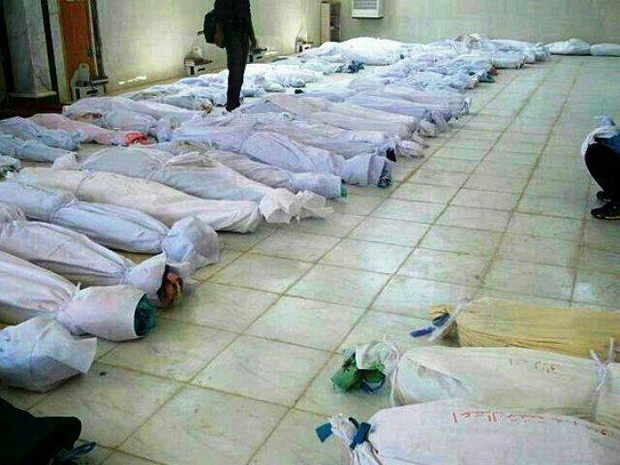
Reports of at least 50 dead have been received from Sudan.
There’s no trying to hide what’s happening within the urban centres of Sudan today. On Wednesday, September 25 at about 1pm, the Sudanese authorities completely shut down the country’s global internet for 24 hours. This happened against the backdrop of spreading peaceful protests following the regime’s decision to lift state subsidies from basic food items and fuel.
In the last few weeks, Sudan’s citizens have been feeling the burden of increasing prices as the Sudanese pound depreciated sharply, and purchasing power declined in a country where 46 percent of the population live in poverty. The lifting of subsidies was met with a popular outburst, especially after a public TV speech by President Omer Al Bashir made it clear that his government has no concrete solutions. He went on to mock the population saying they did not know what hot dogs were before he came to power.
The protests, which started in Wad Madani in Gaziera state, have so far spread to Sudan’s major towns including Nyala in war-struck Darfur. They have been met with unprecedented government violence in the Northern cities of Sudan which have traditionally been peaceful. Live ammunition has been used against protesters, many of whom are school students and youth in their early to mid twenties. By the third day of protests the death toll in Khartoum alone exceeded 100, and 12 in Wad Madani. There have been arrests amongst political leaders, activists and protesters, with more than 80 detainees from Madani alone.
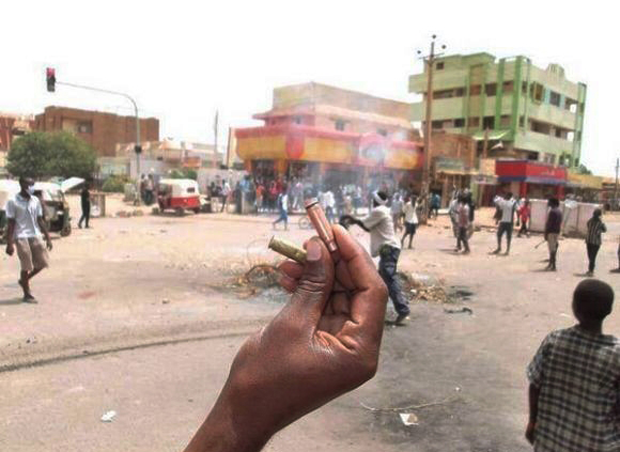
Sudan’s government has cracked down violently, using live ammunition to disperse demonstrators.
Protesters are mainly calling for the regime to step down, with chants of, “liberty, justice, freedom”, “the people want the downfall of the regime”, and “we have come out for the people who stole our sweat”. These protests lack any political or civil society leadership, and so far not a single statement has come from the umbrella of opposition parties, the National Coalition Forces.
Crackdown on the internet and print media
The internet blackout imposed by Sudan’s National Congress Party (NCP) was an intentional ploy aimed at limiting the outflow of information, especially the very graphic images of protesters lying dead in the streets, as well as the images from hospital morgues showing protesters with fatal injuries to the head and upper torso areas. It is clear that this show of force is meant to frighten Sudanese citizens and deter additional protests. (Graphic Images: Street | Street)
This is not the first time the regime in Khartoum has shut down the internet. In June 2013 there was an 8-hour internet blackout during a gathering organized by the Ansar (an off-shoot of the Umma Party) that attracted thousands of people. During the protests last year, dubbed Sudan Revolts, the internet slowed down drastically on the night of June 29, before a large protest was announced.
Since the independence of South Sudan in July 2011, Sudan has also experienced a general clampdown on the media. On September 19, before the start of the protests on Monday, newspapers writing about the economic situation including Alayaam, Al Jareeda and the pro-government Al Intibaha, were confiscated. On Thursday, newspapers including included Al Ayaam and Al Jareeda, refused to print because of the government imposed censorship that prohibits any mention of the ongoing protests. Today Al Sudani and Al Mahjar newspapers (both pro-government) were confiscated, and Al Watan was not allowed to go to press.
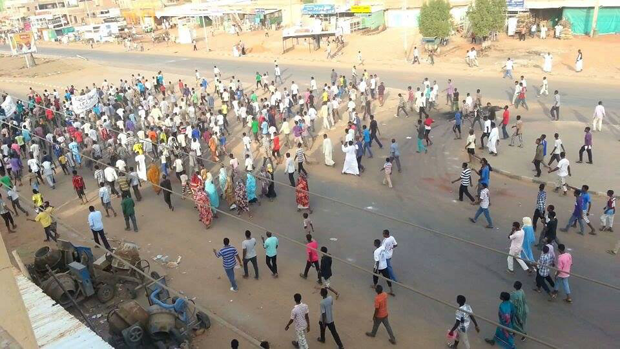
The government of Sudan cut the country off from the internet as protests against the end of fuel subsidies spread.
With most citizens and activists relying completely on social media outlets and internet access through mobile phones to share information, footage and photos, the internet remains the only affordable means to communicate with the outside world. Other options, such as dial-up using modems are not viable for Sudan, as most people have no landlines to connect via modems and depend on mobile devices to access the internet.
During the internet blackout many reported that even SMS messages were blocked. And services such as tweeting via SMS were interrupted by the sole telecommunications provider that carries this service-Zain.
Popular anger and continuing protests
Contrary to the government’s intention the excessive use of force against protesters, the rising death toll and continuing rumours that the internet may be shut down again have not dissuaded citizens, but rather made them more angry and determined, with protests lasting long after midnight in Khartoum. As the streets of the capital and other towns filled up with security agents, riot police and armed government militias, citizens have nonetheless buried their dead in large and angry processions.
Today has been called Martyr’s Friday, in remembrance of all those who have fallen. Protests have been announced in all of Sudan’s towns. In some areas of Khartoum, citizens reported that they were not allowed into mosques for Friday prayers, and that the mosques had a heavy presence of security agents in civilian clothes. This move shows that the regime is anxious protests may follow after the prayers, as well as fearing the possible politicisation of the Friday sermons which may incite more anger.
Nonetheless, this has not deterred more than 2,000 protesters to congregate in Rabta Square, Shambat Barhry (in Khartoum). While writing this, a protester called me to say his internet was not working, and described that even leaders from the communist party, Popular Congress Party and others were starting to arrive. I could hear him with difficulty, but chants in the background were clear, “ya Khartoum, thouri, thouri”—Khartoum, revolt, revolt.
So far one thing is clear: these protests are not a replay of last year’s summer protests that were mainly triggered by university students and youth movements. These are street-supported protests–something that previous protests lacked and a game changer for the NCP who is gradually losing its grip on power.
This article was originally posted on 27 Sept 2013 at indexoncensorship.org
This article was edited on 5 November 2013 at 13:50. The article originally stated that the internet blackout took place on Wednesday 26 September. It took place on 25 September.
27 Sep 2013 | Comment, Digital Freedom, News
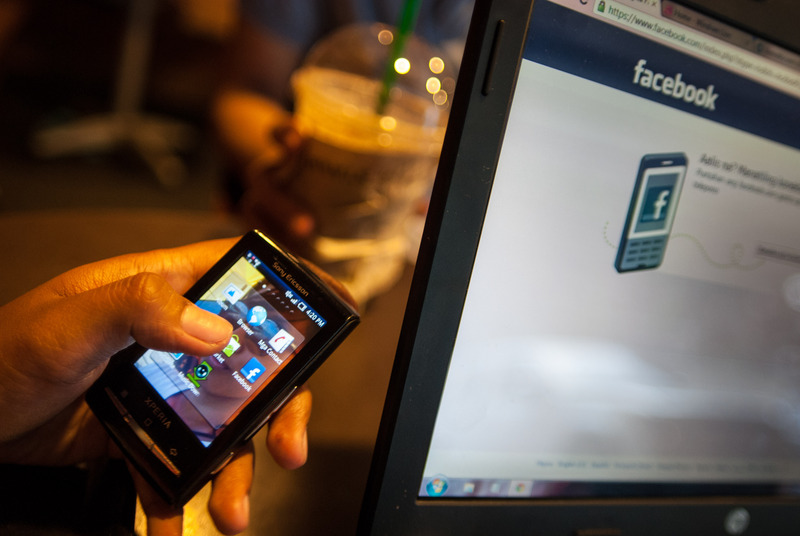
Californian legislators have come up with a plan that would help teenagers delete their online presence, or at least the parts that are held by social media sites.
It’s an incredibly tempting notion: as the Independent’s Grace Dent points wrote this week:
If only I could have rounded up my past in binliner at 18 and set it alight. All those love letters, declaring undying love now sitting in the lofts of boys I can’t remember the names of, the missing diaries, the angry letters sent to the NME, some petulant letters sent to Mars Inc. about the Marathon to Snickers name change. How lovely if aged 18, following a short button pressing ceremony I was officially no longer a twerp.”
Dent is writing about a teenage past pretty much pre-Internet, never mind pre-smartphone with 8 megapixel camera. I’m of the same vintage. There’s really very, very little of young me out there. Thank God.
It is different of course for teens today, who innocently post vast amounts of information about themselves online. We’re beginning to see the repercussions of that. Cast your mind back to earlier this year and the case of 17-year-old Paris Brown, the recently elected youth police and crime commissioner for Kent, who lost her salaried job after someone dug up a few stupid things she’d posted on Twitter a few years previously. It’s depressing that people can be so unforgiving of children.
Much worse, Texan teenager Justin Carter could face jail after being charged with making “terroristic threats” during a Facebook argument about a video game.
Could an erase button solve any of this? I’m not sure. It is possible to get rid of one’s Facebook and Twitter accounts already, but will it be possible to erase all the mentions? The tagged photos and endless other footprints left online? I’m not so sure.
Moreover, I don’t know if it’s a really positive idea. If the web is to be part of everyday life, which we seem to want to encourage, then how does this initiative, essentially creating two different lifetimes, work?
At an Index on Censorship discussion on young people’s free speech online last Monday, an interesting idea emerged: should the joys and dangers of social media be taught in school? Like sexual education is taught? Social media, like sex, is part of life and people should be taught about it sensibly. The worry with a button that effectively erases one’s adolescence is that it may mean we avoid talking about positive social media use for teens in the first place.
On top of all this is broader society. Should we not be a little more forgiving of young people’s indiscretions? A little less judgmental?
We should be able to to delete information we’ve put online about ourselves, absolutely. But we should also be creating an atmosphere where young people don’t feel the need to take the nuclear option and erase years of thoughts, ideas and memories.
This article was originally published on 27 Sept 2013 at indexoncensorship.org