27 Sep 2013 | Digital Freedom, News, Pakistan
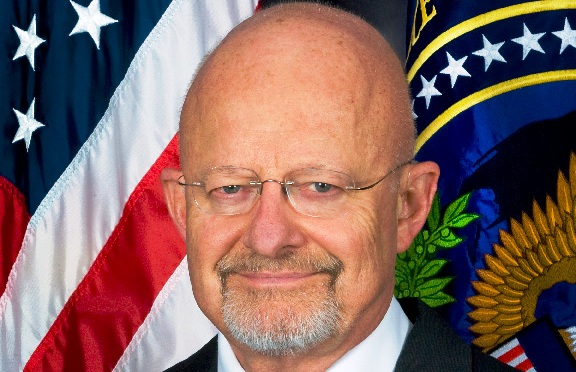
NSA head James R Clapper
Dear Mr Clapper,
We are reaching out to you with important information that may be of crucial value in preserving your organisation’s integrity and purpose. As citizens of Pakistan, we feel there’s an unexplainable bond, a debt if you’d like to call it, that we owe to your agency; after all, we are the second most interesting people in the world in your ever-vigilant eyes. We are therefore writing to raise with you an issue of extreme importance & national security.
The information here is highly critical and can jeopardise our security if leaked; you see, the world does not really recognise whistleblowers as yet. We trust you to keep this to yourself.
The government of the United Kingdom and the government of Canada are both involved in activities that may be considered by you a grave violation of the sovereignty of your organisation. Independent research group The Citizen Lab – truly independent as they do not take government or corporation support – has revealed the presence of Netsweeper and FinFisher equipment in Pakistan, belonging to companies with headquarters in Canada and the United Kingdom respectively.
It is baffling that these two respected governments, your notable allies, have not taken the necessary steps to disable these equipments, or at the very least stopped the trade. FinFisher for one has been used actively in Bahrain, aiding the Bahraini government in cracking down on activists, including an activist your government has lauded and awarded. This seems to us as a painful revelation that shows a lack of faith in your agency from your own allies.
As far as we are concerned, we don’t understand why these companies need to sell this equipment to our government, and why our government needs to spy on us when your organisation has dedicated staff, labour, and, not to forget, extensive budgets to be able to do just that.
With a heavy heart, we hope to keep you informed (just in case you missed out) and hope that you will take strict action to strike down these Weapons of Mass Surveillance that are in blatant disregard, grossly disrespectful, and a gross violation of your integrity and the national security values of your country.
Yours sincerely,
Citizens of the Second Most Interesting Nation in the World
SIGN INDEX’S PETITION AGAINST INTERNET SURVEILLANCE
This article was originally posted on 27 Sept 2013 at indexoncensorship.org
26 Sep 2013 | News, United Nations
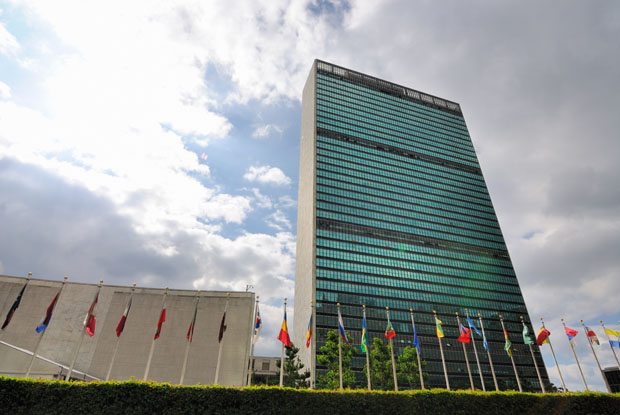
Image SeanPavonePhoto / Shutterstock.com
“The transition to sustainable development must be based on a commitment to eradicate poverty. This is an indispensable requirement; a matter of human rights”, UN General Secretary Ban Ki Moon declared yesterday at a special event discussing the future of global development.
The day-long session took place at the 68th General Assembly titled ‘Beyond the Millennium Development Goals: The Post-2015 Sustainable Development Agenda’. Its aim is to figure out what could be the world’s next unified development strategy when the UN’s eight Millennium Development Goals (MDG) ‘run out’ in 2015.
While it may seem like your average meeting of the diplomatic elite, this week’s events marks one of the most significant events in global development since the Millennium Declaration in 2000. The conclusions will guide a large-scale poverty eradication strategy that will have a very real impact on the lives of millions around the world. It is vital to get it right, and in order to do that, it has to promote and protect freedom of expression.
The major criticisms levelled at the MDGs were the opaque manner in which they were set up, and the minimal focus civil liberties. The right to freedom of expression was all but ignored completely.
So when the time came around to consider the road ahead for global development, many, including the Beyond 2015 project, argued that human rights had to play a fundamental part. “Development will not deliver for the poorest and most marginalised people in the world without a strong focus on human rights,” Human Rights Watch recently stated.
A vital right in this respect is the access and ability to express yourself freely and without fear. As Index has argued before, freedom of expression underpins most other rights and allows them to flourish. The ability for people on the ground to express their opinions, needs and wants, criticise and hold their leaders to account and access a free and fair media, play vital parts in the healthy development of a society. It is the marginalised people this development strategy would seek to help that face the most acute barriers to freedom of expression. If people can’t express what is hindering their development and if no-one is listening, how can their situation truly improve? This is a vicious circle that can only be broken by a strong commitment to universal freedom of expression.
The positive thing is that the powers that be appear to agree with this. Ban Ki Moon’s recent report “A life of dignity for all”, presented at this General Assembly, argues that “We know that upholding human rights and freeing people from fear and want are inseparable; it is imperative that we do more to act on this basic truth.”
The High Level Panel on the Post-2015 Development Agenda, tasked with scoping out the options ahead of this General Assembly, presented their findings in a report in May. They recommended it should include guarantees for freedom of speech, association, peaceful protest, and access to independent media and information. They also argued for increased public participation in political processes and civic engagement, as well as guarantees regarding peoples’ right to information and access to government data.
As opposed to the MDG process, this time around complex, important decisions about world development were not made behind closed door. There was a nine-month consultation process that included input from indigenous peoples, migrants, women’s groups, in addition to thousands of civil society groups and businesses from around the world. Through The World We Want project, a million people from across the world gave their thoughts on development in an online survey.
But the work is far from over. The General Assembly will set the stage for the future of global development, but not in stone. The MDGs avoided politically difficult topics like freedom of expression to ensure widespread support – even from countries with poor record on civil liberties. Unwavering commitment to human rights is needed over the next two years to avoid a watered down agenda.
The MDGs have laid some important foundations. The fact that we’re even discussing how to continue the project post-2015, is to its big credit. For the next step of a global development push, however, human rights including freedom of expression, have to be at the core. People have to be given a voice in their own development process.
26 Sep 2013 | Bahrain, Guest Post, News
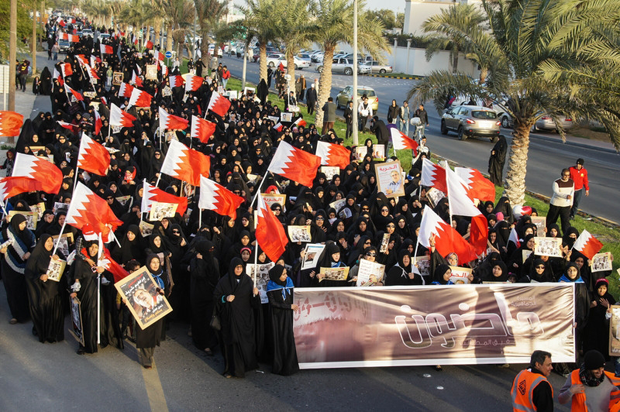
A pro-democracy protest in January 2013. (Photo: Moh’d Saeed / Demotix)
On 17 September, Bahraini authorities arrested Khalil Marzouq, a prominent member of the opposition Al Wefaq group. Following an interrogation that lasted over seven hours, he was charged under newly amended terrorism laws leading, to Bahrain’s main opposition party to pull out of the National Dialogue.
The credibility of the dialogue itself has come under criticism, as the government has carried on with its crackdown on dissent throughout the discussions. Amnesty International points to this irony by noting that authorities have been “flaunting” the National Dialogue as the central reason for canceling the visit of UN Special Rapporteur on Torture back in April, yet have nevertheless moved towards arresting participants. The actions have been criticised as measures intended to “wipe out the opposition”.
There has also been an attempt to dismember the Ulama Council of Shia religious leaders, led by Sheik Isa Qassim. Additionally, in a recent development, Bahrain’s Public Prosecutor has also been re-elected as a member Member of International Association of Prosecutors Executive Committee, despite Bahrain’s human rights abuses and continued prosecution of human rights defenders and political activists.
The results have been critical; Bahrain has been leading a campaign of repression with impunity since the protests began.
The recommendations of the Bahrain Independent Commission of Inquiry and the United Nations Universal Periodic Review have been largely ignored in practice, and instead practical moves have been taken within the national legal framework to target the opposition.
New terrorism laws have been announced implementing measures to withdraw citizenship and setting tough penalties against anyone that the regime dubs a terrorist. Newly implemented decrees have also imposed sweeping bans on all forms of peaceful protest in the capital Manama, alongside tough penalties for parents and guardians of juveniles who take part in unlicensed demonstrations.
Such measures have always been imposed in Bahrain, however the move to practically implement them within national law has lead to a new era of political polarisation.
Media personnel and citizen journalists reporting on human rights abuses have also found themselves targetted. In August, citizen journalist Mohamed Hassan was arrested and his equipment seized during a midnight raid on his home. Shortly following the events, his lawyer AbdulAziz Mosa was also detained after tweeting claims that Hassan had been tortured. The Bahrain Centre for Human Rights reported that he had been interrogated for over three hours, beaten on his back and lower abdomen and “forced to confess under mental and physical coercion”.
More recently, on the 24 September, a US citizen Tagi Al Maidan was convicted and sentenced under charges relating to attempted murder: charges he consistently denies. Al Maidan has long complained of torture during his detention. Torture was confirmed to have been a systematic practice in Bahrain by the BICI despite the government’s denial that it takes place.
Allegations of torture and ill-treatment continue to surface following the report, not only in places of isolation away from security departments, but during CID and Public Prosecution interrogations. During a meeting between Bahrain’s Prime Minister and Mubarak Bin Huwail, recently acquitted of torture, the PM commented to Huawail that “these laws cannot be applied to you. No one can touch this bond. Whoever applies these laws against you is applying them against us. We are one body”.
Despite the lack of international accountability for Bahrain’s rights abuses, these recent developments have forced some states to show public concern over the future of the Kingdom. At the 24th session of the UN Human Rights Council, 47 states expressed concern through a joint-statement over the deterioration of the human rights situation in Bahrain, its newly implemented terrorism laws (specifically revocations of citizenship), the increase in violence and the imprisonment and harassment of persons exercising their internationally recognised freedoms.
The European Parliament has similarly expressed concerns over the deteriorating situation where “human rights activists are facing ongoing systematic targeting, harassment and detention in Bahrain”.
The uprising looks to continue amidst the absolute subjugation of any form of dissent. Opposition have been branded and targeted as “terrorists” — a term undefined in Bahrain national law — and as anniversaries are set to be re-lived in the new year, the movement is subsequently set to escalate in dissent.
This article was originally posted on 26 Sept 2013 at indexoncensorship.org
25 Sep 2013 | News
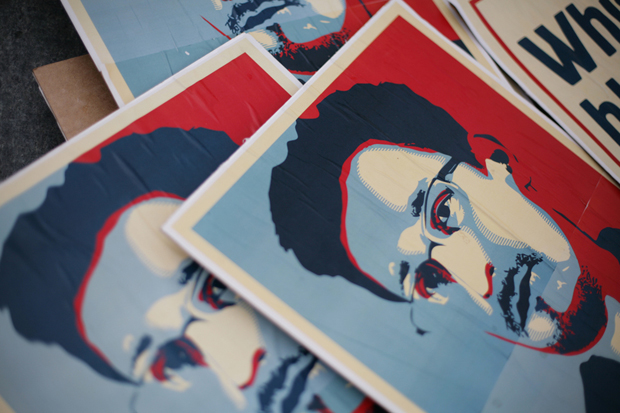
(Photo: David von Blohn / Demotix)
This article was originally published at Indy Voices
What’s happened to Edward Snowden and his revelations about the National Security Agency’s surveillance programme? As stories keep emerging from one of the largest leaks in US history, we learn more and more about the Americans’ ability to monitor communications, but seem less sure how to respond. Most people would acknowledge that the state does retain some right to monitor suspect activities. But this is a very different proposition from the population-wide mass surveillance suggested by the documents leaked by Snowden. Clearly the balance has tipped much too far in favour of default data gathering. So how do we move it back?
This is a complex discussion, and it’s not really being had in the UK right now. The Guardian’s Simon Jenkins has suggested an establishment conspiracy has kept the public from talking about this – it’s certainly true that the response here has not been on the level of that in other countries (not least in Brazil, where a national Internet redesign to avoid US surveillance is being considered).
But part of the problem here is not simply that people have been shielded from the discussion on surveillance, or that people don’t care. It is that people do not know what we are supposed to do about this. Who do we appeal to? What do we want?
This is where the European Union can come into its own. An Englishman’s home may be his castle, but nowhere is protection of privacy given more credence than in Brussels and Berlin. A horror of Soviet-style surveillance of citizens runs deep in many European institutions and nation states, particularly those that had hands-on experience. The most powerful person in Europe, Angela Merkel, remember, was a citizen of Stasiland.
The European Parliament’s Civil Liberties, Justice and Home Affairs Committee (Libe), has set out to investigate claims of surveillance and examine what the EU can do about it. UK Labour MEP Claude Moraes has been charged with reporting on the Committee’s findings by the end of the year.
The parliament will be considerably aided by a 36-page briefing by independent surveillance researcher Caspar Bowden, who was helpfully mapped out the history of US and UK surveillance, and overlap with the European Union, all the way back to Alan Turing’s work with US spies in 1942.
Bowden comes up with several recommendations for Europe: the development of a “European cloud”, the revoking or renegotiation of mechanisms that allow US companies to gather data from European users, and, significantly in the case of the Snowden revelations, “systematic protection and incentives for whistleblowers”.
The European parliament investigation is welcome. But in reality, there is only a certain amount the parliament can actually achieve. The real power will, in the end, rest in the will of the governments of the respective European Union countries to act. Europe’s cyber strategy already states that “increased global connectivity should not be accompanied by censorship or mass surveillance”. But it’s time EU leaders acted on this.
That’s why Index on Censorship, along with dozens of other groups, including Amnesty, Reporters Without Borders and the Electronic Frontier Foundation, as well as stars and activists such as Bianca Jagger, Stephen Fry and Cory Doctorow, is petitioning European leaders directly. The next European Council Summit takes place at the end of October. We want every European government head there to publicly take a stand against mass surveillance.
The European Union, founded in part as a democratic bulwark against the authoritarianism of the eastern bloc, has a chance to stand out in the world against surveillance and for the rights of free speech and privacy. In the coming decades, power will be defined by who controls information: Europe, as a powerful democratic force, should work to ensure that its own ordinary citizens and people around the world are not left impotent.
Sign the petition telling EU leaders to stop mass surveillance here
