30 Jan 2015 | Events, mobile

The London Irish Comedy Festival is hosting a free event about comedy and censorship.
Controversy has always surrounded the comedy industry, from stand-up to sitcom to satire. During the discussion, ethics, censorship, freedom of expression and taste will be explored by special guest panellists and the audience.
- What makes us sometimes laugh at the very worst of human nature?
- Is comedy a natural and positive way of coping with horror?
- When is a joke just too offensive to use?
- When exactly is “too soon”?
- What’s off limits?
- Is every aspect of life fair game?
Join the London Irish Comedy Festival to grapple with these and many other questions in a provocative and interactive event.
PANELLISTS INCLUDE
Steve Moore, Entrepreneur, Campaigner and Facilitator
Jodie Ginsberg, Chief Executive, Index on Censorship
Eddie Doyle, Head of Comedy, Talent Development & Music, RTÉ
Austin Harney, Chair, Campaign for the Rights and Actions of Irish Communities
Gráinne Maguire, stand-up comedian, comedy writer and columnist
WHERE: Comedy Café Theatre, 68 Rivington Street, Shoreditch, EC2A 3AY
WHEN: Thursday 19th February 2015 – 8:00pm
TICKETS: Free but must be reserved – available here
30 Jan 2015 | Bahrain, mobile, News

Maryam Al-Khawaja spoke out in October for the release of fellow human rights activist Nabeel Rajab. (Photo: David Coscia for Index on Censorship)
Nine people have been arrested in Bahrain for “misusing social media”, a charge which is punishable by a fine or up to two years in prison.
Human rights defender Nabeel Rajab was last week sentenced to six months in prison over a tweet he posted which was deemed insulting to public institutions. Rajab has been bailed, and tweeted on 21 January that he will appeal his conviction on 11 February.
Human Rights Watch has dedicated seven pages of its 25th annual report to Bahrain. The World Report 2015, released on Thursday, reviews the human rights situation in over 90 countries.
The report states that over 200 defendants have been sentenced to long stints in prison by the Bahraini courts on charges of national security or terrorism, with at least 70 of those being sentenced to life.
It says: “Bahrain’s courts convicted and imprisoned peaceful dissenters and failed to hold officials accountable for torture and other serious rights violations. The high rate of successful prosecutions on vague terrorism charges, imposition of long prison sentences, and failure to address the security forces’ use of lethal and apparently disproportionate force all reflected the weakness of the justice system and its lack of independence.”
In December, co-director of the Gulf Center for Human Rights (GCHR), Maryam Al-Khawaja, boycotted a court hearing which saw her sentenced to one year in prison. Al-Khawaja was charged with assaulting two policewomen last year when she traveled to Bahrain to visit her father Abdulhadi, who is currently serving a life sentence for his involvement in anti-government protests in 2011. In related news, the GCHR website was yesterday reportedly blocked in the United Arab Emirates.
Al-Khawaja’s sister Zainab was arrested in October on charges of insulting the king, and gave birth to her second child just a few days before being sentenced to three years in prison. She was then sentenced to an additional 16 months less than a week later, on separate charges of insulting a public official.
This article was published on 30 January 2015 at indexoncensorship.org
29 Jan 2015 | Azerbaijan, Azerbaijan News, mobile, News
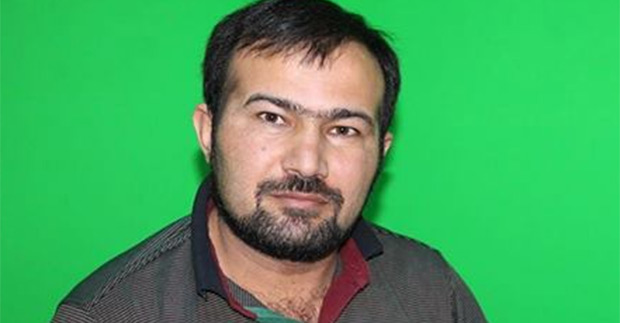
Azerbaijani journalist Seymur Hezi, who works for Index on Censorship Freedom of Expression Award-winning newspaper Azadliq, has been sentenced to five years imprisonment for “aggravated hooliganism”, according to Azadlıq Radiosu.
“Index condemns the sentencing of Azerbaijani journalist Seymur Hezi, who was arrested last year on trumped up charges of disorderly conduct. The ‘crime’ for which he is actually being punished is journalism and his attempts to tell the truth about a brutal authoritarian regime that systematically stifles dissent,” Index CEO Jodie Ginsberg said.
Hezi’s sentencing is another sign of the continuing clampdown by Azerbaijan’s authoritarian government on civil society. Earlier this week, investigative journalist Khadija Ismayilova‘s pre-trial detention period was extended by a Baku court; other prominent human rights defenders who have been arrested in recent months include: Leyla Yunus, Arif Yunus, Rasul Jafarov, Anar Mammadli and Intigam Aliyev.
Hezi was arrested on August 29 2014 after an altercation in which the journalist said he was protecting himself from a physical assault and harassment, according to his lawyers.
Azadlıq Radiosu reported that Hezi’s lawyers and family are certain the arrest and the sentence are politically motivated and that Hezi is innocent.
His father, Meshqul Heziyev told Azadlıq Radiosu, “the hearing was biased and turned down all of the motions. At the end it simply carried out a politically motivated order”.
“Seymur Hezi’s arrest is a serious blow against our newspaper. He is one of the brightest Azerbaijani analysts and journalists, and a true intellectual,” Rahim Haciyev, acting editor of Azadliq newspaper, told Index at the time of Hezi’s arrest.
Haciyev said he is sure Hezi’s arrest is the result of a planned provocation and the journalist is prosecuted for publishing critical articles on the authorities in the newspaper, as well as in his online TV program “Azerbaijani Hour”, which he scripts and hosts.
In March 2011, Hezi was abducted and tortured by unidentified men. He was warned to keep quiet.
Seymur Hezi is also host of news programme “Azerbaijan Hour” and is a member of the opposition Popular Front Party.
This article was published on 29 January 2015 at indexoncensorship.org
29 Jan 2015 | Europe and Central Asia, mobile, News, United Kingdom

Sometimes, when I’m bored, or a bit down and feel the need to believe there are people in the world who are worse to me (worse, not worse off), I turn to TripAdvisor.
I’m sure there are perfectly reasonable people on TripAdvisor. Perfectly normal people, who may have enjoyed a dinner somewhere, or made friends with the barman at their holiday hotel, and thought “I must tell the world! These hardworking service industry people deserve my support.” I’m sure there’s lots of that going on on TripAdvisor (other review sites are available).
These happy people do not concern me. No, these are not the reviews I want to read. I seek out the one and two stars which are often written by the worst people in the world.
Petty, greedy, stingy, paranoid and usually convinced of their own way with imagery. Imagine eating out with these people.
The waitress approaches, smiling (as they often do):
“Would you like to see the wine list?”
“Yes please.” (List is delivered. Exit waitress).
“What do you think she meant by that?”
“What?”
“Asking if we wanted the wine list like that.”
“Like what?”
“Didn’t you hear her?”
“Yes. She said ‘Would you like to see the wine list?’ They often do.”
“But it was the waaaayyyy she said it.”
“Uh.” (Scans room for exits, sees only cheery floor staff).
On goes the evening. Everything is noted. The wine is too cold, the food too hot. Side orders are too expensive, there’s a draft only your dining partner can perceive. The service is too slow/fast. Somehow, in spite of it being a busy night, the waitress has been giving your companion a Paddington hard stare all night.
No, you certainly will not be having dessert, not at these prices.
The bill arrives, and is divided down to the last pea (“You got more ice in your tap water than I did”).
You depart, he on his bus, you on yours. On his way home, he cancels his debit card because he’s sure the restaurant people will have cloned it. You reach home and climb into bed, despondent. His fun though, has just begun.
Pouring himself a decent measure of the large whisky he hides when visitors are around, he settles on the sofa and logs into TripAdvisor (other review sites etc).
“Our trouble started,” he types. “When my friend called to book the table.” (You are now implicated).
“Having read my neighbour Giles Coren’s fine review in the Times of London, I was expecting high things of Brasserie Sarkozy. Methinks Coren the Younger’s judgement may have been clouded by one too many stiffeners over lunch, perhaps with his delightful sister, Victoria (with whom I would be only too happy to ‘Only Connect’!)…”
Why are you friends with this person again? On he goes. The broccoli was insufficiently purple. The steak (always steak) was “inferior” to the Specially Selected 30 Day Matured Aberdeen Angus Sirloin you get in Aldi for just £5.99. The staff were too casual, the room too stuffy, the building in the wrong neighbourhood… And the prices? Is this Monte Carlo?
And he wouldn’t have minded that much if it wasn’t for the rat he almost certainly saw in the gents.
Your friend clicks “one star” closes down his computer, and heads for bed, to dream of the panic when the restaurant’s owners (shysters and rip-off merchants every last one of them) discover his latest mighty internet onslaught.
One wonders if your friend (let’s call him gourmand_Gareth, as that’s what he calls himself), drunk on power, has considered the consequences. Particularly the consequences of the claim about the rat in the toilets, which, while he didn’t quite intentionally make up, is a bit of a misreport. Specifically, he’s moved the rat’s location from “in his imagination” to “standing on the cistern, singing Blur’s classic Britpop ballad To The End”. It didn’t happen. It is wrong to publish a review saying it did. It’s quite probably libellous. In fact, the chef is on the phone to his lawyer right now.
I don’t like your friend (I suspect you don’t either, but you’ve known him since school when… Actually you didn’t like him then either, did you?), but I don’t want him to end up in trouble.
But this is what could happen. While there’s only ever been one successful libel case against a restaurant reviewer in the United Kingdom (Goodfellas v Irish News, 2007, overturned on appeal, fact fans), there has been a rise in libel cases involving social media and the web. According to the Independent, there was a 300 per cent increase between 2012-13 and 2013-14 alone.
In spite of the work done by Index on Censorship and others in improving England’s libel laws, being sued — even being threatened with libel action — is still a deeply unpleasant experience, and quite possibly an expensive one too. Meanwhile, continued threats to the concept of the “mere platform” (that is to say, a site such as TripAdvisor, which allows people to post content without pre-moderation, should not be held legally liable) face threats from the actions of Max Mosley and others who are determined that the web be a more tightly controlled space.
Pre-moderation (editing, in effect) is anathema to how we use the web every day. Try to imagine having to send every tweet to some poor bugger in an office in Dublin who then has to decide whether it gets past every single restriction on speech in the European Union before he publishes it to your page. Not going to happen, no matter how many European courts believe it should.
But on the other side of the coin, people like your friend Gareth should at the very least be aware of what the laws are, and what risks they run. The past few years have seen countless cases of people facing civil and criminal sanction for tweets where they clearly had no idea what the law was (*innocent face*). This is not a plea for more laws, or even more self-censorship. But one does wonder if basic education in what the potential pitfalls of online interaction are, is necessary. Index and its partners are bringing out guides for artists to free speech and the law, but what about the rest of us? It’s too late for poor, silly Gareth.
This article was posted on January 29 2015 at indexoncensorship.org
