This is an edited version of an article that first appeared in the Winter 2025 issue of Index on Censorship, Gen Z is revolting: Why the world’s youth will not be silenced, published on 18 December 2025. We have changed incorrect references to the Ghulja Massacre introduced during the editing process at the request of the author.
Injustice was the first language I learned. I grew up in a home where whispered conversations carried the names of relatives and neighbours who had died or emerged broken after years in China’s labour camps during the Cultural Revolution. I still remember the day a poet from our neighbourhood returned after serving fifteen years for a single poem. We children sat in a circle around him as he told us stories, his voice soft, calm, unbroken. He was the first person who taught me that truth has a cost, but also a power.
My father, a devout Muslim and the moral centre of our community, was often sought out to mediate family disputes. He taught me that dignity means caring for others and taking responsibility for your people. He was my first hero. My mother, gentle and luminous, came from a family of musicians and poets. From her I inherited song, tenderness and the belief that beauty can survive even the harshest winters. Between them, I was raised with faith, melody and a sense of duty that would shape the course of my life.
My Uyghur heritage is not something I “carry”, it is the ground beneath my feet. It is poetry, resilience, longing, and the unshakeable belief that freedom is a birthright. Even as a child, I imagined rescuing those who suffered injustice. I dreamed of equality and a life without fear.
My involvement in human rights began long before I had the language to name it. As a university student, I was among the few Uyghurs who joined the 1989 democracy movement. I left Tiananmen Square on 2 June, two days before the massacre – and understood, for the first time, the true nature of the Chinese Communist Party.
Eight years later came the second turning point: the Ghulja Massacre of 5 February 1997, which took place in Ghulja (the Uyghur name for Yining) in the Uyghur homeland, East Turkestan. Peaceful protesters, friends, neighbours, young men were shot, arrested, disappeared because they were asking to be treated equally. One relative’s son was sentenced to fifteen years on fabricated charges. His mother came to see me the night before I left for the UK in 2000. Holding my hands tightly, she said: “Tell the world what is happening to us.” I promised her I would.
My greatest inspirations are freedom fighters, writers, poets, and musicians who refused to surrender their voices. Among them is Suyunghul Chanisheff, whose memoir The Land Drenched in Tears I translated and which was published in 2017. Her life marked by unimaginable suffering yet unwavering dignity set my path. Another is Nurmemet Yasin, imprisoned after publishing his allegorical story Wild Pigeon. He reportedly died in prison, but his words still fly.
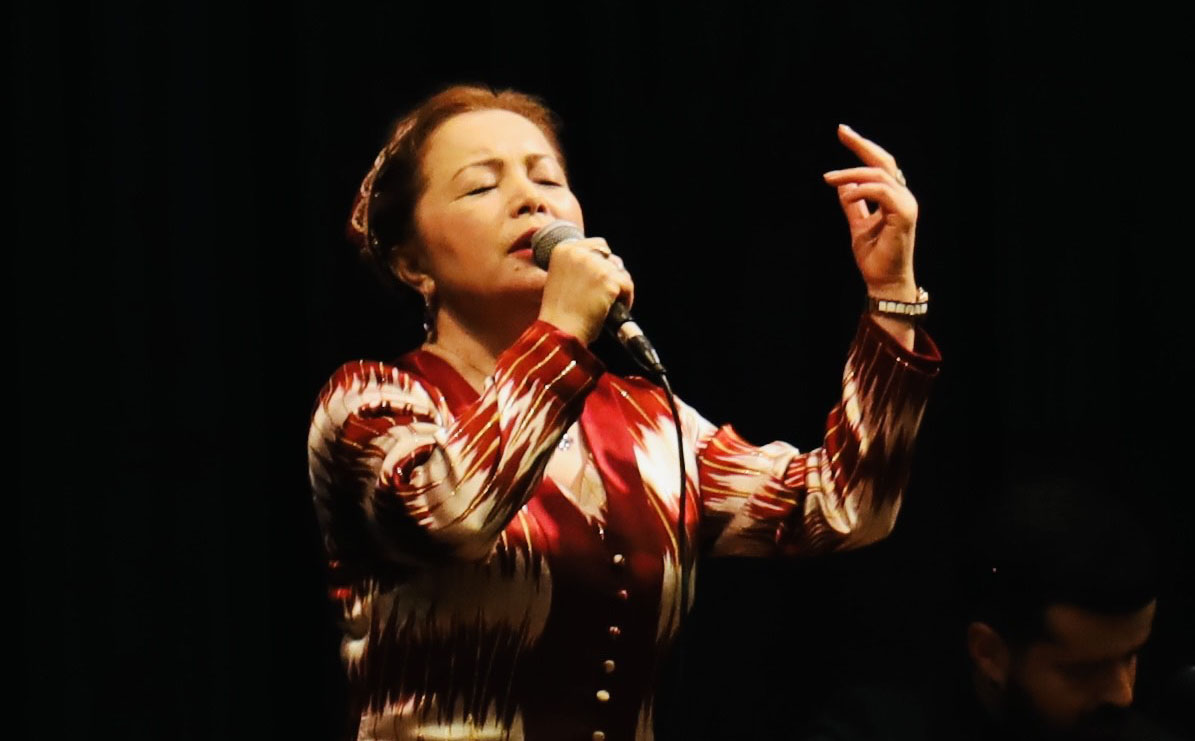
I am guided too by the imprisoned women poets whose work continues to reach us from the shadows: Chimengul Awut, whose poem Oh Wind, Cry I set to music, and Gulnisa Imin, whose poem smuggled from prison still echoes in my heart:
When you think of me, shed no tears of grief…
Think of me as someone on a journey.
If I’m alive, one day I shall return.
Their courage inspires everything I do – my singing, my speaking, my translations, my advocacy. My hope is simple: that by telling their stories, I may help light a flame in others. My people, who continue to hope in absolute darkness are. and will always be, my greatest inspiration.