I’m a woman in the Afghanistan of 2026. Here, days tick like gears in a clock, each moment predictable, each night a mirror of the last. Adventure sleeps and routine reigns. This is my life.
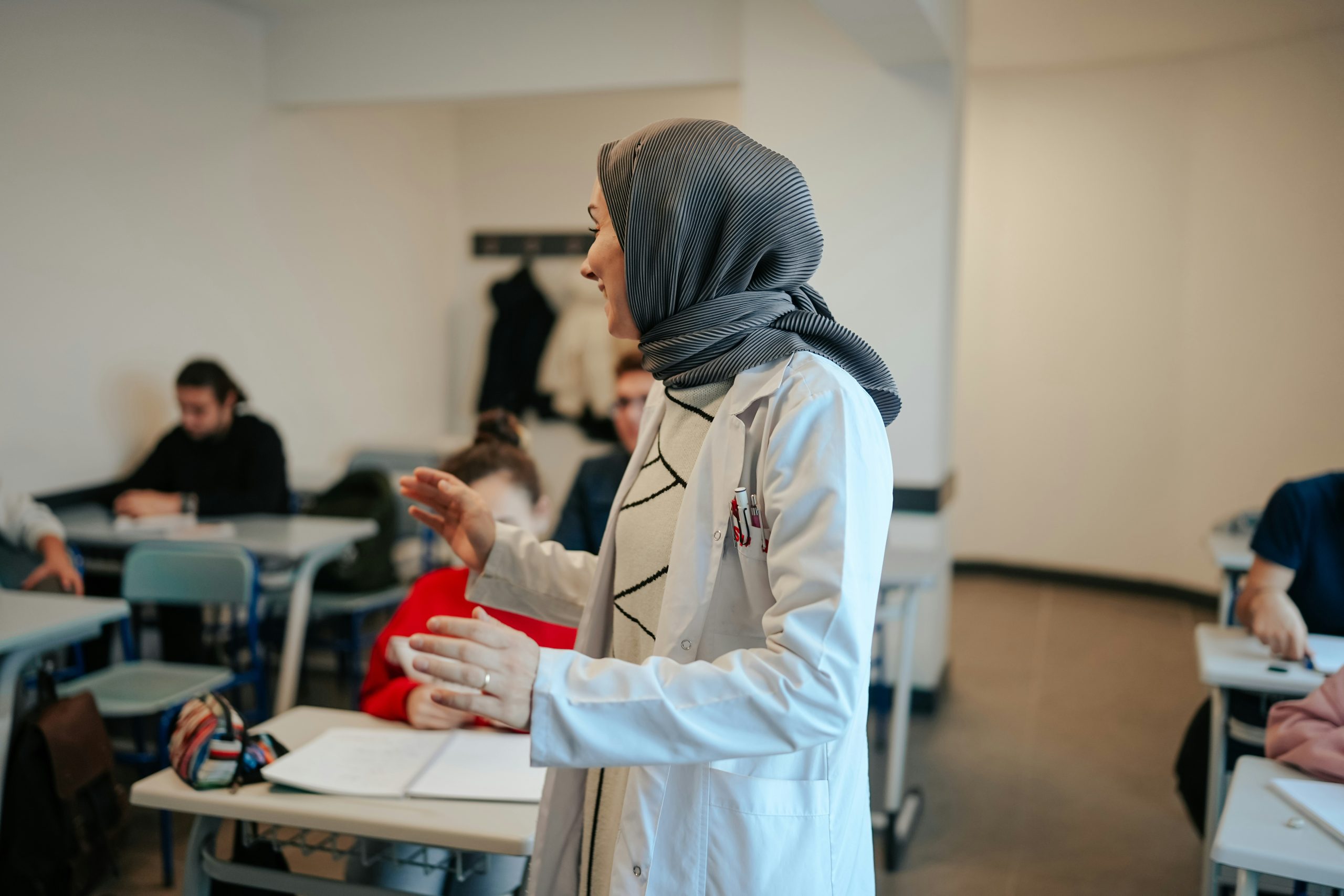
I wake up every morning to the sound of the dove that always perches on the window of the small square room that I share with my two sisters. Usually, my phone’s alarm rings after I freshen up. I never turn it off in case I sleep in, and the coo‑hoo‑hoo of the bird fails to wake me up. I pour a mug of steaming cardamom green tea, which my Mom always brews, and then turn on my laptop, open Google Meet, and join the meeting to teach World History. When I was young, I often declared that the last thing I would ever become was a teacher. Yet life has a way of surprising us. Here I am now, an online teacher to more than 70 students. Among them are Afghan girls who remind me of the resilience of my homeland, and boys and girls scattered across the world: from India and the USA to Argentina, Iran and Italy. Each name on my roster feels like a window into another culture, yet together they form a single classroom bound by curiosity, respect and hope.
Here, electricity comes and goes. My device can run out of charge in the middle of class. Or the internet can weaken until voices stretch like rubber bands, vowels pulled long until they snap back into silence. As a teacher in a country where education in any form is forbidden for girls after a certain age, I cannot deny the fear – the fear that the government may target me, as it has targeted so many before.
I teach two classes in a row, and by the time I finish, it is already noon, the hour when the kitchen calls. The weather is hot nowadays, so hot that I sometimes wonder if I am cooking vegetables while the earth is cooking me. Lunch is mine to prepare, usually a simple plate of vegetables with naan. Dinner belongs to my mother, who conjures rice and dishes I dare not attempt, reminding me daily that after all I am a teacher not a chef.
As soon as I’ve had my last bite of food it is time to join my French class. I love learning new languages, which is why I speak a decent amount of Urdu, Turkish, Persian, Dari and Pashto, my mother tongue.
I spend my entire afternoon joining one university class after another, each related to my majors in Health Science and Law & Political Science. My classmates are a mix of determined Afghan sisters, who refuse to surrender their right to education and students across the globe from Asia and Europe to the Americas. Studying online is like scaling the same mountain twice – once for knowledge, once for discipline. Yet without peace of mind, attention slips away. I fix my gaze on the laptop screen, listening to the professor’s voice carried across continents, yet louder than the lecture are my siblings’ quarrels, the neighbours’ laughter and the cries of handcart vendors: “Eggplant, one kilo for 50 Afghani! Cucumbers, only 20 Afghani!” At times, I recall the street prices more easily than the fact that a healthy heart beats 70 times a minute and blood pressure rests at 120/80.
And about my evenings? I spend it doing admin work for the US-based accredited online school I work for and on my assignments. But that doesn’t mean I don’t catch up with the news and, to be honest, weep in between. I hear about new laws for women and girls, laws that say a girl can be married off as soon as she reaches puberty, even at nine. I hear that a woman cannot ask for a divorce simply because she is beaten black and blue by her husband. I wonder, then, what counts as a “good reason”. I see women struck in public, the sharp crack of a hand against skin breaks the air in the street, for a strand of hair slipping from the veil or for refusing to wear the suffocating blue burqa. I hear the muffled sobs of women turned away from tourist sites, their footsteps dragging on gravel as if they are unworthy of seeing the beauty of their own country.
At night, I can do one of the three things: write poetry or prose, read a book online or watch a movie. Then I wonder how you, my fellow 21-year-olds, think of me, an Afghan woman?
Here, people see me in different ways. For my mother, I am the daughter she loves deeply, yet she worries about mockery, because I remain single in a family where cousins younger than me are already married with children. She hears the whispers: “Marry her off as soon as someone steps forward, or she’ll remain unmarried forever.” They would not care if I ended up with a husband who treats me like clay to be moulded at the flick of his hand, demanding I bend until I break.
For my father, I am the child he once opposed educating, convinced that a girl working outside the home was a shame. Yet now he accepts the salary I earn from teaching online, money that feeds his children, my mother and my grandmother.
For my youngest siblings, I am the invisible fairy who slips coins under their pillows in exchange for broken teeth, leaving behind wonder in the middle of the night.
For my mentor, speaking with me on Zoom inside my four‑walled room, it feels like visiting a prisoner – she sees me through glass, hears me through a phone and knows the bars are invisible but real.
For my students, I am the confidante who absorbs their frustration, the one they ask: “How did Afghanistan fall from being the cradle of civilisations to this?”
For my professors, I am the student who never misses a class, always the first to raise her virtual hand on Google Meet and who turns in every assignment perfectly on time.
To my own self, I am a yearner who longs to see the whole world, to meet new people, to taste dishes I have never known and to sit on the rides of an amusement park – the roller coasters and spinning wheels – screaming my lungs out into the night air.
I dream of having the chance to shape better laws for the girls of my country and beyond, laws that protect rather than punish. I imagine living in a way that defies the 157 edicts by the current regime that dictate how women must move, dress and survive. Just to prove, these laws make no sense.
My friends, I wonder how it feels when you walk to university with a bag slung over your shoulder, how it feels to graduate, to send your cap flying into the sky. To work somewhere with dignity. To practise your culture freely. To follow your faith, knowing it is the right interpretation and not extremism. To be called the pride of the family instead of its shame. To enjoy life, and not merely survive it.
I know there are many of you who advocate for the rights of the oppressed. But why don’t we truly come together? Why don’t we make our efforts visible? Because silence is the ally of oppression, and visibility is the seed of change. If we stand together, our voices will rise higher than the walls built to contain us. And one day, the world will remember not the edicts that tried to break us, but the courage that made us unbreakable.
With hope and friendship,
Samreen
Samreen Makhfi, 21, lives in Kabul. Her life is very different and constrained compared to what she imagined and hoped for. She told Index that writing this letter was important to her for many reasons. First, because she feels Afghanistan is a country that is often discussed, but without people actually helping those inside. She also said that each word is an act of defiance. She is told to be silent and yet here she is able to share her story, her joys and her struggles. Ultimately, she said, “writing is not just expression; it is resistance, it is survival. It is the therapy that steadies me against the weight of what I cannot control. It helps me feel stronger!”