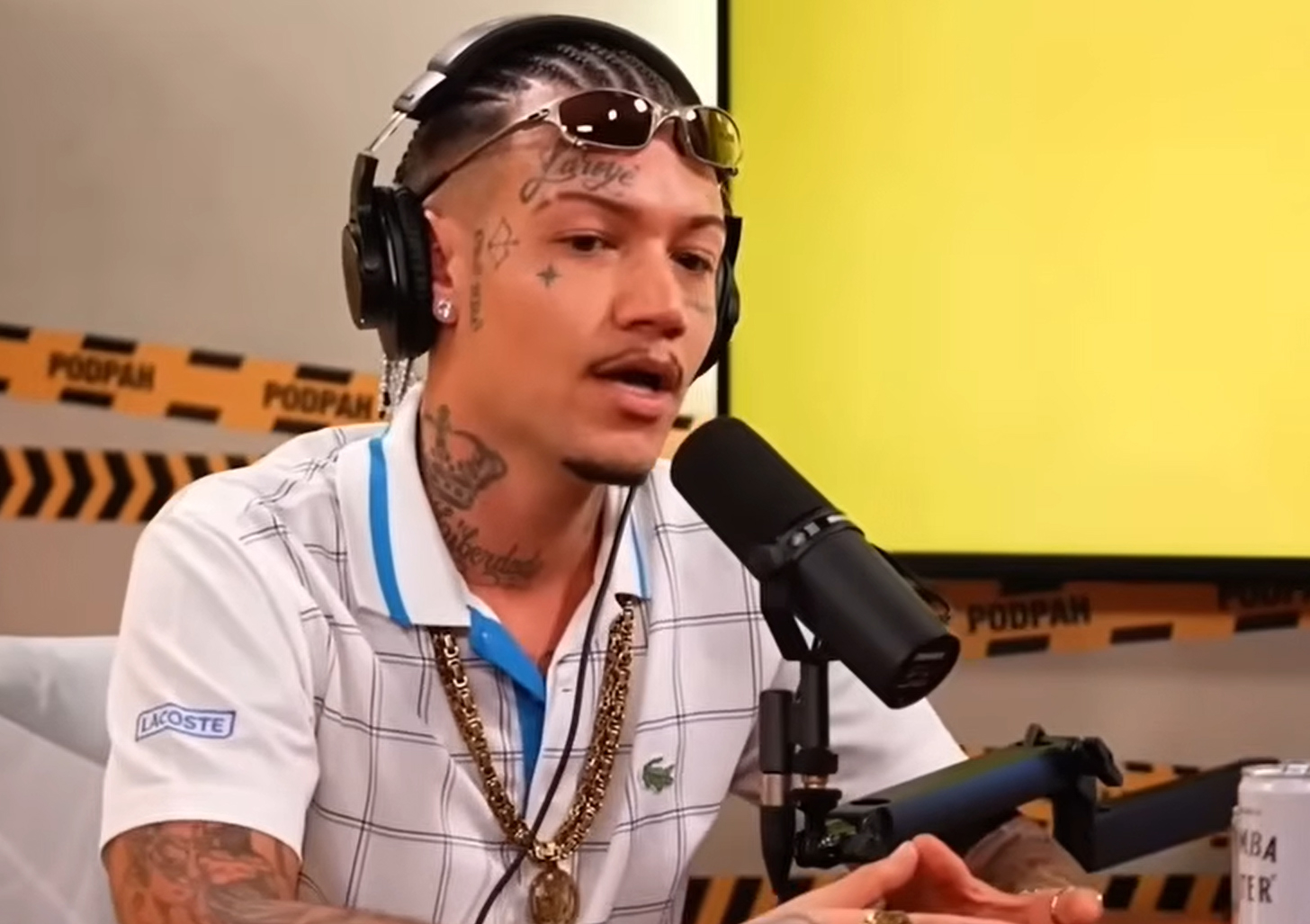
Brazilian left-wing influencer Thiago Torres, best known as Chavoso da USP (roughly translated as the University of São Paulo’s swaggy chav), has faced increasing political persecution in the last months. This reached international levels last month when Thiago’s main Instagram profile, with more than one million followers, was taken down by Meta.
Thiago then started using an old backup Instagram account with 385,000 followers, which was also taken down after allegations that it had been created to circumvent the previous block. Arbitrarily and without possibility of appeal, Meta blocked all access to his accounts and is set to permanently delete their content. A warning on Instagram said that the account “does not follow Community Standards” although the company did not specify which specific rules had been breached. Even after a preliminary injunction was issued on the morning of 20 November that forced Meta to return Thiago’s main account under threat of a fine, three other accounts were taken down later that same evening.
By maintaining the block on the influencer, Meta is involved in yet another case of big tech insubordination to Brazilian justice according to politicians. Federal Congresswoman Sâmia Bomfim, from PSOL (Freedom and Socialism Party), classified the event as a “direct attack on freedom of speech and the work of those who denounce injustices within Brazil.” Thiago sees it as “an offensive against progressive, mainly radical, left-wing voices”.
This is not the first time Meta has taken down accounts with large numbers of followers linked to the Brazilian left. In August this year, historian and influencer Jones Manoel, former candidate for governor of Pernambuco with the PCB (Brazilian Communist Party) and the Brazilian influencer with the most growth on the platform since June, was arbitrarily banned from Instagram. In October, activist and comedian Tiago Santineli also had his 850,000 followers account blocked, following online comments about the death of Charlie Kirk.
Since 9 December 2025, members of parliament from PSOL, PT (Worker’s Party), and left-wing news outlets have reported that their profiles “don’t appear in searches, can’t be tagged, and [that] their reach has plummeted in an orchestrated manner”, according to Federal Congresswoman Fernanda Melchionna. This is known as shadow-banning.
The bans follow a dispute between big tech companies and the left wing government of Luiz Inácio Lula da Silva which dates from January 2025, when Brazil’s Attorney General’s Office sent an extrajudicial notification to Meta because of the company’s decision to stop using independent fact-checkers. The concern was that this would further exacerbate the problem of “fake news”, which became prevalent in the 2018 and 2022 election processes, particularly on the part of the Brazilian right wing. A major dispute between the Brazilian judiciary and Elon Musk’s X also took place last year, resulting in the social network being blocked in the country until Musk complied with court orders.
The regulation of big tech companies – largely similar to what the EU has instigated – is considered by the current government as a matter of national sovereignty. In July, President Trump sent a letter to Brazil’s president, Lula, imposing a massive 50% tariff that rendered the export of a range of Brazilian products to the USA unfeasible. According to the letter, the measure came as retaliation for the sanctions against big tech and in support of former president Jair Bolsonaro, a representative of the Brazilian far right and ally of Trump who was convicted for attempted coup d’état.
In his speech at the UN General Assembly in September, President Lula said that “even under unprecedented attack, Brazil chose to resist and defend its democracy. There is no justification for the unilateral and arbitrary measures against our institutions and our economy. The aggression against the independence of the judiciary is unacceptable.”
It is not only in Brazil that US intervention in favour of big tech been felt. Back in January, Meta’s CEO Mark Zuckerberg clearly stated on the Joe Rogan Experience Podcast that “the US government has a role in basically defending [big tech] abroad”.
In the same week that Brazil hosted COP30 and witnessed the preventive arrest of Bolsonaro, the suspension of five accounts belonging to a left-wing influencer shows that big tech might also have a role in defending the US government’s interests abroad in Brazil.
Researchers like the Brazilian academic Walter Lippold denounce what they call “digital colonialism”, the interconnection between imperialist interests and big tech. To Brazilian sociologist Sérgio Amadeu, “online social networks and platforms controlled by big tech companies are geopolitical structures increasingly aligned with the far right.” In June, at seminars held by Bolsonaro’s right-wing Liberal party (PL), executives from Meta gave workshops teaching how to use AI and achieve greater reach on the platform.
Born and raised in Brasilândia, an outlying neighbourhood of São Paulo, Thiago Torres first rose to prominence as a social sciences student at the University of São Paulo.
Ranked many times as the best university in Latin America, the University of São Paulo subscribes to a national public education project aimed at social development. Despite this, USP remains elitist in the social and racial makeup of both its faculty and students. Thiago spoke about the way this composition shaped the production of knowledge within USP, and used his platform to share social theory with a wider public.
Now graduated and a teacher, Thiago has become known for denouncing cases of political corruption and police violence. Overtly anti-capitalist and anti-imperialist, it’s not surprising that his head is wanted by public officials and companies who benefit from the country’s social division.
In August this year, Thiago was called to testify in the controversial CPI dos Pancadões, a parliamentary commission inquiring into street funk parties. Under the pretext that they disturb public order, it is common for the military police to raid pancadões, using extreme violence and murdering the young people present, many of whom are from racial minorities and come from lower social strata.
Thiago’s account dedicated to police violence, @fim.da.pm (“End the Military Police”), is among those blocked by Meta. The company had until 28 November to return the influencer’s main account, but this didn’t happen.
“Instagram will face a daily fine for each day it fails to comply [with the judiciary decision]”, Thiago explained. “But it’s a relatively small fine for them, so it’s possible they might disregard the court order.” Unfortunately, this seems to be the case.