This piece first appeared in the Winter 2025 issue of Index on Censorship, Gen Z is revolting: Why the world’s youth will not be silenced, published on 18 December 2025.
Some 50 years after Mao’s successors began to open up China’s economy and transform the country, its explosive growth is slowing. Gone are the days when the economy doubled every three to five years and rags-to-riches stories were a dime a dozen.
Today, many lament that the possibility of reinventing one’s fate or guaranteeing a better future for one’s children feels like it’s vanishing.
China’s economy still has extraordinary bright spots, particularly in tech. Its supply chains of rare earth minerals, renewables and electric cars are cause for international envy and fear.
But many of the dividends of that technological progress are concentrated in a few hands, while the social mobility of the early reform years has ossified into a new class structure.
Terms such as neijuan (involution) and tang ping (lying flat) have become fashionable – the former refers to the unrelenting rat-race that is modern life while the latter is the temptation to bow out of the race completely. The Chinese mindset was already deeply competitive and cynical – traumatised, perhaps, by years of war, poverty, famine and communism.
But a new type of disillusionment is spreading across society as a whole, where even “eating bitterness” (a Chinese phrase meaning to endure hardship without complaint) isn’t enough to change your life.
Beijing fears this negativity. While it isn’t always directed at the government, the line between just moaning and blaming the authorities is fine – after all, all-encompassing rule means all-encompassing blame when things go wrong. The government also fears that younger generations will become lazy and simply give up. It needs them to strive – but to strive with hope, not despair.
So, while some arms of the government are looking to reinvigorate economic growth and diffuse the rewards of technology through society, the censors are hard at work on a new mission. For the last couple of years, it has no longer been just dissent they are policing but “gloomy emotions”. In the China of today, censorship isn’t just about what’s not there but moulding what is.
In September, the Cyberspace Administration of China (CAC), the country’s top internet regulator which reports directly to the president, Xi Jinping, began another one of its regular Clear and Bright campaigns to sanitise the internet. This time its focus was explicitly on four types of content: that which polarises, that which spreads panic, that which incites hostility and online violence, and that which exaggerates negative sentiments.
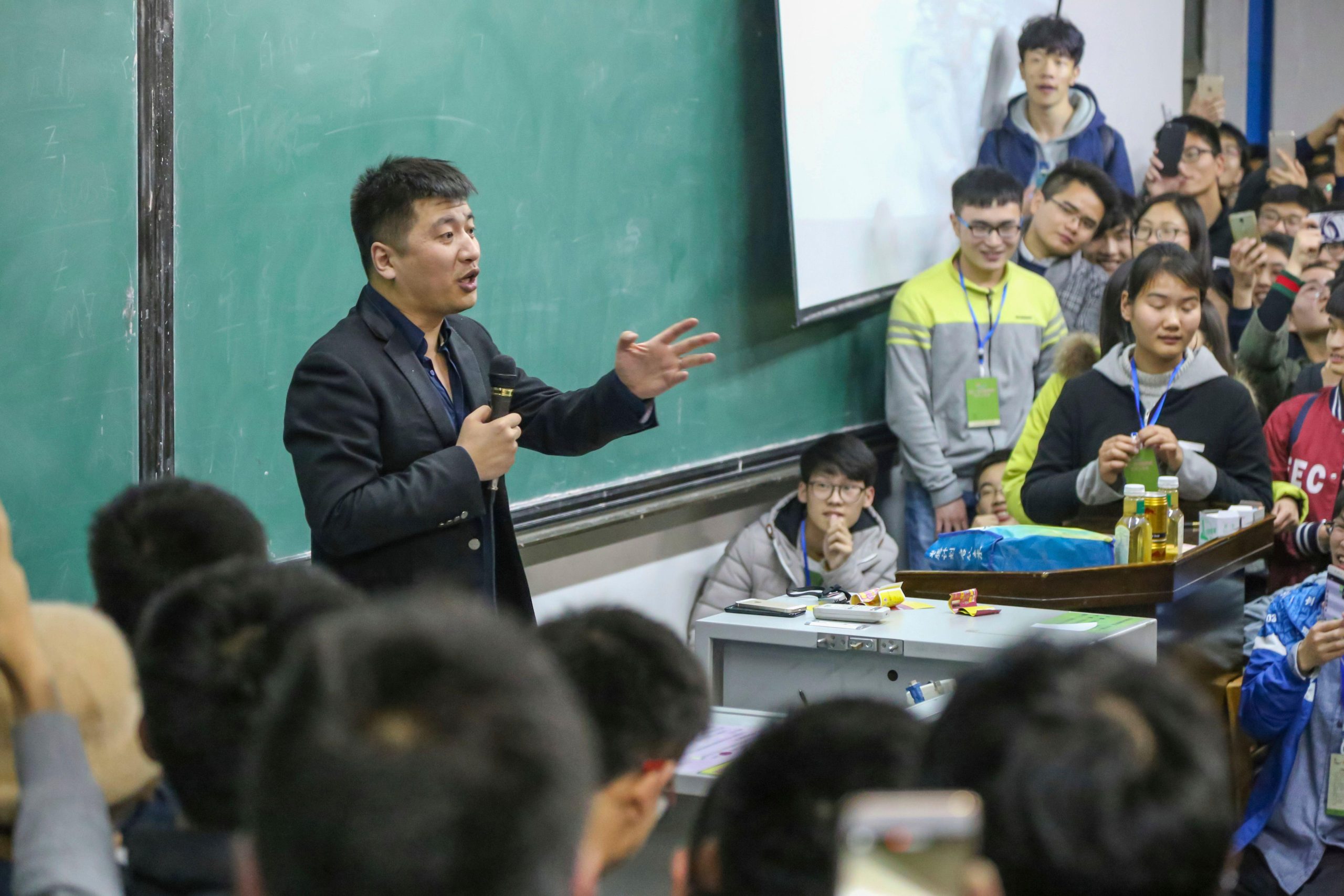
Three high-profile influencers fell victim – their censoring dubbed by Chinese social media as the sanlianfeng (the three consecutive censures). One was 27-year-old Hu Chenfeng, whose main gimmick is cost of living videos demonstrating how far money goes in an average supermarket. Another was Zhang Xuefeng, a viral educator who advises students (and their parents) on what degrees are the most lucrative. And the third was Lan Zhanfei, a professional gamer turned travel vlogger who documents his proudly bachelor life.
As ever, the censors didn’t give reasons for their censure, leaving others on social media to piece together the clues. It seems possible that they were each emblematic of different types of negativity.
Hu Chenfeng, for example, is interested in economic inequality in the country. The first video that got him in trouble was of a 78-year-old grandmother from Nanchong, made in 2023. In it she tells him that her only regular income is her pension of 107 yuan each month. Hu takes her shopping to show the viewer exactly how much food 107 yuan (or $15) can get in a Chengdu supermarket. It is some rice, flour, eggs and a few pork chops.
The video blew up within hours, with many viewers shocked at the level of poverty that still existed in the country – hadn’t the government already declared victory over absolute poverty? It took only a few hours for the video to be taken down, with Hu’s accounts on multiple platforms censored.
Hu returned to social media later that year, but his videos were much less politically sensitive – for example conducting cost of living experiments in other countries – so his latest censure came as a surprise.
A WeChat blog from the Zhejiang Provincial Party Committee following Hu’s cancellation gives a clue. It refers to the tendency of “certain vloggers” to divide society into classes and specifically calls out the use of Apple and Android as signifiers for people’s wealth. Hu had been using brand names as adjectives: he described anything high-end and good quality as Apple (Apple people, Apple lifestyles, Apple cars, Apple universities etc), with Android the defective, low quality, opposite end. Left unsaid was that Chinese-made phones (such as Huawei and Xiaomi) are all Androids.
“You have to ask what hidden arrows exist behind these social media accounts?” the blog asks. It says that the Apple-Android divide politicises people’s phone brand choices, sowing social division. Separately, the blog also spells out the link between Android and indigenous Chinese brands, going as far as to say that Hu is effectively “handing a knife to those forces who would choke off ‘Made in China’”. Hu was not only politicising even gadget choices but was actively unpatriotic.
As for Zhang Xuefeng, there are two theories for why he got in trouble. First, his advice tends to be incredibly cynical – he has advised youngsters to avoid studying journalism in favour of more lucrative, practical degrees such as civil engineering. Nanfang News, an outlet under the umbrella of the Guangdong provincial government, attacked Zhang. “Education is a 100-year strategy, it shouldn’t be hijacked by an impatient commercial logic,” it fretted.
But the restrictions on his social media presence – not a total ban but a temporary limit from getting more followers – also came around the time that a video of him was leaked.
In the clip, Zhang raves about the 3 September military parade. He goes on to pledge that “the day that the guns sound” – referring to an invasion of Taiwan – his company will donate 100 million yuan (£10.8 million) to the military campaign, half of that from him personally.
Could this statement have been seen as boasting about a level of wealth out of reach for the common Chinese? Or perhaps as goading Beijing on to a military invasion which it wants to reserve maximum flexibility on?
In the case of Lan Zhanfei, it might have been simply that the travel vlogger was enjoying his single life too much.
He’s known for saying things such as “if you don’t marry, you won’t go broke”. In a country struggling with youth disillusion and declining fertility, the CAC possibly decided that a role model like Lan was not good at all.
Both Lan and Zhang are now back on their usual platforms after a temporary timeout. Hu, however, is yet to be seen. One presumes that such lucrative streamers will demand clearer explanations from the CAC in private and the regulator, in turn, will demand less negative content. The smartest influencers comply but, even if their livelihoods are saved, they are defanged.
With the latest Clear and Bright campaign, the government is confirming its direction into even more intervention – now not satisfied with erasing just political dissent but also expressions of any wider societal disillusionment.
Censors are now curators of a more cheerful online community. But the clear and bright world they create is at risk of being more and more detached from the reality that many Chinese live in.