NEWS

Ugandan opposition leader Bobi Wine’s freedom message
The singer-turned-politician refuses to give up despite threats to his life
25 Jan 2026

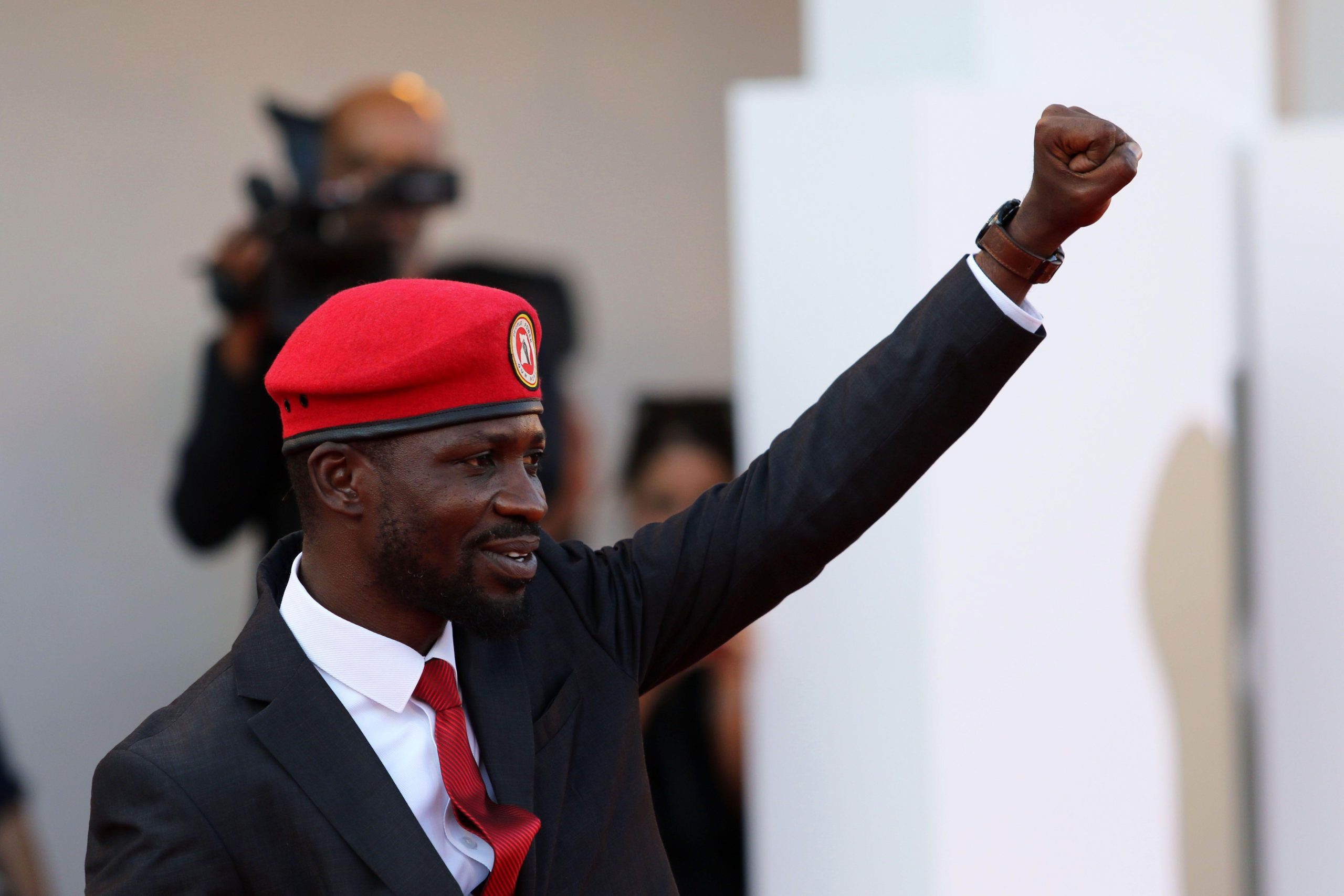
Bobi Wine. Photo by: Ottavia Da Re/Sintesi/Alamy Live News

Bobi Wine is alive. Uganda’s leading opposition figure is currently in hiding following last week’s elections, releasing videos to his millions of followers to confirm that he’s safe, for now. Security forces arrived at his home last week to arrest him. Later the son of President Yoweri Museveni publicly threatened to kill him, boasting online that he has already murdered dozens of Wine’s supporters. This is the reality facing Uganda’s most prominent pro-democracy voice.

At Index, we are constantly in touch with courageous people around the world. Bobi Wine is among the greatest. When we interviewed him in 2024, the singer-songwriter turned politician made one request of the international community: “do more to support all creatives in repressive regimes. By amplifying their voice and messages, you are playing your part in ensuring that eventual freedom is won.” Today, I want to do just that for Wine.

Born in 1982 in the slums of Kampala, Wine, whose real name is Robert Kyagulanyi, went on to become one of Uganda’s most successful musicians. As he told us in 2019 he recognised the power of music, and so his songs, sung to the upbeat rhythms of ragga dancehall, took an increasingly political bent. In 2017, for example, Wine composed Freedom in response to Museveni’s proposed ending of age limits for the president.

All this riled Museveni. Wine was first arrested in 2017, the year he formally entered politics. Hundreds of his concerts were cancelled. Laws were passed to restrict artistic expression, colloquially referred to as “anti-Bobi Wine laws”. In 2018 Wine was effectively banned from performing live. Radio and TV stations were routinely harassed if they played his music, and so many didn’t. That same year Wine survived an assassination attempt, while his driver was killed. He was also arrested for the first time and was so badly beaten that he was temporarily unable to speak. Undeterred, he ran for president in 2021. Hundreds of his team were abducted on the campaign trail and his supporters were shot at. Wine was detained and tortured.

Despite all of this he continued to speak out and to create. He made more songs, sometimes using coded language to evade censorship, he held concerts at his own property. He once again threw his hat into the ring for the 2026 presidential elections.

We are a mere few days away from the 40th anniversary of Museveni’s rule, and our East Africa contributing editor Danson Kahyana has reflected on the dictator’s legacy. Meanwhile, from an undisclosed location, Wine is releasing videos and doing interviews to challenge the regime’s narrative, which seeks to portray him as a criminal and to suggest that these elections were free and fair. He is also highlighting the crackdown against the opposition happening there, which extends far beyond just him. Bobi Wine is a remarkable man. His 2024 request – to amplify the voices of creatives – was simple. I’ll leave you therefore with a few lines from Freedom and a request to listen to it here:

What was the purpose of the liberation?

When we can’t have a peaceful transition?

What is the purpose of the constitution?

When the government disrespects the constitution?

Where is my freedom of expression?

When you charge me because of my expression?

Look what you doing to this nation

What are you teaching the future generation?

Support free expression for all


At Index on Censorship, we believe everyone deserves the right to speak freely, challenge power and share ideas without fear. In a world where governments tighten control and algorithms distort the truth, defending those rights is more urgent than ever.

But free speech is not free. Instead we rely on readers like you to keep our journalism independent, our advocacy sharp and our support for writers, artists and dissidents strong.

If you believe in a future where voices aren’t silenced, help us protect it.

Make a £10 monthly donation

At Index on Censorship, we believe everyone deserves the right to speak freely, challenge power and share ideas without fear. In a world where governments tighten control and algorithms distort the truth, defending those rights is more urgent than ever.

But free speech is not free. Instead we rely on readers like you to keep our journalism independent, our advocacy sharp and our support for writers, artists and dissidents strong.

If you believe in a future where voices aren’t silenced, help us protect it.

Make a £20 monthly donation

At Index on Censorship, we believe everyone deserves the right to speak freely, challenge power and share ideas without fear. In a world where governments tighten control and algorithms distort the truth, defending those rights is more urgent than ever.

But free speech is not free. Instead we rely on readers like you to keep our journalism independent, our advocacy sharp and our support for writers, artists and dissidents strong.

If you believe in a future where voices aren’t silenced, help us protect it.

Make a £10 one-off donation

At Index on Censorship, we believe everyone deserves the right to speak freely, challenge power and share ideas without fear. In a world where governments tighten control and algorithms distort the truth, defending those rights is more urgent than ever.

But free speech is not free. Instead we rely on readers like you to keep our journalism independent, our advocacy sharp and our support for writers, artists and dissidents strong.

If you believe in a future where voices aren’t silenced, help us protect it.

Make a £20 one-off donation

At Index on Censorship, we believe everyone deserves the right to speak freely, challenge power and share ideas without fear. In a world where governments tighten control and algorithms distort the truth, defending those rights is more urgent than ever.

But free speech is not free. Instead we rely on readers like you to keep our journalism independent, our advocacy sharp and our support for writers, artists and dissidents strong.

If you believe in a future where voices aren’t silenced, help us protect it.

Donate a different amount

By Jemimah Steinfeld

Jemimah Steinfeld has lived and worked in both Shanghai and Beijing where she has written on a wide range of topics, with a particular focus on youth culture, gender and censorship. She is the author of the book Little Emperors and Material Girls: Sex and Youth in Modern China, which was described by the FT as "meticulously researched and highly readable". Jemimah has freelanced for a variety of publications, including The Guardian, The Telegraph, The Independent, Vice, CNN, Time Out and the Huffington Post. She has a degree in history from Bristol University and went on to study an MA in Chinese Studies at SOAS.

READ MORE

CAMPAIGNS

SUBSCRIBE

SUPPORT INDEX'S WORK