Australia has been described as having some of the “democratic world’s most draconian anti-protest laws” after a state government invoked special powers ahead of the Israeli president’s visit on Monday.
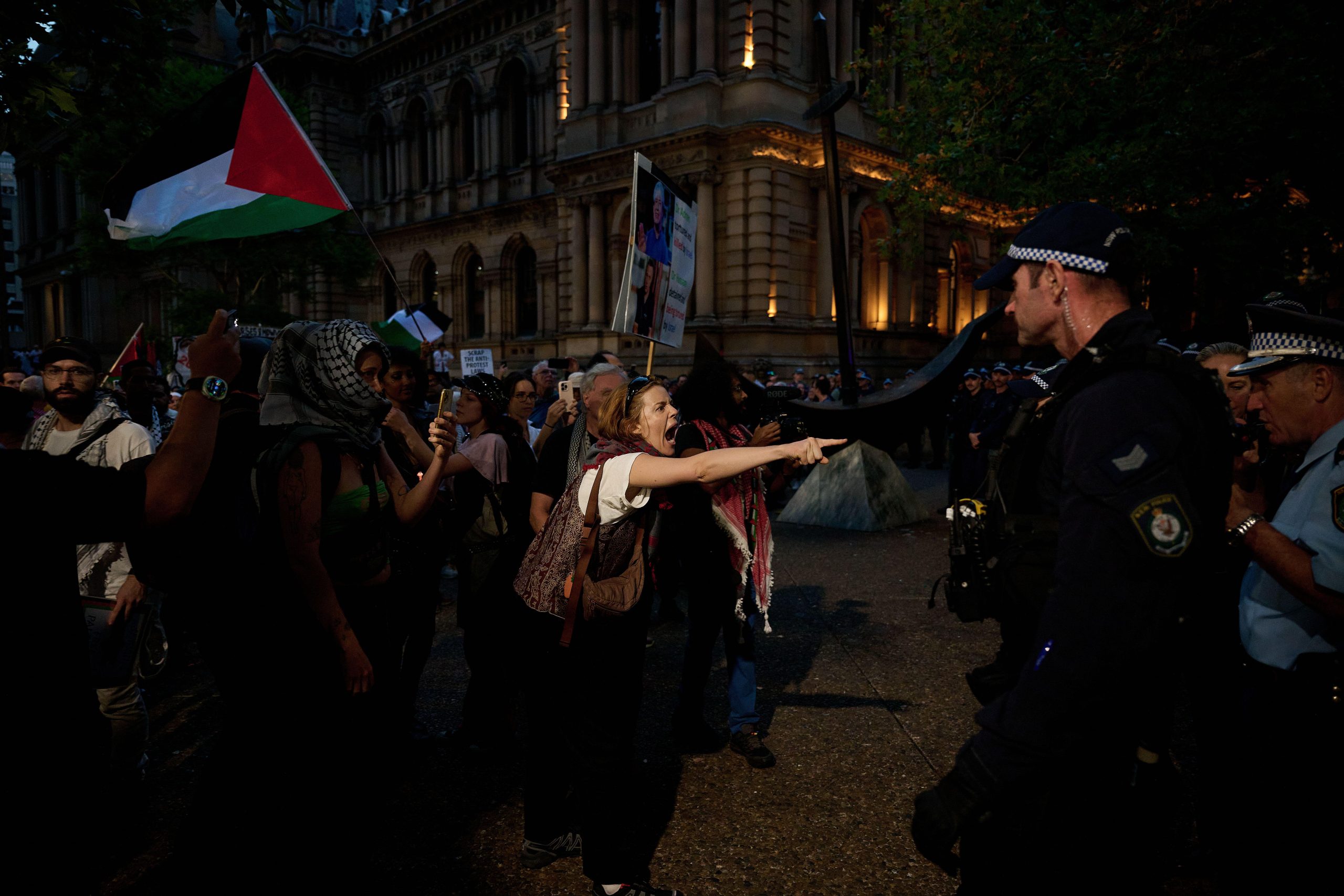
On the first day of Herzog’s visit, there have been reports of police using pepper spray on protesters in Sydney, as hundreds tried to march despite protest restrictions, as well as in Victoria, where demonstrations were also held.
Nationwide demonstrations were set to take place against the five-day visit of Isaac Herzog, who a UN commission of enquiry found incited genocide against Palestinians, in what was described in the lead-up as the most potentially divisive state visit since the peak of the Vietnam War. [Editor’s note: the role of president in Israel is largely ceremonial and executive power is vested in the Cabinet and the Prime Minister.] The demonstrations come after Australia’s Prime Minister Anthony Albanese invited Herzog to visit, following December’s terrorist attack at Bondi Beach, during which two gunmen killed 15 people and injured 40.
To “help manage the visit safely and responsibly”, the New South Wales (NSW) government declared Herzog’s visit a major event under the Major Events Act 2009, it announced over the weekend. The declaration is usually reserved for sporting events.
On Monday afternoon Sydney time, the Palestine Action Group lost a court challenge against the special powers given to NSW police by the state government.
The extra powers allow police to order people to move on, shut certain locations and give lawful directions to prevent disruption or risk to public safety. They insisted they didn’t ban protests or marches and people could still “retain the right to express their views lawfully”. But anyone who fails to comply risks a fine of up to $5,500 or exclusion from the major event area.
Greg Barns, spokesman for the Australian Lawyers Alliance (ALA), a not-for-profit national association of lawyers, academics and other professionals, told Index that governments in Australia had legislation allowing police to regulate protest activities which “ostensibly” seek to balance freedom of speech with community safety.
“It is highly unusual to prevent protests, or severely restrict their scope when a foreign leader visits Australia,” he said. “Famously in the 1960s there were large protests in Sydney against US President Lyndon Johnson.”
He added that because Australia didn’t protect freedom of speech in its constitution, it was easier for governments to pass legislation prohibiting protests.
According to news reports, police ordered an issue to a man in Bondi to move on, after he climbed onto an electrical box and screamed at Herzog’s motorcade. He complied with the direction. Police said two others displaying placards in Bondi were given move on orders under the Summary Offences Act, which they also obeyed.
Professor Ben Saul, the UN special rapporteur on human rights and counter terrorism, said on X on Monday: “Australia now has some of the democratic world’s most draconian anti-protest laws. Today a man was arrested as an ‘agitator’ simply for peacefully yelling ‘shame’ in the direction of the visiting Israeli President, on the basis it may have ‘incited’ fear”.”
Meanwhile NSW premier Chris Minns said: “This is about keeping people safe, lowering the temperature and ensuring Sydney remains calm and orderly.”
Palestine Action Group Sydney accused Minns of a “scare campaign” and said on their Facebook page that it was “absolutely lawful” for people to gather to protest, as they encouraged protesters to gather at Sydney’s Town Hall for a march.
“The streets of Sydney belong to the people, not to the head of a genocidal state,” they said.
Just a week after the Bondi attack, NSW Parliament passed The Terrorism and Other Legislation Amendment Bill 2025, which allows the state’s police commissioner or deputy commissioner with the police minister to restrict authorised assemblies in specific areas for 14 days after a terrorism declaration.
“This is designed to deter divisive, inflammatory public assemblies which put community safety and cohesion at risk in the immediate aftermath of an attack,” the NSW government said on 24 December.
After a declaration, no public assemblies are allowed in designated areas. Police can move people on if their behaviour or presence obstructs traffic or causes fear, harassment or intimidation, they said.
The notice can be extended by two-week periods for up to three months. It does not prevent quiet reflection, prayer or peaceful gatherings, the government said. However, a video has emerged of police seemingly dispersing Muslims praying during the protests.
In early February, the Public Assembly Restriction Declaration (PARD) was extended for two weeks until 17 February, restricting public assemblies in Sydney’s eastern suburbs area, which includes Bondi, and parts of the city.
Critics of the law including Greens MPs have described Minns as pro-Israel and said that it was clear he was targeting pro-Palestine protesters, including those opposing Herzog’s visit, with the moves.
An NSW parliamentary review into hate speech has also recommended the state government introduce legislation banning the phrase “globalise the intifada”.
With several days of Herzog’s visit left, it remains to be seen whether those opposing the Israeli president’s visit will have the opportunity to raise their voices, and whether they can do so safely.