The UK Anti-SLAPP Coalition, which is co-chaired by Index on Censorship, had a significant campaign success this week when coordinated Bills were introduced in both the House of Lords and the House of Commons.
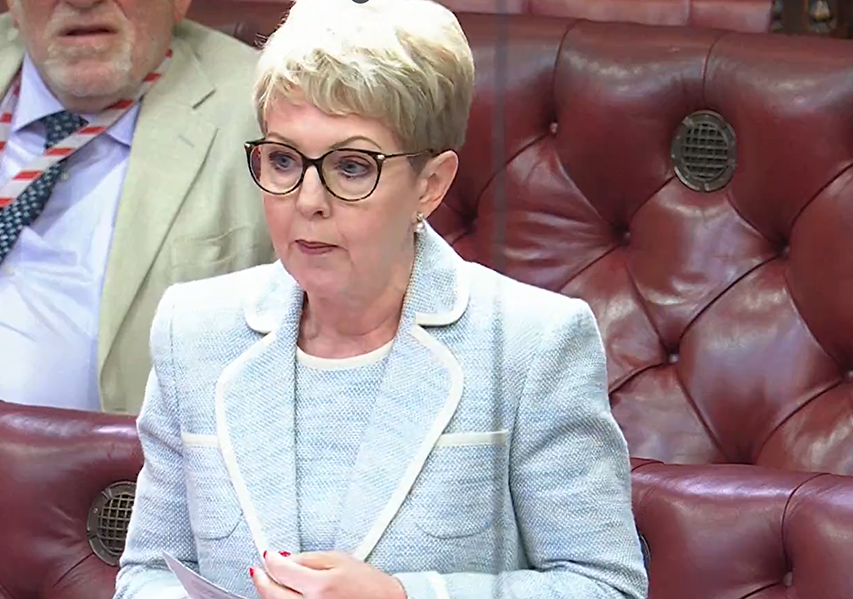
On Tuesday 16 June, Baroness Tina Stowell introduced her anti-SLAPP Bill in the House of Lords. The next day, Sir John Whittingdale MP introduced a parallel bill in the Commons.
Remind me: what is a SLAPP?
SLAPP stands for strategic lawsuit against public participation.
The term describes legal threats and actions that are used to intimidate and harass journalists, whistleblowers, campaigners, academics, and survivors of abuse (among others) by burdening them with time-consuming and costly litigation. Anyone who speaks out on an issue of public interest is at risk.
Even if a defendant has every chance of succeeding at trial, the lengthy process of preparing a legal defence is so prohibitively expensive that they are forced to quietly submit to the claimant’s demands. This means they are silenced.
SLAPPs threaten our right to freedom of expression and our democracy by preventing ordinary people from being able to hold power to account. They also remove information from the public domain, which means that SLAPPs have an impact on all of us.
We have published case studies of a small number of the SLAPPs that have crossed our desks in the UK Anti-SLAPP Coalition. From cosmetic surgery patients to environmentalists, abuse survivors and campaigners, you can read them here.
So, what would the new bills actually do?
The proposal is simple:
Anyone who believes that they are facing a SLAPP would be able to ask a judge to examine the case at an early stage. If the court concludes that the claim is being used to suppress public-interest speech, it could be dismissed before huge legal costs begin to accumulate.
This “early dismissal” mechanism would shift the balance away from wealthy claimants who can use litigation as a pressure tactic, and towards defendants who currently face years of stress, uncertainty and expense.
What these bills definitely won’t do is to protect public-interest speech across the UK. This is a devolved issue, and legislation passed in Westminster will only cover England and Wales. Separate anti-SLAPP bills will need to be passed in Scotland and Northern Ireland to ensure that everyone in the UK is protected from SLAPPs.
Why now?
Successive governments have acknowledged the problem of SLAPPs, but have failed to bring forward comprehensive legislation.
Anti-SLAPP measures were, yet again, left out of this year’s King’s Speech despite repeated and widespread calls for their inclusion. Even after the speech, Deputy Prime Minister David Lammy confirmed that the government would bring forward legislation “as soon as time allows”.
The introduction of parallel Private Members’ Bills is therefore as much a political signal as a legislative exercise: Parliament is being asked to show that the issue has not gone away.
Will these Bills become law?
The honest answer is that we don’t know. The second reading for Whittingdale’s bill is scheduled for late November, and no date has yet been set for Stowell’s bill. However, the impact is immediate as it keeps anti-SLAPP reform firmly on Parliament’s agenda, providing a ready-made legislative blueprint to show that legislation to stamp out SLAPPs can be done effectively and easily within the existing legal framework.
In other words, the real question is not whether Stowell’s or Whittingdale’s bills become law exactly as drafted. It is whether the government will finally listen to mounting pressure to back these bills, and put their weight behind ensuring comprehensive anti-SLAPP legislation that will protect anyone who speaks out in the public interest.
But I heard that anti-SLAPP legislation has already been enacted. Why then is the UK Anti-SLAPP Coalition pushing for more legislation?
Because the UK’s existing anti-SLAPP protections are very limited.
The Economic Crime and Corporate Transparency Act (ECCTA) introduced anti-SLAPP provisions in 2023, but they apply only to cases linked to economic crime. Many abusive cases fall outside that definition. It also depends on a subjective test, forcing the court to undertake a time-intensive process by which the intentions of the SLAPP filer have been identified. That’s why we need a broader law that can protect anyone facing a SLAPP, regardless of the subject matter.
What can I do to support the UK Anti-SLAPP Coalition as they continue to call on the government to enact comprehensive anti-SLAPP legislation?
You can support the work of the Coalition by writing to your MP, by posting your support for action on SLAPPs using the hashtag #StopSLAPPs, and by signing up to the newsletter of the Anti-SLAPP Coalition here.