Justice is better served by openness and transparency, writes Padraig Reidy

UK arrest guidelines are a shift towards secrecy
read more

Justice is better served by openness and transparency, writes Padraig Reidy
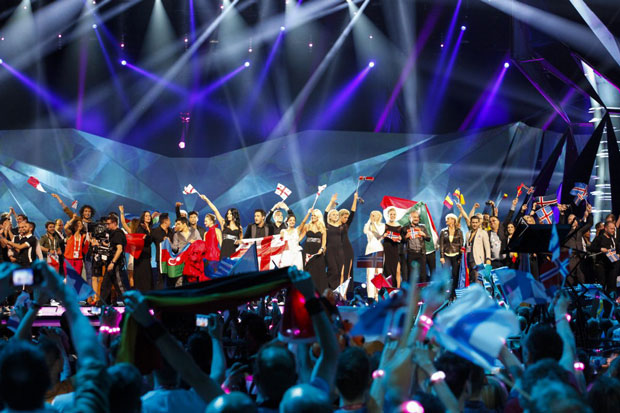
Europe was once again be swept away by a sparkly hurricane of techno beats and pompous ballads, kitschy and/or traditional costumes, wind machines, pyrotechnics, heavily accented English, awkward host banter and nul points. Yes, Eurovision took our breath away in more ways than one, Milana Knezevic writes.
An election is always a good litmus test for a country’s media freedom — particularly in Bulgaria. It consistently ranks last amongst European Union members for media freedom, and the US Department of State called its “gravely damaged media pluralism” one of its most pressing human rights problems, Georgi Kantchev reports.
The International Partnership Group for Azerbaijan (IPGA) -- Index on Censorship is a signatory -- strongly condemns a series of repressive legislative amendments that Azerbaijan’s National Assembly (Milli Majlis) adopted on 14 May 2013. The...
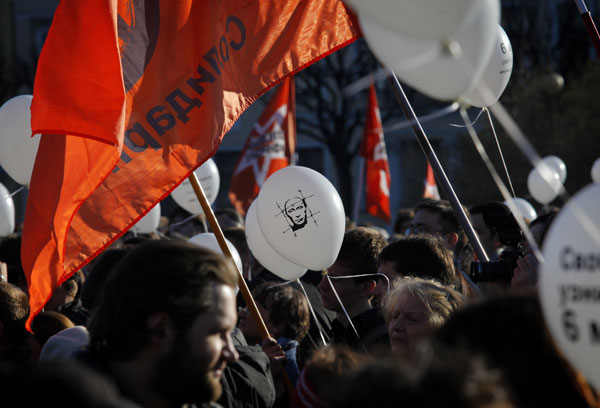
An organisation behind a nature reserve dedicated to the protection of Russia’s cranes has been ordered to register as “a foreign agent” under the country’s non-governmental organisation law. The case highlights how arbitrary implementation is chilling free expression in the country, Andrei Aliaksandrau reports
Index on Censorship and partner organizations have strongly condemned moves by Azerbaijan’s government on Tuesday to criminalise online slander and abuse in the run-up to the country’s October Presidential election.

Think you have what it takes to be published by Index on Censorship? Here’s your chance to find out. Enter our student blogging competition! To enter the competition, submit your piece with your name, university, course and year of study, to [email protected]

Index on Censorship CEO Kirsty Hughes writes that there is cause for deep concern that the EU is failing to protect press freedom, a core element of democracies.
Secrecy of Warwickshire police “against open justice” says Index on Censorship chief
In March the Russian authorities turned their attentions to online social networks — and the Kremlin proved adept at getting major international companies to comply with its directives: on 15 March Twitter blocked an account that promoted drugs and on 29 March Facebook took down a page called “Suicide School” rather than see its entire network blacklisted. On 25 March, reports surfaced that the ministry of Communications and Mass Media planned to transfer maintenance of the Registry of Banned Sites from communications regulator Roskomnadzor to a third party selected by Roskomnadzor. The ministry proposed changes to the registry; to maintain website owners’ information on the register but deny sites owners — as well as hosting and Internet providers — access to […]