[vc_row][vc_column][vc_custom_heading text=”La estrechez de miras de los gobiernos y la industria están poniendo en jaque a la libertad de expresión, asegura Ian Brown
“][vc_row_inner][vc_column_inner][vc_column_text]
Una de las protecciones clave de la libertad de expresión en redes es la capacidad que tienen los proveedores de servicios de Internet (ISP) de permitir el acceso de sus usuarios a contenido de todas partes del mundo. En Estados Unidos, la Unión Europea y muchos otros países, las ISP están exentas de responsabilidad por transmitir páginas web desde sitios remotos a sus usuarios. Como «meros conductos», no necesitan instaurar los exhaustivos controles por difamación o infracción de copyright que se exigen a los medios impresos. Incluso cuando actúan como servidores para sitios web, las ISP están exentas de responsabilidad sobre el contenido de los usuarios siempre y cuando el material ilegal se retire cuando se les notifique. Esta es una de las razones de la explosiva proliferación de contenido accesible en las redes en los últimos diez años.
Últimamente, sin embargo, los gobiernos han estado buscando la manera de hacer que las ISP desempeñen una función más firme como reguladoras del ciberespacio. Concretamente, están animando a las ISP a tomar medidas con respecto a las infracciones de copyright online, el intercambio de imágenes de abuso de menores y el uso de internet para promover el terrorismo.
Estas medidas podrían perjudicar gravemente la libertad de comunicación de todos los individuos. Si bien los usuarios de internet más experimentados suelen saber esquivar los bloqueos que introducen las ISP, la mayoría de la gente no está muy familiarizada con estas herramientas de sorteo de obstáculos, como pueden ser los proxys o la encriptación. Los gobiernos democráticos están debatiendo la restricción de una amplia gama de material, como información sobre la eutanasia y el suicidio, pornografía «extrema» y la «glorificación» del terrorismo.
Los gobiernos están animando a las ISP a tomar medidas de autorregulación del tipo «amable», con métodos de decisión administrativos, no judiciales, de sancionar a usuarios y páginas web. Algunas ISP han introducido cláusulas en sus contratos que les permitan desconectar a ciertos usuarios una vez se dé un número concreto de alegaciones de infracción de copyright contra ellos. La Unión Europea está alentando el desarrollo de líneas telefónicas directas financiadas por la industria que permitan al público denunciar imágenes de abuso infantil, siguiendo el ejemplo de la Internet Watch Foundation británica, según el cual algunas ISP deniegan automáticamente el acceso a webs que hayan sido denunciadas. El gobierno neerlandés ha aprobado un código de conducta que promueve la eliminación de material «indeseable» y «dañino» entre las ISP.
Si bien es cierto que estos planes son más flexibles y menos pesados que una regulación legislativa, lo más habitual es que prescindan de la imparcialidad procesal y la protección de los derechos fundamentales que se promueven desde el escrutinio independiente, tanto judicial como parlamentario. Pocos planes incluyen una protección substancial de los derechos individuales de expresión, asociación o intimidad. A menudo se introducen bajo amenaza de legislación o litigios, decididos y realizados a puerta cerrada «al amparo de la ley», sin consideración por la ciudadanía ni participación por parte de esta.
La aplicación del copyright
Las industrias musical y cinematográfica han pasado gran parte de la última década aterrorizadas por el nivel de infracciones de copyright existente en internet. En general, su reacción ha sido un alud de pleitos contra personas que comparten archivos. Los casos ascienden actualmente a 60.000 solo en Estados Unidos. Sin embargo, parece haber afectado más bien poco al volumen de archivos que se comparten, generando al mismo tiempo una decente cantidad de mala prensa. «Grupo de música demanda a sus fans» no es el tipo de cobertura mediática que a los artistas les gusta ver.
Las industrias del contenido intentan ahora encontrar modos más sencillos de desconectar a usuarios y páginas acusadas de infracción. Desde 2007, han estado alentando a las ISP a filtrar el acceso a internet de sus usuarios, bloquear el acceso a software P2P e implementar planes de «tres strikes», según los cuales se bloquea a los usuarios después de tres alegaciones (sin verificar) de infracción de copyright (http://www. eff.org/ les/ lenode/effeurope/ifpi_ ltering_memo.pdf). Las ISP que se han negado han recibido acusaciones de estar robándoles las ganancias a los músicos, e incluso se las ha animado (como hizo Bono, líder de U2, en un artículo de opinión para el New York Times) a liderar el rastreo de malhechores pertenecientes al gobierno Chino.
En el caso irlandés de EMI contra Eircom (2008), ciertos sellos musicales emprendieron acciones legales para exigir a una importante ISP que filtrase el intercambio de archivos por P2P. De haber ganado, no hay duda de que habría supuesto el bloqueo masivo de intercambios legítimos de archivos, pues las ISP no están facultadas para decidir si un uso específico de una obra protegida está autorizado o no. Se desestimó el caso cuando Eircom accedió a modificar los contratos con sus clientes para permitir que se desconecte a los usuarios que ignoren las advertencias de una presunta infracción de copyright.
La ISP británica Virgin Media accedió en 2008 a enviar cartas de advertencia a clientes que la Industria Fonográfica Británica identificaba compartiendo música ilegalmente. Sin embargo, ninguna de las partes ha publicado datos sobre si estas acciones han reducido el nivel de infracciones del copyright en la red de Virgin. Otras ISP británicas, como Carphone Warehouse, se han negado a participar en esta campaña «educativa».
Los titulares del copyright han estado ejerciendo presión sobre los políticos para que algunas medidas autorreguladoras sean obligatorias, con éxito parcial. Francia fue la primera en introducir la ley de los «tres strikes», con su loi favorisant la diffusion et la protection de la création sur internet de 2009. Tras recibir tres alegaciones de infracción de un usuario en un periodo de 18 meses, una agencia del gobierno podría exigir a las ISP que suspendan la conexión de ese individuo de dos a 12 meses. La primera versión de la ley violaba la presunción de inocencia y los derechos a la libertad de comunicación y expresión, según el gabinete constitucional. La ley ha sido revisada y requiere de la presencia de un juez que decida sobre la suspensión del acceso al usuario en cuestión.
La Digital Economy Bill presentada actualmente en el parlamento británico permitiría al gobierno exigir a las ISP que introduzcan «medidas técnicas» para reducir la velocidad de conexión de un usuario, bloquearle el acceso a ciertas webs o suspender la conexión sin necesidad de supervisión judicial. No obstante, el proyecto de ley ha recibido críticas incluso de la industria musical por «no ser […] una ley racional o bien planteada», que están «intentando pasar a toda prisa en los últimos meses de un gobierno impopular» (http://newsblog. thecmuwebsite.com/post/Pure-Mint-boss-resigns-BPI-committee-over- Digital-Economy-Bill.aspx). El gobierno español ha introducido un proyecto de ley que permitiría al cuerpo administrativo exigir a las ISP que bloqueen webs comerciales que estén poniendo a disposición del público obras infractoras de copyright. Por otro lado, la coalición del gobierno alemán declaró recientemente: «No aceptaremos iniciativas que ofrezcan posibles modos jurídicos de bloquear el acceso a internet en casos de infracciones de copyright».
A nivel europeo, Viviane Reding —a punto de ser comisaria de justicia, derechos fundamentales y ciudadanía— ha advertido a los países de la Unión que no desconecten a quienes están presuntamente compartiendo contenido. En noviembre de 2009, Reding avisó a la autoridad reguladora de telecomunicaciones en España que «la represión no resolverá por sí sola el problema de la piratería en internet; puede que en muchos aspectos incluso vaya en contra de los derechos y libertades que han sido parte de los valores europeos desde la Revolución Francesa».
No obstante, al mismo tiempo, la Comisión Europea está negociando en secreto un nuevo tratado contra las falsificaciones junto a EE.UU., Japón y otras naciones desarrolladas que exigiría una política de tres strikes. El texto del borrador es tan polémico que, el verano pasado, el representante comercial de Estados Unidos se negó a compartir una versión escrita con la comisión, que informaba en un memorándum filtrado de que «estos debates internos fueron delicados, dados los diferentes puntos de vista concernientes al capítulo de internet, tanto dentro de la Administración, con el Congreso y entre los accionistas (proveedores de contenido por un lado, partidarios de la «libertad» en internet por el otro)».
El uso de internet para la distribución de imágenes de abusos sexuales a niños es claramente abominable, igual que lo es fuera de las redes. Las ISP han estado bajo gran presión desde mediados de los 90 para intentar bloquear este contenido. La policía metropolitana de Londres amenazó en 1996 con incautarse de los servidores de las ISP británicas a menos que bloqueasen algunos foros de Usenet. Además de acceder a la petición, las ISP formaron la Internet Watch Foundation (IWF) para establecer unos parámetros de rastreabilidad de sus usuarios y operar un número de teléfono desde el que recibir avisos de individuos que hubieran encontrado imágenes ilegales de abusos.
Los propios analistas de la IWF deciden si las imágenes son ilegales de acuerdo con la ley británica. Después se pasan los informes a las ISP de Reino Unido, que retiran el contenido ilegal de sus servidores, y a la policía de otros países, por medio del Organismo contra la Delincuencia Organizada Grave, para ISP extranjeras.
A consecuencia de la enorme presión ejercida por el gobierno, la mayoría de las ISP de consumo en Reino Unido utilizan hoy día un sistema «Cleanfeed», desarrollado por la empresa British Telecom, para bloquear el acceso de clientes a páginas web en la lista negra de la IWF. El ministro británico de Interior, Vernon Coaker, dijo a la Cámara de los Comunes en marzo de 2009 que «el gobierno se ha comprometido a alcanzar un 100% de bloqueo en redes comerciales… Si ese enfoque no funciona, estamos considerando varias opciones alternativas, incluida la vía legislativa si es necesario». Sin embargo, en octubre de 2009 decidieron que la tasa de bloqueo «voluntario» del 98,6% hacía la legislación innecesaria.
El modelo británico de autorregulación se ha imitado ampliamente. Los números de teléfono existen en Australia, Canadá, Taiwán, Japón, Rusia, Sudáfrica, Corea del Sur, Estados Unidos y por toda Europa, aunque las listas de contenido ilegal están en control policial, en lugar de mediante organizaciones independientes. La Comisión Europea ha financiado la Asociación Internacional de Líneas Directas de Internet desde 1999 al amparo del programa «sobre la seguridad en internet».
La Comisión Europea también financia la red policial CIRCAMP, que ha desarrollado un sistema de bloqueo para ISP llamado Child Sexual Abuse Anti-Distribution Filter. Lo utilizan ISP de Dinamarca, Finlandia, Italia, Malta, Noruega y Suecia. Solo el gobierno alemán ha optado por reevaluar el plan, con un periodo de prueba de 12 meses enfocado en la retirada de material en el origen en lugar de exigir bloqueos a las ISP.
El hecho de que las ISP bloqueen automáticamente, sin decisión judicial, el acceso a contenido web que figure en listas negras secretas supone un importante problema de libertad de expresión. En Reino Unido, a los usuarios que intenten acceder a páginas bloqueadas —incluidas las de webs como la Wikipedia o el Internet Archive— normalmente solo se les informa de que la página no existe. A los sitios web extranjeros no se les suele notificar, ni se les da la oportunidad de protestar contra la decisión de bloquearlos. La situación deja mucho que desear según los estándares estadounidenses de libertad de expresión, sobre los cuales el Tribunal Supremo de Estados Unidos, en el caso de 1965 Freedman contra Maryland, dictaminó: «Solo un fallo judicial en un procedimiento contencioso asegura la sensibilidad necesaria para con la libertad de expresión, solo un procedimiento que requiera un fallo judicial valdrá para imponer una restricción final válida».
Se han filtrado varias listas negras de distintos países, y al parecer incluyen contenido legal, si bien en ocasiones de mal gusto. Se han publicado supuestas listas de bloqueo de Australia, Dinamarca, Finlandia, Noruega y Tailandia. La lista de Australia al parecer incluía «portales de póker online, enlaces de YouTube, webs de porno gay y heterosexual, páginas sobre la eutanasia, páginas de religiones periféricas además de algunas concernientes al cristianismo y las páginas de inicio de empresas y médicos privados». La lista finlandesa incluía una web que criticaba el sistema finlandés de bloqueo y la lista de dominios bloqueados. Según el responsable del sitio, Matti Nikki, la policía nacional se ha negado a retirar la web de la lista negra, y un tribunal administrativo ha rechazado recibir su queja incluso después de que un fiscal rehusase presentar cargos contra Nikki por falta de pruebas (http://lapsiporno.info/english-2008–02–15.html).
Recientemente, el gobierno belga ha criticado los procesos judiciales de bloqueo de sitios web por ser demasiado pesados. Su Unidad Federal de Crimen Informático detecta de 800 a 1.000 páginas con imágenes de abuso infantil cada año, pero raras veces recurre a los tribunales para hacer que las bloqueen. El ministro de empresa, Vicent Van Quickenborne, ha propuesto en su lugar un protocolo de autorregulación según el cual las ISP podrían bloquear contenido ilegal, incluidas páginas racistas, de odio y de fraude por internet, sin necesitar de una decisión judicial.
La Comisión Europea ha propuesto extender sistemas de bloqueo por toda la UE, por mucho que se estén acumulando las pruebas de que el impacto es mínimo sobre la distribución de imágenes de abuso infantil. Graham Watson, eurodiputado y antiguo presidente del comité de las libertades civiles del Parlamento Europeo, afirmaba en octubre de 2009 que «la protección de los niños es una cuestión de extrema importancia, pero esto no quiere decir que la comisión pueda proponer medidas que, además de ser totalmente inútiles, acarreen duraderas consecuencias para el derecho a la libertad de comunicación en Europa».
La lucha contra el terrorismo y la expresión «extremista»
Muchos estados europeos ven en internet un frente propagandístico en su «guerra contra el terror», y han prohibido la «glorificación», «apología» o «promoción pública» del terrorismo. Es muy difícil para los tribunales, por no mencionar los cuerpos de policía y las agencias administrativas, interpretar lenguaje tan vago en un área tan polémica, al mismo tiempo que protegen la libertad de expresión.
Desde 2007, Europol ha coordinado el programa «Check the Web» para monitorizar páginas web de extremismo islámico, y mantiene una lista de direcciones web y comunicados realizados por organizaciones terroristas. La propuesta inicial del proyecto sugería que «deben monitorizarse numerosas páginas web en una amplia variedad de idiomas, evaluándolas y, de ser necesario, bloqueándolas u obligándolas a cerrar»; no obstante, aún no es el caso. Los gobiernos alemán, neerlandés, checo y británico están investigando los aspectos prácticos en un programa de investigación que «aborde la prevención de contenido terrorista en internet». En su plan para los próximos cinco años, la Comisión Europea ha propuesto que, para reducir la amenaza terrorista, «han de facilitarse medios técnicos adecuados y debe mejorar la cooperación entre los sectores privado y público. El objetivo es restringir la diseminación de propaganda terrorista y el apoyo práctico a operaciones terroristas».
Varios estados miembros ya están hablando del uso de poderes para exigir a las ISP que bloqueen páginas extremistas. La Asamblea Nacional Francesa está debatiendo la loi d’orientation et de programmation pour la performance de la sécurité intérieure, que obligaría a las ISP a bloquear «sin demora» el acceso a páginas de una lista secreta en poder del ministerio del interior. El gobierno neerlandés ha aprobado un código de conducta que promueve que las ISP desarrollen criterios para eliminar material «indeseable» y «dañino». El gobierno británico no ha pronunciado palabra al respecto últimamente, pero en 2008 la por entonces ministra del interior Jacqui Smith declaró al canal Radio 4 de la BBC: «Tenemos que trabajar con los proveedores de servicios de internet, tenemos que usar de una vez por todas las lecciones que hemos aprendido sobre cómo proteger a nuestros hijos de los pedófilos y del acoso sexual en internet, para dar forma al modo en el que lo usaremos para prevenir el extremismo violento y hacer frente al terrorismo también».
Es relativamente sencillo definir qué es una imagen de abuso infantil. A la comunidad internacional le está costando encontrar una definición sólida de «terrorismo», por no hablar de su exaltación o fomento. Hasta la respetada abogada de derechos humanos Cherie Booth, consejera de la reina, llegó a ser acusada de fomentar el terrorismo por sus declaraciones de 2002 a la BBC: «Mientras los jóvenes sientan que su única esperanza es hacerse volar por los aires, nunca avanzaremos».
Los intentos por bloquear el acceso a material «extremista» en internet, por lo tanto, probablemente interfieran en gran medida con la capacidad de los usuarios para hablar sobre la situación en Afganistán, Irak y los territorios Palestinos, entre otros. El bloqueo sería de proporcionalidad cuestionable, dado su impacto limitado en ciertos usuarios. La reducción de la radicalización es un objetivo totalmente legítimo, pero en un estudio reciente de estrategias posibles, Tim Stevens y Peter R. Neumann llegaron a la conclusión de que bloquear páginas es «rudimentario, costoso y contraproducente».
Es fácil entender el atractivo que tienen las soluciones «autorreguladoras» para el gobierno y la industria frente a problemas sociales complejos, como lo son la infracción del copyright, las imágenes de abuso infantil y la radicalización de terroristas. Con ellas, podría creerse que los gobiernos están «haciendo algo», que a corto plazo podría resultar razonablemente efectivo, mientras reducen los costes policiales y el escrutinio de tribunales y cuerpos legislativos. Las ISP se llevan los aplausos por su «responsabilidad social» mientras eluden el peso de una regulación potencialmente más intensa.
El escrutinio parlamentario no es garantía automática de la calidad de una ley, especialmente cuando gobiernos como el del nuevo laborismo en Reino Unido se sirven de ella para «enviar mensajes» en lugar de tomar medidas efectivas y proporcionadas. El sistema judicial es de lenta reacción por necesidad frente a una tecnología y ambiente político que avanzan vertiginosamente, con casos clave que el Tribunal Europeo por los Derechos Humanos a menudo tarda una década en cerrar. Organismos intergubernamentales como la Unión Europea y el Consejo de Europa han actuado más rápidamente proponiendo nuevas medidas contra la distribución de archivos, imágenes de abuso infantil y discursos extremistas que para proteger los derechos fundamentales en la era de la información.
Con todo, son las mejores instituciones con las que contamos para proteger la libertad de expresión y los derechos vinculados a esta contra las acciones de gobiernos e industrias cortas de miras. El Consejo de Europa ha recomendado, tarde, que el bloqueo solo debería darse si «concierne a contenido específico y claramente identificable, si una autoridad nacional competente ha tomado una decisión sobre su ilegalidad y si la decisión puede revisarse por un tribunal u organismo regulador independiente e imparcial». Tras una batalla formidable entre varios estados miembros y el Parlamento Europeo, el paquete de Telecomunicaciones de la UE incluye protección específica para los derechos de los usuarios, según la cual:
Las medidas que tomen los Estados Miembros sobre el acceso o uso de los usuarios a servicios y aplicaciones a través de redes de comunicación electrónica respetarán los derechos y libertades fundamentales de las personas naturales […] estas medidas […] solo podrán imponerse si son apropiadas, proporcionadas y necesarias en una sociedad democrática, y su implementación estará sujeta a garantías procesales adecuadas […] incluidas la protección judicial efectiva y un juicio justo.
Está ahora en manos de aquellos que se preocupan por los derechos humanos asegurarse de que estas protecciones fundamentales se hacen respetar. Legisladores, jueces y ciudadanos por igual pueden cumplir su papel para asegurarse de que internet apoya «el caos y la cacofonía» de la democracia. La alternativa sería permitir que la libertad de expresión en internet termine cayendo en un olvido autorregulado.
Gracias a Joe McNamee y Chris Marsden por conversar conmigo sobre la autorregulación en internet.
Ian Brown es investigador senior en el Oxford Internet Institute (parte de la Universidad de Oxford). Desde 1998 ha sido consejero de diversas organizaciones: Privacy International, el Open Rights Group y FIPR y ha asesorado a Greenpeace y el Departamento de Seguridad Nacional de los Estados Unidos
This article originally appeared in the spring 2010 issue of Index on Censorship magazine
Traducción de Arrate Hidalgo
[/vc_column_text][/vc_column][/vc_row][vc_row content_placement=”top”][vc_column width=”1/3″][vc_custom_heading text=”Brave new worlds” font_container=”tag:p|font_size:24|text_align:left” link=”url:https%3A%2F%2Fwww.indexoncensorship.org%2F2010%2F03%2Fbrave-new-words-2%2F|||”][vc_column_text]Our special report explores how the internet not only makes it possible for authoritarian regimes to monitor citizens’ activities as never before, but also makes censorship acceptable, and even respectable, in democracies.
With: Rebecca MacKinnon, Rafal Rohozinski, Andrei Soldatov[/vc_column_text][/vc_column][vc_column width=”1/3″][vc_single_image image=”89164″ img_size=”medium” alignment=”center” onclick=”custom_link” link=”https://www.indexoncensorship.org/2010/03/brave-new-words-2/”][/vc_column][vc_column width=”1/3″ css=”.vc_custom_1481888488328{padding-bottom: 50px !important;}”][vc_custom_heading text=”Subscribe” font_container=”tag:p|font_size:24|text_align:left” link=”url:https%3A%2F%2Fwww.indexoncensorship.org%2Fsubscribe%2F|||”][vc_column_text]In print, online. In your mailbox, on your iPad.
Subscription options from £18 or just £1.49 in the App Store for a digital issue.
Every subscriber helps support Index on Censorship’s projects around the world.
[vc_row][vc_column][vc_video link=”https://vimeo.com/25048883″][vc_column_text]Index on Censorship CEO Jodie Ginsberg delivered Art and authoritarianism: a keynote speech to the Integrity 20 conference at Griffith University, Brisbane, Australia on Thursday 19 October 2017.
Good afternoon and thank you to Griffith University for inviting me to speak on this important topic of art and authoritarianism. The video you have just seen was created more than 30 years ago for the organisation I run, Index on Censorship, a global non-profit that publishes work by and about censored writers and artists and campaigns on their behalf.
It is work that was begun during the Cold War, at a time when Soviet dissidents were unable to publish work challenging the communist regime, when books like George Orwell’s 1984 were banned, and works like Samuel Beckett’s Waiting for Godot outlawed. It was a time when the magazine that Index still produces 45 years later had to be smuggled into eastern Europe, where clandestine literature was swapped for goods unobtainable in the communist east — including bananas.
These days we don’t send people out armed with bananas in exchange for banned texts, but the fact that Index is still in business more than 25 years after the end of the Cold War is a sad reflection that censorship remains alive and well across the world.
If anything, we are seeing its rise: democratic spaces are shrinking and authoritarianism creeping back in places where we thought we had seen its end.
This afternoon’s talk will give a brief overview — that I hope will give a provide a context for our subsequent discussion — of the ways in which authoritarian regimes seek to stifle the arts, or use arts for their own ends, and the ways in which artists fight back.
But first I want to reflect on why the arts are important? Often in public discourse, the arts are considered an ‘add on’, a ‘frippery’, nice to have — but non essential to our basic existence. But I would contend that artistic expression is what defines us as human beings. That the ability to make music, to sing, to dance, to paint, to write, to talk — is fundamental to our humanity. And it is therefore fundamental that we protect it.
The fact that artistic expression plays such a powerful and important role in our existence is perhaps best seen in the seemingly disproportionate amount of time authoritarian regimes spend targeting it. If the spoken or written word, if performance, if the image were not important, if they did not have power, then dictators wouldn’t spend half so much time worrying about them.
Indeed, artists are often the canaries in the mine, a leading barometer of freedom in a country: poorly funded, rarely unionised, but with the ability to powerfully capture uncomfortable truths, artists are easy to target.
In a classic authoritarian regime, artists are most easily targeted by banning works or types of works and by arresting those groups and individuals who step out of line.
Ultimately, censorship doesn’t work. And that’s because of the very nature of artistic expression itself: that the more ways the censors try to find to shut down the ideas, the beliefs they don’t like, the more artists find creative ways to express those same ideas.
[/vc_column_text][/vc_column][/vc_row][vc_row][vc_column][vc_column_text]Moroccan musician Mouad Belaghouat, known as El Haqed, was arrested in 2011 and spent two years in prison for criticising the king. A former winner of the Index on Censorship Freedom of Expression Award for arts, El Haqed’s work highlights corruption and widespread poverty in the country.
Frequently, though, authoritarian regimes censor those artists who fall out of favour not through a direct link to their work but by indirect means. Arresting them, for example, on another pretext such as financial irregularities.
Think of Chinese artist Ai Wei Wei, arrested in 2011 while officials investigated allegations of “economic crimes”. Ai Wei Wei was then hit with a demand for nearly $2 million in alleged unpaid taxes and fines.
Three years later Ai Wei Wei’s work ‘Sunflower Seeds” was cut from an exhibition in honoring the 15th anniversary of the Chinese Contemporary Art Award of which he was a founding, three-time jurist. Museum also workers erased Ai’s name from the list of the award’s past winners and jury members. Erasure: censorship in action.
Explicit censorship like this continues to exist in many countries, with many still operating censorship boards to assess films, books and plays for cutting or banning. In Lebanon, for example, a censorship bureau still exists to which playwrights and others must submit works for approval before they can be shown. In 2013, writer Lucien Bourjeily decided to try to play the censors at their own game and submitted a play called ‘Will it Pass or Not’ that aimed to highlight the arbitrary nature of decisions taken by the bureau. Unsurprisingly, the play was banned. The censorship board’s General Mounir Akiki appeared on television to explain the ban, presenting evidence from four so-called “critics” who insisted the play had no artistic merit and therefore would not be passed. Index published an extract from the play a few months later.
At the time, Bourjeily wrote about the challenges of writing when “the censorship law in Lebanon is so vague and elusive”. Much successful censorship by authoritarian regimes relies not so much on what is explicitly banned but rather on an uncertainty as to what is permitted and what not. In such an environment, self-censorship thrives.
It is just such an environment that artists identify in contemporary Russia where laws — including those on obscenity and offence to religious feeling — are applied erratically, and where funding might be stopped — apparently arbitrarily — if an organisation fails to step in line with a current emphasis on family and religious values.
In this unpredictable environment, artists must think twice before braving the system. If you don’t know where the lines are, how do you know when you have crossed them? In this case, artists might choose to do nothing at all rather than breach an unstated limit.
The 2013 Russian law criminalising acts offending religious believers reflects a broader creep globally in which artists are punished by governments – or by non-state actors including the likes of ISIS – for offence. Bangladesh has seen a series of fatal attacks against writers, publishers and bloggers, many of whom have been targeted for their atheist views.
A failure by the government to get justice for these killings – or even publicly condemn them – is encouraging a state of impunity that encourages further attacks.
In fact, the Bangladesh government has actually placed the onus on writers to avoid writing anything “objectionable” about religion. Writers have been charged under a wide-ranging law used to prosecute anyone who publishes anything on or offline that hurts “religious sentiment” or prejudices the “image of the state.” Last year, during the country’s largest book fair writer Shamsuzzoha Manik was arrested for publishing a book called Islam Bitorko (Debate on Islam).
It is not just insulting religious sentiment that is increasingly problematic in the Muslim world. In countries like Poland, which is also experiencing its own form of creeping authoritarianism in common with many of its neighbours, the Catholic church is resuming an old role as censor in chief. State prosecutors there this year investigated the producers of a play that examines the relationship between the Polish Catholic church and the state, and castigates authorities for failing to respond to allegations of child abuse. In the play’s most notorious scene, an actor simulates oral sex on a plastic statue of the late Polish pope John Paul II, as a sign reads: “Defender of paedophiles”.
What starts as censorship of the arts quickly bleeds into other areas, like education.
In Bangladesh for example, the law I described earlier has been invoked against those who have questioned facts about the 1971 war.
Rewriting history is something authoritarian regimes are rather good at.
Earlier this year index published a story by award-winning author Jonathan Tel about an actor in a time travel TV show who gets stuck in 19th century Beijing after the government axes the genre. It’s a fictional take on true life: in 2011 the Chinese-government did ban all time-travel themed television.
The genre had become extremely popular and therefore hard to control, generating multiple narratives about the past. That posed a challenge for a Chinese Communist Party who only want a singular narrative, the one they control, that China was a country of corrupt feudal overlords and emperors until saved by the party in 1949.
When the ban came into place the administration said it was because the genre ‘disrespects history’.
This impulse to control the narrative is what drives propaganda. Traditionally, authoritarian regimes have found propaganda easiest to achieve simply by shutting down media outlets to limit the flows of information to a limited number of channels controlled by the government: a single newspaper, a government-controlled broadcaster and so on. With art, this is more challenging, and so the art produced by governments for propaganda often finds its expression in a cult of personality linked to a dictator — think of the Stalin statues that mushroomed during his time in office. In North Korea, the government commissions large scale art works depicting the people at work.
Art as defender — and threat to — the national image is inextricably linked, especially in modern regimes, with threats to national security. We see this clearly in countries like Turkey, a democracy that has rapidly slid back into authoritarianism over the past 18 months without passing ‘Go’. Authors, performers, artists have all found themselves at the sharp end of President Erdogan’s ire, and accused of terrorism simply for offering a critique of his government. Erdogan, in common with many dictators, appears to hate more than anything being laughed at and so cartoonists and satirists have found themselves targeted. Cartoonist Musa Kart was imprisoned for nearly 10 months and faces nearly 30 years in jail for his satirical cartoons of the President and his government. In Malaysia, cartoonist Zunar faces up to 43 years in jail for his cartoons lampooning the prime minister and his wife.
I talked at the start about a resurgence of authoritarianism. In conclusion, I want to talk about a feature of censorship that I think is remarkable and which, perhaps, dictators might like to reflect on. That, ultimately, censorship doesn’t work. And that’s because of the very nature of artistic expression itself: that the more ways the censors try to find to shut down the ideas, the beliefs they don’t like, the more artists find creative ways to express those same ideas. Burkina Faso artist Smockey, an outspoken critic of the government whose studios have been firebombed twice because of his work, continues to make music and describes it as the duty of the artists to resist. Yemeni graffiti artist Murad Subay paints public murals that highlight the atrocities being inflicted on his people – and encourages others, ordinary citizens, to join him. Others are more covert: the musicians who meet underground, or the filmmakers who use allegory and metaphor to flout literalist censors.
And perhaps that should give us cause for optimism — at the very least, optimism about the human spirit and its ability to challenge the greatest tyrants through the pen or the paintbrush. To quote Harry Lime in the wonderful film The Third Man: “Don’t be so gloomy. After all it’s not that awful. Like the fella says, in Italy for 30 years under the Borgias they had warfare, terror, murder, and bloodshed, but they produced Michelangelo, Leonardo da Vinci, and the Renaissance. In Switzerland they had brotherly love – they had 500 years of democracy and peace, and what did that produce? The cuckoo clock.”[/vc_column_text][/vc_column][/vc_row][vc_row][vc_column][vc_custom_heading text=”Don’t lose your voice. Stay informed.” use_theme_fonts=”yes”][vc_separator color=”black”][vc_row_inner][vc_column_inner width=”1/2″][vc_column_text]Index on Censorship is a nonprofit that campaigns for and defends free expression worldwide. We publish work by censored writers and artists, promote debate, and monitor threats to free speech. We believe that everyone should be free to express themselves without fear of harm or persecution – no matter what their views.
Join our mailing list (or follow us on Twitter or Facebook) and we’ll send you our weekly newsletter about our activities defending free speech. We won’t share your personal information with anyone outside Index.[/vc_column_text][/vc_column_inner][vc_column_inner width=”1/2″][gravityform id=”20″ title=”false” description=”false” ajax=”false”][/vc_column_inner][/vc_row_inner][/vc_column][/vc_row]
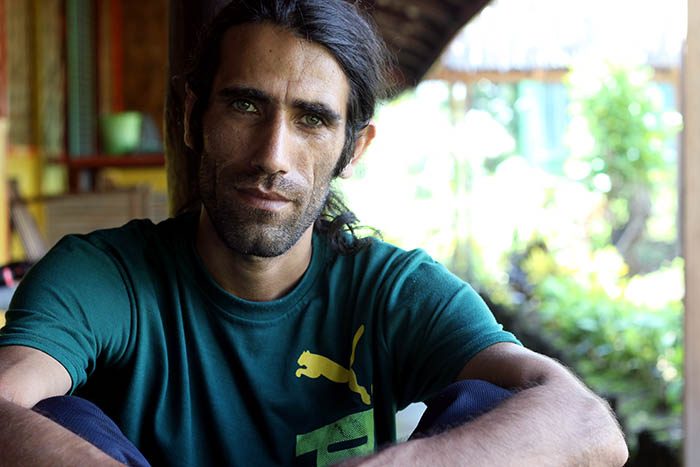
Manus Island, in Papua New Guinea, is the location of a controversial detention centre which the Australian government uses to hold over 1,000 asylum seekers indefinitely. It is also home to Iranian journalist and 2017 Index journalism award nominee Behrouz Boochani. His film Chauka, Please Tell Us the Time, which exposes the realities of life as a detainee on Manus Island, has been selected for the BFI London Film Festival.
An urgent and powerful documentary, shot in a detention centre where asylum seekers trying to reach Australian shores are indefinitely detained. Secretly shot on a mobile phone by Boochani while detained on Manus, the film is a collaboration with Dutch-Iranian filmmaker Arash Kamali Sarvestani. Boochani recounts, via the testimonies of fellow inmates, the abuse and violence inflicted and the precarious state of limbo they find themselves in.
Chauka, the name of the dreaded solitary confinement unit within the detention centre, was originally the name of a beautiful bird and symbol of the Manus Island. By interweaving dialogue with two Manusian men and shots of daily life on the island, the film gives a much-needed voice to Manus inhabitants, understandably distressed by the current situation. With marked restraint, the film exposes lives broken by shocking immigration policies.
[vc_row][vc_column][vc_custom_heading text=”The number of people listening to radio stations is on the rise, and with the arrival of podcasting this old form of media is having a rebirth, argues Rachael Jolley”][vc_row_inner][vc_column_inner][vc_column_text]
A LONG TIME ago my friend Tom told me that for many people there were only two states of mind:talking, and waiting to talk. In effect as his simple description suggests, no one was listening to what anyone else had to say.
This was way before social media got to the state it is in today. In 2017 we have all become transmitters, broadcasting our micro thoughts and reactions almost incessantly. Sometimes I worry that people spend so much of their time on Twitter that they can’t have time to fit in basics like eating, cooking, sleeping, and doing a job.
Listen to a radio show, and you might be provoked, informed or excited about a new subject. But in listening you are doing something that is a little out of fashion, contemplating what others are saying, not writing down some angry instant response, or even just posting the first thought that comes into your head. Surprisingly radio is on the rise again (Americans listened to 11.5 billion hours of news across Nielsen’s portable people meter markets in 2016, up from 10.5 billion in 2015), its audience is growing across various age groups, and part of the reason might be because we are all tired of transmitting constantly. Instead we appear to be happier to settle down and listen to radio and, particularly its news programmes, again.
In the summer of 2017, around 48.2 million people in Britain listened to the radio at least once a week, up 0.9% from 2016. And in 2017 across the Atlantic, the USA is seeing a surge in listeners for news and talk radio. Of particular interest is the steady growth in those who listen to the radio for news in the 18-35 age group. Radio was thought to be going out of fashion as new technologies elbowed it out of the way, but instead it’s back and gathering new audiences. Part of the reason might be growing awareness that someone’s ramblings are not necessarily a reliable source of information.
Meanwhile, according to the Reuters Institute for the Study of Journalism at Oxford University, figures show that in most countries the proportion of the public using social media as a source for news has stagnated. In Portugal, Italy and Australia it has declined.
So why is radio so important? It has a particular strength over other forms of media and communication. You might only need a battery to give it life. And you can listen to radio anywhere without wifi, without a plug point, without being able to read, and without much fuss. That makes radio an essential for anyone living in a remote location, who hasn’t got access to newspapers or internet. It can bring the news and information about what is happening in the world to you, and if you live in a country where you don’t want people to track you, then a battery-operated radio is the way to go.
[/vc_column_text][/vc_column][/vc_row][vc_row][vc_column width=”1/4″][vc_icon icon_fontawesome=”fa fa-quote-left” color=”custom” align=”right” custom_color=”#dd3333″][/vc_column][vc_column width=”3/4″][vc_custom_heading text=”Digital technologies have given radio a new lease of life.” google_fonts=”font_family:Libre%20Baskerville%3Aregular%2Citalic%2C700|font_style:400%20italic%3A400%3Aitalic”][/vc_column][/vc_row][vc_row][vc_column][vc_column_text]
In remote regions of Africa and India, where few other options are available, radio is massively important as a means of finding out what is going on locally, and internationally.
Radio is an old technology. It is the wrinkly old guy against the bouncing baby that is Twitter. The first voice broadcast was in 1900, and it’s come a long way since then.
After television came along, some thought it was the end for radio. But it wasn’t. Then along came the internet, and again some thought it was the last long days of summer for radio. But in fact digital technologies have given radio a new lease of life. Podcasting has kicked a whole new audience radio-wards, while retaining some of its old audience. Podcasts are portable, of course, and can be listened to on the way to work.
According to data from US-based Edison Research, audiences for podcasts in Australia and the United States are seeing steady growth. In Australia, among those who listen to podcasts, 30% listen to more than five hours a week, either at home or in their cars.
Not only have podcasts given us a new form of radio, but they have opened up new opportunities for people who want to make their own programmes. Anyone can now be the equivalent of a radio reporter by making their own podcast at very little cost. With some basic skills and nothing more than a smart phone, you can record interviews, and add an introduction. You can even cut them together on a phone app, or a free internet programme, before publishing your programme on a platform like Soundcloud.
Podcasting has given investigative reporting a boost too, as those who listened to the award-winning Serial will recognise. Meticulous and detailed research went into the journalism for the first series of Serial, which reinvestigated a murder in Baltimore. Millions of people tuned in around the world to find out what each episode would unveil. But unlike the old days of radio, listeners didn’t always have to listen at the same time every week, or sit around an old set in the corner of their living room. The podcast could be downloaded to phones, or iPads for a long journey, or even just live streamed.
While journalists are using radio to bring information to hard to reach places, the bad news, which we report in this issue, is that others are trying to stop them.
In India, the government still tightly controls news radio, so only the state can broadcast, despite having hinted over the past few years that things might change. This is a country where radio is vital for millions of people. The Indian government should be rethinking its approach to radio as innovative radio pioneer Shu Choudray argues (p17).
In Somalia, radio journalist Marwan Mayow Hussein checks under his car for bombs before going off to work. The work he does is dangerous, and certain people would rather he didn’t broadcast, as Ismail Einashe reports in this magazine (p8). Meanwhile in Iraq, the team at Alghad FM in Mosul don’t make their names public in order to stay a little safer as they continue to work in a war zone. Laura Silvia Battaglia went there to meet them (p41).
In Rwanda, radio is vital, Peter Kettler who ran an NGO called Coffee Lifeline there, told Index: “Radio is far more powerful than messages on mobile phones. In Rwanda you are dealing with a heavily illiterate population, but everyone has a radio or access to a shared radio.” During the period of genocide radio was used to incite violence. Graham Holliday investigates the role of radio in Rwanda today (p51), and finds it faces censorship and banning orders. The BBC World Service in English and Kinyarwanda have been banned by the president, and journalists are fleeing the country.
The new rise of radio allows more opportunities to discuss and debate than ever before, but we must also fight for radio stations to be unbound from state control and to be able to broadcast news freely.
Rachael Jolley is the editor of Index on Censorship magazine. She recently won the editor of the year (special interest) at British Society of Magazine Editors’ 2016 awards
Liam Hodkinson and Elizabeth Stitt compile comprehensive facts on radio usage throughout the world.[/vc_column_text][/vc_column_inner][vc_column_inner width=”1/3″][vc_single_image image=”90954″ img_size=”213×300″ alignment=”center” onclick=”custom_link” link=”http://journals.sagepub.com/doi/pdf/10.1080/03064229408535741″][vc_custom_heading text=”Death by radio” font_container=”tag:p|font_size:24|text_align:left” link=”url:http%3A%2F%2Fjournals.sagepub.com%2Fdoi%2Fpdf%2F10.1080%2F03064229408535741|||”][vc_column_text]September 1994
If Rwandan genocide comes to trial, owners of Radio des Milk Collines should be head of the accused.[/vc_column_text][/vc_column_inner][vc_column_inner width=”1/3″][vc_single_image image=”89165″ img_size=”213×300″ alignment=”center” onclick=”custom_link” link=”http://journals.sagepub.com/doi/pdf/10.1177/0306422010372565″][vc_custom_heading text=”Going local” font_container=”tag:p|font_size:24|text_align:left” link=”url:http%3A%2F%2Fjournals.sagepub.com%2Fdoi%2Fpdf%2F10.1177%2F0306422010372565|||”][vc_column_text]June 2010
Jo Glanville explains how radio has the most impact on the local level than any other media platform.[/vc_column_text][/vc_column_inner][/vc_row_inner][vc_separator][/vc_column][/vc_row][vc_row][vc_column width=”1/3″][vc_custom_heading text=”Free to air” font_container=”tag:p|font_size:24|text_align:left” link=”url:%20https%3A%2F%2Fwww.indexoncensorship.org%2F2017%2F09%2Ffree-to-air%2F|||”][vc_column_text]Through a range of in-depth reporting, interviews and illustrations, the autumn 2017 issue of Index on Censorship magazine explores how radio has been reborn and is innovating ways to deliver news in war zones, developing countries and online
With: Ismail Einashe, Peter Bazalgette, Wana Udobang[/vc_column_text][/vc_column][vc_column width=”1/3″][vc_single_image image=”95458″ img_size=”medium” alignment=”center” onclick=”custom_link” link=”https://www.indexoncensorship.org/2017/09/free-to-air/”][/vc_column][vc_column width=”1/3″][vc_custom_heading text=”Subscribe” font_container=”tag:p|font_size:24|text_align:left” link=”url:https%3A%2F%2Fwww.indexoncensorship.org%2Fsubscribe%2F|||”][vc_column_text]In print, online. In your mailbox, on your iPad.
Subscription options from £18 or just £1.49 in the App Store for a digital issue.
Every subscriber helps support Index on Censorship’s projects around the world.

 SUBSCRIBE NOW[/vc_column_text][/vc_column][/vc_row]