16 Apr 2014 | Australia, News, Politics and Society
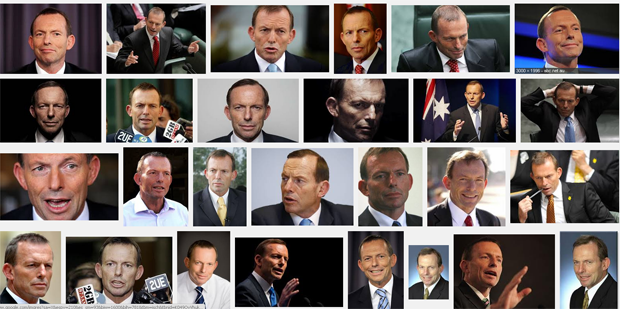
Australian prime minister Tony Abbott
In weeks where Prime Minister Tony Abbott of Australia has publicly praised the importance of freedom of speech in relation to the repeal of a section of the Racial Discrimination Act (18C) it might seem strange that civil servants caught criticising the government, or PM, can be sanctioned for illicit social media use. But to look at the two and suggest it implies gross, implicit hypocrisy, as some have, is not the most nuanced interpretation; however, the new policy code, which actually only applies to one government department bears looking at.
The new guidelines, Social Media Policy of the Department of the Prime Minister and Cabinet, outline what can and cannot be done on social media by employees and seem at pains to cover all bases while also being remarkably intrusive compared with other similar government documents.
The guidelines state they are aimed at ensuring the public believes in the impartiality of those in the Department of the PM&C. They govern social media use, including anonymous comments, during office hours and outside of work, on private devices. What has been noted by the media however is that anonymous speech may be sanctioned and employees are requested to “dob” — that is, report — on colleagues if they see them contravening the new policy. Staff can be reported for being “critical or highly critical of the Department, the Minister or the Prime Minister’’ or “so harsh or extreme in their criticism of the government, government policies, a member of parliament from another political party, or their respective policies, that they could raise questions about the employee’s capacity to work professionally, efficiently or impartially”.
Despite the leaked document now available online, the department maintains, according to the Canberra Times, that its policy on public social media use is a strictly internal document and will not comment. The department also states that no person should speak directly with the media but rather refer all queries to the media department, where the scribe can address queries in writing. This bureaucratic attempt at transparency or a “timely response” is neither limited to this department or government. Under the previous Labor government certain departments, such as the Department of Immigration and Citizenship, took much the same stance at times. Of course, now even refugee or boat arrival numbers are kept secret and weekly press conferences have been scrapped.
The policy has been defended by Freedom Commissioner Tim Wilson, who also defends the repeal of 18C in the name of freedom of speech. He told the Canberra Times: “As I read it, the current policy allows public servants to be critical of government policy, but requires that they do so in a way that does not compromise their capacity, or perception, that they will exercise their role as a public servant in an impartial way.” Wilson believes in the civilising power of codes of conduct and that such “voluntary” agreements do not undermine essential freedom of speech.
The document has rather broad-ranging edicts which could be open to interpretation. It is understood people may “participate robustly” in debate, but robustness may not trump impartiality or professionalism. It is useful then that Abbott’s daughter does not now work for the prime minister’s department. After publicly calling him a “lame, gay, churchy loser” in 2009 her impartiality could be questionable.
This article was published on April 16, 2014 at indexoncensorship.org
8 Apr 2014 | Australia, News, Politics and Society
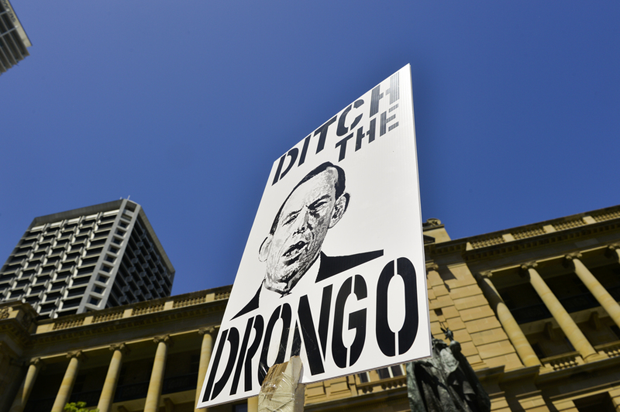
Disillusioned with the Abbott government’s agenda, protestors took to the streets of Brisbane on March 16, 2014. The rally was staged as a vote of no confidence in policy that some say goes against principles of humanity, decency, fairness social justice and equity. (Photo: Claudia Baxter / Demotix)
Australia is looking at repealing sections of the Racial Discrimination Act. Though the move has long been mooted by the government of prime minister Tony Abbott, recent moves to repeal parts of it–and specifically section 18C–has sparked public debate and anger on both sides of the political divide.
“People do have a right to be bigots you know,” attorney general George Brandis told the Australian Senate in late March. He was referring to the Abbott government’s repealing of section 18c of the Racial Discrimination Act which makes it unlawful to “offend, insult, humiliate or intimidate” people based upon their race.
Called by some the “Bolt clause” the repeal of this section has caused both outcry and debate. Conservatives, for the most part, applaud the action for reasons of freedom of speech. Others argue it sets a dangerous precedent and will allow more hate speech to go unchecked or unpunished. It also sends a wider message that racism is acceptable, critics argue.
The Abbott government’s stance can be traced back to 2011. News Limited columnist Andrew Bolt, who is one of the country’s best known conservatives, was found guilty by a federal judge of breaching the Racial Discrimination Act. Writing in Melbourne daily the Herald Sun in 2009 Bolt suggested in two stories that light skinned indigenous people claimed Aboriginality for their own gain. A federal judge found that the articles had not been written in good faith and would offend a reasonable member of the Aboriginal community. Bolt had argued his articles fell within the laws of free speech provisions and, after the ruling was handed down, called it “a terrible day for freedom of speech in this country.”
“In good faith” is important to note as the Racial Discrimination Act’s 18D stipulates that comments made in good faith are permissible as are expressions of genuine belief. Sections D, B and E will also be repealed, however. In their place it will be unlawful to vilify or intimidate persons based upon their race; however, “to intimidate means to cause fear of physical harm.” The new exemption is rather more broad: “This section does not apply to words, sounds, images or writing spoken, broadcast, published or otherwise communicated in the course of participating in the public discussion of any political, social, cultural, religious, artistic, academic or scientific matter.”
Section 18c does not actually carry a criminal penalty. It became law in 1995, partly through recommendations made by the Royal Commission into Aboriginal Deaths in Custody
In a March 12 editorial the Herald Sun pointed out that the government should not be there to adjudicate in cases where offense has been caused and “is to diminish people’s right to voice their opinions, blunt as they might be.” The paper pointed out that defamation laws–incidentally far more commonly used in Australia than any invocation of 18C–are generally more useful in determining if harm has been caused. Bolt has previously been sued for defamation by a Victorian judge.
Brandis has said he is a proponent of free speech and against the kind of internet filtering suggested previously under Labor whereby sites that were refused classification were simply blocked. Many of the sites–in a list published by Wikileaks–contained material that might have possibly been objectionable but was not illegal. As previously reported by Index, Brandis established a “Freedom Commissioner” in Tim Wilson in late 2013. Wilson has been a strong critic of the Australian Human Rights Commission, suggesting it had narrowed its horizons and focused more upon racial discrimination than freedom of speech. Before being appointed to the commission he attacked it for its silence on the previous Labor government’s new media regulations. Wilson made clear last year at the time of his appointment that would support repealing of 18C.
Though publicly committed to free speech Abbott has previously criticised national broadcaster ABC for its reporting of alleged abuse of refugees by the Australian Navy and its reporting of Australia’s tapping of Indonesian Prime Minister Yudhoyono’s wife’s phone, though under the previous administration, “a lot of people feel at the moment that the ABC instinctively takes everyone’s side but Australia’s.”
Though the coalition has lionised the restorative powers of a free press upon a free society, one of its own MPs, Ken Wyatt, has threatened to cross the floor on this issue, while according to the Sydney Morning Herald, MPs David Coleman and Craig Laundy had also expressed concern. Crossing the floor is, though permissible, a rarity dangerous to one’s political career.
Labor Senator Penny Wong and Leader of the Opposition in the Senate suggested that those arguing against 18C are viewing things in terms of “an abstract philosophical or legal argument… it’s a debate about words and principles…For people who have experienced racism… it’s actually a debate about real people and real hurt.”
This article was posted on 8 April 2014 at indexoncensorship.org
19 Feb 2014 | Asia and Pacific, Australia, Digital Freedom, News

(Image: Shutterstock)
When will Australian governments leave the internet alone? Successive governments have shown an inability to allow Australians to go about the business of using the web and browsing at will. Under previous Labor governments, an obsession grew about the need for a mandatory internet filter system. The system would have screened out sites falling into the “Refused Classification” category. Internet activists and the political opposition guffawed at the suggestion. It was deemed excessive and unworkable.
Australia’s new attorney-general, the prickly George Brandis, claims to be interested in freedoms. He certainly spends time talking about it, having established the new office of “Freedom Commissioner” and claiming that the political left has lost sight of traditional civil rights in favour of select, marginal entitlements. His appointee to the position, Tim Wilson of the libertarian Institute of Public Affairs, is meant to signal a policy shift.
Such a move does little to suggest how actual “freedoms” are going to be protected, let alone promoted. Australia’s legislative regime on rights, in the absence of a constitutionally protected bill of rights, is a quilt work of regulations. These are, as ever, the subject of parliamentary change.
When it comes to internet freedoms, Brandis shows a slightly different suspicion of its workings than his predecessors. But in targeting a form of behaviour he cannot accept, he proves to be on familiar ground. The focus here is not morally righteous in the manner of the pornography filterers, but it is righteous in the sense of protecting financial and economic rights. “The illegal downloading of Australian films online is a form of theft.” Both views share a common strand: a desire to circumscribe the way the net, and information, is used.
Before an audience at the Australian Digital Alliance copyright forum last week, Brandis made mention of how he might go about this. The government will consider various legal means to provide a “legal incentive” for ISPs to collaborate with copyright owners to combat infringements. “This may include looking carefully at the merits of a scheme whereby ISPs are required to issue graduated warnings to consumers who are using websites to facilitate piracy.”
A three-strikes system is being pushed, part of a global drive by developed countries to exert greater control over internet content. France, New Zealand, the United States and Britain are all in the stages of implementing such a program. Users of Australia’s broadband system who allegedly download pirated content will be warned before authorities intervene. This can involve threats of discontinuation from the use of the internet after three warnings. So far, owners of content in Australia have been pressing the government to use a warning system short of disconnection.
The effects of this have already been outlined in some detail. Internet service providers such as iiNet and Optus claim that such a policy move will shift the onus on them to police content. That is Brandis’ suggestion: to convert ISPs into cyber policing outfits that will remove websites hosting “illegitimate” material, thereby restraining downloads by customers.
A few points are worth mentioning. The first is how accountability for infringements can be attributed to an ISP. A ruling by the Australian High Court on the liability of an ISP for allowing the downloading of infringing content is instructive. In 2012, the court unanimously found in a case mounted by 34 studios and television companies against iiNet that the ISP was not liable for authorising copyright infringement.
Roadshow Films v iiNet proved to be a global test case on illegal downloads. It found that iiNet did not have direct power to prevent infringements given its lack of control over the BitTorrent protocol. The only way to prevent violations would have been excessive: eliminating a customer’s Internet access altogether, which would also prevent legitimate uses of it. Indifference to cases of infringement was not the same as authorisation of it. And expecting iiNet to do what the plaintiffs wanted would have resulted in heavy expense, inconvenience and liability for terminating customer accounts.
The other point to make is that such graduated systems are set to fail even as they unduly burden the industry. The experiences in France, New Zealand and the UK have shown them to be counterproductive. Steve Dalby, chief regulatory officer of iiNet, forcefully argues that content should be made available via a system of timely release using such streaming services as Netflix and Hulu. “It can’t be a coincidence that graduated response doesn’t work anywhere else in the world, and making content available in a timely fashion in the US market does work.”
Such suggestions by Brandis cast light on preliminary moves on the part of Australia to import American models of intellectual property law into the domestic system. Australia has been the least disagreeable of the countries involved in negotiating the Trans-Pacific Partnership Agreement with the United States, which contains a substantive chapter on intellectual property.
The intellectual property chapter of the secretly negotiated agreement, obtained by WikiLeaks, suggests the extent the TPP will control the way “protected” content, be it technology, medicine and publishing, will be controlled. Mandatory removals and targeting copyright infringements are fundamental to the changes. The main investors in such an arrangement are US companies who will seek, through the legal regulations in other countries, to control the release of protected material. Aspects of the contentious Digital Millennium Copyright Act have found their way into the agreement.
While the interests of copyright are important to consider, the tendency to control the global Internet via an internationalised copyright regime that coopts ISPs into the role of monitors serves no useful role in preventing infringements. This has the effect of turning a provider of such services into a security service for corporate rights. But it is a trend proving irresistible to all governments, especially those in industrial countries.
This article was posted on February 19, 2014 at indexoncensorship.org
7 Feb 2014 | Australia, News, Politics and Society
Australian prime minister Tony Abbott has accused the Australian Broadcasting Corporation of being unAustralian.
In a dust up over the reporting of spying revelations, the Australian Broadcasting Corporation has been called unAustralian by prime minister Tony Abbott, who has also called for a review of its funding.
The ABC, known affectionately as “Auntie”, has long been accused of left-wing bias by both conservative media and politicians and the prime minister is just the latest, saying in late January, “a lot of people feel at the moment that the ABC instinctively takes everyone’s side but Australia’s. I think it is a problem.”
The problems Abbott was referring to were revelations broadcast by ABC, prompted by documents released by former US National Security Agency contractor and whistleblower Edward Snowden, that Australia’s government had tapped the phones of the Indonesian prime minister Susilo Bambang Yudhoyono and his wife in 2009. Snowden was described by Abbott as a “traitor” and said the broadcaster was delighting in “advertising” what he had to say. Abbott accused the broadcaster of attacking the nation.
Though the phone tapping took place during the tenure of the previous Labor government, Abbott’s administration has been vocal that the reporting has badly damaged relations with Indonesia. At the same time, Abbott’s government has been turning back boats into Indonesian waters with no prior warning. This follows an ABC report that Australian navy personnel had abused asylum seekers in their care by forcing them to hold onto hot pipes that burned their hands. The allegations came from members of the Indonesian navy, but were not fully verified by ABC reporters.
An investigation by Media Watch, an ABC watchdog programme detailed varied journalistic abuses or stretches of the truth and found its own network had “overreached” on the allegations of abuse. The programme said the story should have been more adequately researched.
Tony Abbott later said he wanted the national broadcaster to apologise but would “leave it up to them”.
“My concern as a citizen of our country is to try to ensure our national broadcaster is accurate, is fair,” he continued.
Others in his party, such as communications minister Malcolm Turnbull, have not been so direct, noting the importance of freedom of press and a lack of self-censorship
The ABC, in a poll conducted by Essential Research found the taxpayer-funded broadcaster, is considered the country’s second most trusted institution after the Supreme Court. Further research conducted by the ABC found that 85 percent of people believe the broadcaster provides a valuable service.
None of this stops repeated claims of bias against the broadcaster, usually by conservative politicians and journalists. The supposed bias shown last election against Labor by News Limited papers has not been subjected to the same attacks by the Coalition. Other conservative commentators have noted the former government’s own attempts at censorship of the press.
This has come at the same as an”efficiency study” of the ABC and the Special Broadcasting Service, which also receives government funding, has been announced. Beginning this month, it will announce its findings in April and there is much speculation budgets will be cut. There has even been talk of privatising or scrapping the broadcaster, though communications minister Malcolm Turnbull has been keen to distance himself from the ideas.
This article was originally published on 7 February 2014 at indexoncensorship.org
