16 Jun 2017 | Campaigns -- Featured, Press Releases
[vc_row][vc_column][vc_column_text]
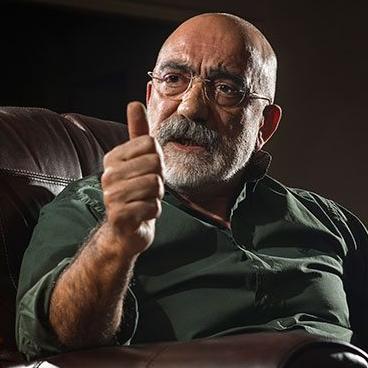
Journalist Ahmet Altan is charged with inserting subliminal messages in support of the failed 15 July coup in Turkey.
On 19 June, the first hearing will take place in a trial concerning 17 defendants, including a number of journalists. Among the defendants are prominent novelists and political commentators, Ahmet Altan, Mehmet Altan and Nazlı Ilıcak. The case is the first trial of journalists accused of taking part in last year’s failed coup
The case is the first trial of journalists accused of taking part in last year’s failed coup attempt and may shed light on how the courts will approach numerous cases concerning the right to freedom of expression and the right to a fair trial under the state of emergency.
Representatives of Article 19, Amnesty International, Index on Censorship, Norwegian PEN and PEN International will be attending the hearing in order to demonstrate solidarity with the defendants, and with media freedom more broadly in Turkey. The Bar Human Rights Committee of England and Wales and the International Senior Lawyers Project are also sending observers to the hearing.
The charges against the accused are detailed in a 247-page long indictment which identifies President Erdogan and the Turkish government as the victims. Defendants Ahmet Altan, Mehmet Altan and Nazlı Ilıcak are charged with “attempting to overthrow the Turkish Grand National Assembly”, “attempting to overthrow the Government of Turkey”, “attempting to abolish the Constitutional order” and “Committing crimes on behalf of an armed terrorist organisation without being a member”. The remaining defendants are additionally charged with “membership of a terrorist organisation”, in reference to the Gülen movement who the Turkish government accuses of having orchestrated the coup attempt.
The majority of those on trial are either currently in exile or have been held in pre-trial detention for almost 10 months. On 14 June, the European Court of Human Rights wrote to the Turkish government requesting its response to a number of questions to determine whether the human rights of seven detained journalists, including the Altans and Nazlı Ilıcak, have been violated due to the long pre-trial detention.
We believe the trial to be politically motivated and call on the authorities to drop all charges against the accused unless they can provide concrete evidence of commission of internationally recognisable criminal offences and to immediately and unconditionally release those held in pre-trial detention.
Article 19 has prepared an expert opinion examining the charges against the Altan brothers, at the request of their defence lawyers, which will be submitted to the court on Monday morning. The opinion argues that the charges levelled against the Altans amount to unlawful restrictions on the exercise of the right to freedom of expression.
For more detailed information regarding the context for free expression in Turkey, please see a joint statement submitted to the UN Human Rights Council in May 2017.
For further information please contact:
Sarah Clarke, International Policy and Advocacy Manager, PEN International, sarah.clarke@pen-international.org
Georgia Nash,Programme Officer – Middle East & North Africa / Europe & Central Asia, ARTICLE 19, [email protected]
Melody Patry, Head of Advocacy, Index on Censorship, [email protected]
[/vc_column_text][/vc_column][/vc_row][vc_row][vc_column][vc_basic_grid post_type=”post” max_items=”12″ style=”load-more” items_per_page=”4″ element_width=”6″ grid_id=”vc_gid:1497944733154-20b659a7-0b15-10″ taxonomies=”7355″][/vc_column][/vc_row][vc_row full_width=”stretch_row_content_no_spaces” content_placement=”middle”][vc_column][vc_single_image image=”91122″ img_size=”full” alignment=”center” onclick=”custom_link” link=”https://www.indexoncensorship.org/2017/05/stand-up-for-satire/”][/vc_column][/vc_row]
13 Jun 2017 | Azerbaijan, Azerbaijan Letters, Campaigns, Campaigns -- Featured, Statements
[vc_row][vc_column][vc_column_text]
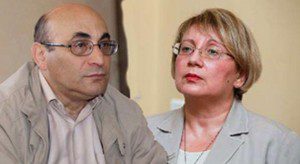
Arif and Leyla Yunus (Photo: HRHN)
Dear Secretary General,
We, the undersigned organisations call on Interpol, and all other relevant bodies and authorities to act with due diligence in accordance with Interpol’s constitution to prevent the misuse of Interpol alerts against Leyla Yunus and Arif Yunus, two prominent human rights defenders from Azerbaijan. The couple currently resides in exile in the Netherlands, where they were granted refugee status in 2016. Detailed information about their human rights activism can be found below. Interpol’s constitution prohibits the misuse of its systems for political purposes and in ways that violate human rights.
Leyla and Arif Yunus were arrested on 30 July and on 5 August 2014 respectively. Azerbaijani authorities prosecuted both on politically motivated charges of large-scale fraud, while also charging Leyla with bogus forgery, tax evasion, and illegal entrepreneurship offences. In August 2015, a court sentenced Leyla Yunus to eight and half years imprisonment, and Arif Yunus to seven, having convicted them of tax evasion and other economic crimes. Authorities also filed treason charges against them both, but later suspended the investigation.
On 9 December 2015, Leyla Yunus was released from detention and her eight-and-a-half-year prison sentence was converted into five-year suspended sentence, following a decision by the Baku City Court of Appeal on the basis of a request from her lawyers with reference to her deteriorating health condition. Similarly, Arif Yunus’s prison term was changed to a five-year suspended sentence. He was placed under house arrest on 12 November 2015. In April 2016 the Azerbaijani government allowed the couple to travel abroad to receive needed medical treatment for conditions they had developed during their prison ordeal.
Due to the politically motivated nature of their prosecution, in spring 2016 the couple received political asylum in the Netherlands.
When Leyla and Arif left Azerbaijan, their cassation appeal was still pending before the Supreme Court. On 27 December 2016, the Supreme Court sent the case back for re-examination to the Baku Appeal Court. On 17 May 2017, at the hearing at the Baku Appeal Court, the Yunus’s lawyer asked the court to ensure the couple’s participation in the proceedings via internet. The court rejected the petition. The same day, the court ordered the couple to return to the country to participate in the subsequent court hearings in their case. The court hearing was rescheduled from 31 May to 3 July 2017.
The arrest of Leyla and Arif Yunus happened against the backdrop of a rapidly deteriorating human rights situation in Azerbaijan. Since 2014, several dozens of human rights defenders, lawyers and journalists and opposition politicians have been arrested and prosecuted on politically-motivated grounds. The arrests and other steps by the government of Azerbaijan have served to severely close the space for independent activism, critical journalism, and opposition political activity in the country.
Azerbaijan has been ranking as Not Free in the Freedom in the World rankings of the Freedom House for several years, scoring the lowest on the political rights and civil liberties. In the latest Freedom of the Press rankings, Azerbaijan scored the 162nd place out of 180 countries.
The United Nations Working Group on Arbitrary Detention recently concluded an official visit to Azerbaijan. In a statement issued at the end of its visit, the Working Group concluded that human rights defenders, journalists, and political and religious leaders continue to be detained on criminal or administrative charges in the country as a way to impair their exercise of basic human rights and fundamental freedoms and to silence them. The Working Group stressed that these practices constitute abuse of authority and violate the principle of the rule of law that Azerbaijan has undertaken to comply with. One of the cases highlighted by the Working Group is that of Leyla and Arif Yunus. In his recent report to the Human Rights Council, the United Nations Special Rapporteur on human rights defenders, Michel Forst also drew attention to the legal persecution of human rights defenders in Azerbaijan.
An official request has been made to Interpol on 12 June 2017 by the European Human Rights Advocacy Centre (EHRAC), which represents the couple, to inquire about the existence of any alerts made against Leyla and Arif Yunus by the Azerbaijani Government and to request Interpol to take all appropriate steps to prevent the dissemination of such an alert. Taking into consideration the very poor human rights record in Azerbaijan and the routine practice of politically-motivated prosecutions by the authorities, any attempt by the Azerbaijani authorities to use Interpol alerts against Leyla Yunusova and Arif Yunusov would violate the prohibition in Interpol’s constitution against the misuse of its systems for political purposes and in ways that violate human rights. Interpol should, therefore, refuse any request from the Azerbaijani authorities to use the Interpol Information System against Leyla Yunusova and Arif Yunusov, and we call on all relevant national bodies and authorities not to act on Interpol alerts against them, in case they are issued.
Short biographies:
Leyla Yunus is a long time human rights defender and activist since the late Soviet era. She is the director of the Institute for Peace and Democracy, a human rights organisation in Azerbaijan that focused on political prisoners, women’s rights and other issues. For almost 30 years Leyla Yunus and Arif Yunus have been involved in compiling comprehensive lists of political prisoners in Azerbaijan. Leyla Yunus is a Knight of the French Legion of Honor, winner of the International Theodor Hacker award, Laureate of the Polish Sergio Vieira de Mello Award and a finalist of the 2014 Sakharov Prize of the European Parliament.
Arif Yunus is a prominent Azerbaijani historian and human rights activist. He is the chairperson of the Conflict and Migration departments at the Institute for Peace and Democracy. Throughout his career, Arif has published over 30 books and several articles on the history of Azerbaijan and on Azerbaijani-Armenian relations. In his work, he has promoted dialogue between intellectuals from Azerbaijan and Armenia, and for many years has advocated for a peaceful resolution of the conflict in Nagorno-Karabakh. He has supported numerous victims of torture and spoken out repeatedly against politically motivated detentions.
The list of signatory organisations:
1. Amnesty International
2. Association UMDPL (Ukraine)
3. Bir Duino
4. Centre for the Development of Democracy and Human Rights
5. Committee Against Torture
6. Crude Accountability
7. Fair Trials
8. FIDH and OMCT under “Observatory for the protection of human rights defenders”
9. Freedom Files
10. Front Line Defenders
11. Helsinki Foundation for Human Rights
12. Human Rights House Foundation
13. Human Rights Watch
14. Index on Censorship
15. International Partnership for Human Rights
16. Institute for Reporters’ Freedom and Safety (IRFS)
17. Kazakhstan International Bureau for Human Rights and the Rule of Law
18. KRF Public Alternative
19. Legal Policy Research Centre
20. Public Verdict
21. Regional Center for Strategic Studies
22. The Barys Zvozskau Belarusian Human Rights House
23. The Georgian Centre for Psychosocial and Medical Rehabilitation of Torture Victims
24. The Netherlands Helsinki Committee
25. Women of the Don[/vc_column_text][/vc_column][/vc_row][vc_row][vc_column][vc_basic_grid post_type=”post” max_items=”12″ style=”load-more” items_per_page=”4″ element_width=”6″ grid_id=”vc_gid:1497944614160-ae286e6b-fd24-9″ taxonomies=”7145″][/vc_column][/vc_row][vc_row full_width=”stretch_row_content_no_spaces” content_placement=”middle”][vc_column][vc_single_image image=”91122″ img_size=”full” alignment=”center” onclick=”custom_link” link=”https://www.indexoncensorship.org/2017/05/stand-up-for-satire/”][/vc_column][/vc_row]
8 Jun 2017 | Azerbaijan, Digital Freedom, Europe and Central Asia, France, Mapping Media Freedom, News, Russia, Spain
[vc_row][vc_column][vc_column_text]

Over the last seven days, violence, intimidation, harassment and assault have been used to stop journalists from doing their job in the countries covered by Index on Censorship’s project Mapping Media Freedom.
Project manager Hannah Machlin explained why incidents in Azerbaijan and Ukraine are particularly alarming. She called the Azerbaijani incident “the most serious violation to press freedom in the past few days and it shows the situation in the region continues to be disturbing”.
The violation, which took place in late May, was against exiled Azerbaijani journalist Afgan Mukhtarli, who was abducted and allegedly tortured before being taken across the border and put in pre-trial detention in Azerbaijan.
“This shows that Georgia can’t be considered a safe haven for opposition journalists and activists as well as reiterates the continued crackdown on press freedom in Azerbaijan,” Machlin said. The incident has been reported to the Council of Europe’s platform on the protection of journalism to enable that organisation to pursue discussions with the country’s representatives. Index on Censorship joined other press freedom organisations to request the Georgian government take action on the incident.
Machlin said the situation in Ukraine “indicates a complex issue in a war-torn area”. She said the “the report shows that there’s still renewed violent intimidation tactics perpetrated by the separatists against Ukrainian public broadcasters in Donbas”. She explains this is interesting because it shows that the separatists are targeting channels of free information set up by Kyiv and that Ukraine is even trying to install public broadcasters in the eastern region controlled by self-proclaimed authorities because the country “is trying to put a press presence back in there”.
29 May 2017 – Azerbaijani journalist Afgan Mukhtarli was on his way home but never made it.
Mukhtarli was reportedly kidnapped from his neighbourhood after being forced into a car with his hands tied together. He was also beaten with a broken nose and bruises all over his head and face.
He then was transported back to Azerbaijan without a passport.
Mukhtarli was charged for illegally crossing the border, smuggling and resisting law enforcement and was also accused of being in possession of 10,000 EUR during the police search at the border.
One day later on 30 May, he was sentenced to three months in pretrial detention.
Mukihtarli’s wife and child in still in Tbilsi where they fled after escaping Azerbaijan in 2015 when Mukhtarli was threatened over his investigative reporting on corruption in the Azerbaijan.
26 May 2017 – Do TeBe, a new TV channel, endured a smashing of their front door by two unidentified assailants.
Police came to the channel, located in Donetsk oblast and are now investigating the incident.
Do TeBe’s deputy director Ilya Suzdalyev said “We are in the front line region, even what looks like hooliganism must be thoroughly investigated and perpetrators should be punished. Especially when it is, in fact, an attack on the public broadcaster, which was just created in Ukraine.”
Do TeBe TV channel is a regional branch of the National Public Broadcasting Company of Ukraine.
31 May 2017 – Outside the parliament building where the 2017 presidential inauguration took place journalists were assaulted by supporters of the new president.
Lidija Valtner, a journalist for daily Danas, was filming and interviewing an anti-government protester when she was assaulted by a group of supporters. Not only did they shove her around and try to take her mobile phone, but they also assaulted the protester she was interviewing.
Another journalist on the scene was reporting for Radio Belgrade when she was pushed and her equipment thrown to the ground.
Journalists for Balkan Investigative Reporting Network (BIRN) and Vice Serbia were also harassed with violence from the crowd whilst they were taking photos of the clashes. The police asked for their IDs after they witnessed a few men ripping a protest banner.
The assailants are still on the loose.
31 May 2017 – An unknown person called the editor-in-chief of the local news website Kurier.Sreda.Berdsk and threatened her and the editorial staff. Galina Komornikova’s outlet is located in the Novosibirsk region in Berdsk.
On the call, the individual said that “the Syrian theme is not one for journalists”.
The call may have been in response to a story published by the outlet the day before about the secret funeral of a Berdsk resident and Russian military officer. Yevgeni Tretyakov, who was killed in Syria on 15 May, may have belonged to private Russian military troops as he was not an official Russian army contractor.
The outlet then commented on the article saying “An unknown individual called us and promised to ‘come and handle us on behalf of law enforcement agencies’ following the article.”
Para-military private troops are not a new concept. Both Russian and international civil investigative groups and media outlets have been reporting evidence for these groups in the Syrian conflict.
A comment was also left by user “The Animal” stating “Actually, data on military casualties is classified, therefore, I would not be surprised if special people came to visit you to shake a bit, you and your sources.”
29 May 2017 – After elimination while being interviewed, tennis player Maxime Hamou tried to kiss channel Eurosport journalist Maly Thomas several times.
It was at the Rolland Garros tournament where Hamou grabbed Thomas and tired kiss her on the neck and cheek.[/vc_column_text][/vc_column][/vc_row][vc_row][vc_column][vc_column_text]
Mapping Media Freedom
Click on the bubbles to view reports or double-click to zoom in on specific regions. The full site can be accessed at https://mappingmediafreedom.org/[/vc_column_text][/vc_column][/vc_row]
31 May 2017 | Azerbaijan, Azerbaijan Statements, Campaigns -- Featured, Statements
[vc_row][vc_column][vc_column_text]
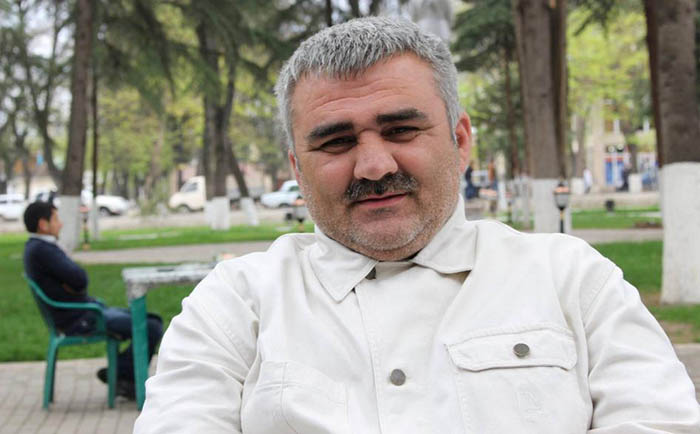
Afgan Mukhtarli. Credit: Meydan TV
Index on Censorship is extremely concerned at the news of journalist Afgan Mukhtarli being detained and facing prosecution in Azerbaijan after being disappeared from Georgia.
Freelance Azerbaijani journalist Afgan Mukhtarli was reported missing in Tbilisi, Georgia on the evening of 29 May by his wife Leyla Mustafayeva. Eurasianet reported that Mustafayeva said that her husband last called her when he was just a few blocks away from their home, but he never showed up.
The Georgian police stated on 30 May that a search was underway for the journalist, but later, the independent Azeri news agency Turan reported that the Azerbaijani border service department detained Mukhtarli.
Independent investigative journalist Khadija Ismayilova confirmed that Mukhtarli was kidnapped from his neighbourhood where he was forced into a car, his hands were tied and he was beaten. Mukhtarli sustained serious injuries. His lawyer, Elchin Sadigov, told the Committee to Protect Journalists: “He was beaten, has a broken nose, bruises all over his head and right eye, his rib may be broken.”
He was then taken across the border into Azerbaijan by car without his passport.
Mukhtarli is being charged with trespassing, smuggling and resistance to law-enforcement (violations of Articles 318.1, 206.1 and 315.2 of the criminal code), his lawyer confirmed. The Azerbaijani police also claim Mukhtarli was in possession of 10,000 EUR during the police search.
“Georgia has long been perceived as a safe haven for Azerbaijani dissidents, but the disappearance of Afgan Mukhtarli and other incidents are deeply concerning,” Melody Patry, Index’s head of advocacy said. “The charges brought by Azerbaijan’s prosecutors against Mukhtarli are spurious and Index calls for his immediate and unconditional release. We further call on the Georgian authorities to swiftly investigate the kidnapping of the journalist.”
Mukhtarli, who has contributed to various independent outlets, including Meydan TV, fled to Georgia from Azerbaijan in 2015, after receiving threats over his investigative reporting on corruption in the Azerbaijani Defence Ministry.
Twelve days before, the journalist said in an interview with independent online news outlet Jam News, that he and his wife, who is also a journalist and an activist, were both under surveillance.[/vc_column_text][/vc_column][/vc_row][vc_row][vc_column][vc_basic_grid post_type=”post” max_items=”4″ element_width=”6″ grid_id=”vc_gid:1496242648118-e98a8e80-c3a5-0″ taxonomies=”7145″][/vc_column][/vc_row]
