17 Jan 2012 | Leveson Inquiry
Private Eye editor Ian Hislop has spoken out against further press regulation, arguing that “if the state regulates the press then the press no longer regulates the state”.
Hislop told the Leveson Inquiry that the British press faces substantial regulation, adding that the worst excesses of the press occurred due to poor enforcement. He highlighted that many of the “heinous crimes” addressed by the Inquiry, namely phone hacking and contempt of court, are already illegal.
“I believe in a free press and I don’t think it should be regulated, but it should abide by law,” he said.
Hislop also lamented the “deeply embedded” involvment among senior politicians and News International, and urged Lord Justice Leveson to call the Prime Minister, Tony Blair and Gordon Brown to give evidence.
During his evidence, which at times resembled a debate than testimony, he alluded to France’s stringent privacy law, which he labelled “draconian”. The French “are catching up with two decades of news because of the reluctance to look at private lives of people who ran them”, he said.
Hislop also spoke out against prior notification, detailing how, when stopped from running a story about Law Society president Michael Napier, his magazine spent £350,000 while the application for an injunction went through. “The lesson I learned was not to give prior notification,” he said, adding later that privacy had become “more of a problem than libel” in the UK.
Yet he called libel arbitration a “waste of time”, noting he would “rather end up in the courts because that’s where you end up anyway.” He told the Inquiry that, since 2000, his magazine has faced 40 libel actions.
Also speaking this morning was News International CEO Tom Mockridge, who took over from former chief Rebekah Brooks in the wake of the phone hacking scandal last summer. Mockridge upheld the British press for “its extent of competition, choice and ability to report with freedom”, noting that many outside the country look at the press with “jealousy”.
Following a discussion of the regulatory models of Italy and Hong Kong, Mockridge disagreed with Lord Justice Leveson’s distinction between state regulation and a mechanism of statutory backing in a self-regulatory body. “If the state intervenes, the state intervenes,” he said, noting that it would “diminish a free press”.
Follow Index on Censorship’s coverage of the Leveson Inquiry on Twitter – @IndexLeveson
6 Dec 2011 | China
The new boss of CCTV, China’s state TV network, Hu Zhanfan, says it like it is.
He believes Chinese journalists should first and foremost be the Chinese government’s mouthpiece and those that don’t play ball won’t go far.
“The first social responsibility and professional ethic of media staff should be understanding their role clearly and be a good mouthpiece.”
Hu, a former newspaper editor, made these comments several months ago, but they only started causing a stir among Chinese web users over the weekend when the original Xinhua News report was posted on Weibo, China’s most popular microblogging site.
 One web user compared Hu to Nazi propaganda chief, Joseph Goebbels.
Below are pasted some of Hu’s comments from that Xinhua report, translated by the University of Hong Kong’s China Media Project.
“A number of news workers have not defined their own role in terms of the propaganda work of the Party, but rather have defined themselves as journalism professionals, and this is a fundamentally erroneous role definition. Strengthening education in the Marxist View of Journalism and raising the quality and character of news teams is not just very necessary, it is a matter of extreme urgency.
“Concerning social responsibility and professional ethics, editor-in-chief Hu Zhanfan believes that the first and foremost social responsibility [of journalists] is to serve well as a mouthpiece tool. This is the most core content of the Marxist View of Journalism, and it is the most fundamental of principles.”
5 Dec 2011 | Asia and Pacific, China
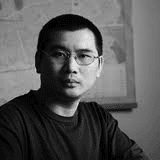 China has blocked the website of an iPad magazine called Sun Affairs edited by media rebels Chang Ping and Wen Yunchao. The site has lost its mainland audience.
To the government, Chang has form. Earlier this year his controversial commentary got him sacked from the county’s most liberal newspaper company, the Southern Group. Officials are refusing to grant him the visa that would enable him to join a new venture at Sun TV in Hong Kong.
China Media Project (CMP) reported that he was “was offered a position…and filed a visa application under Hong Kong’s Admission Scheme for Mainland Talents and Professionals.” Eight months later, his application has still not been granted. Chang told Southern Media, “I have asked them [the Immigration Department] about it, and they simply say that [my application] is under review.”
The fact that Chang Ping is being denied the opportunity to leave the mainland is an indicator of the worsening environment for journalists, something that Chang Ping has reflected in a blog post, where he writes:
Some people have talked about the loosening up of the media, but when I ask writers to write explaining this… they ask me to delete their stories once they have been used, and forbid me from sending them a cheque, so the stories can’t be traced to them. What a contrast this is to the supposed loosening up… [The media atmosphere] has tightened up.
Read an interview with Chang Ping here
4 Nov 2011 | Asia and Pacific, China
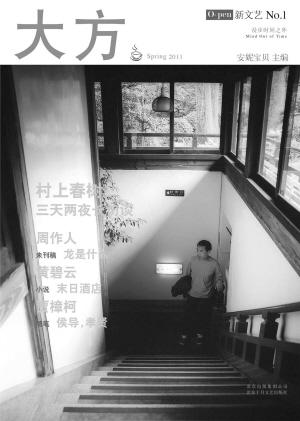
O-pen Magazine was set up in March 2011 by Annie Baby, a popular novelist who got her start on the internet. On 1 November she announced on her Sina microblog that O-pen had been forced to stop publishing. In China, magazines need a national periodical registration number, which enables the government to control magazine output. Like other magazines without a registration number, Annie Baby opted to use ISBN from a publishing house.
Local speculation suggests that shutting down O-pen because it had the wrong registration code was just a pretext. The state has begun a cultural campaign to ‘rectify and purify content’ on TV and other forms of cultural expression is taking place.
Magazine censorship is nothing new — China’s No. 1 blogger Han Han, also a novelist, launched Party in June 2010, it was shut down after just one issue. On November 2, Han Han wrote a blog post that was later taken down by the authorities. However, University of Hong Kong brilliant China Media Project had already posted a translation:
I’ve been involved in this work [of writing] for around 13 years now, and I now understand just how powerless and of no account cultural workers (文化工作者) really are. Owing to a richness of restrictions, people in this line of work are unable to produce anything truly special.
Even though Han Han does not explicitly state it, he is referring to Annie Baby. Han Han compares censorship to castration.
As for myself, while every single essay I write goes through a process of self-censorship and castration, sometimes unavoidably the fashion of my castration is still insufficient to pass muster. This has to do with the level of sensitivity at various publishing houses. For example, my most recent novel has been killed outright, because the protagonist in the novel is surnamed Hu [like China’s president]. So even though I have only written 5,000 characters so far, the publisher assumes there must be political allegory somewhere. By the time I realized I had to avoid this name and changed the character’s surname it was too late.

