4 Sep 2018 | Magazine, Magazine Contents, Volume 47.03 Autumn 2018
[vc_row][vc_column][vc_custom_heading text=”With contributions from Ian Rankin, Herta Müller, Peter Sands, Timandra Harkness, David Ulin, John Lloyd, Sheng Keyi and Nazanin Zaghari-Ratcliffe”][/vc_column][/vc_row][vc_row][vc_column][vc_column_text]
The autumn 2018 issue of Index on Censorship magazine looks at the ways in which we might be turning away from facts and science across the globe.
We examine whether we have lost the art of arguing through Julian Baggini‘s piece on the dangers of offering a different viewpoint, and the ways we can get this art back through Timandra Harkness‘ how-to-argue guide. Peter Sands talks about the move towards more first person reporting in the news and whether that is affecting public trust in facts, while Jan Fox talks to tech experts about whether our love of social media “likes” is impacting our ability to think rationally.
We also go to the areas of the world where scientists are directly under threat, including Hungary, with Dan Nolan interviewing academics from the Hungarian Academy of Scientists, Turkey, where Kaya Genç discusses the removal of Darwin from secondary school education, and Nigeria, where the wellness trend sees people falling as much for pseudoscience as actual science, writes Wana Udobang.
[/vc_column_text][/vc_column][/vc_row][vc_row][vc_column][vc_single_image image=”102490″ img_size=”full”][/vc_column][/vc_row][vc_row][vc_column][vc_column_text]
Outside of the special report, don’t miss our Banned Books Week special, featuring interviews with Kamila Shamsie, Olga Tokarczuk and Roberto Saviano. We also have contributions from Kenyan author Ngũgĩ wa Thiong’o on his time in prison and how that might have shaped his creativity and Nobel Prize-winning writer Herta Müller on being questioned by Romanian secret police.
Finally, do not miss best-selling crime writer Ian Rankin‘s exclusive short story for the magazine and poems written by imprisoned British-Iranian mother Nazanin Zaghari-Ratcliffe, which are published here for the first time.
[/vc_column_text][/vc_column][/vc_row][vc_row][vc_column][vc_custom_heading text=”Special Report: The Age of Unreason”][/vc_column][/vc_row][vc_row][vc_column][vc_column_text]
Turkey’s unnatural selection, by Kaya Genç: Darwin is the latest victim of an attack on scientific values in Turkey’s education system
An unlikeable truth, by Jan Fox: Social media like buttons are designed to be addictive. They’re impacting our ability to think rationally
The I of the storm, by Peter Sands: Do journalists lose public trust when they write too many first-person pieces?
Documenting the truth, by Stephen Woodman: Documentaries are all the rage in Mexico, providing a truthful alternative to an often biased media
Cooking up a storm, by Wana Udobang: Wellness is finding a natural home in Nigeria, selling a blend of herbs – and pseudoscience
Talk is not cheap, by Julian Baggini: It’s only easy speaking truth if your truth is part of the general consensus. Differing viewpoints are increasingly unwelcome
Stripsearch, by Martin Rowson: Don’t believe the experts; they’re all liars
Lies, damned lies and lies we want to believe, by Rachael Jolley: We speak to TV presenter Evan Davis about why we are willing to believe lies, no matter how outlandish
How to argue with a very emotional person, by Timandra Harkness: A handy guide to debating successfully in an age when people are shying away from it
Brain boxes, by Tess Woodcraft: A neuroscientist on why some people are willing to believe anything, even that their brains can be frozen
Identity’s trump cards, by Sarah Ditum: We’re damaging debate by saying only those with a certain identity have a right to an opinion on that identity
How to find answers to life’s questions, by Alom Shaha: A physics teacher on why a career-focused science approach isn’t good for students thinking outside the box
Not reading between the lines, by David Ulin: Books aren’t just informative, they offer a space for quiet reflection. What happens if we lose the art of reading?
Campaign lines, by Irene Caselli: Can other campaigners learn from Argentina’s same-sex marriage advocates how to win change?
Hungary’s unscientific swivel, by Dan Nolan: First they came for the humanities and now Hungary’s government is after the sciences
China’s deadly science lesson, by Jemimah Steinfeld: How an ill-conceived campaign against sparrows contributed to one of the worst famines in history
Inconvenient truths, by Michael Halpern: It’s a terrible time to be a scientist in the USA, or is it? Where there are attacks there’s also resistance
[/vc_column_text][/vc_column][/vc_row][vc_row][vc_column][vc_custom_heading text=”Global View”][vc_column_text]
Beware those trying to fix “fake news”, by Jodie Ginsberg: If governments and corporations become the definers of “fake news” we are in deep trouble
[/vc_column_text][/vc_column][/vc_row][vc_row][vc_column][vc_custom_heading text=”In Focus”][vc_column_text]
Cry freedom, by Rachael Jolley: An interview with Trevor Phillips on the dangers of reporters shying away from the whole story
When truth is hunted, by Ngũgĩ wa Thiong’o: The award-winning Kenyan author on having his work hunted and why the hunters will never win
Return of Iraq’s silver screen, by Laura Silvia Battaglia: Iraq’s film industry is reviving after decades of conflict. Can it help the nation rebuild?
Book ends, by Alison Flood: Interviews with Olga Tokarczuk, Kamila Shamsie and Roberto Saviano about the best banned books
Pricing blogs off the screen, by Amanda Leigh Lichtenstein: The Tanzanian government is muzzling the nation’s bloggers through stratospheric fees
Modi’s strange relationship with the truth, Anuradha Sharma: The Indian prime minister only likes news that flatters him. Plus John Lloyd on why we should be more concerned about threats to Indian media than US media
[/vc_column_text][/vc_column][/vc_row][vc_row][vc_column][vc_custom_heading text=”Culture”][vc_column_text]
Word search, by Ian Rankin: The master of crime writing spins a chilling tale of a world in which books are obsolete, almost, in an Index short story exclusive
Windows on the world, by Nazanin Zaghari-Ratcliffe and Golrokh Ebrahimi Iraee: The British-Iranian mother and her fellow inmate on life inside Tehran’s notorious Evin prison. Plus poems written by both, published here for the first time
Metaphor queen, by Sheng Keyi: The Chinese writer on talking about China’s most sensitive subjects – and getting away with it, sort of. Also an exclusive extract from her latest book
[/vc_column_text][/vc_column][/vc_row][vc_row][vc_column][vc_custom_heading text=”Column”][vc_column_text]
Index around the world, by Danyaal Yasin: A member of the new Index youth board from Pakistan discusses the challenges she faces as a journalist in her country
[/vc_column_text][/vc_column][/vc_row][vc_row][vc_column][vc_custom_heading text=”Endnote”][vc_column_text]
Threats from China sent to UK homes, by Jemimah Steinfeld: Even outside Hong Kong, you’re not safe criticising Chinese-government rule there. We investigate threatening letters that have appeared in the UK
[/vc_column_text][/vc_column][/vc_row][vc_row][vc_column width=”1/3″][vc_custom_heading text=”Subscribe”][vc_column_text]In print, online. In your mailbox, on your iPad.
Subscription options from £18 or just £1.49 in the App Store for a digital issue.
Every subscriber helps support Index on Censorship’s projects around the world.
 SUBSCRIBE NOW[/vc_column_text][/vc_column][vc_column width=”1/3″][vc_single_image image=”102479″ img_size=”medium”][/vc_column][vc_column width=”1/3″][vc_custom_heading text=”Listen”][vc_column_text]The Autumn 2018 magazine podcast, featuring interviews with Academy of Ideas founder and director Claire Fox, Tanzanian blogger Elsie Eyakuze and Budapest-based journalist Dan Nolan.
LISTEN HERE[/vc_column_text][/vc_column][/vc_row]
4 Sep 2018 | News, Volume 47.03 Autumn Extras
[vc_row][vc_column][vc_column_text][/vc_column_text][/vc_column][/vc_row][vc_row][vc_column][vc_column_text]
Are facts under attack? We explore this question in the Autumn issue of Index on Censorship magazine. In the podcast, we speak to Academy of Ideas founder and director Claire Fox about why we need to leave our echo chambers; Tanzanian blogger Elsie Eyakuze discusses a current blogging tax in her country pricing writers offline, and journalist Dan Nolan talks of the dangers that currently face scientists in Hungary.
Print copies of the magazine are available on Amazon, or you can take out a digital subscription via Exact Editions. Copies are also available at the BFI, the Serpentine Gallery and MagCulture (all London), News from Nowhere (Liverpool), Red Lion Books (Colchester) and Home (Manchester). Each magazine sale helps Index on Censorship continue its fight for free expression worldwide.
[/vc_column_text][/vc_column][/vc_row][vc_row][vc_column width=”1/3″][vc_custom_heading text=”The Age of Unreason”][vc_column_text]The autumn 2018 issue of Index on Censorship magazine explores the age of unreason. Are facts under attack? Can you still have a debate? We explore these questions in the issue, with science to back it up.
With: Timandra Harkness, Ian Rankin, Sheng Keyi[/vc_column_text][/vc_column][vc_column width=”1/3″][vc_single_image image=”102479″ img_size=”medium”][/vc_column][vc_column width=”1/3″][vc_custom_heading text=”Subscribe”][vc_column_text]In print, online. In your mailbox, on your iPad.
Subscription options from £18 or just £1.49 in the App Store for a digital issue.
Every subscriber helps support Index on Censorship’s projects around the world.
SUBSCRIBE NOW[/vc_column_text][/vc_column][/vc_row]
28 Jun 2018 | Austria, Europe and Central Asia, Mapping Media Freedom, Media Freedom, media freedom featured, News
[vc_row][vc_column][vc_column_text]
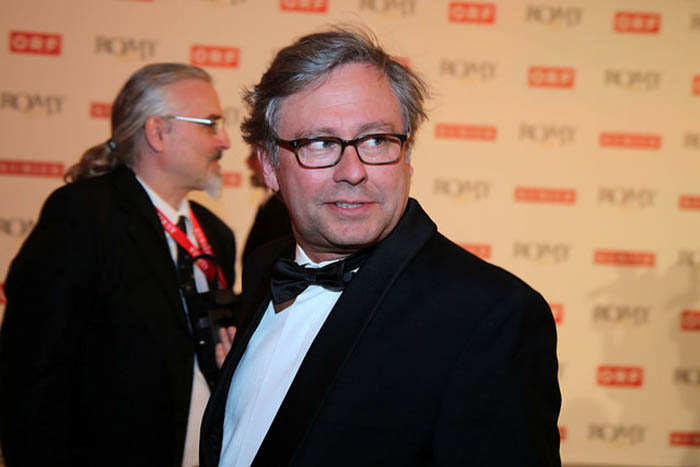
ORF managing director Alexander Wrabetz. Credit: Franz Johann Morgenbesser
A month prior to his election as head of the Austrian Broadcasting Corporation (ORF) board of trustees in May 2018, Norbert Steger gave an interview to the daily conservative newspaper Salzburger Nachrichten, voicing his concern about the “objectivity” of the broadcaster and announcing his intention to “cut a third of foreign correspondents, should they not report correctly”.
Steger highlighted the coverage of the Hungarian elections as being particularly problematic, criticising the reports of Ernst Gelegs, ORF’s Hungary correspondent who criticised the human rights situation in the country, including the restrictions media freedom, as being “one-sided”. Steger also called for the dismissal of journalists who violate the broadcaster’s guidelines for ORF journalists.
Despite his criticism of the ORF, Steger’s election is hardly surprising given political nature of how positions are assigned: 24 of the board’s 35 members are directly appointed by Austria’s federal and state governments and political parties. An additional six are indirectly appointed by the Federal Chancellor.
When the Social Democratic Party of Austria lost to the populist-conservative Austrian People’s Party (ÖVP) and its far-right coalition partner FPÖ in October 2017, it became clear that Heinz Lederer, former head of the ORF board of trustees and a Social Democrat, would need to make room for a representative of the ruling parties. In the end, the government’s decision was made by Steger, a former FPÖ politician.
Responding to Steger’s comments that journalists cannot be “overly sensitive”, ORF journalist Stefan Kappacher, in his widely-shared acceptance speech for the country’s most prestigious journalism award, said: “As ORF journalists we are grateful to be able to produce independent journalism and we will continue to fight for this independence.”
This independence is in jeopardy. Steger’s election puts ORF managing director Alexander Wrabetz under particular pressure as his position is elected by the board by a simple majority and can vote him out of office with a two-thirds majority. Wrabetz, a Social Democrat and the first person to be elected to this position three times in a row, has survived four national elections. Bernhard Baumgartner, a journalist for the daily newspaper Wiener Zeitung, assumes that the board of trustees will not vote Wrabetz out in order to avoid a public outcry, but rather change the governance structure by law, for example, by replacing the managing director with a management board. According to the weekly magazine Profil, ÖVP and FPÖ agreed that Steger will push for a new ORF law and effectively hand the position over to the ÖVP.
The government plans an extensive reform of ORF. The government programme includes a “re-definition of the mandate of the public media” as well as “structural and financial reforms”, as Index on Censorship reported earlier this year. This also entails the replacement of the ORF public tax, its primary source of financing, which currently guarantees accountability to the public, serving as the most important guarantee of the broadcaster’s ability to maintain its watchdog function in society. “Financing public service broadcasting via the public budget” instead of direct public tax would “set the wrong incentives” and would make the ORF “vulnerable”, Austria’s president Van der Bellen warned. Kappacher predicts even more drastic consequences: “The allocation of political funding would then be based on the reporting behaviour of ORF journalists.”
This concern is widely shared by other journalists and NGOs. Udo Bachmair, a former ORF journalist and president of the Vereinigung für Medienkultur (Association for Media Culture), tells Index on Censorship that he considers the public tax indispensable and that its replacement risks making the ORF completely dependent on the government. “The replacement of objective reporting with conformity as we’ve seen in Hungary and Poland would be a logical consequence,” he says. “The ORF’s political independence is a key element to democracy in Austria. Together with other quality print media, it guarantees independent, high-quality journalism.”
Bachmair adds that as Austria has a particularly high concentration of tabloids, which have been promoting right-wing populist tendencies for many years, “it is even more important that the ORF fulfils its mission to inform the public and hold against the tendency to paint black and white pictures and promote hatred on the internet”.
The recent spate of direct attacks on the ORF and its journalists by representatives of the FPÖ causes ORF journalists to feel under increasing pressure, Bachmair says. “This reminds me of the first ÖVP-FPÖ coalition in Austria between 2000 and 2006, where an increasing number of TV broadcasting journalists complained about attempts of political intervention. However, the scale reached now is unprecedented.”
For now, it is not within the competence of the board of trustees to make management decisions. Wrabetz made this clear in his reaction to Stegers attempt to put the ORF and its foreign correspondents in line as he pushed back on Twitter and announced an extension of Gelegs’ contract, due to this “excellent reports”. Wrabetz also voiced his intention to further strengthen foreign correspondents and to expand by two more offices by 2020.
Steger did not apologise for his statements in the interview but told the left-wing daily newspaper Der Standard that he “misses the full explanation behind his statement”, insinuating that his statement was reported out of context. “It is not acceptable to have privileged, well-paid people [at the ORF] who think that differentiating between reports and opinion does not apply to them,” he said. “ORF foreign correspondents currently produce opinion rather than reports, which I strongly oppose.” It is the ORF managing-director who would need to intervene against “violations of objective reporting”. Wrabetz has not taken appropriate actions, according to Steger.
For now, ORF journalists such as Wrabetz and anchorman Armin Wolf push against these changes as much as possible, but support from the top slowly fades. In their last session in March 2018, the ORF Viewers’ and Listeners’ Council adopted a resolution. It states: “The ORF Viewers’ and Listeners’ Council strongly rejects the current attacks of a ruling party on public service broadcasting including ORF staff and the intention to abolish the ORF public tax.”
The Council also warned of any attempt to undermine press freedom, naming intimidation attempts against the media and in particular against ORF journalists as an example. On 3 May 2018 however, the Council’s latest elections took place and chancellor Sebastian Kurz replaced the majority of SPÖ members by affiliates of his own party, subjecting another body of the ORF’s top level entirely to the government’s will.
Increasingly, civil society organisations are speaking out against the government’s attempts to weaken the ORF’s independence. Several artists, media experts, publicists and writers founded the platform We, for the ORF. Its self-declared aim is “to fight against the ORF’s political absorption”. As the government’s long-promised media symposium took place on 6 and 7 June 2018, which should serve as the basis for an ORF reform, We, for the ORF organised a protest a day earlier called The Better Media Symposium, which garnered the support of over 40 organisations.
Bachmair, a member of the platform, tells Index: “While the platform’s public appearance in the media is limited, it is an important voice, which it will use to monitor and report on the media developments of the upcoming months. Moreover, the platform will fight for the future independence of the ORF and, in a broader sense, for media freedom and a media landscape characterised by plurality, diversity and critical, high-quality journalism.”[/vc_column_text][/vc_column][/vc_row][vc_row][vc_column][vc_raw_html]JTNDaWZyYW1lJTIwd2lkdGglM0QlMjI3MDAlMjIlMjBoZWlnaHQlM0QlMjIzMTUlMjIlMjBzcmMlM0QlMjJodHRwcyUzQSUyRiUyRm1hcHBpbmdtZWRpYWZyZWVkb20udXNoYWhpZGkuaW8lMkZzYXZlZHNlYXJjaGVzJTJGNjklMkZtYXAlMjIlMjBmcmFtZWJvcmRlciUzRCUyMjAlMjIlMjBhbGxvd2Z1bGxzY3JlZW4lM0UlM0MlMkZpZnJhbWUlM0U=[/vc_raw_html][vc_basic_grid post_type=”post” max_items=”4″ element_width=”6″ grid_id=”vc_gid:1530108986023-3bfc44c5-d383-0″ taxonomies=”7592, 6564″][/vc_column][/vc_row]