21 May 2018 | Digital Freedom, European Union, Germany, News, Russia, United States
[vc_row][vc_column][vc_single_image image=”85524″ img_size=”full” alignment=”center”][vc_column_text]For around six decades after WWII ideas, laws and institutions supporting free expression spread across borders globally. Ever more people were liberated from stifling censorship and repression. But in the past decade that development has reversed.
On April 12 Russian lawmakers in the State Duma completed the first reading of a new draft law on social media. Among other things the law requires social media platforms to remove illegal content within 24 hours or risk hefty fines. Sound familiar? If you think you’ve heard this story before it’s because the original draft was what Reporters Without Borders call a “copy-paste” version of the much criticized German Social Network law that went into effect earlier this year. But we can trace the origins back further.
In 2016 the EU-Commission and a number of big tech-firms including Facebook, Twitter and Google, agreed on a Code of Conduct under which these firms commit to removing illegal hate speech within 24 hours. In other words what happens in Brussels doesn’t stay in Brussels. It may spread to Berlin and end up in Moscow, transformed from a voluntary instrument aimed at defending Western democracies to a draconian law used to shore up a regime committed to disrupting Western democracies.
US President Donald Trump’s crusade against “fake news” may also have had serious consequences for press freedom. Because of the First Amendment’s robust protection of free expression Trump is largely powerless to weaponise his war against the “fake news media” and “enemies of the people” that most others refer to as “independent media”.
Yet many other citizens of the world cannot rely on the same degree of legal protection from thin-skinned political leaders eager to filter news and information. The Committee to Protect Journalists (CPJ) has documented the highest ever number of journalists imprisoned for false news worldwide. And while 21 such cases may not sound catastrophic the message these arrests and convictions send is alarming. And soon more may follow. In April Malaysia criminalised the spread of “news, information, data and reports which is or are wholly or partly false”, with up to six years in prison. Already a Danish citizen has been convicted to one month’s imprisonment for a harmless YouTube video, and presidential candidate Mahathir Mohammed is also being investigated. Kenya is going down the same path with a draconian bill criminalising “false” or “fictitious” information. And while Robert Mueller is investigating whether Trump has been unduly influenced by Russian President Putin, it seems that Putin may well have been influenced by Trump. The above mentioned Russian draft social media law also includes an obligation to delete any “unverified publicly significant information presented as reliable information.” Taken into account the amount of pro-Kremlin propaganda espoused by Russian media such as RT and Sputnik, one can be certain that the definition of “unverified” will align closely with the interests of Putin and his cronies.
But even democracies have fallen for the temptation to define truth. France’s celebrated president Macron has promised to present a bill targeting false information by “to allow rapid blocking of the dissemination of fake news”. While the French initiative may be targeted at election periods it still does not accord well with a joint declaration issued by independent experts from international and regional organisations covering the UN, Europe, the Americans and Africa which stressed that “ general prohibitions on the dissemination of information based on vague and ambiguous ideas, including ‘false news’ or ‘non-objective information’, are incompatible with international standards for restrictions on freedom of expression”.
However, illiberal measures also travel from East to West. In 2012 Russia adopted a law requiring NGOs receiving funds from abroad and involved in “political activities” – a nebulous and all-encompassing term – to register as “foreign agents”. The law is a thinly veiled attempt to delegitimise civil society organisations that may shed critical light on the policies of Putin’s regime. It has affected everything from human rights groups, LGBT-activists and environmental organisations, who must choose between being branded as something akin to enemies of the state or abandon their work in Russia. As such it has strong appeal to other politicians who don’t appreciate a vibrant civil society with its inherent ecosystem of dissent and potential for social and political mobilisation.
One such politician is Victor Orban, prime minister of Hungary’s increasingly illiberal government. In 2017 Orban’s government did its own copy paste job adopting a law requiring NGOs receiving funds from abroad to register as “foreign supported”. A move which should be seen in the light of Orban’s obsession with eliminating the influence of anything or anyone remotely associated with the Hungarian-American philanthropist George Soros whose Open Society Foundation funds organisations promoting liberal and progressive values.
The cross-fertilisation of censorship between regime types and continents is part of the explanation why press freedom has been in retreat for more than a decade. In its recent 2018 World Press Freedom Index Reporters Without Borders identified “growing animosity towards journalists. Hostility towards the media, openly encouraged by political leaders, and the efforts of authoritarian regimes to export their vision of journalism pose a threat to democracies”. This is something borne out by the litany of of media freedom violations reported to Index on Censorship’s Mapping Media Freedom, which monitors 43 countries. In just the last four years, MMF has logged over 4,200 incidents — a staggering array of curbs on the press that range from physical assault to online threats and murders that have engulfed journalists.
Alarmingly Europe – the heartland of global democracy – has seen the worst regional setbacks in RSF’s index. This development shows that sacrificing free speech to guard against creeping authoritarianism is more likely to embolden than to defeat the enemies of the open society.[/vc_column_text][/vc_column][/vc_row][vc_row][vc_column width=”1/2″][vc_single_image image=”100463″ img_size=”full” onclick=”custom_link” img_link_target=”_blank” link=”http://www.freespeechhistory.com”][/vc_column][vc_column width=”1/2″][vc_column_text]
A podcast on the history of free speech.
Why have kings, emperors, and governments killed and imprisoned people to shut them up? And why have countless people risked death and imprisonment to express their beliefs? Jacob Mchangama guides you through the history of free speech from the trial of Socrates to the Great Firewall.[/vc_column_text][/vc_column][/vc_row][vc_row][vc_column][vc_basic_grid post_type=”post” max_items=”12″ style=”load-more” items_per_page=”4″ element_width=”6″ grid_id=”vc_gid:1526895517975-5ae07ad7-7137-1″][/vc_column][/vc_row]
8 May 2018 | Campaigns -- Featured, Media Freedom, Statements
[vc_row][vc_column][vc_column_text]Index on Censorship is pleased to hear the amendments to the Data Protection Bill are likely not going ahead. One of the amendments, which was not voted on, would have left many newspapers having to pay both sides’ costs in a legal dispute – even if the media outlet won. This amendment had serious consequences for a free press, a cornerstone of democracy[/vc_column_text][vc_column_text]On Wednesday, the UK’s House of Commons will vote on the Data Protection Bill: a bill to regulate the way in which personal information is processed.
It is of course critical that we have robust protections over our personal data. Yet, as is so often the case with new laws, Index on Censorship believes we are in grave danger of ushering in one protection only to eliminate another: in this case, the protections afforded to and by a free press.
This is because members of both the House of Lords and Commons have sought to introduce amendments to this bill that would reintroduce into law restrictions on the press that the current government has rightly said it will not implement, namely forcing any publisher who refuses to sign up to a state-approved regulator to pay the legal costs of any data protection case brought against them, even if they win.
Such a measure would, in effect, invite anyone seeking to prevent exposure in the press – including those cases in which exposure, such as the Windrush scandal or MPs expenses, is in the public interest – to threaten legal action to silence a potential publisher. We urge MPs to reject these amendments.
In earlier proposed amendments, any organisation – including non-profit organisations like Index on Censorship – which refused to sign up to a state-approved regulator would have been liable to pay both sides’ costs. The latest amendments on the question of cost-shifting attempts to close that loophole by exempting small publishers but this just makes a mockery of the entire endeavour: either the rules apply to everyone or no one. The ability to hold power to account and expose the corrupt should not be left to one kind of media organisation.[/vc_column_text][/vc_column][/vc_row][vc_row][vc_column width=”1/4″][vc_icon icon_fontawesome=”fa fa-times” color=”black” background_style=”rounded” size=”xl” align=”right”][/vc_column][vc_column width=”3/4″][vc_column_text]
Index does not believe any media organisation should be forced to sign up to a regulator – especially one that has state approval, no matter how arm’s length.
[/vc_column_text][/vc_column][/vc_row][vc_row][vc_column][vc_column_text]Of course, there should be protections for those wronged by the press: but the threat of financial penalties on potential public interest journalism is not the way to do it. Far better is to encourage low-cost, easily accessible and swift redress for all.
Index does not believe any media organisation should be forced to sign up to a regulator – especially one that has state approval, no matter how arm’s length.
For the past five decades, we have monitored state interference in news reporting, from authoritarian Chile in the 1970s to North Korea today. With a history of scrutinising government pressure on media, we were never going to join Impress (currently the only state-approved regulator).
A free press is fundamental to democracy. Investigative and campaigning journalists have exposed scandals that have helped save lives: such as the work done by Index on Censorship’s patron, Sir Harold Evans, on the Thalidomide scandal while editor of the Sunday Times.
More recently, work by journalist Carole Cadwalladr at The Observer broke the Cambridge Analytica story wide open, while Amelia Gentleman’s reporting at The Guardian has driven the story on Windrush.
Without an environment in which such journalists are encouraged to report – without the fear that they might face costly court cases even for reporting stories that are true – who will hold the corrupt to account?
“It is easy to dismiss such concerns as the hysterical whinging of the mainstream media,” said Index on Censorship chief executive Jodie Ginsberg. “That would be a huge mistake. A genuinely free press – one in which both independent investigative journalist outfits and mainstream media organisations can operate – benefits everyone.”
We crush media freedom at our peril. The democratic gains being eroded in Turkey, Russia, Poland and Hungary and elsewhere have all been accompanied by a loss of press freedom: a freedom that is hard won but easily lost.
A version of this statement was first published on the Independent website.[/vc_column_text][/vc_column][/vc_row][vc_row][vc_column][vc_basic_grid post_type=”post” max_items=”12″ style=”load-more” items_per_page=”4″ element_width=”6″ grid_id=”vc_gid:1526037891828-b7251ca2-5483-4″ taxonomies=”6534″][/vc_column][/vc_row]
26 Apr 2018 | Campaigns -- Featured, Statements
[vc_row][vc_column][vc_column_text]
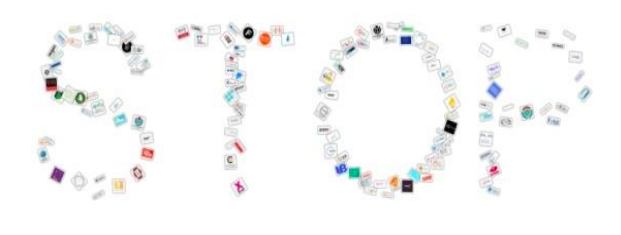
Brussels, 26 April 2018
OPEN LETTER IN LIGHT OF THE 27 APRIL 2018 COREPER I MEETING
Your Excellency Ambassador, cc. Deputy Ambassador,
We, the undersigned, are writing to you ahead of your COREPER discussion on the proposed Directive on copyright in the Digital Single Market.
We are deeply concerned that the text proposed by the Bulgarian Presidency in no way reflects a balanced compromise, whether on substance or from the perspective of the many legitimate concerns that have been raised. Instead, it represents a major threat to the freedoms of European citizens and businesses and promises to severely harm Europe’s openness, competitiveness, innovation, science, research and education.
A broad spectrum of European stakeholders and experts, including academics, educators, NGOs representing human rights and media freedom, software developers and startups have repeatedly warned about the damage that the proposals would cause. However, these have been largely dismissed in rushed discussions taking place without national experts being present. This rushed process is all the more surprising when the European Parliament has already announced it would require more time (until June) to reach a position and is clearly adopting a more cautious approach.
If no further thought is put in the discussion, the result will be a huge gap between stated intentions and the damage that the text will actually achieve if the actual language on the table remains:
- Article 13 (user uploads) creates a liability regime for a vast area of online platforms that negates the E-commerce Directive, against the stated will of many Member States, and without any proper assessment of its impact. It creates a new notice and takedown regime that does not require a notice. It mandates the use of filtering technologies across the board.
- Article 11 (press publisher’s right) only contemplates creating publisher rights despite the many voices opposing it and highlighting it flaws, despite the opposition of many Member States and despite such Member States proposing several alternatives including a “presumption of transfer”.
- Article 3 (text and data mining) cannot be limited in terms of scope of beneficiaries or purposes if the EU wants to be at the forefront of innovations such as artificial intelligence. It can also not become a voluntary provision if we want to leverage the wealth of expertise of the EU’s research community across borders.
- Articles 4 to 9 must create an environment that enables educators, researchers, students and cultural heritage professionals to embrace the digital environment and be able to preserve, create and share knowledge and European culture. It must be clearly stated that the proposed exceptions in these Articles cannot be overridden by contractual terms or technological protection measures.
- The interaction of these various articles has not even been the subject of a single discussion. The filters of Article 13 will cover the snippets of Article 11 whilst the limitations of Article 3 will be amplified by the rights created through Article 11, yet none of these aspects have even been assessed.
With so many legal uncertainties and collateral damages still present, this legislation is currently destined to become a nightmare when it will have to be transposed into national legislation and face the test of its legality in terms of the Charter of Fundamental Rights and the Bern Convention.
We hence strongly encourage you to adopt a decision-making process that is evidence-based, focussed on producing copyright rules that are fit for purpose and on avoiding unintended, damaging side effects.
Yours sincerely,
The over 145 signatories of this open letter – European and global organisations, as well as national organisations from 28 EU Member States, represent human and digital rights, media freedom, publishers, journalists, libraries, scientific and research institutions, educational institutions including universities, creator representatives, consumers, software developers, start-ups, technology businesses and Internet service providers.
EUROPE
1. Access Info Europe
2. Allied for Startups
3. Association of European Research Libraries (LIBER)
4. Civil Liberties Union for Europe (Liberties)
5. Copyright for Creativity (C4C)
6. Create Refresh Campaign
7. DIGITALEUROPE
8. EDiMA
9. European Bureau of Library, Information and Documentation Associations (EBLIDA)
10. European Digital Learning Network (DLEARN)
11. European Digital Rights (EDRi)
12. European Internet Services Providers Association (EuroISPA)
13. European Network for Copyright in Support of Education and Science (ENCES)
14. European University Association (EUA)
15. Free Knowledge Advocacy Group EU
16. Lifelong Learning Platform
17. Public Libraries 2020 (PL2020)
18. Science Europe
19. South East Europe Media Organisation (SEEMO)
20. SPARC Europe
AUSTRIA
21. Freischreiber Österreich
22. Internet Service Providers Austria (ISPA Austria)
BELGIUM
23. Net Users’ Rights Protection Association (NURPA)
BULGARIA
24. BESCO – Bulgarian Startup Association
25. BlueLink Foundation
26. Bulgarian Association of Independent Artists and Animators (BAICAA)
27. Bulgarian Helsinki Committee
28. Bulgarian Library and Information Association (BLIA)
29. Creative Commons Bulgaria
30. DIBLA
31. Digital Republic
32. Hamalogika
33. Init Lab
34. ISOC Bulgaria
35. LawsBG
36. Obshtestvo.bg
37. Open Project Foundation
38. PHOTO Forum
39. Wikimedians of Bulgaria
CROATIA
40. Code for Croatia
CYPRUS
41. Startup Cyprus
CZECH REPUBLIC
42. Alliance pro otevrene vzdelavani (Alliance for Open Education)
43. Confederation of Industry of the Czech Republic
44. Czech Fintech Association
45. Ecumenical Academy
46. EDUin
DENMARK
47. Danish Association of Independent Internet Media (Prauda) ESTONIA
48. Wikimedia Eesti
FINLAND
49. Creative Commons Finland
50. Open Knowledge Finland
51. Wikimedia Suomi
FRANCE
52. Abilian
53. Alliance Libre
54. April
55. Aquinetic
56. Conseil National du Logiciel Libre (CNLL)
57. France Digitale
58. l’ASIC
59. Ploss Auvergne-Rhône-Alpes (PLOSS-RA)
60. Renaissance Numérique
61. Syntec Numérique
62. Tech in France
63. Wikimédia France
GERMANY
64. Arbeitsgemeinschaft der Medieneinrichtungen an Hochschulen e.V. (AMH)
65. Bundesverband Deutsche Startups
66. Deutscher Bibliotheksverband e.V. (dbv)
67. eco – Association of the Internet Industry
68. Factory Berlin
69. Initiative gegen ein Leistungsschutzrecht (IGEL)
70. Jade Hochschule Wilhelmshaven/Oldenburg/Elsfleth
71. Karlsruhe Institute of Technology (KIT)
72. Landesbibliothekszentrum Rheinland-Pfalz
73. Silicon Allee
74. Staatsbibliothek Bamberg
75. Ubermetrics Technologies
76. Universitäts- und Landesbibliothek Sachsen-Anhalt (Martin-Luther-University Halle-Wittenberg)
77. University Library of Kaiserslautern (Technische Universität Kaiserslautern)
78. Verein Deutscher Bibliothekarinnen und Bibliothekare e.V. (VDB)
79. ZB MED – Information Centre for Life Sciences
GREECE
80. Greek Free Open Source Software Society (GFOSS)
HUNGARY
81. Hungarian Civil Liberties Union
82. ICT Association of Hungary – IVSZ
83. K-Monitor
IRELAND
84. Technology Ireland
ITALY
85. Hermes Center for Transparency and Digital Human Rights
86. Istituto Italiano per la Privacy e la Valorizzazione dei Dati
87. Italian Coalition for Civil Liberties and Rights (CILD)
88. National Online Printing Association (ANSO)
LATVIA
89. Startin.LV (Latvian Startup Association)
90. Wikimedians of Latvia User Group
LITHUANIA
91. Aresi Labs
LUXEMBOURG
92. Frënn vun der Ënn
MALTA
93. Commonwealth Centre for Connected Learning
NETHERLANDS
94. Dutch Association of Public Libraries (VOB)
95. Kennisland
POLAND
96. Centrum Cyfrowe
97. Coalition for Open Education (KOED)
98. Creative Commons Polska
99. Elektroniczna BIBlioteka (EBIB Association)
100. ePaństwo Foundation
101. Fundacja Szkoła z Klasą (School with Class Foundation)
102. Modern Poland Foundation
103. Ośrodek Edukacji Informatycznej i Zastosowań Komputerów w Warszawie (OEIiZK)
104. Panoptykon Foundation
105. Startup Poland
106. ZIPSEE
PORTUGAL
107. Associação D3 – Defesa dos Direitos Digitais (D3)
108. Associação Ensino Livre
109. Associação Nacional para o Software Livre (ANSOL)
110. Associação para a Promoção e Desenvolvimento da Sociedade da Informação (APDSI)
ROMANIA
111. ActiveWatch
112. APADOR-CH (Romanian Helsinki Committee)
113. Association for Technology and Internet (ApTI)
114. Association of Producers and Dealers of IT&C equipment (APDETIC)
115. Center for Public Innovation
116. Digital Citizens Romania
117. Kosson.ro Initiative
118. Mediawise Society
119. National Association of Public Librarians and Libraries in Romania (ANBPR)
SLOVAKIA
120. Creative Commons Slovakia
121. Slovak Alliance for Innovation Economy (SAPIE)
SLOVENIA
122. Digitas Institute
123. Forum za digitalno družbo (Digital Society Forum)
SPAIN
124. Asociación de Internautas
125. Asociación Española de Startups (Spanish Startup Association)
126. MaadiX
127. Sugus
128. Xnet
SWEDEN
129. Wikimedia Sverige
UK
130. Libraries and Archives Copyright Alliance (LACA)
131. Open Rights Group (ORG)
132. techUK
GLOBAL
133. ARTICLE 19
134. Association for Progressive Communications (APC)
135. Center for Democracy & Technology (CDT)
136. COMMUNIA Association
137. Computer and Communications Industry Association (CCIA)
138. Copy-Me
139. Creative Commons
140. Electronic Frontier Foundation (EFF)
141. Electronic Information for Libraries (EIFL)
142. Index on Censorship
143. International Partnership for Human Rights (IPHR)
144. Media and Learning Association (MEDEA)
145. Open Knowledge International (OKI)
146. OpenMedia
147. Software Heritage
[/vc_column_text][vc_row_inner][vc_column_inner][vc_basic_grid post_type=”post” max_items=”4″ element_width=”6″ grid_id=”vc_gid:1524750347203-f1e70660-87dd-9″ taxonomies=”1908″][/vc_column_inner][/vc_row_inner][/vc_column][/vc_row]
