20 Feb 2017 | News, Youth Board
[vc_row][vc_column][vc_column_text]Index on Censorship has recruited a new youth board to sit until June 2017. The group is made up of young students, journalists and legal professionals from countries including India, Hungary and the Republic of Ireland.
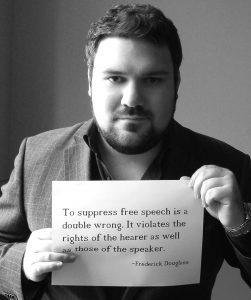
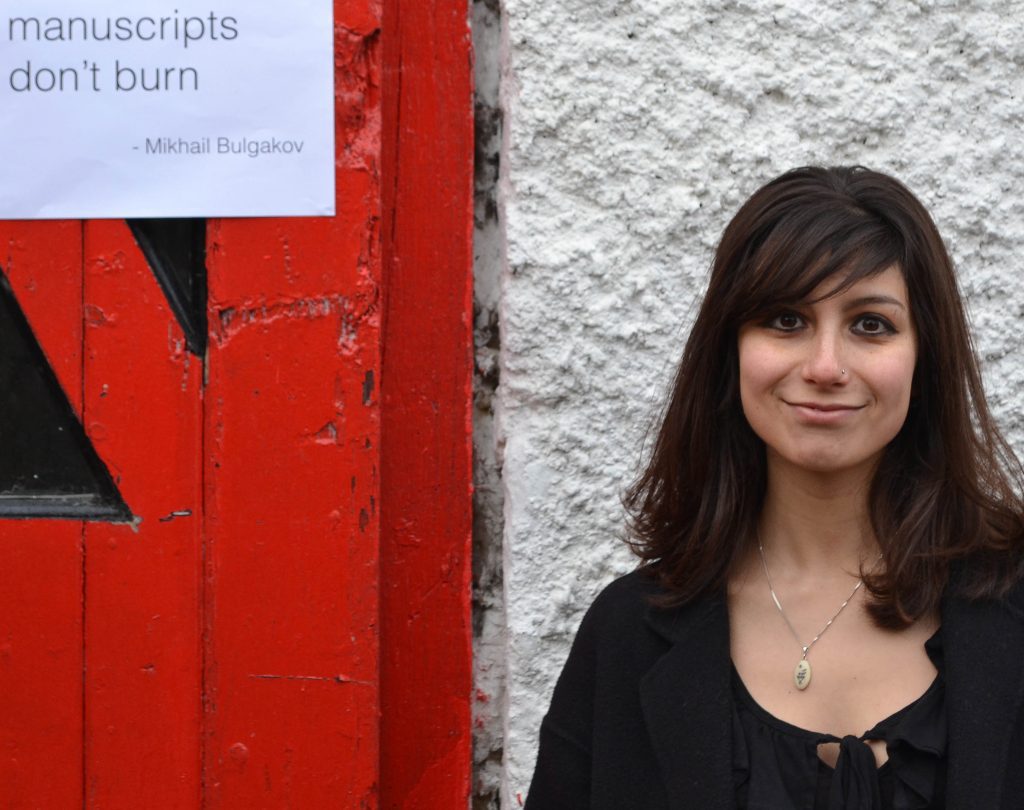
Each month, board members meet online to discuss freedom of expression issues around the world and complete an assignment that grows from that discussion. For their first task the board were asked to write a short bio and take a photo of themselves holding a quote that reflects their belief in free speech.
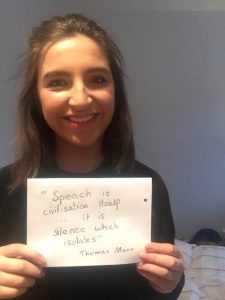 Fionnuala McRedmond – Dublin
I graduated last June from the University of Cambridge with a degree in classics. I am now studying for a MSc in political theory at the London School of Economics. I was an active student journalist during my time at Cambridge, and it was there that I first developed an interest in the struggles of censorship and speech across the globe. The propensity for governments to censor speech and ideas is not a modern phenomenon. In ancient Rome book burning was not unheard of, and Cicero once expressed the all too familiar idea: “it is not permitted to say what one thinks… it is obviously permitted to keep silent.” Then, as much as now, free speech was the cornerstone of a healthy society. And then, as much as now, speech was censored by tyrannical power. I am particularly interested in the relationship between censorship and identity. In the past, and even more so now, people have been denied the right to share their words and ideas on the basis of ethnic, religious and political identity. Work by groups like Index on Censorship is crucial in protecting people’s right to speak, no matter who they are. I hope to better understand and develop these ideas with the Index on Censorship youth board.
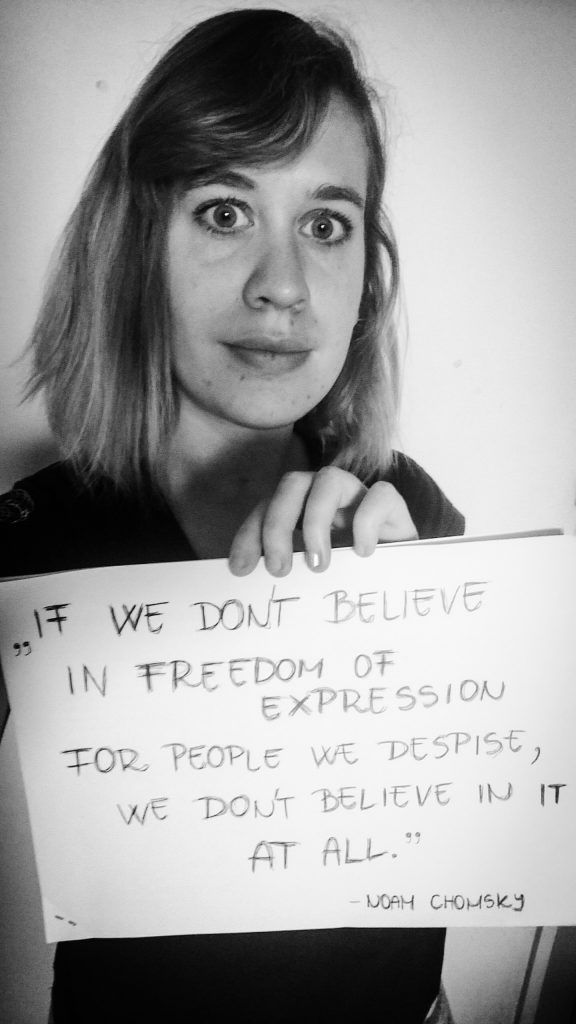 Júlia Bakó – Budapest
I am a Hungarian journalist, student and activist currently living in Budapest. After finishing my first degree in journalism, I have started studying international relations.
As a journalist and as someone who is deeply committed to human rights I am naturally drawn to freedom of expression and freedom of press issues. During the last couple of years I have worked with several NGOs and other organisations like Transparency International, Amnesty International, OSCE and Atlatszo.hu. I have dealt with corruption cases as an investigative journalist, I have studied human rights monitoring and – partly because of my studies, but mostly because of my personal interest and commitment – I have tried to explore freedom of expression and other issues not just in my own country, but all over the world, to find patterns, similarities and possible measures that could be taken either on a national or international level.
The quote I chose about freedom of expression says something what we sometimes tend to forget about. Being able to express our own opinions, however right they may seem to us, should never stop us from fighting for the rights of others to be able to act the same way, even though their opinions seem fundamentally different sometimes. Granting the chance to express opinions we do not agree with is what is able to create the diversity of thought, the debate about social issues and with that democracy itself.
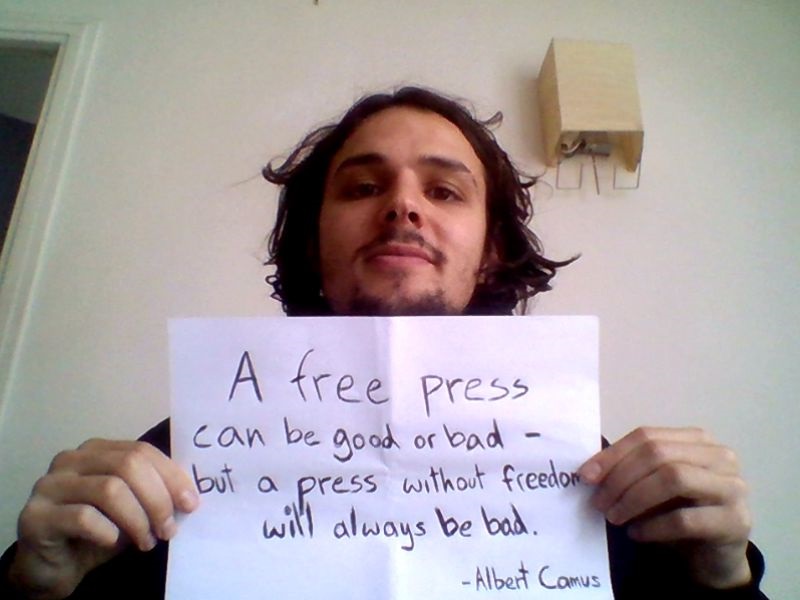 Samuel Earle – Paris
I currently live in Paris, where I am a freelance writer and English teacher.
I became interested in freedom of expression while studying politics at university – first at undergraduate and then at MSc level – and that continues today through my interest in journalism. What’s clear to me is that although freedom of expression is always valuable, the challenges it faces globally are never the same.
In the west, I think there is a complacency concerning freedom of expression: that stopping censorship is assumed to be enough. But I believe that in societies as unequal as our own, and where market forces reign, the value of freedom of expression can be diminished – as shown, for example, by the fake-news phenomenon.
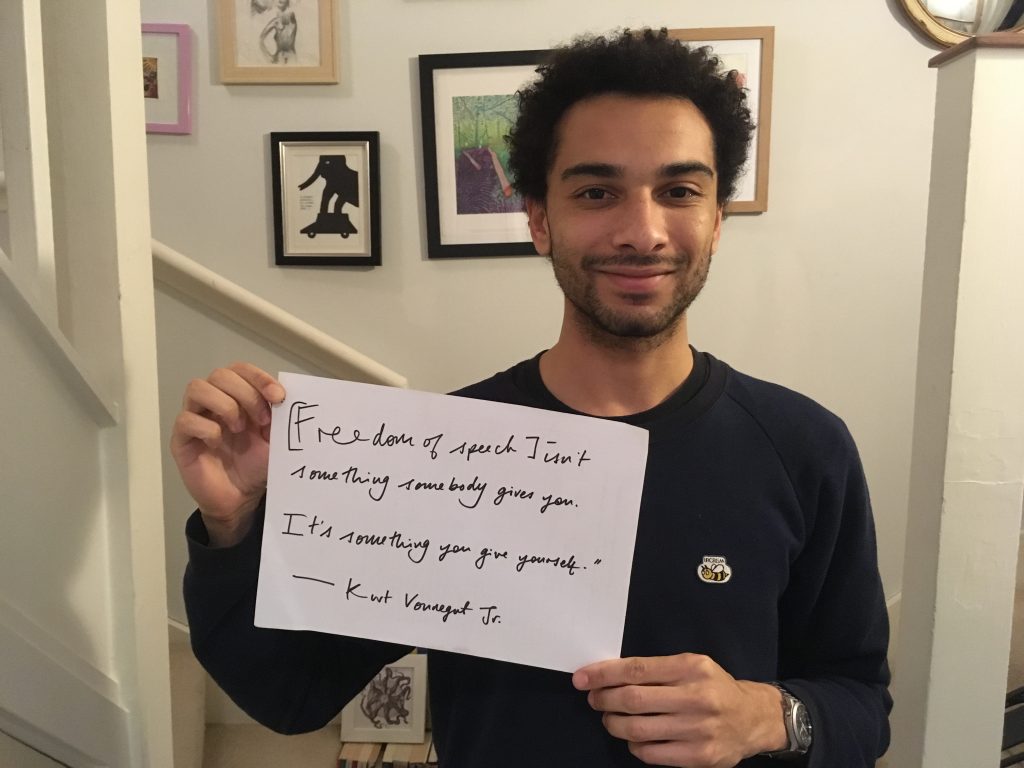 Samuel Rowe – London
I am currently a postgraduate law student, having studied literature as an undergraduate in the UK and the USA. I hope to become a public law barrister, specialising in media and information law and human rights. Like the character in Kurt Vonnegut’s Hocus Pocus, I believe that the right to freedom of speech is innate. It is not a commodity; it is not something to be bargained with. My interest in issues surrounding freedom of speech directed my undergraduate dissertation, which focused on the western surveillance state. This sort of covert action can have the effect of creating an environment of self-censorship, and often has a disproportionate impact on marginalised communities. I looked at methods of resistance (of which there are many) to see how groups maintained freedom of speech under the gaze of the state. The suppression of freedom of speech is hardly a novel phenomenon and mass surveillance is just one way in which it is currently under threat. From White House officials calling disagreeable information “fake news” to irresponsible no platforming in universities, this is an era in which the limits and value of freedom of speech are being questioned. I believe that without freedom of speech, there can be no full interrogation of the evils which face us. And without interrogation, we risk losing sight of the full scope those evils might pose.
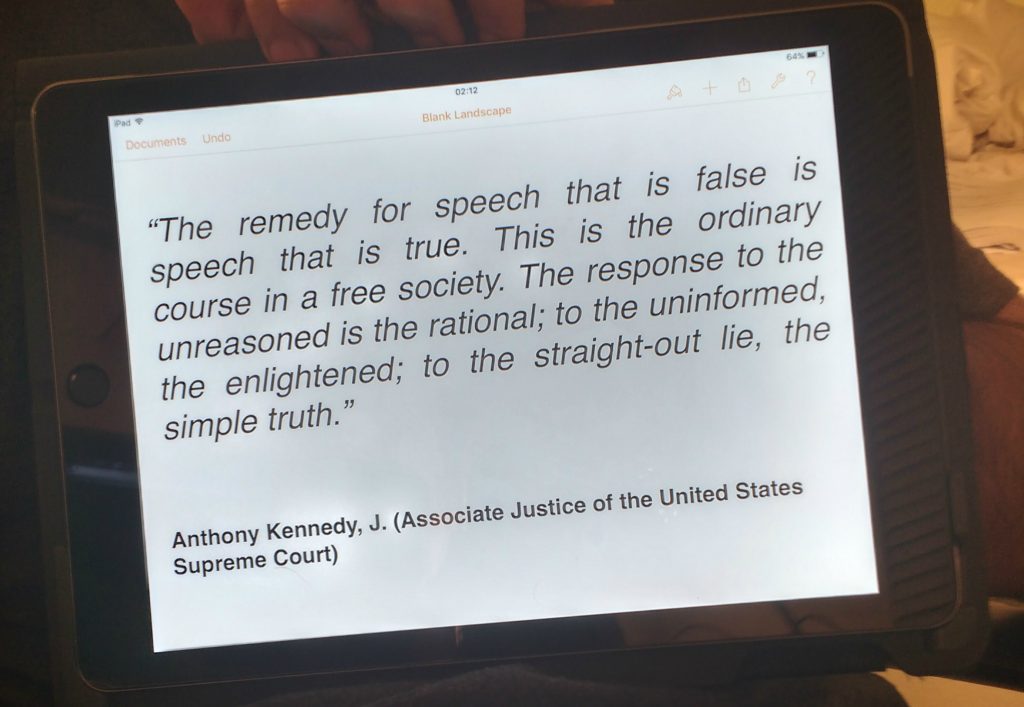 Tarun Krishnakumar – New Delhi
In recent times, there has been much concern expressed about the proliferation of “fake” news online and the impact it can have on democratic processes, politics and the public at large. These concerns have stirred various stakeholders – including governments, news media and internet intermediaries – into action. For instance, the German government recently declared fake news from Russia to be a significant threat to its upcoming elections. In a similar vein, internet giants like Google and Facebook – likely in the wake of unfavourable political outcomes – have been clamouring to show that they are willing to clamp down on content that is false or misleading.
In response to these developments, the quote I’ve selected manifests what, I feel, should be the appropriate response to fake speech: more “non-fake” speech – and not more regulation. While many justifications to clamp down on fake news may be well-intentioned, the history of regulating speech has shown us that inserting an intermediary into a conversation creates unintended and harmful consequences for free speech. Often this manifests as overt censorship while, in other cases, it is the creation of private arbiters of what may or may not be said on a platform – a more covert and creeping harm. Given the subjectivity in judging what news is “fake”, the debate also presents an excuse for regimes to tighten existing censorship controls or establish new ones.
The internet has given everyone an opportunity to have an equal say. This must be preserved at all costs. Fake news must be countered not through bans, blocking or regulation but by targeting the societal information asymmetries that allow it to flourish and creating conditions that facilitate society to produce more speech that is not “fake”. Policy efforts should focus on educating readers and providing them the tools to judge content for themselves – thereby minimising the effect of false or misleading content. For this, what is necessary is a culture of being exposed to a balanced diet of diverse content. When governments peddle nationalistic, religious, or political rhetoric in educational curricula and skew facts, little do they realise that they are creating the very conditions that allow “fake” news to flourish and have the harmful impacts that they complain of.
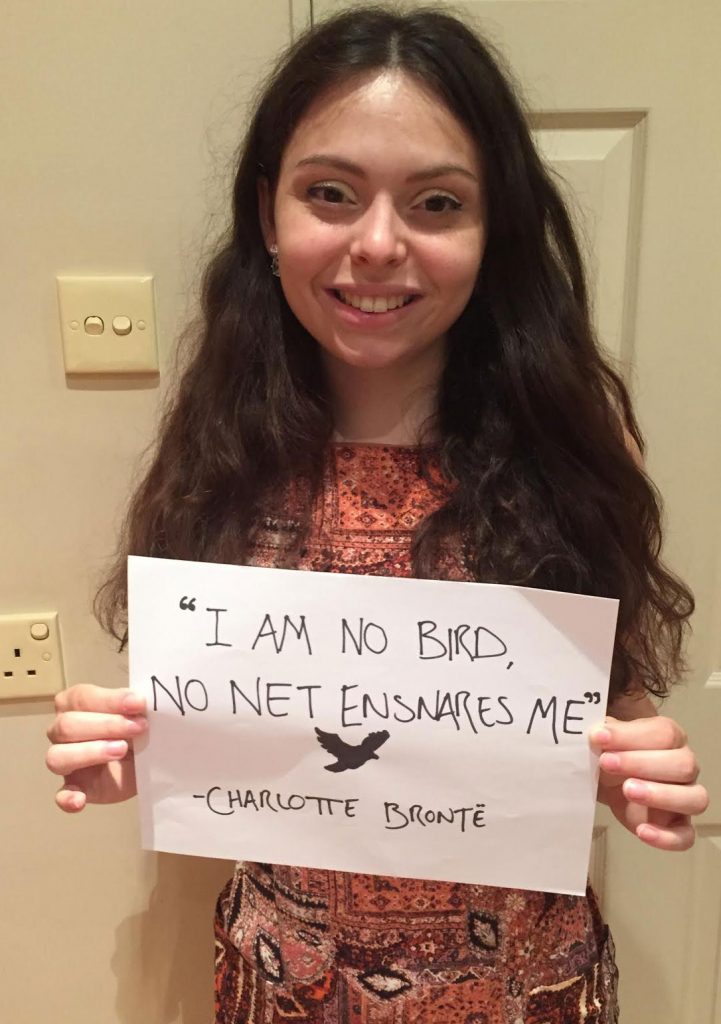 Sophia Smith-Galer – London
I’m a MA student studying broadcast journalism at City University in London. I studied Spanish and Arabic previously at Durham University and I’m particularly interested in how artists and writers overcome challenges to their freedom of expression in Latin America and the Middle East. As a singer I have always been intrigued by the imagery of a caged bird that sings despite its entrapment; Charlotte Bronte instead uses this metaphor to show how independent Jane Eyre has become by the end of the eponymous novel. Humans have always connected birds with freedom, or lack of – just look at Twitter’s logo – and so the quote really resonated with me.
Freedom of expression is particularly important to me as several countries that speak both of the languages I have dedicated years of study to continue to be plagued by tyrants and censors. I’m particularly interested addressing censorship in Latin America and the Middle East, especially with regard to the arts, as I’m also a classical singer and keen art historian.
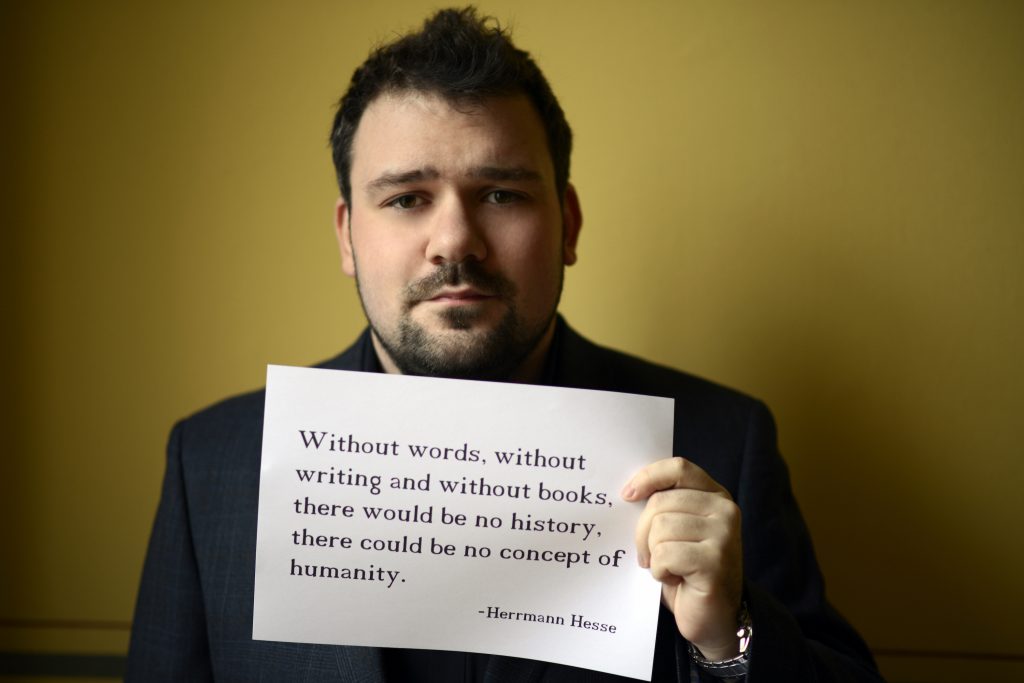 Constantin Eckner – St Andrews
I am originally from Germany. I graduated from University of St Andrews with an MA degree in modern history. Currently, I am a PhD candidate specialising in human rights, asylum policy and the history of migration. Moreover, I have worked as a writer and journalist since I was 17 years old, covering a variety of topics over the years. Longer stays in cities like Budapest and Istanbul have raised my awareness for pressures exerted upon freedom of expression.
I chose this particular quote, because Hermann Hesse emphasised the importance of the written word and how it had an impact on the concept of humanity. In his time, Hesse was conscious that without writing it was not possible to express thoughts and spread ideas. Therefore, all those who fought the existence of the written word threatened humanity which was a frightening thought for a humanist like Hesse.
In a perfect world, every human being would live without fear of state censorship and potentially facing repercussions for the words they write—or for the pictures they draw, for the photos they shoot, for music they play.
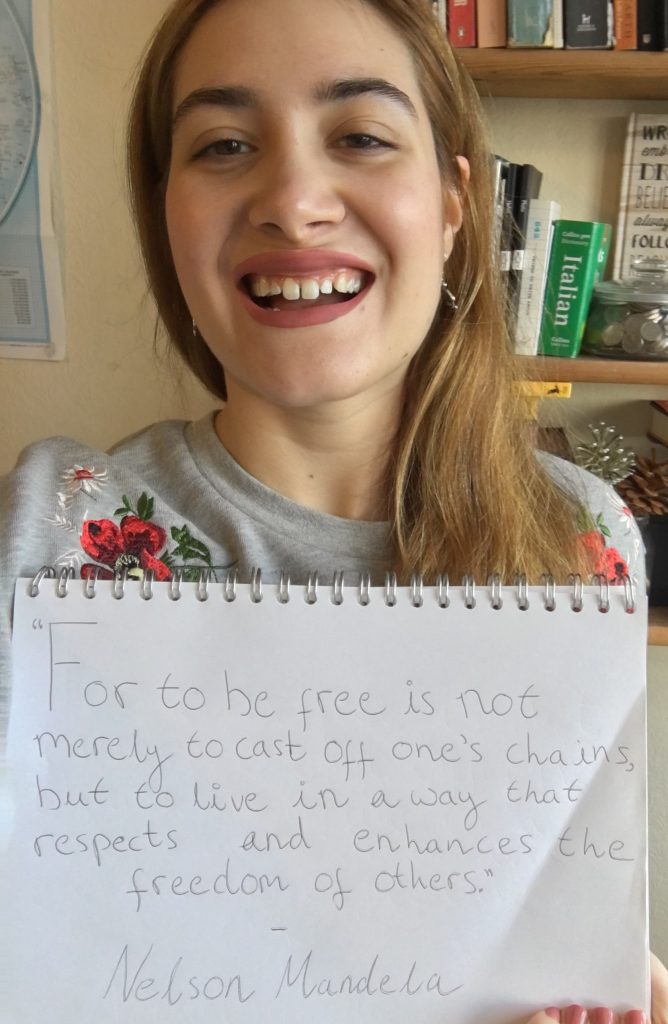 Isabela Vrba Neves – Stockholm
I’m half Brazilian and half Czech, raised in Sweden, but currently living in London where I work in communications for a mental health charity. I‘m also a Latin America correspondent for the International Press Foundation (IPF), a platform where young journalists get to write about stories that matter the most to them. It was during my time at Kingston University, studying journalism and French, when my interest in censorship and freedom of expression first emerged.
During my undergraduate studies I learned how important a free press is for a working democracy. It is a platform bringing together multiple voices, by sharing news, ideas and holding those in power to account. However, many journalists around the world suffer repression for simply doing their job and for using their right to free speech.
For me, Nelson Mandela‘s quote represents the importance of respecting and listening to each other, even with different views, but also highlighting the voices of those who are forced into silence.
Interviewing journalists from Venezuela and Pakistan, who face these types of constraints, has made me more engaged in sharing stories concerning freedom of expression, not only by journalists, but also by artists and activists. In the future, as a journalist, I want to focus on freedom of expression and by being part of the youth advisory board, I will be able to expand my knowledge and have great conversations with other young people who are passionate for justice and social change.[/vc_column_text][/vc_column][/vc_row][vc_row full_width=”stretch_row_content”][vc_column][three_column_post title=”More from the youth advisory board” category_id=”6514″][/vc_column][/vc_row]
9 Feb 2017 | Mapping Media Freedom, News, Youth Board
[vc_row][vc_column][vc_column_text]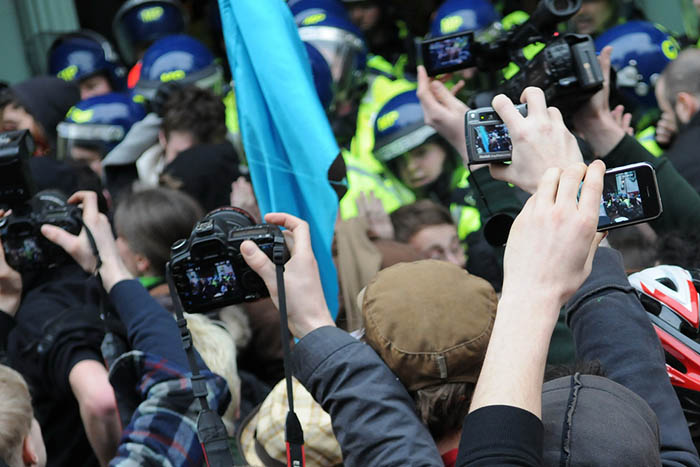
To highlight the most pressing concerns for press freedom in Europe in 2017, members Index’s outgoing youth board review the year gone by with some of our Mapping Media Freedom correspondents.
Youth board member Sophia Smith Galer, from the UK, spoke to Ilcho Cvetanoski, Mapping Media Freedom correspondent for Croatia, Montenegro, Bosnia and Macedonia.
According to Cvetanoski, a lot has improved in the region over the last 15 years. The era during which journalists were targeted and killed is long passed, but the media is still dogged by censorship and political divides. In fact, journalists are regularly threatened and vilified by political elites, often denounced as foreign mercenaries, spies and traitors. Cvetanoski reports that this has led to “physical threats, the atmosphere of impunity, media ownership and also verbal attacks amongst the journalists themselves”. He notes that techniques pressuring journalists have changed from “blatant physical assaults to more subtle ones”.
The breaking up of the former Yugoslavia has undoubtedly been a historical burden on Bosnia and Herzegovina and Croatia. Cvetanoski describes this legacy as having left “deep scars in every aspect of the people’s lives, including the lives and the work of journalists”. Media workers are still remembered as having once been tools of the state. Nowadays, the opposite is happening; they’re being criticised by political elites as enemies of the state simply for scrutinising politicians’ behaviour.
It’s unsurprising that this has left many journalists in the region politicised, undermining professionalism and trust in the media. Conservative politicians court sympathisers in the media so that they can manipulate the angle and content of stories that are run. The fact that journalist salaries are low and that the economic situation is poor overall further imperils journalistic integrity in the face of bribes.
If the situation remains as it is – with limited and highly controlled sources for financing the media, a poor political culture and low media literacy among citizens – then Cvetanoski holds little hope for the future of press freedom in the region. News consumers aren’t equipped with the literacy levels to distinguish between professional versus sensational journalism, nor are the sources of media funding transparent or appropriate. “In this deadlock democracy, the first victims are the citizens who lack quality information to make decisions.”
Mapping Media Freedom is helping to change this. Making journalists feel less alone and offering a space for them to report threats to press freedom ensures that the hope for a free press throughout Europe is kept alive.
The youth board’s Constantin Eckner, from Germany, spoke with Zoltán Sipos, the MMF correspondent for Hungary, Romania and Bulgaria.
 As MMF illustrates, journalists in all three countries have to deal with constant pressure from authorities and various degrees of censorship. In 2016, 42 incidents were reported in Hungary, 21 in Romania and 7 in Bulgaria.
Index on Censorship’s regional correspondent Zoltán Sipos, who is also the founder and editor of Romania’s investigative outlet Átlátszó Erdély, points out that the Hungarian government and its allies within the country follow a sophisticated plan to neutralise critical media outlets. Several newspapers that struggled financially have been purchased by rich business people or media moguls in recent history. “Just like in regards to any other part of society, prime minister Viktor Orbán seeks for a centralisation of the media industry,” Sipos says.
Yet, instead of simply controlling the media, Orbán and the reigning party Fidesz intend to use established outlets and broadcasters to construct narratives in favour of their agendas. Only a handful of independent outlets remain in Hungary.
In November 2016, Class FM, Hungary’s most popular commercial radio channel, was taken off the air. The Media Council of Hungaryʼs National Media refused to renew its licence as Class FM was owned by Hungarian oligarch Lajos Simicska, whose outlets became very critical towards the government after a quarrel between him and Orbán.
The authorities in Romania and Bulgaria might not follow a well-wrought plan, but the situation for critical journalists is as severe. “The main problem is that most outlets can’t generate enough revenue from the market,” Sipos explains. “These outlets found themselves under constant pressure, as powerful business people are willing to purchase them and use them to promote their own political agendas.” Ultimately, this issue leads to the demise of independent reporting and weakens voices critical of the ruling parties and influential political players.
Sipos concludes that “these three countries have little to no tradition of independent journalism.” Although death threats towards, or even violence against journalists do not exist, the working conditions for critical reporters are difficult.
He recommends the investigative outlets Bivol.bg from Bulgaria, atlatszo.hu and Direkt36.hu from Hungary as well as RISE Project and Casa Jurnalistului from Romania as bastions of independent journalism. A few mainstream outlets that conduct critical reporting are 444.hu, index.hu, HotNews.ro and Digi24.
Layli Foroudi, a youth board member from the UK, interviewed Mitra Nazar, MMF correspondent for Serbia, Kosovo, Slovenia and the Netherlands.
 A Dutch national based in Belgrade, Serbia and the Netherlands are Nazar’s natural beats, and she also monitors media freedom in the nearby Balkan states of Slovenia and Kosovo.
This year, Serbia has been the most intense of the four countries to cover. Serbian journalists have been subject to physical attacks and the government has maintained a smear campaign against independent media outlets in the country.
“This is a very organised campaign,” explains Nazar, “they’re being called foreign spies and foreign mercenaries.”
The “foreign spy” accusation has a real effect on the personal safety of journalists, whose pictures are often published alongside such accusations in the pro-government media. Nazar, who wrote a feature on the subject, says that this can cause such journalists to be branded as unpatriotic and anti-Serbian: “When the government accuses journalists of being “foreign spies”, it gives the impression that these independent journalists are against Serbia as a country.”
The ruling party of Serbia even went so far as to organise a touring exhibition called Uncensored Lies, where the work of independent media was parodied in an attempt to prove that the government does not censor, however, the exhibition also served to discredit these publications by calling the content “lies”.
“Can you imagine the ruling party organises an exhibition discrediting independent media,” says Nazar, shocked, “this is not indirect censorship, it is directly from the government.”
The media landscape in the Netherlands does not experience direct state-sponsored censorship, but there are other challenges. The Netherlands ranks 2nd in the 2016 RSF World Press Freedom Index, but Nazar has still reported a total of 49 incidents since the Mapping Media Freedom project started, from police aggression against journalists, to assaults on reporters during demonstrations, to broadcasters being denied access to public meetings.
For 2017, she is interested in looking into how the Dutch media deals with the rise of the far right and a growing anti-immigrant sentiment, especially in the upcoming elections which will see controversial far-right candidate Geert Wilders stand for office.
Last year, a Dutch tabloid De Telegraaf published an article about the arrival of refugees to the Netherlands with a sensational headline that generated a lot of debate in the Dutch media, which Nazar says is becoming increasingly politicised and polarised.
For Nazar, there is a line to be drawn with what legacy media outlets should and should not publish. “That line is representing and following the facts,” she says, “if you publish a headline that says there is a “migrant plague”, that is beyond facts – it is a political agenda.”
The youth board’s Ian Morse, from the USA, interviewed Vitalii Atanasov, the MMF correspondent for Ukraine.
In just the past two months in Ukraine, journalists have been assaulted, TV stations have been banned and governments on both sides of the country’s conflict with Russia have sought to limit public information and attack those who publicise.
Vitalii Atanasov is the correspondent who reported these incidents to the Mapping Media Freedom project. Drawing on sources from individual journalists to large NGOs, Atanasov monitors violations of media plurality and freedom in Ukraine for the project. To verify a story, he sometimes contacts media professionals directly, or crowdsources through social media, as he finds that all journalists publicise cases of violation of their rights, attacks, and incidents of violence.
“Some cases are complicated, and the information about them is very contradictory,” Atanasov tells Index. “So I’m trying to trace the background of the conflict that led to the violation of freedom of expression and media.”
Many of the violations that occur in Ukraine are either individual attacks on media workers by separatists in the east or Ukrainian officials attempting to control the media through regulation and licensing.
Of about a dozen and a half reports since he began working with MMF, Atanasov says many reports stick out, such as the “blatant” attempts of authorities to influence the work of major TV channels such as Inter and 1+1 channels. Most recently, Ukraine banned the independent Russian station Dozhd from broadcasting in Ukraine. While TV has recently been the target, problems with media freedom have come from almost everywhere.
“The sources of these threats can be very different,” Atanasov says, “for example, representatives of the authorities, the police, intelligence agencies, politicians, private businesses, third parties, criminals, and even ordinary citizens.”
Atanasov and MMF build off the work of other groups working in Ukraine, such as the Institute of Mass information, Human Rights Information Center, Detector Media, and Telekritika.ua.
Click on the bubbles to view reports or double-click to zoom in on specific regions. The full site can be accessed at https://mappingmediafreedom.org/
[/vc_column_text][/vc_column][/vc_row][vc_row][vc_column][vc_basic_grid post_type=”post” max_items=”4″ element_width=”6″ grid_id=”vc_gid:1486659943480-96bea7cd-9879-6″ taxonomies=”6514, 6564″][/vc_column][/vc_row]
7 Feb 2017 | Awards, News, Press Releases
 Judges include actor Noma Dumezweni; former Vanity Fair editor Tina Brown
- Sixteen courageous individuals and organisations who fight for freedom of expression in every part of the world
A Zimbabwean pastor who was arrested by authorities last week for his #ThisFlag campaign, an Iranian Kurdish journalist covering his life as an interned Australian asylum seeker, one of China’s most notorious political cartoonists, and an imprisoned Russian human rights activist are among those shortlisted for the 2017 Index on Censorship Freedom of Expression Awards.
Drawn from more than 400 crowdsourced nominations, the shortlist celebrates artists, writers, journalists and campaigners overcoming censorship and fighting for freedom of expression against immense obstacles. Many of the 16 shortlisted nominees are regularly targeted by authorities or by criminal and extremist groups for their work: some face regular death threats, others criminal prosecution or exile.
“The creativity and bravery of the shortlist nominees in challenging restrictions on freedom of expression reminds us that a small act — from a picture to a poem — can have a big impact. Our nominees have faced severe penalties for standing up for their beliefs. These awards recognise their courage and commitment to free speech,” said Jodie Ginsberg, CEO of campaigning nonprofit Index on Censorship.
Awards are offered in four categories: arts, campaigning, digital activism and journalism.
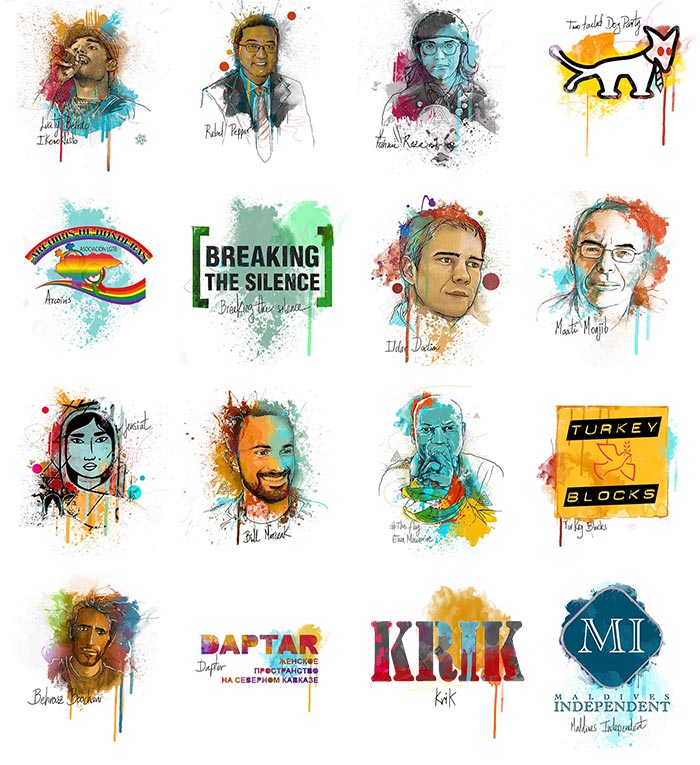
Nominees include Pastor Evan Mawarire whose frustration with Zimbabwe’s government led him to the #ThisFlag campaign; Behrouz Boochani, an Iranian Kurdish journalist who documents the life of indefinitely-interned Australian asylum seekers in Papua New Guinea; China’s Wang Liming, better known as Rebel Pepper, a political cartoonist who lampoons the country’s leaders; Ildar Dadin, an imprisoned Russian opposition activist, who became the first person convicted under the country’s public assembly law; Daptar, a Dagestani initiative tackling women’s issues like female genital mutilation that are rarely discussed publicly in the country; and Serbia’s Crime and Corruption Reporting Network (KRIK), which was founded by a group of journalists to combat pervasive corruption and organised crime.
Other nominees include Hungary’s Two-tail Dog Party, a group of satirists who parody the country’s political discourse; Honduran LGBT rights organisation Arcoiris, which has had six activists murdered in the past year for providing support to the LGBT community and lobbying the country’s government; Luaty Beirão, a rapper from Angola, who uses his music to unmask the country’s political corruption; and Maldives Independent, a website involved in revealing endemic corruption at the highest levels in the country despite repeated intimidation.
Judges for this year’s awards, now in its 17th year, are Harry Potter actor Noma Dumezweni, Hillsborough lawyer Caiolfhionn Gallagher, former Vanity Fair editor Tina Brown, designer Anab Jain and music producer Stephen Budd.
Dumezweni, who plays Hermione in the stage play Harry Potter and the Cursed Child, was shortlisted earlier this year for an Evening Standard Theatre Award for Best Actress. Speaking about the importance of the Index Awards she said: “Freedom of expression is essential to help challenge our perception of the world”.
Winners, who will be announced at a gala ceremony in London on 19 April, become Index on Censorship Freedom of Expression Awards Fellows and are given support for their work, including training in areas such as advocacy and communications.
“The GreatFire team works anonymously and independently but after we were awarded a fellowship from Index it felt like we had real world colleagues. Index helped us make improvements to our overall operations, consulted with us on strategy and were always there for us, through the good times and the pain,” Charlie Smith of GreatFire, 2016 Freedom of Expression Awards Digital Activism Fellow.
This year, the Freedom of Expression Awards are being supported by sponsors including SAGE Publishing, Google, Vodafone, media partner CNN, VICE News, Doughty Street Chambers, Psiphon and Gorkana. Illustrations of the nominees were created by Sebastián Bravo Guerrero.
Notes for editors:
- Index on Censorship is a UK-based non-profit organisation that publishes work by censored writers and artists and campaigns against censorship worldwide.
- More detail about each of the nominees is included below.
- The winners will be announced at a ceremony at The Unicorn Theatre, London, on 19 April.
For more information, or to arrange interviews with any of those shortlisted, please contact: Sean Gallagher on 0207 963 7262 or [email protected]. More biographical information and illustrations of the nominees are available at indexoncensorship.org/indexawards2017.
Index on Censorship Freedom of Expression Awards nominees 2017
Arts
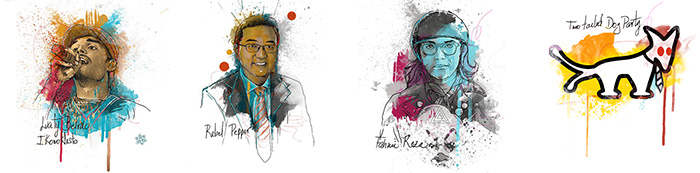
Luaty Beirão, Angola
Rapper Luaty Beirão, also known as Ikonoklasta, has been instrumental in showing the world the hidden face of Angolan President José Eduardo dos Santos’s rule. For his activism Beirão has been beaten up, had drugs planted on him and, in June 2015, was arrested alongside 14 other people planning to attend a meeting to discuss a book on non-violent resistance. Since being released in 2016, Beirão has been undeterred attempting to stage concerts that the authorities have refused to license and publishing a book about his captivity entitled “I Was Freer Then”, claiming “I would rather be in jail than in a state of fake freedom where I have to self-censor”.
Rebel Pepper, China
Wang Liming, better known under the pseudonym Rebel Pepper, is one of China’s most notorious political cartoonists. For satirising Chinese Premier Xi Jinping and lampooning the ruling Communist Party, Rebel Pepper has been repeatedly persecuted. In 2014, he was forced to remain in Japan, where he was on holiday, after serious threats against him were posted on government-sanctioned forums. The Chinese state has since disconnected him from his fan base by repeatedly deleting his social media accounts, he alleges his conversations with friends and family are under state surveillance, and self-imposed exile has made him isolated, bringing significant financial struggles. Nonetheless, Rebel Pepper keeps drawing, ferociously criticising the Chinese regime.
Fahmi Reza, Malaysia
On 30 January 2016, Malaysian graphic designer Fahmi Reza posted an image online of Prime Minister Najib Razak in evil clown make-up. From T-shirts to protest placards, and graffiti on streets to a sizeable public sticker campaign, the image and its accompanying anti-sedition law slogan #KitaSemuaPenghasut (“we are all seditious”) rapidly evolved into a powerful symbol of resistance against a government seen as increasingly corrupt and authoritarian. Despite the authorities’ attempts to silence Reza, who was banned from travel and has since been detained and charged on two separate counts under Malaysia’s Communications and Multimedia Act, he has refused to back down.
Two-tailed Dog Party, Hungary
A group of satirists and pranksters who parody political discourse in Hungary with artistic stunts and creative campaigns, the Two-tailed Dog Party have become a vital alternative voice following the rise of the national conservative government led by Viktor Orban. When Orban introduced a national consultation on immigration and terrorism in 2015, and plastered cities with anti-immigrant billboards, the party launched their own mock questionnaires and a popular satirical billboard campaign denouncing the government’s fear-mongering tactics. Relentlessly attempting to reinvigorate public debate and draw attention to under-covered or taboo topics, the party’s efforts include recently painting broken pavement to draw attention to a lack of public funding.
Campaigning
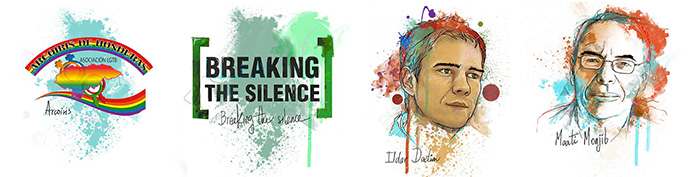 Arcoiris, Honduras
Established in 2003, LGBT organisation Arcoiris, meaning ‘rainbow’, works on all levels of Honduran society to advance LGBT rights. Honduras has seen an explosion in levels of homophobic violence since a military coup in 2009. Working against this tide, Arcoiris provide support to LGBT victims of violence, run awareness initiatives, promote HIV prevention programmes and directly lobby the Honduran government and police force. From public marches to alternative awards ceremonies, their tactics are diverse and often inventive. Between June 2015 and March 2016, six members of Arcoiris were killed for this work. Many others have faced intimidation, harassment and physical attacks. Some have had to leave the country because of threats they were receiving.
Breaking the Silence, Israel
Breaking the Silence, an Israeli organisation consisting of ex-Israeli military conscripts, aims to collect and share testimonies about the realities of military operations in the Occupied Territories. Since 2004, the group has collected over 1,000 (mainly anonymous) statements from Israelis who have served their military duty in the West Bank and Gaza. For publishing these frank accounts the organisation has repeatedly come under fire from the Israeli government. In 2016 the pressure on the organisation became particularly pointed and personal, with state-sponsored legal challenges, denunciations from the Israeli cabinet, physical attacks on staff members and damages to property. Led by Israeli politicians including the prime minister, and defence minister, there have been persistent attempts to force the organisation to identify a soldier whose anonymous testimony was part of a publication raising suspicions of war crimes in Gaza. Losing the case would set a precedent that would make it almost impossible for Breaking the Silence to operate in the future. The government has also recently enacted a law that would bar the organisation’s widely acclaimed high school education programme.
Ildar Dadin, Russia
A long-term opposition and LGBT rights activist, Ildar Dadin was the first, and remains the only, person to be convicted under Russia’s 2014 public assembly law that prohibits the “repeated violation of the order of organising or holding meetings, rallies, demonstrations, marches or picketing”. Attempting to circumvent this restrictive law, Dadin held a series of one-man pickets against human rights abuses – an enterprise for which he was arrested and sentenced to three years imprisonment in 2015. In November 2016, website Meduza published a letter smuggled to his wife in which Dadin wrote that he was being tortured and abuse was endemic in Russian jails. The letter, a brave move for a serving prisoner, had wide resonance, prompting a reaction from the government and an investigation. Against his will, Dadin was transferred and disappeared within the Russian prison system until a wave of public protest led to his location being revealed in January 2017. Dadin was released on February 26 after a supreme court order.
Maati Monjib, Morocco
A well-known academic who teaches African studies and political history at the University of Rabat since returning from exile, Maati Monjib co-founded Freedom Now, a coalition of Moroccan human rights defenders who seek to promote the rights of Moroccan activists and journalists in a country ranked 131 out of 180 on the Reporters Without Borders Press Freedom Index. His work campaigning for press freedom – including teaching investigative journalism workshops and using of a smartphone app called Story Maker designed to support citizen journalism – has made him a target for the authorities who insist that this work is the exclusive domain of state police. For his persistent efforts, Monjib is currently on trial for “undermining state security” and “receiving foreign funds.”
Digital Activism
 Jensiat, Iran
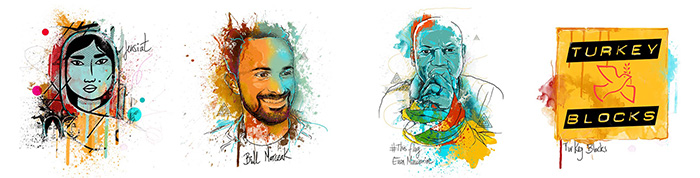
Despite growing public knowledge of global digital surveillance capabilities and practices, it has often proved hard to attract mainstream public interest in the issue. This continues to be the case in Iran where even with widespread VPN usage, there is little real awareness of digital security threats. With public sexual health awareness equally low, the three people behind Jensiat, an online graphic novel, saw an an opportunity to marry these challenges. Dealing with issues linked to sexuality and cyber security in a way that any Iranian can easily relate to, the webcomic also offers direct access to verified digital security resources. Launched in March 2016, Jensiat has had around 1.2 million unique readers and was rapidly censored by the Iranian government.
Bill Marczak, United States
A schoolboy resident of Bahrain and PhD candidate in computer science at the University of California, Berkeley, Bill Marczak co-founded Bahrain Watch in 2013. Seeking to promote effective, accountable and transparent governance, Bahrain Watch works by launching investigations and running campaigns in direct response to social media posts coming from activists on the front line. In this context, Marczak’s personal research has proved highly effective, often identifying new surveillance technologies and targeting new types of information controls that governments are employing to exert control online, both in Bahrain and across the region. In 2016 Marczak investigated several government attempts to track dissidents and journalists, notably identifying a previously unknown weakness in iPhones that had global ramifications.
#ThisFlag and Evan Mawarire, Zimbabwe
In May 2016, Baptist pastor Evan Mawarire unwittingly began the most important protest movement in Zimbabwe’s recent history when he posted a video of himself draped in the Zimbabwean flag, expressing his frustration at the state of the nation. A subsequent series of YouTube videos and the hashtag Mawarire used, #ThisFlag, went viral, sparking protests and a boycott called by Mawarire, which he estimates was attended by over eight million people. A scale of public protest previously inconceivable, the impact was so strong that private possession of Zimbabwe’s national flag has since been banned. The pastor temporarily left the country following death threats and was arrested in early February as he returned to his homeland.
Turkey Blocks, Turkey
In a country marked by increasing authoritarianism, a strident crackdown on press and social media as well as numerous human rights violations, Turkish-British technologist Alp Toker brought together a small team to investigate internet restrictions. Using Raspberry Pi technology they built an open source tool able to reliably monitor and report both internet shut downs and power blackouts in real time. Using their tool, Turkey Blocks have since broken news of 14 mass-censorship incidents during several politically significant events in 2016. The tool has proved so successful that it has begun to be implemented elsewhere globally.
Journalism
Behrouz Boochani, Manus Island, Papua New Guinea/Australia (he is an Iranian refugee)
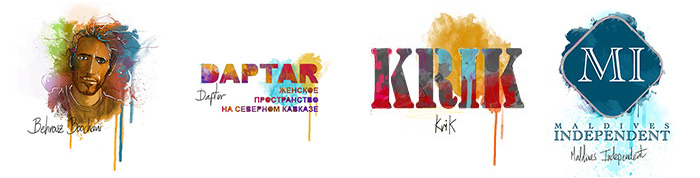
Iranian Kurdish journalist Behrouz Boochani fled the city of Ilam in Iran in May 2013 after the police raided the Kurdish cultural heritage magazine he had co-founded, arresting 11 of his colleagues. He travelled to Australia by boat, intending to claim asylum, but less than a month after arriving he was forcibly relocated to a “refugee processing centre” in Papua New Guinea that had been newly opened. Imprisoned alongside nearly 1000 men who have been ordered to claim asylum in Papua New Guinea or return home, Boochani has been passionately documenting their life in detention ever since. Publicly advertised by the Australian Government as a refugee deterrent, life in the detention centre is harsh. For the first 2 years, Boochani wrote under a pseudonym. Until 2016 he circumvented a ban on mobile phones by trading personal items including his shoes with local residents. And while outside journalists are barred, Boochani has refused to be silent, writing numerous stories via Whatsapp and even shooting a feature film with his phone.
Daptar, Dagestan, Russia
In a Russian republic marked by a clash between the rule of law, the weight of traditions, and the growing influence of Islamic fundamentalism, Daptar, a website run by journalists Zakir Magomedov and Svetlana Anokhina, writes about issues affecting women, which are little reported on by other local media. Meaning “diary”, Daptar seeks to promote debate and in 2016 they ran a landmark story about female genital mutilation in Dagestan, which broke the silence surrounding that practice and began a regional and national conversation about FGM. The small team of journalists, working alongside a volunteer lawyer and psychologist, also tries to provide help to the women they are in touch with.
KRIK, Serbia
Crime and Corruption Reporting Network (KRIK) is a new independent investigative website which was founded by a team of young Serbian journalists intent on exposing organised crime and extortion in their country which is ranked as having widespread corruption by Transparency International. In their first year they have published several high-impact investigations, including forcing Serbia’s prime minister to admit that senior officials had been behind nocturnal demolitions in a Belgrade neighbourhood and revealing meetings between drug barons, the ministry of police and the minister of foreign affairs. KRIK have repeatedly come under attack online and offline for their work –threatened and allegedly under surveillance by state officials, defamed in the pages of local tabloids, and suffering abuse including numerous death threats on social media.
Maldives Independent, Maldives
Website Maldives Independent, which provides news in English, is one of the few remaining independent media outlets in a country that ranks 112 out of 180 countries on the Reporters Without Borders Press Freedom Index. In August 2016 the Maldives passed a law criminalising defamation and empowering the state to impose heavy fines and shut down media outlets for “defamatory” content. In September, Maldives Independent’s office was violently attacked and later raided by the police, after the release of an Al Jazeera documentary exposing government corruption that contained interviews with editor Zaheena Rasheed, who had to flee for her safety. Despite the pressure, the outlet continues to hold the government to account.
27 Jan 2017 | News, Turkey, Turkey Uncensored
[vc_row][vc_column][vc_column_text]
Turkey Uncensored is an Index on Censorship project to publish a series of articles from censored Turkish writers, artists and translators.
[/vc_column_text][vc_video link=”https://youtu.be/LzWBgzJrQdo”][vc_column_text]As tens of thousands of women took to the streets around the world on 21 January, another woman, the Turkish MP Şafak Pavey was being treated in hospital for injuries sustained during a physical assault on the floor of the Grand National Assembly during debates on constitutional amendments.
Pavey had just delivered a moving speech in which she warned that the presidential system being considered would bring about unchallenged one-man rule. The “bandits”, as she called them, a group of women MPs belonging to the ruling AKP, attacked her and two other MPs, Aylin Nazlıaka, an independent, and Pervin Buldan from the Kurdish HDP. The AKP MPs were said to be acting under a male colleague’s orders.
The attack contrasted sharply with the pictures of enthusiastic women from around the United States and the world committed to sisterhood and equality. The distance between the two extremes might seem to be yawning but isn’t. In Turkey, the gap opened up in just four short years.
The empowered mood created by women marching for equal rights and uniting their voices in opposition reminded me of the heady days of 2013 when the anti-government Gezi Park protests rocked Turkey. Like the demonstrators in DC and London, people all over Turkey took to the streets to raise a chant against our own Trump: President Recep Tayyip Erdogan. In Gezi, the seeds of dissent spread through social media and bloomed across the country just as the women’s march did across the globe. It was just the beginning, or so we thought.
After a brutal suppression that left at least 10 dead and over 8,000 injured, the Gezi spirit, that united voice, faded away. The most significant political heritage was the “Vote and Beyond” organisation, which launched an incredibly effective election monitoring network during the June 2015 elections. Thanks to that group and the popular young Kurdish leader Selahattin Demirtaş’s energy, the outcome of the polls reflected the full and complete picture of Turkey’s population in parliament. The combined opposition parties were the majority in the assembly and to continue governing, the AKP would be forced to form a coalition. Then things happened.[/vc_column_text][vc_single_image image=”85130″ img_size=”full” add_caption=”yes”][vc_column_text]As the ceasefire with the Kurdistan Workers’ Party (PKK) collapsed and armed conflict resumed, coalition negotiations ground into political deadlock as the summer wore on. Erdogan called a snap election for that November that lined up with his political ambitions. Less than a month before the election, a staggering terror attack rocked Ankara and ongoing deaths of security personnel in the country’s south-east added to a grim mood. At the polls, the AKP regained its majority in parliament. Though the governing party was nominally back in full control, it lacked political legitimacy and popular support, both of which would be delivered by the rogue military units that staged the failed July 15 coup and paved the way for Erdogan’s emergency rule.
Witch hunts are a strange thing. Even if you spot one when it’s getting underway, it’s always too late to stop it.
After the election, the political opposition was locked out of enacting change through parliament. It was further paralysed by Erdogan’s “shock and awe” tactics, which saw the leaders of the parties assaulted on the floor of the assembly or imprisoned on fabricated terror charges. Opposition voters are too depressed now to remember the confident and exhilarating days of the Gezi protests.
It would be a mistake to dismiss Turkey’s experience as a unique case. There are parallels with the unfolding situations in Russia, Poland, Hungary and now the USA. The bullies of our interesting times are singing from the same hymn sheet, using identical language and narratives — power to the right people, experts and intellectuals are overrated, overturn the establishment. The forces of resistance must now share strategies as well. Opposition to the growing threat of illiberal democracy needs to network and be vocal or else our initial responses to the horrors and human rights violations — including the purge of Turkey’s press under emergency rule — would be a waste of time.
Here’s a small taste of where we failed in Turkey — a warning to Europeans and Americans of what not to do.
“No” is an intoxicating word that gives emotional fuel to the masses. After swimming in the slack waters of identity politics or concerning yourself with whether or not your avocados are fair trade, taking to the streets en masse for a proper cause is like a fresh breeze. But as we learned in Turkey, “No” can also be a dead end. It exists in a dangerous dependency on the what those in power are up to. It shouldn’t be mistaken for action as it is only a reaction.
“No” is unable to create a new political choice. It is an anger game that sooner or later will exhaust all opposition by splitting itself into innumerable causes intent on becoming an individual obstacle to the ruling power.
Make no mistake: the bullies of the world are united in a truly global movement. It is sweeping all before it. And it’s not just Putin, Trump, Erdogan or even Orban, it’s their minions, millions of fabricated apparatchiks that invade the political, social and digital spheres like multiplying gremlins.
What the opposition must do — what Turkey’s protesters failed to do — is strengthen the infrastructure, harden networks and open strong lines of communication between disparate groups whether at home or abroad. All those lefty student movements, marginalised progressive newspapers or resisting communities that are labelled as naïve or passé until now must coalesce around core campaigns and goals.
Failure to move beyond “No”, in Turkey’s case, has made alternative and potential political movements all but invisible. There are just three leftist newspapers in Turkey, three ghosts to break news about women MPs being beaten up. And that’s because we can’t move past “No” when others were shut down or silenced.[/vc_column_text][/vc_column][/vc_row][vc_row][vc_column][vc_basic_grid post_type=”post” max_items=”4″ element_width=”6″ grid_id=”vc_gid:1485771885900-d32a2643-5934-8″ taxonomies=”8607″][/vc_column][/vc_row][vc_row][vc_column][/vc_column][/vc_row]
