27 Dec 2013 | Digital Freedom, Europe and Central Asia, European Union, News, Politics and Society, Religion and Culture
This article is part of a series based on our report, Time to Step Up: The EU and freedom of expression.
Since the entering into force of the Lisbon Treaty on 1 December 2009, which made the EU Charter of Fundamental Rights legally binding, the EU has gained an important tool to deal with breaches of fundamental rights.
The Lisbon Treaty also laid the foundation for the EU as a whole to accede to the European Convention on Human Rights. Amendments to the Treaty on European Union (TEU) introduced by the Lisbon Treaty (Article 7) gave new powers to the EU to deal with state who breach fundamental rights.
The EU’s accession to the ECHR, which is likely to take place prior to the European elections in June 2014, will help reinforce the power of the ECHR within the EU and in its external policy. Commission lawyers believe that the Lisbon Treaty has made little impact, as the Commission has always been required to assess whether legislation is compatible with the ECHR (through impact assessments and the fundamental rights checklist) and because all EU member states are also signatories to the Convention.[1] Yet external legal experts believe that accession could have a real and significant impact on human rights and freedom of expression internally within the EU as the Court of Justice of the European Union (CJEU) will be able to rule on cases and apply European Court of Human Rights jurisprudence directly. Currently, CJEU cases take approximately one year to process, whereas cases submitted to the ECHR can take up to 12 years. Therefore, it is likely that a larger number of freedom of expression cases will be heard and resolved more quickly at the CJEU, with a potential positive impact on justice and the implementation of rights in the EU.[2]
The Commission will also build upon Council of Europe standards when drafting laws and agreements that apply to the 28 member states. Now that these rights are legally binding and are subject to formal assessment, this may serve to strengthen rights within the Union.[3] For the first time, a Commissioner assumes responsibility for the promotion of fundamental rights; all members of the European Commission must pledge before the Court of Justice of the European Union that they will uphold the Charter.
The Lisbon Treaty also provides for a mechanism that allows European Union institutions to take action, whether there is a clear risk of a “serious breach” or a “serious and persistent breach”, by a member state in their respect for human rights in Article 7 of the Treaty of the European Union. This is an important step forward, which allows for the suspension of voting rights of any government representative found to be in breach of Article 7 at the Council of the European Union. The mechanism is described as a “last resort”, but does potentially provide leverage where states fail to uphold their duty to protect freedom of expression.
Yet within the EU, some remained concerned that the use of Article 7 of the Treaty, while a step forward, is limited in its effectiveness because it is only used as a last resort. Among those who argued this were Commissioner Reding, who called the mechanism the “nuclear option” during a speech addressing the “Copenhagen Dilemma” (the problem of holding states to the human rights commitments they make when they join). In March 2013, in a joint letter sent to Commission President Barroso, the foreign ministers of the Netherlands, Finland, Denmark and Germany called for the creation of a mechanism to safeguard principles such as democracy, human rights and the rule of law. The letter argued there should be an option to cut EU funding for countries that breach their human rights commitments.
It is clear that there is a fair amount of thinking going on internally within the Commission on what to do when member states fail to abide by “European values”. Commission President Barroso raised this in his State of the Union address in September 2012, explicitly calling for “a better developed set of instruments” to deal with threats to these rights.
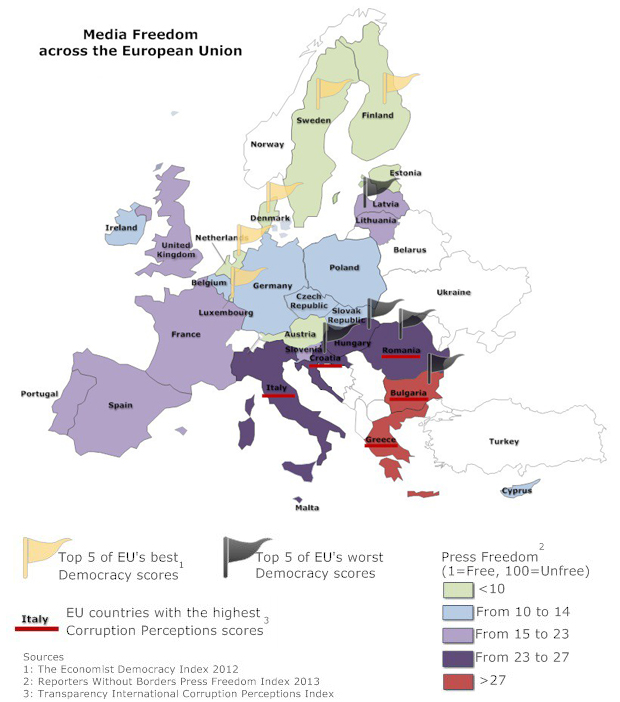
This thinking has been triggered by recent events in Hungary and Italy, as well as the ongoing issue of corruption in Bulgaria and Romania, which points to a wider problem the EU faces through enlargement: new countries may easily fall short of both their European and international commitments.
Full report PDF: Time to Step Up: The EU and freedom of expression
Footnotes
[1] Off-record interview with a European Commission lawyer, Brussels (February 2013).
[2] Interview with Prof. Andrea Biondi, King’s College London, 22 April 2013.
[3] Interview with lawyer, Brussels (February 2013).
12 Dec 2013 | Digital Freedom Reports, Europe and Central Asia, European Union, Index Reports, News, Politics and Society
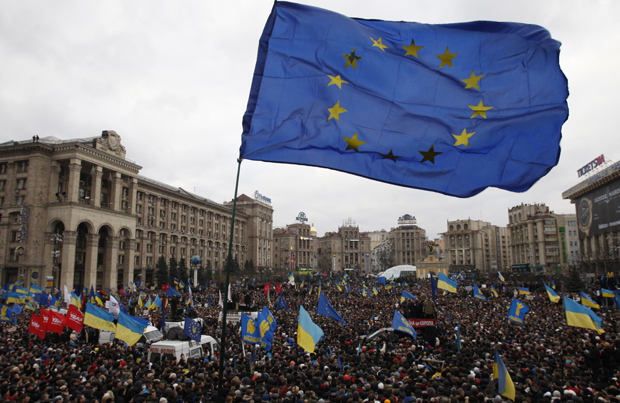
As Ukraine experiences ongoing protests over lack of European integration, Index’ new report looks at the EU’s relationship with freedom of expression (Photo: Anatolii Stepanov / Demotix)
Index on Censorship’s policy paper, Time to Step Up: The EU and freedom of expression, looks at freedom of expression both within the European Union’s 28 member states, which with over 500 million people account for about a quarter of total global economic output, but also how this union defends freedom of expression in the wider world. States that are members of the European Union are supposed to share “European values”, which include a commitment to freedom of expression. However, the way these common values are put into practice vary: some of the world’s best places for free expression are within the European Union – Finland, Netherlands, Denmark and Sweden – while other countries such as Italy, Hungary, Greece and Romania lag behind new and emerging global democracies.
This paper explores freedom of expression, both at the EU level on how the Commission and institutions of the EU protect this important right, but also across the member states. Firstly, the paper will explore where the EU and its member states protect freedom of expression internally and where more needs to be done. The second section will look at how the EU projects and defends freedom of expression to partner countries and institutions. The paper will explore the institutions and instruments used by the EU and its member states to protect this fundamental right and how they have developed in recent years, as well as the impact of these institutions and instruments.
Outwardly, a commitment to freedom of expression is one of the principle characteristics of the European Union. Every European Union member state has ratified the European Convention on Human Rights (ECHR); the International Covenant on Civil and Political Rights (ICCPR) and has committed to the Universal Declaration of Human Rights. To complement this, the Treaty of Lisbon has made the EU Charter of Fundamental Rights legally binding which means that the EU institutions and member states (if they act within the scope of the EU law) must act in compliance with the rights and principles of the Charter. The EU has also said it will accede to the ECHR. Yet, even with these commitments and this powerful framework for defending freedom of expression, has the EU in practice upheld freedom of expression evenly across the European Union and outside with third parties, and is it doing enough to protect this universal right?
Within the European Commission, there has been considerable analysis about what should be done when member states fail to abide by “European values”, Commission President Barroso raised this in his State of the Union address in September 2012, explicitly calling for “a better developed set of instruments” to deal with threats to these perceived values and the rights that accompany them. With threats to freedom of expression increasing, it is essential that this is taken up by the Commission sooner rather than later.
To date, most EU member states have failed to repeal criminal sanctions for defamation, with only Croatia, Cyprus, Ireland and the UK having done so. The parliamentary assembly of the Council of Europe called on states to repeal criminal sanctions for libel in 2007, since then little action has been taken by EU member states. There also remain significant issues in the field of privacy law and freedom of information across the EU.
While the European Commission has in the past tended to view its competencies in the field of media regulation as limited, due to the introduction of the Charter of Fundamental Rights into EU primary law, the Commission is looking at a possible enhancement of its role in this area.
With media plurality limited across Europe and in fact potentially threatened by the convergence of media across media both online and off (and the internet being the most concentrated media market), the Commission must take an early view on whether it wishes to intervene more fully in this field to uphold the values the EU has outlined. Political threats against media workers are too commonplace and risks to whistleblowers have increased as demonstrated by the lack of support given by EU member states to whistleblower Edward Snowden. That the EU and its member states have so clearly failed one of the most significant whistleblowers of our era is indicative of the scale of the challenge to freedom of expression within the European Union.
The EU and its member states have made a number of positive commitments to protect online freedom, including the EU’s positioning at WCIT, the freedom of expression guidelines and the No-Disconnect strategy helping the EU to strengthen its external polices around promoting digital freedom. These commitments have challenged top-down internet governance models, supported the multistakeholder approach, protected human rights defenders who use the internet and social media in their work, limited takedown requests, filters and others forms of censorship. But for the EU to have a strong and coherent impact at the global level, it now needs to develop a clear and comprehensive digital freedom strategy. For too long, the EU has been slow to prioritise digital rights, placing the emphasis on digital competitiveness instead. It has also been the case that positive external initiatives have been undermined by contradictory internal policies, or a contradiction of fundamental values, at the EU and member state level. The revelations made by Edward Snowden show that EU member states are violating universal human rights through mass surveillance.
The Union must ensure that member states are called upon to address their adherence to fundamental principles at the next European Council meeting. The European Council should also address concerns that external government surveillance efforts like the US National Security Agency’s Prism programme are undermining EU citizens’ rights to privacy and free expression. A comprehensive overarching digital freedom strategy would help ensure coherent EU policies and priorities on freedom of expression and further strengthen the EU’s influence on crucial debates around global internet governance and digital freedom. With the next two years of ITU negotiations crucial, it’s important the EU takes this strategy forward urgently.
While the European Commission has in the past tended to view its competencies in the field of media regulation as limited, due to the introduction of the Charter of Fundamental Rights into EU primary law, the Commission is looking at a possible enhancement of its role in this area.
With media plurality limited across Europe and in fact potentially threatened by the convergence of media across media both online and off (and the internet being the most concentrated media market), the Commission must take an early view on whether it wishes to intervene more fully in this field to uphold the values the EU has outlined.
Political threats against media workers are too commonplace and risks to whistleblowers have increased as demonstrated by the lack of support given by EU member states to whistleblower Edward Snowden. That the EU and its member states have so clearly failed one of the most significant whistleblowers of our era is indicative of the scale of the challenge to freedom of expression within the European Union.
Where the EU acts with a common approach among the member states, it has significant leverage to help promote and defend freedom of expression globally. To develop a more common approach, since the Lisbon Treaty, the EU has enhanced its set of policies, instruments and institutions to promote human rights externally, with new resources to do so. Enlargement has proved the most effective tool to promote freedom of expression with, on the whole, significant improvements in the adherence to the principles of freedom of expression in countries that have joined the EU or where enlargement is a real prospect. That this respect for human rights is a condition of accession to the EU shows that conditionality can be effective. Whereas the eastern neighbourhood has benefitted from the real prospect of accession (for some countries), in its southern neighbourhood, the EU has failed to promote freedom of expression by placing security interests first and also by failing to react quickly enough to the transitions in its southern neighbourhood following the events of the Arab Spring. The new strategy for this region is welcome and may better protect freedom of expression, but with Egypt in crisis, the EU may have acted too late. The EU must assess the effectiveness of some of its foreign policy instruments, in particular the dialogues for particular countries such as China.
The freedom of expression guidelines provide an excellent opportunity to reassess the criteria for how the EU engages with third party countries. Strong freedom of expression guidelines will allow the EU to better benchmark the effectiveness of its human rights dialogues. The guidelines will also reemphasise the importance of the EU, ensuring that the right to freedom of expression is protected within the EU and its member states. Otherwise, the ability of the EU to influence external partners will be limited.
Headline recommendations
• After recent revelations about mass state surveillance the EU must develop a roadmap that puts in place strong safeguards to ensure narrow targeted surveillance with oversight not mass population surveillance and must also recommit to protect whistle-blowers
• The European Commission needs to put in place controls so that EU directives cannot be used for the retention of data that makes mass population surveillance feasible
• The EU has expanded its powers to deal with human rights violations, but is reluctant to use these powers even during a crisis within a member state. The EU must establish clear red lines where it will act collectively to protect freedom of expression in a member state
• Defamation should be decriminalised across the EU
• The EU must not act to encourage the statutory regulation of the print media but instead promote tough independent regulation
• Politicians from across the EU must stop directly interfering in the workings of the independent media
• The EU suffers from a serious credibility gap in its near neighbourhood – the realpolitik of the past that neglected human rights must be replaced with a coherent, unified Union position on how to promote human rights
Recommendations
- The EU has expanded its powers to deal with human rights violations, but is reluctant to use these powers even during a crisis within a member state. The EU must establish clear red lines where it will act collectively to protect freedom of expression in a member state
- The EU should cut funding for member states that cross the red lines and breach their human rights commitments
Libel, privacy and insult
- Defamation should be decriminalised in line with the recommendations of the Council of Europe parliamentary assembly, and the UN and OSCE’s special rapporteurs on freedom of expression.
- Insult laws that criminalise insult to national symbols should be repealed
Freedom of information
- To better protect freedom of information, all EU member states should sign up to the Council of Europe Convention on Access to Official Documents
- Not all EU institutions, offices, bodies and agencies are acting on their freedom of information commitments. More must be done by the Commission to protect freedom of information
Media freedom & plurality
- The EU must revisit its competencies in the area of media regulation in order to prevent the most egregious breaches of the right to freedom of expression in particular the situations that arose in Italy and Hungary
- The EU must argue against statutory regulation of the print media and argue for independent self-regulation where media bandwidth is no longer limited by spectrum and other considerations
- Member states must not allow political interference or considerations of “political balance” into the workings of the media, where this happens the EU should be considered competent to act to protect media freedom and pluralism at a state level
- The EU is not doing enough to protect whistleblowers. National states must do more to protect journalists from threats of violence and intimidation
Digital
- The Commission must prepare a roadmap for collective action against mass state surveillance
- The EU is right to argue against top-down state control over internet governance it must find more natural allies for this position globally
- The Commission should proceed with a Directive that sets out the criteria takedown requests must meet and outline a process that protects anonymous whistle-blowers and intermediaries from vexatious claims
The EU and freedom of expression in the world
- The EU suffers from a credibility issue in its southern neighbourhood. To repair its standing in the wider world, the EU and its member states must not downgrade the importance of human rights in any bilateral or multilateral relationship
- The EU’s EEAS Freedom of Expression guidelines are welcome. To be effective, they need to focus on the right to freedom of expression for ordinary citizens and not just media actors
- The guidelines need to become the focus for negotiations with external countries, rather than the under-achieving human rights dialogues
- With criticism of the effectiveness of the human rights dialogues, the EU should look again at how the dialogues fit into the overall strategy of the Union and its member states
The European Union contains some of the world’s strongest defenders of freedom of expression, but also a significant number of member states who fail to meet their European and international commitments. To deal with this, in recent years, the European Union’s member states have made new commitments to better protect freedom of expression. The new competency of the European Court of Justice to uphold the values enshrined in the European Convention of Human Rights will provide a welcome alternative forum to the increasingly deluged European Court of Human Rights. This could have significant implications for freedom of expression within the EU. Internally within the EU there is still much that could be done to improve freedom of expression. It is welcome that that the EU and its member states have made a number of positive commitments to protect online freedom, with new action on vexatious takedown notices and coordinated action to protect the multistakeholder model of internet governance. Increasing Commission concern over media plurality may also be positive in the future.
Yet there are a number of areas where the EU must do more. The decriminalisation of defamation across Europe should be a focal point for European action in line with the Council of Europe’s recommendations. National insult laws should be repealed. The Commission should not intervene to increase its powers over national media regulators, but should act where it has clear competencies, in particular to prevent media monopolies and to help deal with conflict of interests between politicians and state broadcasters. Most importantly, discussions of mass population surveillance at the European Council in October must be followed by a roadmap outlining how the EU will collectively take action on this issue. Without internal reform to strengthen protections for freedom of expression, the EU will not enjoy the leverage it should to promote freedom of expression externally to partner countries. While the External Action Service freedom of expression guidelines are welcome, they must be impressed upon member countries as a benchmark for reform.
Externally, the EU has failed to deliver on the significant leverage it could have as the world’s largest trading block. Where the EU has acted in concert, with clear aims and objectives for partner countries, such as during the process of enlargement, it has had a big impact on improving and protecting freedom of expression. Elsewhere, the EU has fallen short, particularly in its southern neighbourhood and in its relationship with China, where the EU has continued human rights dialogues that have failed to be effective.
New commitments and new instruments post-Lisbon may better protect freedom of expression in the EU and externally. Yet, as the Snowden revelations show, the EU and its member states must do significantly more to deliver upon the commitments that have been agreed.
Full report PDF: Time to Step Up: The EU and freedom of expression
This article was posted on 12 Dec 2013 at indexoncensorship.org
1 Nov 2013 | News, United Kingdom
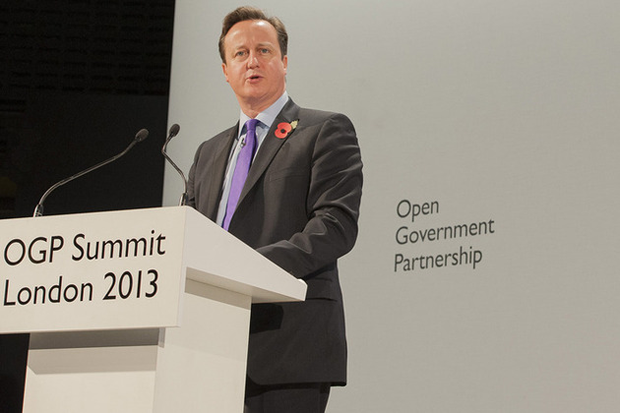
State control of the press is hot topic. On Wednesday, Queen Elizabeth signed off a Royal Charter which gives politicians a hand in newspaper regulation. This come after David Cameron criticised the Guardian’s reporting on mass surveillance, saying “If they don’t demonstrate some social responsibility it will be very difficult for government to stand back and not to act”.
But what does state control of the press really look like? Here are 10 countries where the government keeps a tight grip on newspapers.
Bahrain
Press freedom ranking: 165
The tiny gulf kingdom in 2002 passed a very restrictive press law. While it was scaled back somewhat in 2008, it still stipulates that journalists can be imprisoned up to five years for criticising the king or Islam, calling for a change of government and undermining state security. Journalists can be fined heavily for publishing and circulating unlicensed publications, among other things. Newspapers can also be suspended and have their licenses revoked if its ‘policies contravene the national interest.’
Belarus
Press freedom ranking: 157
In 2009 the country known as Europe’s last dictatorship passed the Law on Mass Media, which placed online media under state regulation. It demanded registration of all online media, as well as re-registration of existing outlets. The state has the power to suspend and close both non-registered and registered media, and media with a foreign capital share of more than a third can’t get a registration at all. Foreign publications require special permits to be distributed, and foreign correspondents need official accreditation.
China
Press freedom ranking: 173
The country has a General Administration of Press, Publication, Radio, Film and Television and an army official censors dedicated to keeping the media in check. Through vaguely worded regulation, they ensure that the media promotes and toes the party line and stays clear of controversial topics like Tibet. A number of journalists have also been imprisoned under legislation on “revealing state secrets” and “inciting subversion.”
Ecuador
Press freedom ranking: 119
In 2011 President Rafael Correa won a national referendum to, among other things, create a “government controlled media oversight body”. In July this year a law was passed giving the state editorial control and the power to impose sanctions on media, in order to stop the press “smearing people’s names”. It also restricted the number of licences will be given to private media to a third.
Eritrea
Press freedom ranking: 179
All media in the country is state owned, as President Isaias Afwerki has said independent media is incompatible with Eritrean culture. Reporting that challenge the authorities are strictly prohibited. Despite this, the 1996 Press Proclamation Law is still in place. It stipulates that all journalists and newspapers be licensed and subject to pre-publication approval.
Hungary
Press freedom ranking: 56
Hungary’s restrictive press legislation came into force in 2011. The country’s media outlets are forced to register with the National Media and Infocommunications Authority, which has the power to revoke publication licences. The Media Council, appointed by a parliament dominated by the ruling Fidesz party, can also close media outlets and impose heavy fines.
Saudi Arabia
Press freedom ranking: 163
Britain isn’t the only country to tighten control of the press through royal means. In 2011 King Abdullah of Saudi Arabia amended the media law by royal decree. Any reports deemed to contradict Sharia Law, criticise the government, the grand mufti or the Council of Senior Religious Scholars, or threaten state security, public order or national interest, are banned. Publishing this could lead to fines and closures.
Uzbekistan
Press freedom ranking: 164
The Law on Mass Media demands any outlet has to receive a registration certificate before being allowed to publish. The media is banned from “forcible changing of the existing constitutional order”, and journalists can be punished for “interference in internal affairs” and “insulting the dignity of citizens”. Foreign journalists have to be accredited with the Ministry of Foreign Affairs.
Vietnam
Press freedom ranking: 172
The 1999 Law on Media bans journalists from “inciting the people to rebel against the State of the Socialist Republic of Vietnam and damage the unification of the people”. A 2006 decree also put in place fines for journalists that deny “revolutionary achievements” and spread “harmful” information. Journalists can also be forced to pay damages to those “harmed by press articles”, regardless of whether the article in question is accurate or not.
Zimbabwe
Press freedom ranking: 133
The country’s Access to Information and Protection of Privacy Act gives the government direct regulatory power over the press through the Media and Information Council. All media outlets and journalists have to register with an obtain accreditation from the MIC. The country also has a number of privacy and security laws that double up as press regulation, The Official Secrets Act and the Public Order and Security Act.
This article was originally posted on 1 Nov 2013 at indexoncensorship.org.
8 Oct 2013 | Europe and Central Asia, News
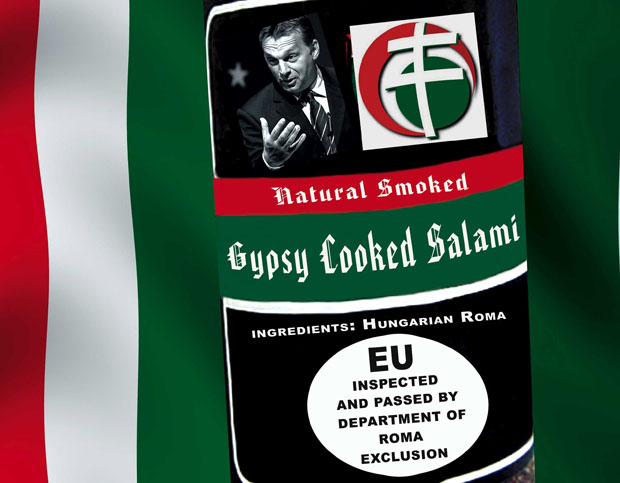
A poster from Marika Schmiedt’s exhibition Thoughts Are Free
The Hungarian Ambassador to Austria has called for the cancellation of a “racist” and “anti-Hungarian” art exhibition which opened yesterday in the Austrian city of Linz.
Thoughts Are Free, the exhibition by Roma artist Marika Schmiedt, features posters highlighting the plight of Roma people in Europe today. Several pieces draw parallels between the Nazis and Hungary’s far-right Jobbik party, whose views on the country’s Roma population have been well documented. In one poster, Hungarian Prime Minister Viktor Orbán from the Fidesz party is pictured on the label of “Natural Smoked Gypsy Cooked Salami” next to a Jobbik logo.
Ambassador Vince Szalay-Bobrovniczky labelled the exhibition: “a cheap provocation, openly racist and hostile against Hungary, and in violation of European values and the dignity of minorities, especially the Roma,” reported the Hungarian news agency MTI.
The Ambassador also took issue with it being located in Linz City Hall, stating that that the “socialist Linz city administration” will not back out of the “discrimination filled” project due to the artist’s political and ideological ties.
He contacted both Mayor Franz Dobuschs and Austrian President Heinz Fischer demanding that the exhibition be cancelled.
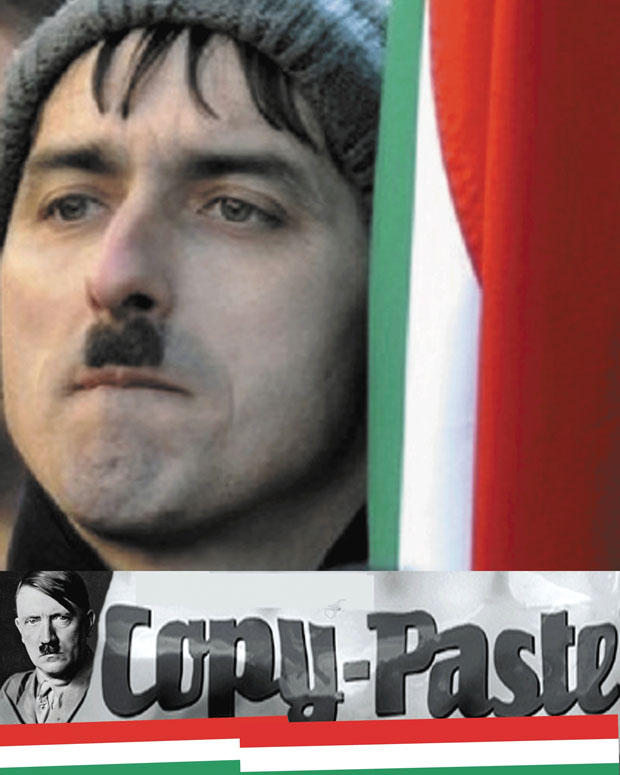
Image Marika Schmiedt
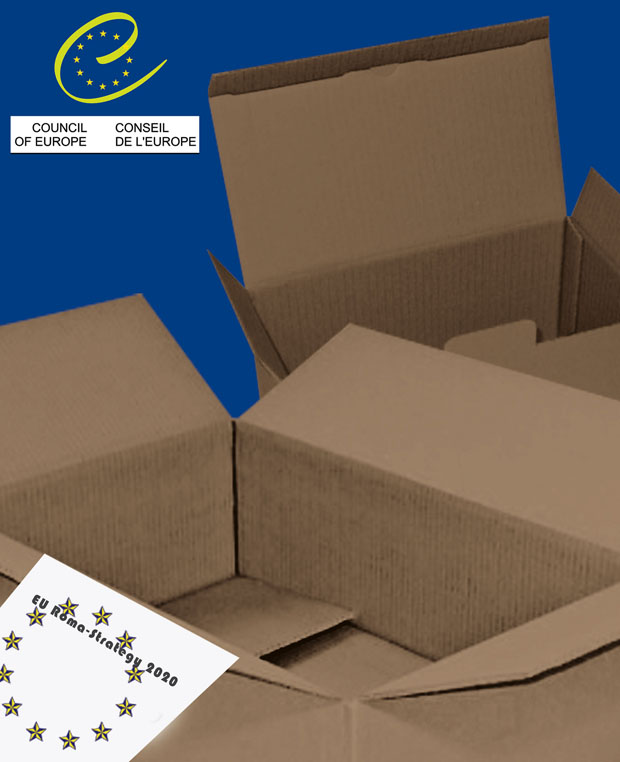
Image Marika Schmiedt
Linz City Hall has also been inundated with hundreds of emails from angry Hungarians, seemingly led by the Salzburg Hungarian Club, which, in May, invited Jobbik politician Tamás Sneider to speak.
This is not the first time Thoughts Are Free has caused controversy. When the posters were first exhibited at a construction site fence in Linz last November, the Austrian police removed them following complaints lodged by Hungarians.
Mayor Dobuschs however, did not budge: “Criticism and escalation is a legitimate method in a democracy,” he said in a reply to Szalay-Bobrovniczky. “We therefore stand by the artist who will receive a public forum at City Hall”.
The exhibition opening took place yesterday as planned, with police protection. Schmiedt told Index it was very well attended.
She added: “Maybe I might also dedicate a graphic to the ambassador?”
