31 Jul 2014 | Ireland, News, Pakistan, Religion and Culture
It was, apparently, the posting of a “blasphemous image” on Facebook that led an angry mob to burn down houses with children inside them.
It’s been suggested that it was a picture of the Kaaba, Islam’s holiest site, that provoked the mob in Gujranwala in Pakistan. They rallied last Sunday at Arafat colony, home of 17 families belonging to the Ahmadi sect. As police stood by, houses were looted and torched. At the end of the night, a woman in her 50s, Bushra Bibi, and her granddaughters Hira and Kainat, an eight-month-old baby, were dead. None of them had anything to do with the blasphemous Facebook post.
Was the image even blasphemous? In some ways, it doesn’t really matter. What matters was that it was posted by an Ahmadi, whose very existence is condemned by the Pakistani penal code.
Ahmadiyya emerged in India in the late 19th century. It is a small sect based on the belief that its founder, Mirza Ghulam Ahmad, was, in fact, the Mahdi of Muslim tradition. This teaching is rejected by Orthodox Sunni Islam.
In Pakistan, this means that being a member of the Ahmadiyya sect is dangerous. The law says you cannot describe yourself as Muslim. You cannot exchange Muslim greetings. You cannot describe your call to prayer as a Muslim call to prayer. You cannot describe your place of worship as a Masjid.
Any Ahmadi who “any manner whatsoever outrages the religious feelings of Muslims” can be imprisoned for up to three years.
Ahmadis suffer disproportionately from Pakistan’s blasphemy laws, but they are not the only ones who suffer. Accusations of blasphemy are frequently levelled at members of other minorities and at mainstream Muslims too. Often, this is done out of sheer spite. Often it is done to settle scores.
As the New Statesman’s Samira Shackle has pointed out, amid the chaos and fear generated by the law, it’s often difficult to find out what people are actually supposed to have done, as media hesitate to repeat the alleged blasphemy lest they themselves be accused of the crime.
The fevered atmosphere created by the laws mean that to oppose them can be fatal. In Janury 2011, Punjab governor Salmaan Taseer was killed by his own bodyguard after he pledged to support a Christian woman, Aasia Bibi, who had been accused of the crime. Taseer’s assassin claimed that the governor had been an “apostate”. He was widely praised by the religious establishment. Three months later, Minority Affairs Minister Shahbaz Bhatti was killed, apparently because of his belief that the blasphemy law should be changed.
Meanwhile, an amendment proposed by Taseer’s colleague Sherry Rehman, which would have abolished the death penalty for blasphemy, was dropped. Rehman was posted to diplomatic service in the United States later that year, amid allegations that she herself had committed some kind of blasphemy.
The number of blasphemy cases is steadily rising, and Human Rights Watch recently claimed that 18 people are on death row after being found guilty of defaming the prophet Muhammad, though no one has as yet been executed.
The laws may seem archaic, but they are in fact utterly modern. While some of South Asia’s laws on religious offence date back to the Raj, the laws relating to the Ahmadi, and the law making insulting Muhammad a capital offence only emerged in the 1980s, as part of General Zia’s attempts to shore up his religious credentials.
The sad fact is this Pakistan’s new enthusiasm for blasphemy laws is not an international aberration. Nor is this a trend confined to confessional Islamic states.
Ireland’s 2009 Defamation Act introduced a 25,000 Euro fine for the publication of “blasphemous matter”. According to the Act , “a person publishes or utters blasphemous matter if—
(a) he or she publishes or utters matter that is grossly abusive or insulting in relation to matters held sacred by any religion, thereby causing outrage among a substantial number of the adherents of that religion, and
(b) he or she intends, by the publication or utterance of the matter concerned, to cause such outrage.”
Note how similar the wording is to the Pakistani law forbidding Ahmadis from offending Muslims. The Pakistani government repaid the compliment when, along with other members of the Organisation of Islamic Conference, it attempted to force the UN to recognise “religious defamation” as a crime, lifting text from the Irish act. Pakistan claimed, grotesquely, that criminalising blasphemy was about preventing discrimination. Cast your eyes back once again to how its blasphemy provisions treat Ahmadis.
Across Europe, more and more blasphemy cases are emerging. In January of this year, a Greek man was sentenced to 10 months for setting up a Facebook page mocking an Orthodox cleric. In 2012, Polish singer Doda was fined for suggesting that the Bible read like it was written by someone drunk and “smoking some herbs”. The trial of Pussy Riot in Russia was heavy with talk of sacrilege.
We tend to believe that the world is moving inexorably toward a secular settlement. The unintended upshot of this prevalent belief is that organised religions, even in countries like Pakistan, get to portray themselves as weak people who need to be protected from extinction, even as they wield power of life and death over people.
Religious persecution is real, and should be fought. Freedom of belief is a basic right. But blasphemy laws protect only power, and never people.
This article was posted on July 31, 2014 at indexoncensorship.org
21 Jul 2014 | About Index, ArtFreedomWales
Why we are doing this programme
We believe that freedom of artistic expression lies at the heart of artistic practice and the debate about it needs to be kept live and abreast of changes in society.
Index on Censorship’s UK Programme
“Freedom of expression is not self-perpetuating, but needs to be maintained by the constant vigilance of those who care about it.” — Michael Scammell – Index on Censorship Magazine 1972
Support for artistic freedom allows the artist to push boundaries, to say what is not being said, imagine the world differently, act as critic and speak truth to power. Artistic freedom of expression thrives on risk and experimentation, embracing controversy and diversity of opinion and the debate and dialogue triggered by challenging art.
You only have to think of what happens to artists in societies that are unfree for this to be thrown into sharp relief.
But even in countries where freedoms are upheld as a core principle, artistic freedoms are all too easily eroded by social, political and sometimes legal constraints. ArtFreedomWales is part of a wider Index programme that is taking stock of the support for free expression across the arts sector in the UK, and asking is the space for artistic freedom of expression expanding or shrinking?
Last year we held a major conference at the Southbank Centre in London- Taking the Offensive which identified and debated the social, political or legal controls that shape the cultural landscape. Nicholas Serota, Director Tate, gave the key note speech and the conference discussed the triggers for and the prevalence of self-censorship across our cultural organisations and institutions. It also discussed how the sector could come together to reinforce support for artistic freedom in general and when controversy breaks in particular. (Read the report here.) In May, we held a symposium in Belfast exploring these issues in Northern Ireland.
We are currently running a programme called ArtFreedomWales — a series of online events culminating in a day-long conference in the autumn to explore the state of artistic freedom and practice in Wales. Supported by Arts Council Wales, the programme will bring together Welsh artists and activists to discuss the issues and begin mapping a plan for action. Watch the first online event here.
18 Jul 2014 | Events
Index on Censorship is delighted to announce the first two events in a series of online conversations about artistic freedom of expression in Wales. They form part of our ArtFreedomWales programme looking at how artistic freedom is regarded, supported, debated and promoted across the arts sector, in the press, by the public, by funders and policy makers in the UK.
Wales as a centre for artistic freedom of expression – the opportunities and the obstacles.
Online conversation with Tim Price – playwright, Kathryn Gray – poet and writer, Lisa Jen – musician/actor/writer and Leah Crossley – artist.
What: ArtFreedomWales
When: July 18, 11am (BST)
Where: Take part in the Google Hangout here
Artists working in Welsh – opportunities and obstacles to expression
Online conversation with Arwel Gruffydd – Artistic Director Theatr Genedlaethol Cymru, and Bethan Parry Jones – broadcaster, journalist and writer.
What: ArtFreedomWales
When: August 1, 11am (BST)
Where: Take part in the Google Hangout here
Please note: this conversation will be in Welsh with an English summary at the end.
These are the first two of four events we are live-streaming over the summer in the lead up to a symposium in Cardiff at Chapter Arts Centre (expected in October) on artistic freedom of expression in Wales. You will be able to email and tweet questions to the panels during the discussion. We want to hear from everyone producing and participating in the arts in Wales who has something to say about freedom of expression. These discussions will inform the agenda for a symposium in Cardiff and each will focus on a different theme that we have identified through our initial research.
What are the issues in Wales? What are the opportunities? What are the obstacles? What has the right to freedom of expression got to do with Wales’ major cultural debates and policies – bi-lingualism, engaging young people and ethnically diverse voices, tackling poverty, maximising on new cultural infrastructure, having an international voice?
Last year we held a conference in London ‘Taking the Offensive’ which identified and debated the social, political or legal controls that shape the cultural landscape. (Read the full report here.) We held a symposium in Belfast in May exploring these issues in Northern Ireland. (The report is due shortly.)
We want to engage with everyone who is interested in this subject. Welsh translations of all our key messages and information will be provided. Given the limitations of the budget we cannot make this a fully bilingual project, but we will ensure that Welsh speaking artists are involved in all aspects of the programme and translation is available.
Arts Council of Wales supports this programme
11 Jul 2014 | Awards, News, Turkey
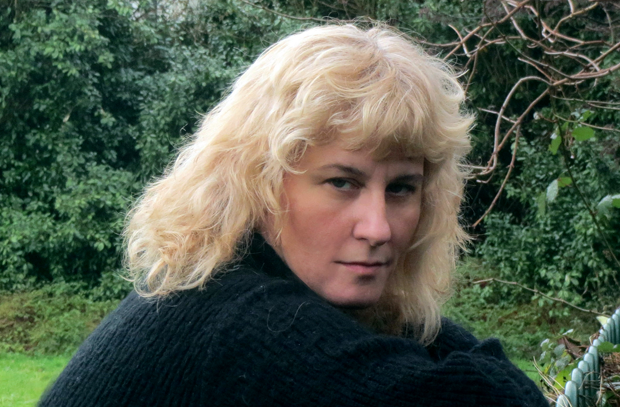
Meltem Arikan
Three months have passed since the 2014 Index Awards and we caught up with arts nominee, Meltem Arikan. The Turkish playwright and author told Index she has finished the script of a new play, Sheep Republic. She hoped it would be staged in Turkey, but the political situation in the country prevents this from happening. She looks forward to hopefully having it staged in the UK with the team who brought her previous play, “Mi Minor” to life.
Index: What projects have you been working on since the Index Awards?
Arikan: I wrote a performance piece for The International Performance Festival Cardiff called “Recalling love: And woman and man” and it was performed in June by Memet Ali Alabora and Pinar Ogun, whom I created Mi Minor with. Then I finished writing the script of my new play “Sheep Republic” which is about oppression and how easily it’s accepted by people.
The play was written to be staged in Turkey originally, however it doesn’t look like it is going to be possible because of political reasons. So we want to stage it here with the creative team of “Mi Minor”.
Nowadays I am working on another theatre piece where I’m questioning the concept of “belonging” through my own experiences, feelings and observations of nationalities, races, languages and communities; this time to be performed in Welsh language, and quite unusually English language will be the foreign language. It will be previewed in Eisteddfod Festival as part of Theatr Genedlaethol’s Cwt Drama on 7 August.
Index: What do you hope for the future of these projects and your life in the next coming months?
Arikan: I always find questions about hope quite difficult to answer. So much that I have even named one of my novels “Hope is a curse.” My agent Meg Davis has introduced my banned book “Stop hurting my flesh” to publishers in the UK. It’s an ongoing process but the idea of my novel being published, excites me very much, just like the thought of “Mi Minor” to be staged in the UK.
Index: Before the awards, did you feel you had less recognition?
Arikan: After being nominated by Index, in February 2014, I was invited to PEN Ethiopia 3rd congress with Julia Farrington from Index, where I met the President of German PEN, Josef Haslinger, who has recently invited us to Frankfurt Book Fair in October to introduce my story and my work.
It was great to be nominated by Index and it surely gave me more recognition. Moreover, being a part of the Index family and to be able to write articles about freedom of speech and expression is just as important for me.
Last year during Gezi Park demonstrations it was hard enough to deal with the false allegations made in various media about my play and the “Mi Minor” creative team. We were accused of rehearsing Gezi park demonstrations with our play. We were completely exhausted, and didn’t feel safe to leave our houses in Istanbul. They were making a lot of TV shows about “Mi Minor” which included an edited version of one of my speeches that I made six years ago about secularism. As a result of these accusations I have received thousands of death and rape threats. The fear I witnessed in my son’s eyes and the anxiety that my partner was living through was what upset me the most. I still feel fragile when I recall the moments I had to leave them behind and come to the UK to stay alive. Because of the notorious recognition, I was even being cautious while walking on the streets of London in the first couple of months of coming here.
Index: How has your life changed since being nominated for an Index Award?
Arikan: I came to the UK with one piece of luggage, leaving everything behind, then I met Julia Farrington and she offered to do an interview with me. So we archived my story with three interviews which was very difficult and encouraging for me at the time.
Later I was nominated for an Index Award, and I met Index staff through the Index Awards and when they asked me to write for the website, I was delighted. Writing is what keeps me sane. I don’t know how to survive without writing so I am thankful to be supported as a writer by Index On Censorship.
This article was posted on July 10, 2014 at indexoncensorship.org
