9 Jan 2014 | Europe and Central Asia, European Union, News, Politics and Society
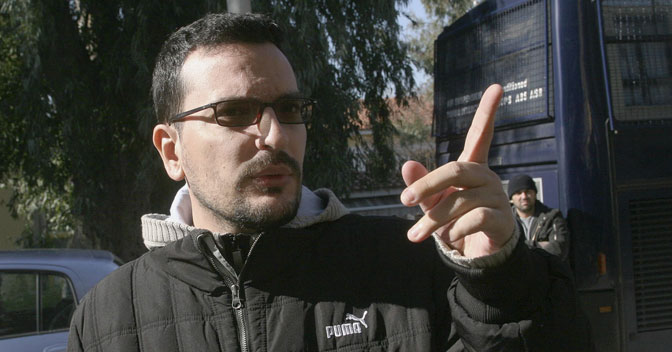
Sokratis Giolia, an investigative journalist, was shot dead outside his home in Athens prior to publishing the results of an investigation into corruption.
This article is part of a series based on our report, Time to Step Up: The EU and freedom of expression
The main threats to media freedom and the work of journalists are from political pressure or pressure exerted by the police, to non-legal means, such as violence and impunity. There have been instances where political pressure against journalists has led to self-censorship in a number of European Union countries. This pressure can manifest itself in a number of ways, from political pressure to influence editorial decisions or block journalists from promotion in state broadcasters to police or security service interventions into media investigations on political corruption.
The European Commission now has a clear competency to protect media freedom and should reflect on how it can deal with political interference in the national media of member states. As the heads of state or government of the EU member states have wider decision-making powers at the European Council this gives a forum for influence and negotiation, but this may also act as a brake on Commission action, thereby protecting media freedom.
Italy presents perhaps the most egregious example of political interference undermining media freedom in a EU member state. Former premier Silvio Berlusconi has used his influence over the media to secure personal political gain on a number of occasions. In 2009 he was thought to be behind RAI decision to stop broadcasting Annozero, a political programme that regularly criticised the government. In the lead up to the 2010 regional elections, Berlusconi’s party pushed through rules which effectively meant that state broadcasters had to either feature over 30 political parties on their talk shows or lose their prime time slots. Notably, Italian state broadcaster RAI refused to show adverts for the Swedish film Videocracy because it claimed the adverts were “offensive” to Silvio Berlusconi.
Under the government of Prime Minister Viktor Orbán, Hungary has seen considerable political interference in the media. In September 2011, popular liberal political radio station “Klubrádió” lost its licence following a decision by the Media Authority that experts believed was motivated by political considerations. The licence was reinstated on appeal. In December 2011, state TV journalists went on hunger strike after the face of a prominent Supreme Court judge was airbrushed out of a broadcast by state-run TV channel MTV. Journalists have complained that editors regularly cave into political interference. Germany has also seen instances of political interference in the public and private media. In 2009, the chief editor of German public service broadcaster ZDF, Nikolaus Brender, saw his contract terminated in controversial circumstances. Despite being a well-respected and experienced journalist, Brender’s suitability for the job was questioned by politicians on the channel’s executive board, many of whom represented the ruling Christian Democratic Union. It was decided his contract should not be renewed, a move widely criticised by domestic media, the International Press Institute and Reporters Without Borders, the latter arguing the move was “motivated by party politics” which, it argued, was “a blatant violation of the principle of independence of public broadcasters”. In 2011, the editor of Germany’s (and Europe’s) biggest selling newspaper, Bild, received a voicemail from President Christian Wulff, who threatened “war” on the tabloid if it reported on an unusual personal loan he received.
Police interference in the work of journalists, bloggers and media workers is a concern: there is evidence of police interference across a number of countries, including France, Ireland and Bulgaria. In France, the security services engaged in illegal activity when they spied on Le Monde journalist Gerard Davet during his investigation into Liliane Bettencourt’s alleged illegal financing of President Sarkozy’s political party. In 2011, France’s head of domestic intelligence, Bernard Squarcini, was charged with “illegally collecting data and violating the confidentiality” of the journalists’ sources. In Bulgaria, journalist Boris Mitov was summoned on two occasions to the Sofia City Prosecutor’s office in April 2013 for leaking “state secrets” after he reported a potential conflict of interest within the prosecution team. Of particular concern is Ireland, which has legislation that outlaws contact between ordinary police officers and the media. Clause 62 of the 2005 Garda Siochána Act makes provision for police officers who speak to journalists without authorisation from senior officers to be dismissed, fined up to €75,000 or even face seven years in prison. This law has the potential to criminalise public interest police whistleblowing.[1]
It is worth noting that after whistleblower Edward Snowden attempted to claim asylum in a number of European countries, including Austria, Finland, Germany, Italy, Ireland, the Netherlands, Spain, the governments of all of these countries stated that he needed to be present in the country to claim asylum. Others went further. Poland’s Foreign Minister Radosław Sikorski posted the following statement on Twitter: “I will not give a positive recommendation”, while German Foreign minister Guido Westerwelle said although Germany would review the asylum request “according to the law”, he “could not imagine” that it would be approved. The failure of the EU’s member states to give shelter to Snowden when so much of his work was clearly in the public interest within the European Union shows the scale of the weakness within Europe to stand up for freedom of expression.
Deaths, threats and violence against journalists and media workers
No EU country features in Reporters Without Borders’ 2013 list of deadliest countries for journalists. But since 2010, three journalists have been killed within the European Union. In Bulgaria in January 2010 , a gunman shot and killed Boris Nikolov Tsankov, a journalist who reported on the local mafia, as he walked down a crowded street. The gunman escaped on foot. In Greece, Sokratis Giolia, an investigative journalist, was shot dead outside his home in Athens prior to publishing the results of an investigation into corruption. In Latvia, media owner Grigorijs Nemcovs was the victim of an apparent contract killing, which Reporters Without Borders claims appeared to be carefully planned and executed.103 Nemcovs was also a political activist and deputy mayor, and his newspaper, Million, was renowned for its investigative coverage of political and local government corruption and mismanagement.
While it is rare for journalists to be killed within the EU, the Council of Europe has drawn attention to the fact that violence against journalists does occur in EU countries, particularly in south eastern Europe, including in Greece, Latvia, Bulgaria and Romania.[2] The South East Europe Media Organisation (SEEMO) has raised concerns over police violence against journalists covering political protests in many parts of south eastern Europe, particularly in Romania and Greece.
[1] There is an official whistleblowing mechanism instituted by the law, but it is not independent of the police.
[2] William Horsley for rapporteur Mats Johansson, ‘The State of Media Freedom in Europe’, Committee on Culture, Science, Education and Media, Council of Europe (18 June 2012).
8 Jan 2014 | News, Volume 42.04 Winter 2013
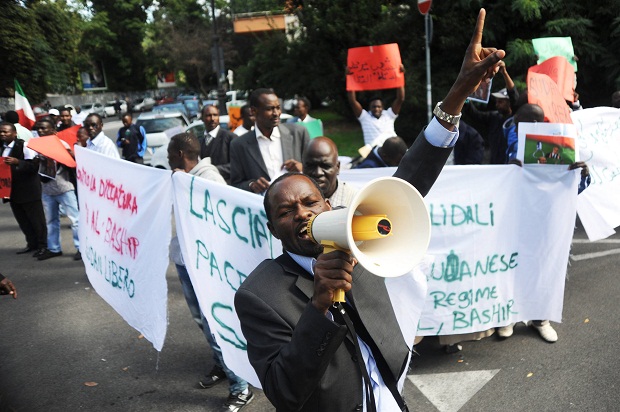
Dozens of protesters in front of the Sudanese Embassy in Rome October 2013 to protest of the alleged human rights abuses in Sudan (Image Marco Zeppetella/Demotix)
In the latest magazine issue of Index on Censorship the Bishop of Bradford Nick Baines reflects on his first visit to Sudan, a country whose leader strongly believes in one religion and one language for all.
Freedom of expression is of universal importance, but its absence is sometimes more easily seen through the lens of a different culture. The familiar landscape of “home” can sometimes hinder a proper appreciation of the absence of freedoms, being outside of one’s comfort zone can heighten awareness of reality. In this article I want to approach the matter from the outside in.
Early in 2013 I visited Sudan for the first time. The diocese of Bradford has had a partnership with Sudan for 30 years, and I was linked for a decade with Anglican dioceses in Zimbabwe (in my previous post as Bishop of Croydon). I thought I could easily switch attention from one African country to another. The reality was different.
Zimbabwe is ruled by Robert Mugabe, a man so corrupt that even his own demise will not clear the path to a golden new age – there are too many people who need to be protected by power well into the future. Sudan is governed by Omar al Bashir, a man committed to the project of creating a single nation (Sudan) with a single ethnicity (Arab), a single language (Arabic) and a single religion (Islam). There is a degree of shameful incompetence about Mugabe’s manipulation of power and the consequent destruction of the Zimbabwean economy and the country’s political culture. But al Bashir knows exactly what he is doing. And he does it in the face of a serious indictment by the International Criminal Court (ICC) for genocide in Darfur: he feels untouchable
Since 99 per cent of southerners voted in 2011 for the division of Sudan into two independent states, Sudan and South Sudan, al Bashir has chosen to make the secessionists take responsibility for their choice – to some extent understandably. If they are so keen on having their own country, then they can go there… and then apply for visas to come to Sudan as foreigners. Harsh? Yes, but he could be seen to be compelling the South Sudanese to live with the consequences of their actions. Democratic choices bring consequences.
However, the real experience of this is the expulsion from Sudan of anyone deemed to originate in the south – even several generations ago. Those who remain – often because they are married to Sudanese – are prohibited from working. Apart from the human cost of this policy, the effect on the Anglican church (the Episcopal Church of Sudan, which has not divided along with the states) is an exodus of leaders, an increased dependency of those who remain on the goodwill and generosity of other Sudanese Christians. And this is happening alongside the ongoing genocide in Darfur, government violence in South Kordofan and Blue Nile state. Khartoum has had to absorb destitute migrants on an unimaginable scale.
Those displaced are almost exclusively African. They speak African languages (derogatorily referred to as “twittering” by the Arabs). They are mostly (but not exclusively) Christian.
My visit to Khartoum earlier this year ended when my wife and I left a Christian-owned guesthouse at 1am in order to get to the airport for the flight back to Manchester. Within an hour the guesthouse had been raided by the security services, all property confiscated, and all residents and guests taken in for questioning. Foreign guests were deported and the family that ran the guesthouse was removed; the father of the family is now prohibited from working. This might not sound too dramatic – especially in the light of reports from parts of the Middle East and South Asia where Christians are being targeted for violence or forced to convert to Islam – but it comes as part of a deliberate policy on the part of government to exclude Christians and force them to leave for the South. This necessarily puts pressure on Christians to keep quiet, but the bishops (in particular) continue to be unafraid to engage courageously with “the powers”.
It seems that al Bashir blames the international community for refusing to welcome him back into the fold by removing the ICC indictment after the peaceful transition to two states. Foreigners are to be removed, even when they provide essential services that cannot be provided locally. We met European medical personnel who had spent their working lives developing medical facilities in local communities, and who now found themselves thrown out, leaving medical provision severely weakened.
Why destroy social, educational and medical infrastructure simply in order to save face? Riots in September 2013 in Khartoum (initially about the removal of fuel subsidies) demonstrated that economic matters do not always serve the interests of the government of the day.
But there is a bigger question relevant beyond Sudan. How do we understand and clearly define the categories in which and through which we see political, religious and cultural phenomena? Getting the category wrong leads inevitably to miscomprehension, to a potentially dangerous misapplication of rhetoric/language… and this has political consequences.
My own diocese of Bradford has a high percentage of Muslims from south Asia. Immigration began in the mid-20th century in order to staff the textile mills of West Yorkshire. Many of Bradford’s Muslims originate from the region of Kashmiri Mirpur in Pakistan. This concentration necessarily affects how the community lives and organises in Bradford, how it is influenced by (and, in turn, influences) events back in Pakistan, and how it is understood by the non-Pakistani population in the city.
One of the first lessons I had to learn when I came to Bradford nearly three years ago was not to confuse ethnicity with religion. What might appear to be a phenomenon rooted in religious identity (certain modes of dress, for example) might actually be more appropriately understood as a cultural phenomenon that coincidentally becomes associated with religious identity. To confuse the two can be dangerous. What I have in mind here is where violence (in particular) is attributed to religion, when religious tagging is clearly a tribal badging designed to hide more cultural (or other) identity.
Examples of this can be seen in the Northern Ireland of the Troubles or the sectarian destructiveness of Lebanon. Although the categories cannot easily be extricated from one another, at least those who observe or comment on such events should have the intelligence to dig a little deeper into the categorisation of such phenomena before simplistically eliding culture and religion as if they were synonymous.
The point is that there are two dangers here: (a)that category errors lead to poor communication and confusion, and (b)that people might be reluctant to speak out on serious matters simply because they fear being accused of racism or simply getting it wrong. This doesn’t help anyone where honest and frank conversation is needed and mutual critique is essential to good relationships.
This takes us back to Sudan. It is not a simple matter – capable of easy explication or distinction – to work out what can be attributed to which category. Al Bashir’s policy seems clearly to create a political, ethnic, religious and cultural identity in which there is no place for diversity. One can assume that he is aiming at a myth of solidarity – that if everyone claims the same identity, they will buy into the same projects, have the same friends and enemies, defend the same categories and communicate in the same way. Of course, this fails to take into account the complex reality of human identity construction and how complex and diverse people interrelate and self-identify.
In one sense all this should not need to be articulated. If Muslim is blowing up Muslim in Pakistan or Afghanistan, then there is clearly more going on than mere “religion” or religious identity. Simply reporting atrocities as if they were political or cultural events (without reference to religious allegiance) is as naïve as to report on religion without reference to the ethnic, political, economic, social or cultural identities that shape religious expression.
This is not a plea for obfuscation or mitigation of religiously motivated violence. On the contrary, it is a plea for the sort of literacy that seeks to comprehend in order to know how to think about and respond to phenomena that might all-too-easily be capable of simplistic categorisation.
Language goes to the heart of this. Not only the language of explanation or reportage, but the ways in which language is (or particular languages are) seen to be totems of identities that are deemed to be inconvenient. In Zimbabwe identity is tied up inextricably with language: the Shonaspeaking government has demonstrated in past violence what it thinks of the Ndebelespeaking Matabele. In Sudan African languages – mostly spoken by Christians of African (rather than Arabic) origin – are being derided and squeezed out. This is one reason why some churches in Sudan put such high value on keeping their own languages alive, teaching them to both children and adults, working hard (with pitiful resources) to reserve their means of communication as an integral element of cultural and religious identity. Language is as much part of individual and common identity as is skin colour, and nobody should be compelled to lose their native tongue.
One of the most penetrating verses of the Old Testament is found in the book of Proverbs. Seized upon by opponents of Hitler during the 1930s and 1940s in Germany, it demands that we “open our mouths for the dumb” – that is, that those who have a voice must keep alive the songs and language of people whose voice is silenced by the exercise of corrupt power. The moral demands of this are clear here also. But, for that voice to be heard and understood, it is essential that intelligent consideration is given to ensuring that the categories of speech and identification are kept as accurate as possible.
Responding to religious phenomena as if they were merely “cultural” is as dangerous and misplaced as eliding all cultural phenomena as merely “religious” – and runs the risk of stopping people speaking truthfully and accurately when religion is the root of violence or cultural violence seeks to hide behind a religious facade. The world is more complex than that. We can and must do better.
2 Jan 2014 | Egypt, News, Politics and Society
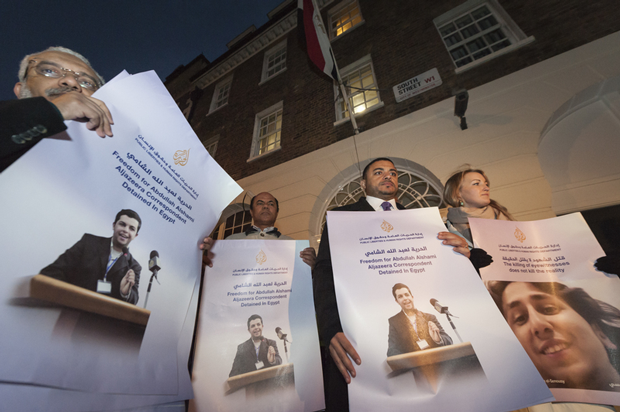
In November 2013, the National Union of Journalists (NUJ UK and Ireland), the International Federation of Journalists (IFJ) and the Aljazeera Media Network organised a show of solidarity for the journalists who have been detained, injured or killed in Egypt. (Photo: Lee Thomas / Demotix)
In a new sign of a regression in press freedom in Egypt, authorities have ordered three journalists working for the Al Jazeera English (AJE) channel held in custody for fifteen days.
The journalists –AJE Cairo Bureau Chief Mohamed Fadel Fahmy, award-winning former BBC Correspondent Peter Greste and producer Baher Mohamed–were arrested in a police raid on Sunday on a makeshift studio at a luxury Cairo hotel. They were charged with “belonging to a terrorist group and broadcasting false news that harms national security .”
Cameras and other broadcasting equipment were seized during the raid on the work room where the AJE TV crew had reportedly conducted interviews with activists and Muslim Brotherhood members on the political crisis in Egypt. A fourth member of the AJE team–Cameraman Mohamed Fawzy–was also arrested but was released hours later without charge.
The latest detentions raise the number of journalists affiliated with Al Jazeera and who are now jailed in Cairo , to five. Al Jazeera Arabic correspondent Abdullah Al Shami was arrested on 14 August while covering the brutal security crackdown on supporters of toppled President Mohamed Morsi at Rab’aa–the larger of two encampments where pro-Morsi protesters had been demonstrating against his forced removal and demanding his reinstatement. Al Jazeera Mubasher Misr Cameraman Mohamed Badr was meanwhile, arrested on 15 July while covering clashes between security forces and pro-Morsi protesters in Ramses Square.
Al Jazeera has denounced the arrests of its staff members as an act designed to “stifle and repress the freedom of reporting by the network’s journalists.” The Egyptian government’s hostility towards journalists affiliated with the Qatari-based network has been prompted by what many Egyptians perceive as “a pro-Muslim Brotherhood bias in the network’s coverage of the events unfolding in Egypt”. Since the military takeover of the country in July 2013, at least 22 staff members have resigned from AJ Jazeera Mubasher Misr, the Egyptian arm of the network , over the alleged “bias in favour of the Islamist group”. Al Jazeera has however, denied the allegation.
The latest detentions are perceived by analysts as part of the crackdown on the Muslim Brotherhood–the Islamist group from which the deposed President hails. Last week, the group was officially classified as a “terrorist organization” by the Egyptian authorities, in a move criminalizing the group’s activities, financing and membership .
The arrests of the AJE journalists have also raised fears among rights activists and organizations that the government crackdown was “widening to silence all voices of dissent”. Human Rights Lawyer Ragia Omran told the New York Times on Monday the charges are “part of a pattern of aggressive prosecutions–including conviction of protesters— that were rarely pursued even under Hosni Mubarak.” The New York-based Committee For the Protection of Journalists , CPJ, has also condemned the arrests, calling on the Egyptian government to release the journalists immediately . In a statement released by CPJ, Sherif Mansour, Middle East and North Africa coordinator , said ” the Egyptian government was equating legitimate journalistic work with acts of terrorism in an effort to censor critical news coverage.” In its annual census conducted last month, the CPJ ranked Egypt among the top ten jailers of journalists in the world with at least five journalists languishing in Egyptian prisons. It has also listed Egypt among the three most dangerous countries for journalists in the Middle East after Syria and Iraq . Six journalists have been killed in the country over the course of the past year, three of them while covering the bloody crackdown on Morsi’s supporters at Rab’aa.
Members of Mohamed Fahmy’s family meanwhile used his Twitter account to send a message on Tuesday reminding the government that “journalists are not terrorists.” His supporters meanwhile started a hashtag on Twitter calling for his release. Many of them expressed disappointment at what they described as “the government’s latest act of repression” warning that it would harm the government’s image much more than any amount of critical reporting would.
This article was posted on 2 Jan 2013 at indexoncensorship.org
2 Jan 2014 | European Union, News, Politics and Society
The law of libel, privacy and national “insult” laws vary across the European Union. In a number of member states, criminal sanctions are still in place and public interest defences are inadequate, curtailing freedom of expression.
The European Union has limited competencies in this area, except in the field of data protection, where it is devising new regulations. Due to the impact on freedom of expression and the functioning of the internal market, the European Commisssion High Level Group on Media Freedom and Pluralism recommended that libel laws be harmonised across the European Union. It remains the case that the European Court of Human Rights is instrumental in defending freedom of expression where the laws of member states fail to do so. Far too often, archaic national laws have been left unreformed and therefore contain provisions that have the potential to chill freedom of expression.
Nearly all EU member states still have not repealed criminal sanctions for defamation – with only Croatia,[1] Cyprus, Ireland, Romania and the UK[2] having done so. The parliamentary assembly of the Council of Europe called on states to repeal criminal sanctions for libel in 2007, as did both the Organization for Security and Co-operation in Europe (OSCE) and UN special rapporteurs on freedom of expression.[3] Criminal defamation laws chill free speech by making it possible for journalists to face jail or a criminal record (which will have a direct impact on their future careers), in connection with their work. Many EU member states have tougher sanctions for criminal libel against politicians than ordinary citizens, even though the European Court of Human Rights ruled in Lingens v. Austria (1986) that:
“The limits of acceptable criticism are accordingly wider as regards a politician as such than as regards a private individual.”
Of particular concern is the fact that insult laws remain in place in many EU member states and are enforced – particularly in Poland, Spain, and Greece – even though convictions are regularly overturned by the European Court of Human Rights. Insult to national symbols is also criminalised in Austria, Germany and Poland. Austria has the EU’s strictest laws in this regard, with the penal code criminalising the disparagement of the state and its symbols[4] if malicious insult is perceived by a broad section of the republic. This section of the code also covers the flag and the federal anthem of the state. In November 2013, Spain’s parliament passed draft legislation permitting fines of up to €30,000 for “insulting” the country’s flag. The Council of Europe’s Commissioner for Human Rights, Nils Muiznieks, criticised the proposals stating they were of “serious concern”.
There is a wide variance in the application of civil defamation laws across the EU – with significant differences in defences, costs and damages. Excessive costs and damages in civil defamation and privacy actions is known to chill free expression, as authors fear ruinous litigation, as recognised by the European Court of Human Rights in MGM vs UK.[5] In 2008, Oxford University found huge variants in the costs of defamation actions across the EU, from around €600 (constituting both claimants’ and defendants’ costs) in Cyprus and Bulgaria to in excess of €1,000,000 in Ireland and the UK. Defences for defendants vary widely too: truth as a defence is commonplace across the EU but a stand-alone public interest defence is more limited.
Italy and Germany’s codes provide for responsible journalism defences instead of using a general public interest defence. In contrast, the UK recently introduced a public interest defence that covers journalists, as well as all organisations or individuals that undertake public interest publications, including academics, NGOs, consumer protection groups and bloggers. The burden of proof is primarily on the claimant in many European jurisdictions including Germany, Italy and France, whereas in the UK and Ireland, the burden is more significantly on the defendant, who is required to prove they have not libelled the claimant.
Privacy
Article 8 of the European Convention on Human Rights protects the right to a private life throughout the European Union. [6] The right to freedom of expression and the right to a private right are often complementary rights, in particular in the online sphere. Privacy law is, on the whole, left to EU member states to decide. In a number of EU member states, the right to privacy can restrict the right to freedom of expression because there are limited protections for those who breach the right to privacy for reasons of public interest.
The media’s willingness to report and comment on aspects of people’s private lives, in particular where there is a legitimate public interest, has raised questions over the boundaries of what is public and what is private. In many EU member states, the media’s right to freedom of expression has been overly compromised by the lack of a serious public interest defence in privacy law. This is most clearly illustrated by the fact that some European Union member states offer protection for the private lives of politicians and the powerful, even when publication is in the public interest, in particular in France, Italy and Germany. In Italy, former Prime Minister Silvio Berlusconi used the country’s privacy laws to successfully sue the publisher of Italian magazine Oggi for breach of privacy after the magazine published photographs of the premier at parties where escort girls were allegedly in attendance. Publisher Pino Belleri received a suspended five-month sentence and a €10,000 fine. The set of photographs proved that the premier had used Italian state aircraft for his own private purposes, in breach of the law. Even though there was a clear public interest, the Italian Public Prosecutor’s Office brought charges. In Slovakia, courts also have a narrow interpretation of the public interest defence with regard to privacy. In February 2012, a District Court in Bratislava prohibited the distribution or publication of a book alleging corrupt links between Slovak politicians and the Penta financial group. One of the partners at Penta filed for a preliminary injunction to ban the publication for breach of privacy. It took three months for the decision to be overruled by a higher court and for the book to be published.
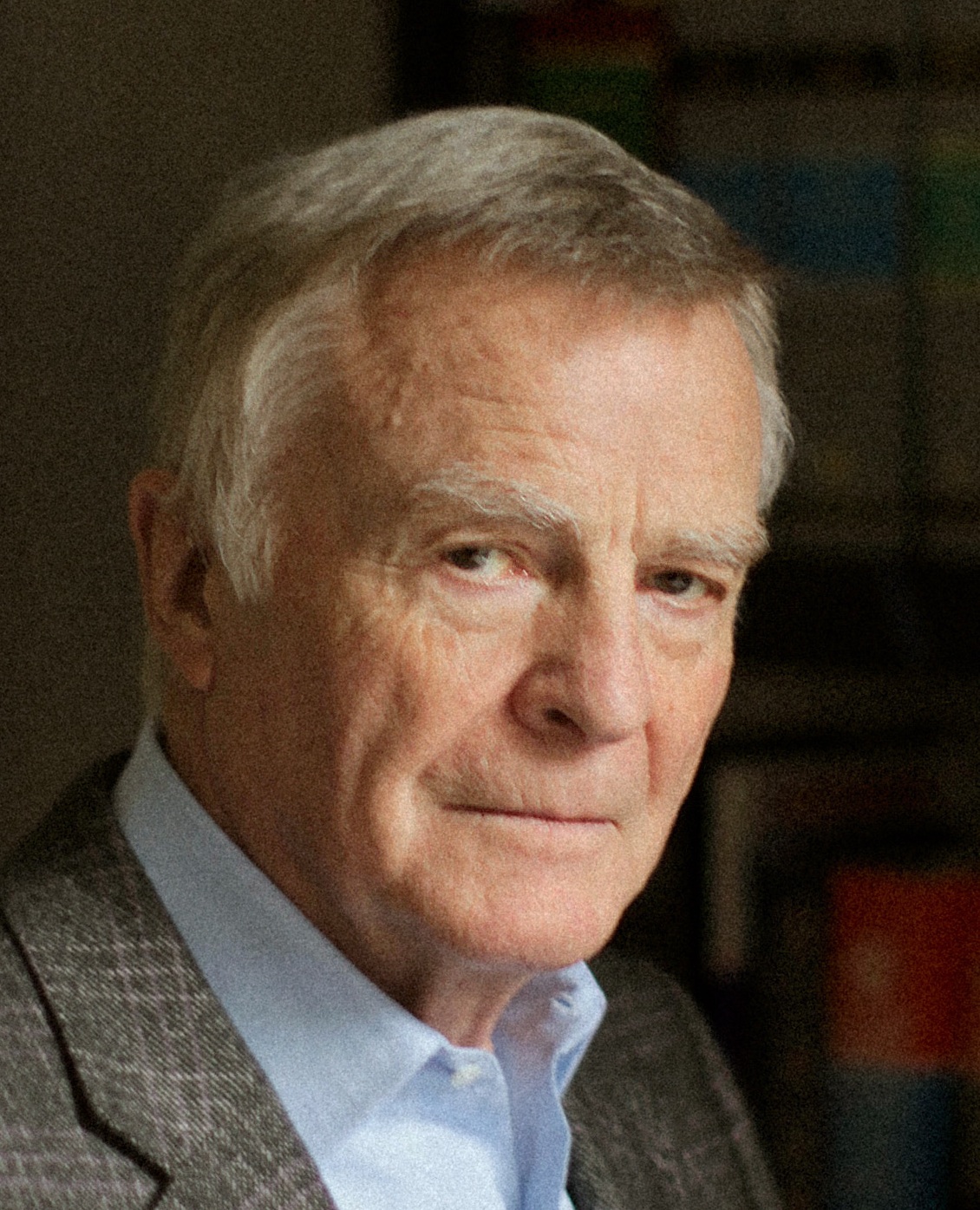
The European Court of Human Rights rejected former Federation Internationale de l’Automobile president Max Mosley’s attempt to force newspapers to give prior notification in instances where they may breach an individual’s right to a private life, noting that the requirement for prior notification would likely chill political and public interest matters. Yet prior notification and/or consent is currently a requirement in three EU member states: Latvia, Lithuania and Poland.
Other countries have clear public interest defences. The Swedish Personal Data Act (PDA), or personuppgiftslagen (PUL), was enacted in 1998 and provides strong protections for freedom of expression by stating that in cases where there is a conflict between personal data privacy and freedom of the press or freedom of expression, the latter will prevail. The Supreme Court of Sweden backed this principle in 2001 in a case where a website was sued for breach of privacy after it highlighted criticisms of Swedish bank officials.
When it comes to data retention, the European Union demonstrates clear competency. As noted in Index’s policy paper “Is the EU heading in the right direction on digital freedom?“, published in June 2013, the EU is currently debating data protection reforms that would strengthen existing privacy principles set out in 1995, as well as harmonise individual member states’ laws. The proposed EU General Data Protection Regulation, currently being debated by the European Parliament, aims to give users greater control of their personal data and hold companies more accountable when they access data. But the “right to be forgotten” clause of the proposed regulation has been the subject of controversy as it would allow internet users to remove content posted to social networks in the past. This limited right is not expected to require search engines to stop linking to articles, nor would it require news outlets to remove articles users found offensive from their sites. The Center for Democracy and Technology referred to the impact of these proposals as placing “unreasonable burdens” that could chill expression by leading to fewer online platforms for unrestricted speech. These concerns, among others, should be taken into consideration at the EU level. In the data protection debate, freedom of expression should not be compromised to enact stricter privacy policies.
This article was posted on Jan 2 2013 at indexoncensorship.org
[1] Article 208 of the Criminal Code.
[2] Article 168(2) of the Criminal Code.
[3] Article 248 of the Criminal Code prohibits ‘disparagement of the State and its symbols, ibid, International PEN.
[4] Index on Censorship, ‘UK government abolishes seditious libel and criminal defamation’ (13 July 2009)
[5] More recent jurisprudence includes: Lopes Gomes da Silva v Portugal (2000); Oberschlick v Austria (no 2) (1997) and Schwabe v Austria (1992) which all cover the limits for legitimate criticism of politicians.
[6] Privacy is also protected by the Charter of Fundamental Rights through Article 7 (‘Respect for private and family life’) and Article 8 (‘Protection of personal data’).
