1 Jul 2013 | Europe and Central Asia, News, Religion and Culture
The European Union Foreign Affairs Council last week released its guidelines on promoting and protecting religious freedom. The guidelines, designed to set standards for the EU’s external dealings, make, for the most part, encouraging reading, Padraig Reidy writes
The section on free expression sets out thus:
“Freedom of religion or belief and the freedom of expression are interdependent, interrelated and mutually reinforcing rights, protecting all persons — not religions or beliefs in themselves — and protecting also the right to express opinions on any or all religions and beliefs.”
The distinction made here between protecting “persons” as opposed to “religions and beliefs in themselves” is very important, boiling down to the simple notion that individuals have rights but ideologies don’t.
Further on, the guidelines suggest that the EU will recall, when appropriate, that the right to freedom of religion or belief, as enshrined in relevant international standards, does not include the right to have a religion or a belief that is free from criticism or ridicule.
As an argument against modern versions of blasphemy laws: laws which claim to “protect religious feelings”. Russia recently passed such a law, criminalising “public actions expressing clear disrespect for society and committed with the goal of offending religious feelings of the faithful”. The Organisation of Islamic Conference, meanwhile, is seeking to have “defamation of religion” recognised at United Nations level. Any EU attempt to curb this move is somewhat undermined by the fact that the OIC has copied its definition of blasphemy from Ireland’s 2009 Defamation Act.
The guidelines suggest that the EU should resist attempts to curb religious speech as long as there is not a “prima facie case that this expression constitutes hates speech”. But they do also raise the expectation that Europe should condemn any violence carried out in relation to “offensive speech”.
The European Platform on Religious Intolerance and Discrimination (EPRID) has welcomed the guidelines. In a statement, it said:
“Promoting freedom of religion or belief is therefore not only a moral or legal obligation, but also a strategic political choice. The adoption of these Guidelines today gives a strong signal that [it] is now a priority for the EU.”
28 Jun 2013 | United Kingdom
Peers have debated Northern Ireland’s rejection of the Defamation Act 2013. Padraig Reidy reports
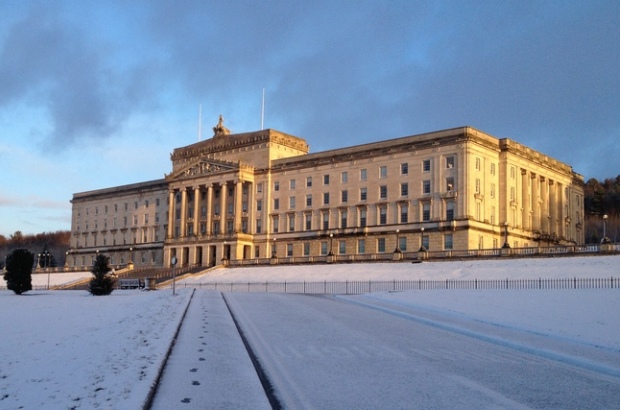
Will free speech be chilled at Stormont? (Pic: Johnny McGinley/Demotix)
(more…)
28 Jun 2013 | In the News
INDEX POLICY PAPER
Is the EU heading in the right direction on digital freedom?
While in principle the EU supports freedom of expression, it has often put more emphasis on digital competitiveness and has been slow to prioritise and protect digital freedom, Brian Pellot, digital policy advisor at Index on Censorship writes in this policy paper
(Index on Censorship)
BRAZIL
Brazil protesters: Is common ground really necessary?
The bus fare hikes that sparked widespread Brazilian protests have been reversed, but protests continue. Can they last?
(The Christian Science Monitor)
BURMA
Burma censors Time Magazine for coverage of radical Buddhists
Reporters Without Borders condemns the decision by Burmese magazine distributor Inwa Publications not to sell Time Magazine’s July issue, which has cover story about the Burmese Buddhist monk Ashin Wirathu headlined “The Face of Buddhist Terror.”
(Thailand Business News)
CHINA
Rethinking the Firewall as a One-Way Mirror
Maybe he should be known for hanging China’s One-Way Mirror instead constructing its Great Firewall. That’s the message Chinese Internet users are sending as the nation’s best-known censorship engineer, Fang Binxing, said he was retiring. Known as the father of China’s Great Firewall for helping develop tools that keep Internet users in the country from surfing websites available elsewhere, Mr. Fang is facing a fresh line of criticism in the wake of allegations by former U.S. defense contractor Edward Snowden that American intelligence agencies regularly compromised Chinese servers.
(Wall Street Journal)
CANADA
Bill to end ‘hate speech’ portion of human rights law gets mixed reviews but Senate approval
A contentious section of Canadian human rights law, long criticized by free-speech advocates as overly restrictive and tantamount to censorship, is gone for good.
(The Province)
EUROPEAN UNION
Post-Prism leaks, where does the EU stand on digital freedom?
The EU needs to develop a coherent and comprehensive digital freedom strategy. Brian Pellot writes
(Index on Censorship)
HUNGARY
Can free expression survive in Hungary?
Funding has been removed from projects not deemed to be in keeping with the official view of Hungarian culture.
(New Statesman)
SUDAN
Sudanese journalist targeted for allegedly insulting the military
When three journalists were invited to accompany a military official to a town supposedly recaptured from rebels, they did not expect to end up caught in crossfire. One journalist is being targeted after an anonymous and more honest account of the incident appeared online. Reem Abbas reports
(Index on Censorship)
TUNISIA
Tunisian court sets free Femen activists
Three European women who were sentenced to four months in jail for staging a topless protest in support of a detained Tunisian Femen activist have arrived in Paris after being freed a day earlier by a Tunisian court, French media has reported.
(France 24)
TURKEY
Angela Merkel warns Turkey European democratic values ‘non-negotiable’ for EU entry
GERMAN Chancellor Angela Merkel said she welcomed an agreement to reopen talks with Turkey about joining the European Union but warned in the light of the crackdown on Turkish anti-government protests that democratic values were non-negotiable.
(Irish Independent)
Turkey heads for Twitter showdown after anti-government protests
The Turkish government is heading towards a showdown with Twitter after asking it to set up a “representative office” inside the country. The move could presage censorship of the microblogging service it has accused of helping stir weeks of anti-administration protests.
(The Guardian)
UNITED KINGDOM
British media ‘may leave Belfast over province’s refusal to change libel laws’
British media groups may pull out of Northern Ireland because the province is refusing to implement changes to antiquated libel laws, the House of Lords has been warned.
(The Daily Mail)
Wealthy are gagging the media: Nesbitt
The UUP leader and a retired part-time judge yesterday told MLAs that the wealthy and powerful are using the current libel laws in an attempt to “control” the media.
(News Letter)
Libel lawyer: I did not lobby DUP to block bill
Belfast’s most prominent libel lawyer has said that he did not lobby DUP Finance Minister Sammy Wilson to block British libel reforms extending to Northern Ireland.
(News Letter)
Free Speech or Hate Speech? Britain Bans U.S. Anti-Muslim Bloggers
A British decision to bar a visit by two prominent American anti-Islam activists has prompted righteous indignation from the targets of the ban as well as a more measured debate about the limits of free speech.
(The New York Times)
Free Speech Dies in UK: Robert Spencer, Pamela Geller Banned from Entering
“U.S. Bloggers banned from Entering the UK.” That’s how a BBC headline broke the news that authors Pamela Geller and Robert Spencer were denied entry to the country that gave the world the Magna Carta.
(PJ Media)
UNITED STATES
Kickstarter’s Choice: How free should speech be on the web?
“No problem. I don’t want you to do anything you aren’t comfortable with.” Memorize that line. It is your go-to when faced with resistance. Say it genuinely, without presumption. All master seducers are also masters at making women feel comfortable. You’ll be no different. If a woman isn’t comfortable, take a break and try again later.”
(The New Yorker)
Another ‘Free Speaker’ Jailed for Views
Speaking one’s mind in American police state becoming an increasingly dangerous proposition
(American Free Press)
Virginia-based appeals court reinstates NC dietary advice blogger’s free-speech lawsuit
A federal appeals court has reinstated a North Carolina blogger’s lawsuit claiming state officials violated his free-speech rights. The North Carolina Board of Dietetics/Nutrition last year told Stanley resident Steve Cooksey to take down or modify parts of his website offering dietary advice to fellow diabetics. The board said it had received a complaint that Cooksey was operating as a dietician without a state license.
(The Washington Post)
For Censoring Websites, the Muzzle Award Goes to Rhode Island Public Schools
Over the past two decades, the Internet has become a crucial tool in public education, opening schoolchildren to the broader world. Yet concerns about sex, violence, and other inappropriate content has led many school districts to impose draconian restrictions limiting kids’ access to even the most innocuous material.
(WGBH Boston)
Previous Free Expression in the News posts
June 27 | June 26 | June 25 | June 24 | June 21 | June 20 | June 19 | June 18 | June 17
27 Jun 2013 | In the News
INDEX POLICY PAPER
Is the EU heading in the right direction on digital freedom?
While in principle the EU supports freedom of expression, it has often put more emphasis on digital competitiveness and has been slow to prioritise and protect digital freedom, Brian Pellot, digital policy advisor at Index on Censorship writes in this policy paper
(Index on Censorship)
AUSTRALIA
Australia doubles down on censorship, refuses R18+ classification to State of Decay
Australia, coming off the back of refusing classification to Saints Row IV yesterday, apparently wasn’t satisfied with just one act of censorship. Today Undead Labs announced that their game too had been refused classification, so for the foreseeable future Australia will not be seeing State of Decay. Again, the issue seems to be related to some sort of drug use. The team is currently exploring their options with Microsoft
(NeoSeeker)
BAHRAIN
Bahrain mulls clamp on Internet calls
Bahrain is considering introducing controls on calls made via the Internet, including those on Skype and Viber, said a top official.
(Trade Arabia)
BRAZIL
Brazil’s left and right struggle for ownership of protests
Rival groups split on the political direction of the protests, with claims two organisations back military rule
(The Guardian)
EGYPT
Egypt journalists to march for free expression on 30 June
Journalists criticise attacks on freedom of expression under President Mohamed Morsi
(Ahram Online)
EUROPEAN UNION
EU adopts guidelines to “protect and promote” LGBTI rights
Coming on the heels of Russia’s enactment of a “gay propaganda” law, the European Union’s decision to adopt guidelines to protect the rights of lebian, gay, bisexual, transgender and intersex persons in foreign relations on Monday is welcome. Sean Gallagher writes
(Index on Censorship)
FRANCE
Pro-Israeli activist found guilty of libel
A man has been convicted of defamation in France for his claims about a widely-publicised video which showed a 12-year-old Palestinian boy’s death in Gaza Strip.
(Al Jazeera)
ISRAEL
Knesset members seek libel protection for IDF soldiers
If passed, legislation will enable class-action suits against critics who make false claims about army operations
(The Times of Israel)
INDIA
Censor laws are extremely ambiguous: Anand Gandhi
Independent filmmaker Anand Gandhi was in the city recently to screen his film ‘Ship of Theseus’ for the students of Film and Television Institute of India. Anand spoke to TOI about being an independent filmmaker, film censorship and why serious engagement from the government for Indian films is the need of the hour.
(The Times of India)
JORDAN
Jordan Accused Of Targeting Online Dissent
Jordan’s King Abdullah vowed to make the desert kingdom a “free Internet” country as he began his rule more than a decade ago. On June 2, when local Internet providers were ordered to block hundreds of news websites across the kingdom, Web publishers protested the broken promise and international media watchdog organizations charged censorship.
(NPR)
RUSSIA
Blockage of Major News Websites Raises Censorship Fears
A ruling by a court in the central Russian town of Ulyanovsk ordering a state-run Internet provider to block access to 15 websites, including those of two prominent national newspapers, has sparked fears of a broader campaign of Internet censorship in the country.
(The Moscow Times)
SOUTH AFRICA
South African groups seek arrest warrants for Obama
Two South African groups were trying to obtain arrest warrants for US President Barack Obama, who will visit the country later this week.
(Times Live)
TURKEY
Turkey seeks to tighten grip on Twitter after protests
Turkey said on Wednesday it had asked Twitter to set up a representative office inside the country, which could give it a tighter rein over the microblogging site it has accused of helping stir weeks of anti-government protests.
(Reuters)
UNITED KINGDOM
Banning of Geller and Spencer from UK will only build grievance
Britain’s ban on anti-Muslim activists could do more harm than good, says Padraig Reidy
(Index on Censorship)
Change in libel laws ‘not required in Northern Ireland’
A Stormont committee has been told there is no need to reform antiquated Northern Ireland’s libel laws by a high-profile libel lawyer.
(Belfast Telegraph)
Daily Mail in £110k libel payout over Syrian chemical weapons story
The Daily Mail has been forced to pay more than £100,000 in damages and apologise for a story linking a UK defence company with the use of chemical weapons in Syria.
(Press Gazette)
UNITED STATES
Jeff Olson Faces 13 Years In Jail For Writing Anti-Bank Messages In Chalk
Jeff Olson, a man who is being prosecuted for writing anti-bank messages on sidewalks in water-soluble chalk last year, is facing a 13-year jail sentence.
(Opposing Views)
Companies win U.S. free speech shield over scientific articles
Authors and publishers of controversial scientific articles, and the companies sponsoring those articles, won broad free speech protection from a U.S. appeals court on Wednesday.
(Reuters)
Sexual predator cries censorship over Jaycee Dugard memoir
Eight years ago, a New York journalist named Peter Braunstein, then 41, forced his way into the apartment of a 34-year-old Manhattan woman by pretending to be a firefighter. He proceeded to drug the woman, a former colleague, and sexually assault her for more than 12 hours.
(Los Angeles Times)
VIETNAM
In Vietnam, “Depraved” Blogging Could Get You Locked Up for a Decade
Vietnam is not a good place to be a blogger. At least, it’s not a good place to be a blogger if you actually want to write what’s on your mind.
(Motherboard)
Previous Free Expression in the News posts
June 26 | June 25 | June 24 | June 21 | June 20 | June 19 | June 18 | June 17
