13 Jul 2010 | Index Index, minipost
The Palestinian authorities have prevented three newspapers from being distributed in Gaza territories for the second day in a row. The ban comes only days after the Israeli authorities lifted their own year and a half ban on the papers. The Palestinian Center for Development and Media Freedoms (MADA) quoted Palestinian sources as saying that the authorities require daily newspapers printed in the West Bank to agree not to print anything critical of Hamas. The newspapers are still waiting for an official announcement as to why they have been banned. MADA strongly condemned the action and demanded that the authorities allow all journalists to work freely in the area.
12 Jul 2010 | Middle East and North Africa, News
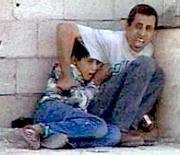 It was the most iconic image of the second intifada: the killing of a Palestinian child. Ten years on, French libel courts are still settling disputes about what really happened at the Netzarim crossroads. Natasha Lehrer reports
Just over two years ago the French appeals court overturned a guilty verdict against Philippe Karsenty. The blogger was originally found guilty of libelling Charles Enderlin, the veteran French television correspondent whose report on the killing in September 2000 of 12-year-old Mohammed al Dura by an Israeli bullet has been the subject of controversy for a decade. Now Karsenty has won his own libel case against the broadcaster Canal + and the magazine L’Express.
In June this year, Canal + and TAC PRESSE, an independent television company, were found guilty of libelling Karsenty in a 2008 programme on the subject of media hoaxes. The programme drew parallels between the September 11 conspiracy theorists and Karsenty, who has spent almost 10 years challenging the veracity of Enderlin’s 2000 report for the state television station France 2. The court found that the failure of Stéphane Malterre, the documentary’s director, to make any mention whatsoever of the many doubts that have been raised about the original news report and which have been widely reported around the world — considerably more so than in France itself — constituted evidence of a lack of good faith on the part of the programme makers and the broadcaster Canal +, and justified Karsenty’s claim of libel.
An article by the journalist Vincent Hugueux, in the magazine L’Express, published the same day that Malterre’s documentary was broadcast, reiterated the accusation that Karsenty was a hoaxer.
In Rumeurs, intox: les nouvelles guerres de l’info….Stephane Malterre showed us various recent hoaxes, from the rantings after the September 11th attacks to the concerted attacks on the journalist Charles Enderlin.
…. The episode on the journalist Charles Enderlin, target of a campaign as loathesome and relentless as it is inept, had the merit of exposing two specimens in thrall to a pathetic form of nervous obsession: the historian Richard Landes and the Frenchman Philippe Karsenty.
On 1 July 2010, the presiding judge found in favour of Karsenty, L’Express was found guilty of libel. However, the judge rejected Karsenty’s claim for €25,000 damages, finding that Hugueux was influenced by the content of Malterre’s documentary and therefore had written his article in good faith.
In an interesting footnote to this long-running case, the judgment includes the following statement: “Philippe Karsenty acted in good faith by exercising his right to criticise Charles Enderlin for having broadcast a faked report.” Karsenty has made clear his satisfaction in this interestingly unequivocal statement, avowing in his own press release that the judgement will “be useful in the future because it confirms that France 2’s news report was phony and that [the] Canal + documentary was defamatory and manipulative enough to influence a journalist”. It seems highly unlikely that the judgment signals the end of this affair.
Natasha Lehrer is a writer and translator. She lives in Paris.
25 Jun 2010 | Middle East and North Africa, News

After 21 months being in jail, controversial blogger Hossein Derakhshan, (aka Hoder) finally faced trial on 23 June, writes Hamid Tehrani
Iran’s semi-official news agency Fars [Farsi] claims the charges against Derakhshan are working with “hostile” states, propaganda against the Islamic regime, propaganda in favor of anti-revolutionary groups, insulting religious sanctities, and launching and managing “obscene” websites.
Abolqasem Salavati has been identified as the presiding judge. Salavati oversaw some of the major post-election trials of 2009. In those cases, Salavati got a chance to sit in judgment over some of Iran’s most prominent political figures, including former vice president Mohammad Ali Abtahi, former deputy speaker of parliament Behzad Nabavi, former government spokesman Abdollah Ramezanzadeh, and a number of other former government officials.
Fars does not provide specific information about the trial except that the prosecutor’s representative read out a long list of charges in the presence of Hossein’s family, his lawyer and the judge.
Conservative Jahan News [Farsi], published the same information as Fars, but also quoted some of Derakhshan’s blog posts to demonstrate his support for reformists and his hostility to some of Iranian leaders including Ayatholah Khamenei, Ayatholah Mesbah Yazdi and President Mahmoud Ahmadinejad. Jahan News adds that it cannot publish the insults regarding religious figures. But what the site calls “insults” are a few points of view and critiques. Jahan omits to mention that for more than a year before traveling back to Iran Hossein was a supporter of Ahmadinejad.
Cyrus Farivar, a German-based journalist who has followed the case closely, managed to get this quote via email from a source close to Derakhshan’s family:
“One trial session was held and although no family members were allowed in, but the family remains optimistic that no serious issues exist in his case. Plus, considering the fact that he has already served a long time in prison, most of which has been in solitary confinement, the family doesn’t expect a longer jail sentence. There are more court sessions to be held before the final verdict is out.”
The reasons for Hoder’s initial arrest remain unclear, but some speculate that his two (highly publicised) trips to Israel were behind it.
Iranian Blogger Z8tun summed up the situation 21 months ago: “other Iranians have been caught visiting Israel, but were released after a few hours of interrogation. Some speculate that Derakhshan, who in recent years became a supporter of President Ahmadinejad’s government, was arrested because he insulted some religious leaders in the country. He has himself argued in Western media, despite multiple testimonies of jailed bloggers, that nobody goes to jail in Iran because of the content of their blog.”
The Islamic Republic has cracked down on the blogosphere in recent years, and there are several other bloggers in jail in Iran including human rights activist Shiva Nazar Ahari. On 18 March 2009 Omid Reza Mir Sayafi became the first blogger to die in suspicious circumstances in an Iranian prison.
Campaign for Derakhshan’s release through the Free Hoder Facebook page
Hamid Tehrani, Iran Editor of Global Voices
25 Jun 2010 | Middle East and North Africa, News
 Irena Maryniak talks to Sadeq Saba, head of BBC Persian service, about the channel’s future, signal jamming and impartiality
(more…)
