18 Feb 2022 | Statements, United States
The undersigned organisations express their serious concern at the legal proceedings, also known as SLAPPs, that have been brought against investigative journalist Scott Stedman, his US media company Forensic News, and three of his colleagues.
Between June 2019 and June 2020, Forensic News published six articles and a podcast about the business affairs of British-Israeli security consultant and businessman Walter Soriano, after he was summoned by the United States’ Senate Intelligence Committee. The Committee was reportedly interested in Soriano’s connections to several people of interest, including the Russian oligarch Oleg Deripaska, who had been a former business associate of Donald Trump’s campaign chairman Paul Manafort.
The Forensic News team was sued by Soriano in July 2020, one month after they published their last article about him. Although the defendants are all based in the United States and Forensic News is incorporated in the state of California, the lawsuit has been brought in London.
A total of five claims were made in relation to data protection, libel, misuse of private information, harassment, and malicious falsehoods. Two of the claims, harassment and malicious falsehoods, have since been dismissed.
“We believe that the lawsuit that has been brought against Forensic News is a SLAPP,” the undersigned organisations said. SLAPPs abuse the law in order to silence critical coverage on matters of public interest. Index on Censorship has filed a media freedom alert to the Council of Europe Platform for the Protection of Journalism and Safety of Journalists.
“The case has many of the hallmarks of a SLAPP, including that Soriano is not only suing the news organisation, but also the four individual reporters. He also has lawsuits pending against investigative journalists in France and Israel, as well as against Twitter in Ireland,” the organisations said.
Due to the extremely expensive nature of mounting a legal defence in England and Wales, Forensic News is having to raise funds through an online crowdfunding campaign. The case is expected to go to trial before the end of 2022.
SIGNED:
Index on Censorship
Blueprint for Free Speech
The Campaign for Freedom of Information in Scotland (CFoIS)
Coalition For Women In Journalism (CFWIJ)
The Daphne Caruana Galizia Foundation
English PEN
European Centre for Press and Media Freedom (ECPMF)
IFEX
International Press Institute (IPI)
Justice for Journalists Foundation
Organized Crime and Corruption Reporting Project
Osservatorio Balcani Caucaso Transeuropa (OBCT)
PEN International
Reporters Without Borders (RSF)
Spotlight on Corruption
27 Dec 2021 | Artistic Freedom, Magazine, News, United Kingdom, Volume 50.04 Winter 2021, Volume 50.04 Winter 2021 Extras
In June 2015, a national newspaper in Britain started a campaign to have a play banned. This surprised me for two reasons. One: clearly no one had told the Daily Mirror about the Theatre Act 1968, which abolished the state’s censorship of the stage and did away with the quaintly repressive (if that’s not an oxymoron) notion of the Lord Chamberlain’s red pen. Two: the play in question was mine.
I wrote An Audience With Jimmy Savile to show how the late entertainer managed to get away with a lifetime of sexual offending. But despite the play’s very public service intentions, the Mirror started a petition to stop it. And so, for a moment, I found myself in some exalted, unwarranted company: Ibsen and George Bernard Shaw had plays banned (Ghosts and Mrs Warren’s Profession, respectively). Inevitably, however, the Mirror’s cack-handed attempt at censorship failed and the play went ahead.
The episode was instructive, however. Because while it’s true that “we” – that is, the British state – don’t ban plays any more, a powerful and unhealthy censorious reflex still exists and there are clear signs that the urge to stifle and to repress has been growing stronger over the last few years. That repression takes many forms: a social media backlash here, a not-very-subtle government threat there – but it’s real, it’s unhealthy and it’s profoundly worrying.
Censorship in the West is real
We are not, of course, in the same league as China – where a play bemoaning their treatment of Uyghur Muslims, for example, would never be officially sanctioned – but as playwright David Hare told me in an email exchange for this article, censorship in the West is real. It just isn’t called that anymore.
“Is there censorship in the sense that there is censorship in Iran, Russia or China? Of course not. Nobody’s physical survival is threatened,” he said.
But he does seem to say that the BBC has, in effect, become a censorious government’s useful idiot. (My phrase, not his.)
“The BBC has a current policy of deliberately not alienating the government,” he said. “They have chosen the path of ingratiation rather than asserting their independence. The result is, effectively, a range of subjects [which is] hopelessly narrowed. Hence the ubiquity of cop shows. Even medical dramas are forbidden if they stray into questions of ministerial health policy.”
Some might accuse Hare of pique, given that a TV adaptation of his most recent play, Beat the Devil, starring Ralph Fiennes, was turned down by the BBC. He says it was rejected because of the subject matter: Covid-19. (Hare became gravely ill with the virus and the play depicts him on his sickbed, despairing of the government’s response to the pandemic as they “stutter and stumble” on the airwaves.)
Indeed, when Hare went public with his attack on the corporation for turning him down, it refused to comment and the inference was that this was an editorial judgment and not a political one. But, says Hare, they would say that wouldn’t they?
“Censorship in the West,” he said, occurs “in the impossible grey area between editorial judgment and active prohibition.”
He’s right. The most egregious recent example of censorship-in-all-but-name occurred in 2015 when the National Youth Theatre (NYT) cancelled a production of the play Homegrown, about the radicalisation of young Muslims, two weeks before it was due to open. The executive who made the decision cited “editorial judgment” as a factor.
But, thanks to Freedom of Information requests from Index on Censorship, a fuller explanation emerged soon afterwards. An email from the NYT executive responsible for cancelling the production contained the following line: “At the end of the day we are simply ‘pulling a show’ … at a point that still saves us a lot of emotional, financial and critical fallout.”
In other words: “Yes, we might be censoring an important piece of work featuring the two most underrepresented groups on stage – Muslims and young people – because we are worried about defending ourselves from a backlash which hasn’t happened yet, but we don’t really fancy defending free speech and trying to ride out the storm because it’s too much hassle. So, let’s just cancel it and put it down to editorial judgment. Oh yeah – and safeguarding. Even though putting on work like this should be our raison d’etre.”
The director of the piece, Nadia Latif, was understandably shellshocked. A few weeks after the cancellation she said the creative team were “genuinely still reeling. The gesture of someone silencing you is a really profound one. You give your heart and soul to something, and someone comes and shuts it down. It’s like they’re saying my thoughts and feelings are no longer valid.”
And to refer the audience to my earlier point, it’s happening more and more. Albeit behind the scenes, and sometimes in ways you don’t get to hear about. There are two reasons for this: the pandemic and the nature of the current government.
Covid and censorship
The pandemic first. Although Hare’s Covid-19 polemic made it to the stage, that was the exception not the rule. I can’t find any other examples of plays critical of the current government being either staged or commissioned.
That would seem to be directly related to the fact that, during lockdown, every theatre in the country was desperate for financial assistance from the Treasury. So regrettably, but perhaps not surprisingly, few gave the go-ahead to works which bit, or even nibbled, the only hand that could feed them.
This isn’t speculation. When the producers of my play The Last Temptation of Boris Johnson – an unashamed takedown of the prime minister – tried to book it into theatres for a national tour post-pandemic, more than one theatre said, in effect: “We are worried we will lose our Covid grants if we put on a play like that.”
Which brings us on to the current Conservative government and its attempt to take a long march through our cultural, creative and editorial institutions.
When the Tories couldn’t get the former Daily Mail editor Paul Dacre installed as the new boss of the broadcasting regulator Ofcom, they simply scrapped the selection process and ordered that it start again, putting Dacre’s name forward once more – even though, first time round, the selection panel described him as “not appointable”. Dacre has now voluntarily withdrawn and gone back to the Mail.
Someone who was appointable and acceptable, however – to the government, that is – was Nadine Dorries, the new secretary of state for digital, culture, media and sport. Putting Dorries in charge at DCMS was a bit like getting Herod to run the local nursery. Within days of taking over she reportedly started issuing threats against our premier creative organisation – the BBC – which, in her view, was guilty of not sufficiently toeing the line.
After the BBC radio presenter Nick Robinson hectored Johnson in an interview – “Stop talking, prime minister” – it’s said that Dorries told her advisers that Robinson had “cost the BBC a lot of money”.
A bit like the take on Aids policy from the satricial show Brass Eye – is it Good Aids or Bad Aids? – there is Good Censorship and Bad Censorship. The decision to ban Homegrown falls into the latter category.
The social media backlash
But the act of self-editing – in effect, self-censorship – has more going for it. As Hare puts it: “There is all sorts of subject matter I wouldn’t tackle – but entirely because I’m not good enough. I have always refused anything which represents life in Nazi concentration camps, since I don’t trust myself to do it well enough to do justice to what happened. If I don’t think I can do justice to the real suffering of real people, then I avoid, [although] I take my hat off to great writers who are able to expand subject matter at a level where it vindicates the idea of writing about absolutely everything. More power to them.”
But it’s complicated, of course. The worry is that more and more writers, terrified of a vicious social media backlash, are self-editing to an extent that is unhealthy. There are few, for example, who would now dare to pen a play that took a critical, coolly objective look at both sides of the argument over transgender rights – even though tackling difficult subjects and representing “problematic” points of view is, arguably, one of theatre’s prime functions. What could be more relevant, and on point, than a play like that?
One playwright who did sail into these waters was Jo Clifford. Her play, The Gospel According to Jesus, Queen of Heaven, casts Jesus as a trans woman. During its 2018 run at Edinburgh’s Traverse Theatre, an online petition demanding the play be banned garnered a healthy – or rather unhealthy – 24,674 signatures. Soon after that she spoke of how artists and writers were “on the front line of a culture war that will only deepen and strengthen as the ecological and financial crisis worsens and the right feel more fearfully that they are losing their grip on power”.
So, at a time when writers and playwrights need to be bolder, the signs are that they’re becoming more and more cowed; hence Sebastian Faulks’s bizarre announcement that he will no longer physically describe female characters in his novels. Fortunately, most of his peers seem to disagree with him. A recent open letter signed by more than 150 eminent writers, artists and thinkers including JK Rowling, Margaret Atwood and Gloria Steinem warned of “a fear spreading through arts and media”.
“We are already paying the price in greater risk aversion among writers, artists and journalists who fear for their livelihoods if they depart from the consensus, or even lack sufficient zeal in agreement,” it said.
Then again, not everyone agreed with the letter. Author Kaitlyn Greenidge said she was asked to sign it but refused, saying: “I do not subscribe to [its] concerns and do not believe this threat is real. Or at least I do not believe that being asked to consider the history of anti-blackness and white terrorism when writing a piece, after centuries of suppression of any other view in academia, is the equivalent of loss of institutional authority.”
Like I said, it’s complicated.
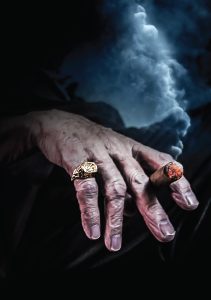
Promotional material for An Audience With Jimmy Savile. Photo: Boom Ents
The big question for writers, then, is this – if, like me, you believe that anything goes on stage, provided it’s not proscribed by law, how far should you go? Where do the (self-imposed) limits of free expression lie?
Those limits are different for each writer, of course. I would draw the line at, for example, depicting sexual assault on stage. My Jimmy Savile play showed the effects of it, clearly, on the main character – a young woman who’d been abused by him at Stoke Mandeville Hospital – but left the rest to the audience’s imagination. Sometimes it’s more powerful that way.
I would, however, defend the right of other playwrights to go further and include vivid scenes of sexual assault, provided it was for the “right” reasons. There would need to be a coherent dramatic justification for it and the creative team would be advised to have plenty of flak jackets ready. Anyone who tests the boundaries in this way will inevitably face accusations of prurience, unjustified provocation or worse.
The actor’s “thumb”
In 1980, when Howard Brenton showed a scene of homosexual rape in The Romans in Britain, the production found itself being prosecuted for gross indecency by Mary Whitehouse as part of her attempt to “clean up” Britain. (The prosecution failed when a key witness admitted that, from the back of stalls, what he thought was a penis might have been an actor’s thumb.)
A similar court case today would be unlikely. But then again there is always the Court of Public Opinion, powered by the rotten fuel of social media, which is arguably more scary and intimidating than the real thing.
I wouldn’t draw the line at giving free expression on stage to anti-Semitism, either. Sometimes the best way to destroy an argument is to bring it into the light. With one crucial proviso, which I will come to in a moment.
As a Jew who lost relatives in the Holocaust I am fascinated by the subject. I would love to see a play which explained where anti-Semitism came from. Or whether the definitions of it are justified. Are there internal contradictions there? (We fought the war to preserve our freedoms, but isn’t using the label “anti-Semitic” a destruction of one of our most cherished freedoms? As in, the freedom of speech?)
Any play which seeks to answer these questions would need characters espousing anti-Semitism – the more articulately the better, in my view – if they are to work properly.
My proviso would be that the anti-Semitism would need to be both contextualised and rigorously challenged. This could be done within the play – two characters arguing – or in the form of a post-show debate.
I would, for example, even have defended the right of writer Jim Allen and director Ken Loach to stage Perdition, their controversial 1987 play for the Royal Court, despite its disgusting anti-Semitic tropes.
The play accused Jews of “collaborating” with the Nazis during the Holocaust (is there a more loaded, insulting, inappropriate word in this context than “collaborated”?) and was based on the story of Rudolf Kastner, who negotiated with Adolf Eichmann to let more than 1,600 Jews flee Hungary for the safety of Switzerland.
Kastner, it is argued, should have done more to warn more Jews (not just the 1,600 that he rescued) of what was happening. Hence Allen’s line: “To save your hides, you [a Jew] practically led them to the gas chambers.” Disgusting, misjudged and morally wrong.
In the resulting furore, the Royal Court cancelled the play. But the decision to ban it, paradoxically, only increased support for it, and the poison it contained. I would have let it go ahead but tried to persuade Allen to make editorial changes. And if that didn’t work (and I doubt it would have done, although some controversial lines were excised during rehearsals) then I would have staged a debate, forming part of the show, which allowed the Jewish community to explain why the play was so offensive and misjudged. Education beats defenestration, every time.
The stage would be the perfect place to explore the arguments on both sides, but in particular to highlight the muddy thinking of the anti-Israel lobby, as personified by Sally Rooney, who recently decided to punish the Jews by forbidding a Hebrew translation of her latest novel. (Although making them read it might have been a more effective punishment.)
British theatre is not in a good place today. Where are the revolutionaries? The new, angry young men and women, the new John Osbornes? We don’t need to Look Back In Anger: it’s all in front of us, now.
Would a film like 2009’s Four Lions, a deeply moral but, to some, hugely offensive Jihadi satire, get made today? I very much doubt it.
We – all of us: writers, commissioners and directors – need to be braver.
29 Sep 2021 | Afghanistan, Americas, Artistic Freedom Commentary and Reports, Asia and Pacific, Australia, Burma, Cuba, Ecuador, Europe and Central Asia, Israel, Lukashenko letters, Magazine, Magazine Contents, Middle East and North Africa, Religion and Culture, Russia, Syria, Turkey, Uganda, United Kingdom, United States, Volume 50.03 Autumn 2021, Volume 50.03 Autumn 2021 Extras
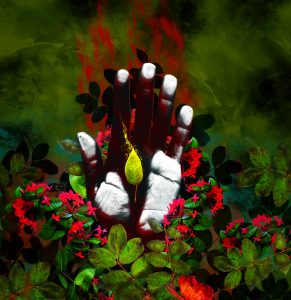
The Autumn issue of Index magazine focuses on the struggle for environmental justice by indigenous campaigners. Anticipating the United Nations Climate Change Conference (COP26), in Glasgow, in November, we’ve chosen to give voice to people who are constantly ignored in these discussions.
Writer Emily Brown talks to Yvonne Weldon, the first aboriginal mayoral candidate for Sydney, who is determined to fight for a green economy. Kaya Genç investigates the conspiracy theories and threats concerning green campaigners in Turkey, while Issa Sikiti da Silva reveals the openly hostile conditions that environmental activists have been through in Uganda.
Going to South America, Beth Pitts interviews two indigenous activists in Ecuador on declining populations and which methods they’ve been adopting to save their culture against the global giants extracting their resources.
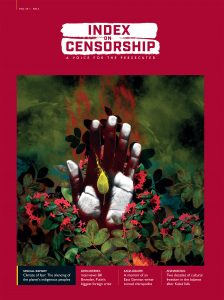 Cover of Index on Censorship Autumn 2021 (50-3)[/caption]
A climate of fear, by Martin Bright: Climate change is an era-defining issue. We must be able to speak out about it.
The Index: Free expression around the world today: the inspiring voices, the people who have been imprisoned and the trends, legislation and technology which are causing concern.
Pile-ons and censorship, by Maya Forstater: Maya Forstater was at the heart of an employment tribunal with significant ramifications. Read her response the Index’s last issue which discussed her case.
The West is frightened of confronting the bully, by John Sweeney: Meet Bill Browder. The political activist and financier most hated by Putin and the Kremlin.
An impossible choice, by Ruchi Kumar: The rapid advance of Taliban forces in Afghanistan has left little to no hope for journalists.
Words under fire, by Rachael Jolley: When oppressive regimes target free speech, libraries are usually top of their lists.
Letters from Lukashenka’s prisoners, by Maria Kalesnikava, Volha Takarchuk, Aliaksandr Vasilevich and Maxim Znak: Standing up to Europe’s last dictator lands you in jail. Read the heartbreaking testimony of the detained activists.
Bad blood, by Kelly Duda: How did an Arkansas blood scandal have reverberations around the world?
Welcome to hell, by Benjamin Lynch: Yangon’s Insein prison is where Myanmar’s dissidents are locked up. One photojournalist tells us of his time there.
Cartoon, by Ben Jennings: Are balanced debates really balanced? Ask Satan.[/vc_column_text][/vc_column][/vc_row][vc_row][vc_column][vc_custom_heading text=”Special Report” font_container=”tag:h2|font_size:22|text_align:left”][/vc_column][/vc_row][vc_row][vc_column][vc_column_text]
Credit: Xinhua/Alamy Live News
It’s not easy being green, by Kaya Genç: The Turkish government is fighting environmental protests with conspiracy theories.
It’s in our nature to fight, by Beth Pitts: The indigenous people of Ecuador are fighting for their future.
Respect for tradition, by Emily Brown: Australia has a history of “selective listening” when it comes to First Nations voices. But Aboriginal campaigners stand ready to share traditional knowledge.
The write way to fight, by Liz Jensen: Extinction Rebellion’s literary wing show that words remain our primary tool for protests.
Change in the pipeline? By Bridget Byrne: Indigenous American’s water is at risk. People are responding.
The rape of Uganda, by Issa Sikiti da Silva: Uganda’s natural resources continue to be plundered.Cigar smoke and mirrors, by James Bloodworth: Cuba’s propaganda must not blight our perception of it.
Denialism is not protected speech, by Oz Katerji: Should challenging facts be protected speech?
Permissible weapons, by Peter Hitchens: Peter Hitchens responds to Nerma Jelacic on her claims for disinformation in Syria.
No winners in Israel’s Ice Cream War, by Jo-Ann Mort: Is the boycott against Israel achieving anything?
Better out than in? By Mark Glanville: Can the ancient Euripides play The Bacchae explain hooliganism on the terraces?
Russia’s Greatest Export: Hostility to the free press, by Mikhail Khordokovsky: A billionaire exile tells us how Russia leads the way in the tactics employed to silence journalists.
Remembering Peter R de Vries, by Frederike Geeerdink: Read about the Dutch journalist gunned down for doing his job.
A right royal minefield, by John Lloyd: Whenever one of the Royal Family are interviewed, it seems to cause more problems.
A bulletin of frustration, by Ruth Smeeth: Climate change affects us all and we must fight for the voices being silenced by it.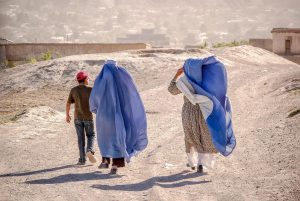 Credit: Gregory Maassen/Alamy[/caption]
The man who blew up America, by David Grundy: Poet, playwright, activist and critic Amiri Baraka remains a controversial figure seven years after his death.
Suffering in silence, by Benjamin Lynch and Dr Parwana Fayyaz The award-winning poetry that reminds us of the values of free thought and how crucial it is for Afghan women.
Heart and Sole, by Mark Frary and Katja Oskamp: A fascinating extract gives us an insight into the bland lives of some of those who did not welcome the fall of the Berlin Wall.
Secret Agenda, by Martin Bright: Reforms to the UK’s Official Secret Act could create a chilling effect for journalists reporting on information in the public interest.
