15 Jan 2014 | Europe and Central Asia, European Union, Index Reports, News, Politics and Society
This article is part of a series based on our report, Time to Step Up: The EU and freedom of expression
Beyond its near neighbourhood, the EU works to promote freedom of expression in the wider world. To promote freedom of expression and other human rights, the EU has 30 ongoing human rights dialogues with supranational bodies, but also large economic powers such as China.
The EU and freedom of expression in China
The focus of the EU’s relationship with China has been primarily on economic development and trade cooperation. Within China some commentators believe that the tough public noises made by the institutions of the EU to the Chinese government raising concerns over human rights violations are a cynical ploy so that EU nations can continue to put financial interests first as they invest and develop trade with the country. It is certainly the case that the member states place different levels of importance on human rights in their bilateral relationships with China than they do in their relations with Italy, Portugal, Romania and Latvia. With China, member states are often slow to push the importance of human rights in their dialogue with the country. The institutions of the European Union, on the other hand, have formalised a human rights dialogue with China, albeit with little in the way of tangible results.
The EU has a Strategic Partnership with China. This partnership includes a political dialogue on human rights and freedom of the media on a reciprocal basis.[1] It is difficult to see how effective this dialogue is and whether in its present form it should continue. The EU-China human rights dialogue, now 14 years old, has delivered no tangible results.The EU-China Country Strategic Paper (CSP) 2007-2013 on the European Commission’s strategy, budget and priorities for spending aid in China only refers broadly to “human rights”. Neither human rights nor access to freedom of expression are EU priorities in the latest Multiannual Indicative Programme and no money is allocated to programmes to promote freedom of expression in China. The CSP also contains concerning statements such as the following:
“Despite these restrictions [to human rights], most people in China now enjoy greater freedom than at any other time in the past century, and their opportunities in society have increased in many ways.”[2]
Even though the dialogues have not been effective, the institutions of the EU have become more vocal on human rights violations in China in recent years. For instance, it included human rights defenders, including Ai Weiwei, at the EU Nobel Prize event in Beijing. The Chinese foreign ministry responded by throwing an early New Year’s banquet the same evening to reduce the number of attendees to the EU event. When Ai Weiwei was arrested in 2011, the High Representative for Foreign Affairs Catherine Ashton issued a statement in which she expressed her concerns at the deterioration of the human rights situation in China and called for the unconditional release of all political prisoners detained for exercising their right to freedom of expression.[3] The European Parliament has also recently been vocal in supporting human rights in China. In December 2012, it adopted a resolution in which MEPs denounced the repression of “the exercise of the rights to freedom of expression, association and assembly, press freedom and the right to join a trade union” in China. They criticised new laws that facilitate “the control and censorship of the internet by Chinese authorities”, concluding that “there is therefore no longer any real limit on censorship or persecution”. Broadly, within human rights groups there are concerns that the situation regarding human rights in China is less on the agenda at international bodies such as the Human Rights Council[4] than it should be for a country with nearly 20% of the world’s population, feeding a perception that China seems “untouchable”. In a report on China and the International Human Rights System, Chatham House quotes a senior European diplomat in Geneva, who argues “no one would dare” table a resolution on China at the HRC with another diplomat, adding the Chinese government has “managed to dissuade states from action – now people don’t even raise it”. A small number of diplomats have expressed the view that more should be done to increase the focus on China in the Council, especially given the perceived ineffectiveness of the bilateral human rights dialogues. While EU member states have shied away from direct condemnation of China, they have raised freedom of expression abuses during HRC General Debates.
The Common Foreign and Security Policy and human rights dialogues
The EU’s Common Foreign and Security Policy (CFSP) is the agreed foreign policy of the European Union. The Maastricht Treaty of 1993 allowed the EU to develop this policy, which is mandated through Article 21 of the Treaty of the European Union to protect the security of the EU, promote peace, international security and co-operation and to consolidate democracy, the rule of law and respect for human rights and fundamental freedom. Unlike most EU policies, the CFSP is subject to unanimous consensus, with majority voting only applying to the implementation of policies already agreed by all member states. As member states still value their own independent foreign policies, the CFSP remains relatively weak, and so a policy that effectively and unanimously protects and promotes rights is at best still a work in progress. The policies that are agreed as part of the Common Foreign and Security Policy therefore be useful in protecting and defending human rights if implemented with support. There are two key parts of the CFSP strategy to promote freedom of expression, the External Action Service guidelines on freedom of expression and the human rights dialogues. The latter has been of variable effectiveness, and so civil society has higher hopes for the effectiveness of the former.
The External Action Service freedom of expression guidelines
As part of its 2012 Action Plan on Human Rights and Democracy, the EU is working on new guidelines for online and offline freedom of expression, due by the end of 2013. These guidelines could provide the basis for more active external policies and perhaps encourage a more strategic approach to the promotion of human rights in light of the criticism made of the human rights dialogues.
The guidelines will be of particular use when the EU makes human rights impact assessments of third countries and in determining conditionality on trade and aid with non-EU states. A draft of the guidelines has been published, but as these guidelines will be a Common Foreign and Security Policy document, there will be no full and open consultation for civil society to comment on the draft. This is unfortunate and somewhat ironic given the guidelines’ focus on free expression. The Council should open this process to wider debate and discussion.
The draft guidelines place too much emphasis on the rights of the media and not enough emphasis on the role of ordinary citizens and their ability to exercise the right to free speech. It is important the guidelines deal with a number of pressing international threats to freedom of expression, including state surveillance, the impact of criminal defamation, restrictions on the registration of associations and public protest and impunity against human right defenders. Although externally facing, the freedom of expression guidelines may also be useful in indirectly establishing benchmarks for internal EU policies. It would clearly undermine the impact of the guidelines on third parties if the domestic policies of EU member states contradict the EU’s external guidelines.
Human rights dialogues
Another one of the key processes for the EU to raise concerns over states’ infringement of the right to freedom of expression as part of the CFSP are the human rights dialogues. The guidelines on the dialogues make explicit reference to the promotion of freedom of expression. The EU runs 30 human rights dialogues across the globe, with the key dialogues taking place in China (as above), Kazakhstan, Kyrgyzstan, Tajikistan, Turkmenistan, Uzbekistan, Georgia and Belarus. It also has a dialogues with the African Union, all enlargement candidate countries (Croatia, the former Yugoslav republic of Macedonia and Turkey), as well as consultations with Canada, Japan, New Zealand, the United States and Russia. The dialogue with Iran was suspended in 2006. Beyond this, there are also “local dialogues” at a lower level, with the Heads of EU missions, with Cambodia, Bangladesh, Egypt, India, Israel, Jordan, Laos, Lebanon, Morocco, Pakistan, the Palestinian Authority, Sri Lanka, Tunisia and Vietnam. In November 2008, the Council decided to initiate and enhance the EU human rights dialogues with a number of Latin American countries.
It is argued that because too many of the dialogues are held behind closed doors, with little civil society participation with only low-level EU officials, it has allowed the dialogues to lose their importance as a tool. Others contend that the dialogues allow the leaders of EU member states and Commissioners to silo human rights solely into the dialogues, giving them the opportunity to engage with authoritarian regimes on trade without raising specific human rights objections.
While in China and Central Asia the EU’s human rights dialogues have had little impact, elsewhere the dialogues are more welcome. The EU and Brazil established a Strategic Partnership in 2007. Within this framework, a Joint Action Plan (JAP) covering the period 2012-2014 was endorsed by the EU and Brazil, in which they both committed to “promoting human rights and democracy and upholding international justice”. To this end, Brazil and the EU hold regular human rights consultations that assess the main challenges concerning respect for human rights, democratic principles and the rule of law; advance human rights and democracy policy priorities and identify and coordinate policy positions on relevant issues in international fora. While at present, freedom of expression has not been prioritised as a key human rights challenge in this dialogue, the dialogues are seen by both partners as of mutual benefit. It is notable that in the EU-Brazil dialogue both partners come to the dialogues with different human rights concerns, but as democracies. With criticism of the effectiveness and openness of the dialogues, the EU should look again at how the dialogues fit into the overall strategy of the Union and its member states in the promotion of human rights with third countries and assess whether the dialogues can be improved.
[1] It covers both press freedom for the Chinese media in Europe and also press freedom for European media in China.
[2] China Strategy Paper 2007-2013, Annexes, ‘the political situation’, p. 11
[3] “I urge China to release all of those who have been detained for exercising their universally recognised right to freedom of expression.”
[4] Interview with European diplomat, February 2013.
13 Dec 2013 | Europe and Central Asia, News, Russia
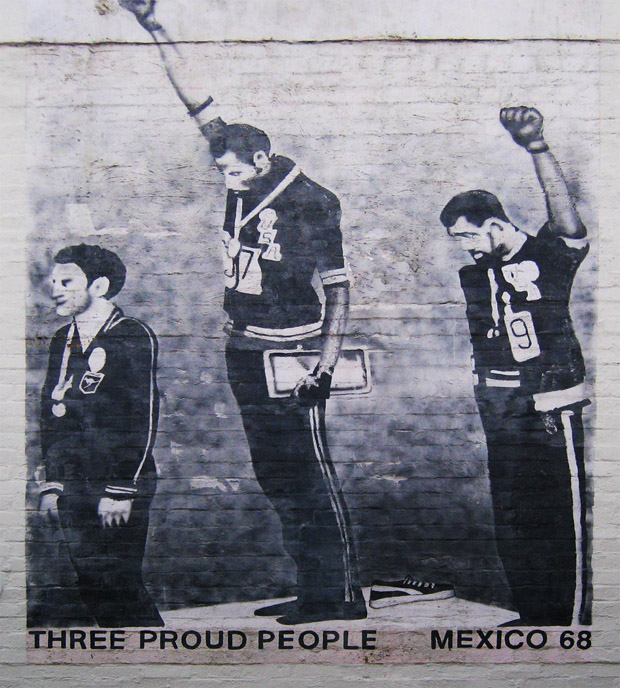
Grafitti of Tommie Smith, John Carlos and Peter Norman showing solidarity for the civil rights movement at the Mexico City Olympics in 1968 (Image: Newtown graffiti/Wikimedia Commons)
Athletes preparing to head off to Sochi Winter Olympics in February, have been reminded that they are barred from making political statements during the games.
”We will give the background of the Rule 50, explaining the interpretation of the Rule 50 to make the athletes aware and to assure them that the athletes will be protected,” said IOC President Thomas Bach in an interview earlier this week. Rule 50 stipulates that ”No kind of demonstration or political, religious or racial propaganda is permitted in any Olympic sites, venues or other areas.” Failure to comply could, at worst, mean expulsion for the athlete in question.
Political expression is certainly a hot topic at Sochi 2014. The games continue to be marred by widespread, international criticism of Russia’s human — and particularly LGBT– rights record. The outrage has especially been directed at the country’s recently implemented, draconian anti-gay law. Put place to “protect children”, it bans “gay propaganda”. This vague terminology could technically include anything from a ten meter rainbow flag to a tiny rainbow pin, and there have already been arrests under the new legislation.
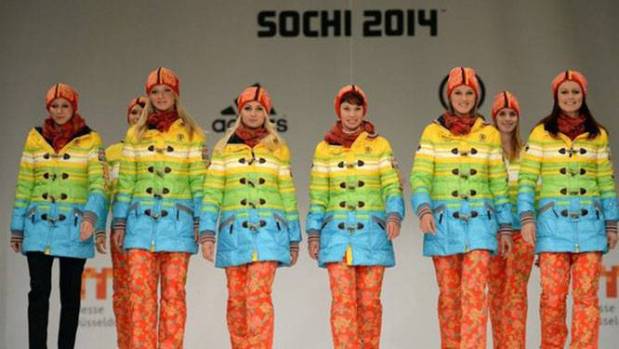
The confusion continued as the world wondered how this might impact LGBT athletes and spectators, or those wishing to show solidarity with them. Russian authorities have for instance warned of possible fines for visitors displaying “gay propaganda”. Could this put the Germans, with their colourful official gear, in the firing line? (Disclaimer: team Germany has denied that the outfits were designed as a protest.)
On the other hand, Russian president Vladimir Putin has promised there will be no discrimination at the Olympics, and IOC Chief Jaques Rogge, has said they “have received strong written reassurances from Russia that everyone will be welcome in Sochi regardless of their sexual orientation.”
On top of this, the IOC also recently announced that there will be designated “protest zones” in Sochi, for “people who want to express their opinion or want to demonstrate for or against something,” according to Bach. Where these would be located, or exactly how they would work, was not explained.
But while the legal situation in Russia adds another level of uncertainty and confusion regarding free, political expression for athletes, rule 50 has banned it for years. And for years, athletes have taken a stand anyway.
By far the most famous example came during the 1968 Olympics in Mexico City — American sprinters Tommie Smith and John Carlos, on the podium, black gloved fists raised in solidarity with the ongoing American civil rights movement. The third man on the podium, Australian Peter Norman, showed his support by wearing a badge for the Olympic Project for Human Rights. All three men faced criticism at the time, but the image today stands out as one of the most iconic and powerful pieces of Olympic history.
However, the history of Olympians and political protest goes further back than that. An early example is the refusal of American shotputter Ralph Rose to dip the flag to King Edward VII at the 1908 games in London. It us unknown exactly why he did it, but one theory is that it was an act of solidarity for Irish athletes who had to compete under the British flag, as Rose and others on his team were of Irish descent.
The Cold War years unsurprisingly proved to be a popular time for athletes to put their political views across. When China withdrew from the 1960 Olympics in protest at Taiwan, then recognised by the west as the legitimate China, taking part. The IOC then asked Taiwan not to march under the name ‘Republic of China’. While considering boycotting the games, the Taiwanese delegation instead decided to march into the opening ceremony with a sign reading “under protest”.
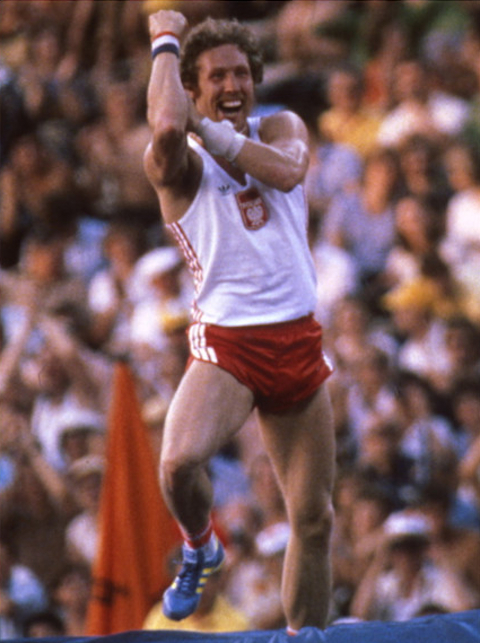
The same year as the Smith and Carlos protest, a Czechoslovakian gymnast kept her face down during the Soviet national anthem, in protest at the brutal crackdown of the Prague Spring earlier that year. And that was not the only act of defiance against the Soviet Union. During the controversial 1980 Moscow Olympics, boycotted by a number of countries over the USSR invasion of Afghanistan, the athletes competing also took a stand. The likes of China, Puerto Rico, Denmark, France and the UK marched under the Olympic flag in the opening ceremony, and raised it in the medal ceremonies. After winning gold, and beating a Soviet opponent, Polish high jumper Wladyslaw Kozakieicz also made a now famous, symbolic protest gesture towards the Soviet crowd.
But there are also more recent examples. At Athens 2004, Iranian flyweight judo champion Arash Miresmaeili reportedly ate his way out of his weight category the day before he was set to fight Israeli Ehud Vaks. “Although I have trained for months and was in good shape, I refused to fight my Israeli opponent to sympathise with the suffering of the people of Palestine” he said. A member of the South Korean football team which beat Japan to win bronze at the 2012 London Olympics, celebrated with a flag carrying a slogan supporting South Korean sovereignty over territory Japan also claims.
When the debate on political expression comes up, the argument of “where do we draw the line” often follows. If the IOC is to allow messages of solidarity with Russia’s LGBT population, should they allow, say, a Serbian athlete speak out against Kosovan independence? Or any number of similar, controversial political issues? Is it not easier to simply have a blanket band, and leave it at that?
The problem with this is, as much as the IOC and many other would like it, the Olympics, with all their inherent symbolism, simply cannot be divorced from wider society or politics. The examples above show this. With regards to Sochi in particular, the issue is pretty straightforward — gay are human rights. Some have argued we should boycott a Olympics in a country that doesn’t respect the Universal Declaration on Human Rights, or indeed the Olympic Charter. This is not happening, so the very least we can is use the Olympics to shine a light on gay rights in Russia. At its core, the Olympics are about the athletes — they are the most visible and important people there. It remains to be seen whether any of them will take a stand for gay rights, outside cordoned-off protest areas, in the slopes and on the rink, where the spotlight shines the brightest. And if they do, they should have our full support.
This article was posted on 13 Dec 2013 at indexoncensorship.org
2 Dec 2013 | Croatia, News, Religion and Culture
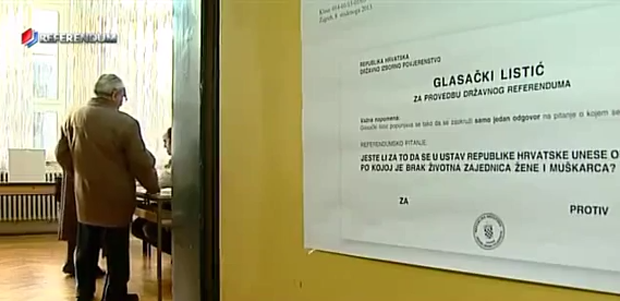
Croatians cast their votes on whether marriage should be constitutionally recognised as being between a man and a woman (Image: Mc Crnjo/YouTube)
Croatia’s voters moved Sunday to amend the country’s constitution to define marriage as being between a man and a woman. The campaign had been orchestrated by the country’s religious institutions. Sixty-five percent of voters supported a change that effectively bars gay marriage.
The campaign used some interesting and controversial tactics. Religious teachers in schools threatened students that they wouldn’t get a passing grade if they did not provide proof of their families’ support for the constitutional change. This was reported by an English language teacher from Split, the second largest city in Croatia, to the inspection body of the Ministry of Education around mid-November.
“If this is the situation in Split I believe it is even worse in smaller towns”, concluded the teacher who did not want to sign her name.
Following this, the media received numerous letters from school teachers confirming that religious teachers around Croatia were blackmailing students to make sure their family members vote “for the protection of the family” — the Catholic Church’s interpretation of the referendum question.
“If the president of the country and other public persons can talk about voting at the referendum why can’t a religious teacher do so?” commented Sabina Marunčić, senior advisor for religious education at the Croatian Education and Teacher Training Agency.
Since the call for a referendum on 8 November, the campaign has been the main topic of discussion in Croatia, despite the country facing a severe economic crisis and an unemployment rate of 20.3 per cent. While Croatian law defines marriage as a union between a man and a woman, this definition does not exist in the constitution. A recent announcement of a new law on same-sex partnerships has caused conservative movements to come together in the initiative “In the Name of Family”. They started spreading fear about gay marriage being legalised, despite the centre-left government showing no intention to do this. A 2003 law on same-sex partnerships has been seen as practically useless because it secures only a few, less important rights, and only after a relationship breaks down.
For weeks all anyone talked about was who will vote “for” and who will vote “against”, in the first national referendum in the Republic of Croatia set up by popular demand. The Social Democratic prime minister Zoran Milanović, President Ivo Josipović and numerous ministers all came forth against introducing the definition into the constitution. A large portion of powerful media was also openly against it. However, public opinion polls showed that 68 per cent of the citizens would vote for the proposal; 26 per cent against.
In the referendum campaign, the Catholic Church have firmly been advocating “for”. It has has a strong influence in the country of 4.29 million, with 86 per cent declaring themselves Catholic according to the latest census, released in 2011. The initiative “In the name of family” which has succeeded in gathering signatures of 740,000 citizens in order to hold a referendum is also linked to the Catholic Church.
“The church did not want to start the initiative for a referendum but it wholeheartedly accepted In the Name of Family, whose numerous members are conservative Catholics close to certain Croatian bishops,” says Hrvoje Crikvenec, editor of the religious portal Križ života (“Cross of Life”).
“However, I believe that the entire organisation and initiative is supported more by politics, that is, a marginal political right-wing party Hrast, than Croatian bishops. They have now become more involved in the campaign in the hope of what would for them be a positive outcome of the referendum, which would ultimately show them as winners.”
The initiative’s leaders do come from the non-parliamentary right-wing party Hrast, as well as conservative associations opposing the introduction of sex education in schools, artificial insemination and abortion. Some of them have been linked to Opus Dei, a secretive Catholic organisation which has been strengthening its presence in Croatia. In the Name of Family and the fight against a possible equal standing of homosexual and heterosexual marriages has provided them with the support of a larger portion of the public.
The Catholic Church has undoubtedly helped the success of a In the Name of Family. Signatures were gathered in front of churches and elsewhere, even in universities. Cardinal Josip Bozanić had written a note instructing priests to encourage believers in masses to attend the referendum and vote for the definition of marriage as a union between a man and a woman. Group prayers for its success were also organised throughout Croatia in the lead up to the vote.
“We can’t blame the bishops for advocating the referendum from the altar because this is a part of the church’s program. They are more entitled do so than to say who to vote for at the elections, which they also do. However, it is inadmissible for religious teachers to influence children in schools,” university professor of philosophy and political commentator Žarko Puhovski says.
Despite Croatia being a majority Catholic country, every fourth marriage ends in divorce and a decreasing number of couples are deciding to marry.
“The church’s influence on citizens is far greater regarding political than moral views. Church morality is accepted in principle, but political views supported by the church gain additional power. That is why the referendum is causing a short-term increase in the influence of the church, which has for years been weakening,” Puhovski explains.
Church leaders are often complaining about the non-existent dialogue with the current, left-wing government, especially regarding the issues they consider to be related to religion – education of children, family care and marriage.
“The ultimate success of this referendum is in showing the power of the church in Croatia. It has shown the government that it can move masses of people so in the future, the government will have to think carefully before making any decision which could harm their interests,” said a group of Roman Catholic theologists in a joint letter made public on 29 November.
“The relationship between the church and the state has mostly been disturbed by militant statements of individuals from the Catholic Church leadership, which seem to be best served with a one common mindset rather than political and worldview pluralism,” sociologist and ex-ambassador for the Holy See, Ivica Maštruko says.
“We are not dealing with a normal criticism of the current social state and relations, but bigotry, inappropriate discourse and civilisational and religious malice,” Maštruko added.
An example of such a discourse is provided by reputable former minister and theologist Adalbert Rebić who, earlier this year, was quoted as saying: “The conspiracy of faggots, communists and dykes will ruin Croatia.” Pastor Franjo Jurčević was convicted for publishing homophobic and extremist posts on his blog.
But in the campaign for the referendum the Catholic Church was joined by representatives of the other most influential religious communities in Croatia – Orthodox Christians, Muslims, Baptists and the Jewish community Bet Israel. Together they supported the referendum and invited the believers to vote in order to “secure a constitutional protection of marriage”. Religious communities in Croatia are usually rarely seen forming such shared views.
“The most interesting thing is the agreement between the Catholic Church and the Serbian Orthodox Church which have in the past twenty years completely missed the chance to initiate reconciliation, dialogue and co-existence during and after the wars in ex-Yugoslavia. Religious communities in the region can obviously agree only when they find a common enemy, which in the case of this referendum are LGBT persons,” Cirkvenec says.
Žarko Puhovski considers it indicative that religious communities in Croatia succeed in forming shared views only with regards to sexual morality.
“They have failed to reach a consensus on any other moral or political issue,” he concludes.
This article was published on 2 Dec 2013 at indexoncensorship.org
29 Nov 2013 | Academic Freedom, News, United Kingdom
In bid to address the issues surrounding people with extremist views giving talks at British campuses, Universities UK recently released new guidelines on external speakers. “Universities have to balance their obligation to secure free speech with their duties to ensure that the law is observed — which includes promoting good campus relations and maintaining the safety and security of staff, students and visitors,” says the body, which represents vice-chancellors.
This is not the first time they have spoken out about the topic. However, a set of guidelines from 2011 reads: “It is the law alone which can set restrictions on freedom of speech and expression and on academic freedom — it is for the law and not for institutions or individuals within institutions to set the boundaries on the legitimate exercise of those rights”. It appears they are calling for somewhat stricter regulation this time around. The current guidelines are also more in line with the view of the National Union of Students, which maintains that “(…) many students’ unions may wish to go further than the law on securing ‘freedom from harm’ when restricting some speaker activity.” The NUS’ own “No Platform” policy, banning certain speakers from their events, puts this theory into practice.
This is one of those topics that seems to come up at fairly regular intervals, and the outline of the debate is familiar by now. One side argues that speakers with outwardly hateful or discriminatory views don’t deserve a platform through which to legitimate them; while the other side argues that to deny them this is to deny them the right to freedom of expression, which also extends to those with whom we disagree. The following speakers have been responsible for at one point reigniting the debate, each in their own way.
1) Nick Griffin
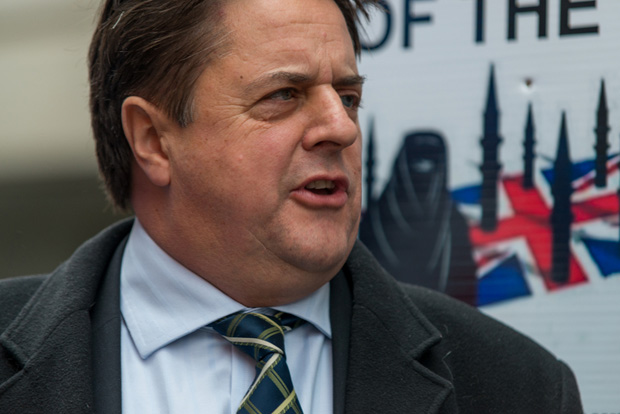
Nick Griffin outside the Old Bailey court on the first day of the trial of the murder of Lee Rigby (Image: Velar Grant/Demotix)
The most famous case in recent years was the 2007 appearance of BNP leader Nick Griffin (and Holocaust-denying historian David Irving) at an Oxford Union debate on free speech. The invitation caused massive uproar, with protesters picketing the event. “It is not just an Oxford issue, this will have ramifications for other places where the BNP are active… this is going to give legitimacy and credibility to their views,” said Student Union President Martin McClusky at the time. “I find the views of the BNP and David Irving awful and abhorrent but my members agreed that the best way to beat extremism is through debate,” argued Oxford Union president Luke Tryl. This is not only time the Nick Griffin has caused controversy as a potential university speaker. Trinity College Dublin cancelled plans to include him in a debate immigration, saying “it could not guarantee the safety and wellbeing of staff and students”.
2) Mufti Ismail Menk
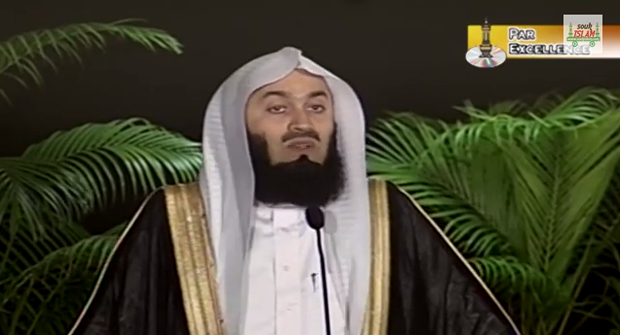
Mufti Ismail Menk giving a lecture (Image: soukISLAM/YouTube)
Islamic preacher Mufti Ismail Menk spoke at Liverpool University earlier this month. He has previously stated that gay people are “filthy” and “worse than animals”. The event was initially reported to be part of a longer tour stopping at Glasgow, Leeds, Liverpool, Leicester, Cardiff and Oxford universities. However, all except Liverpool, where he was hosted by the Islamic Society, revoked their invitation or said he had not been officially invited in the first place. Liverpool responded that it is “not the role of the university to censor people’s views”.
3) Mohamed El-Nabawy
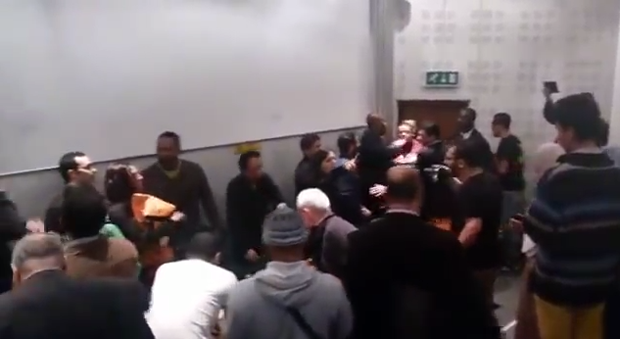
A video captured the protest that erupted when Mohamed El-Nabawy was due to speak at SOAS (Image: YouTube)
A representative of Tamaroud, the grassroots movement which played a significant role in the ousting of Egypt’s Muslim Brotherhood-backed elected government, was chased away by angry protesters prior to a scheduled talk at London’s School of Oriental and African Studies (SOAS). The protesters, who were not students, chanted and brandished posters associated with the Muslim Brotherhood at the open lecture. SOAS security had to escort El-Nabawy off campus using an emergency exit . A spokeswoman for the Palestinian Society, which had organised the talk, said: “In the pursuit of freedom of speech and expression, some people may find some of the views expressed at our events objectionable.”
4) David Gale
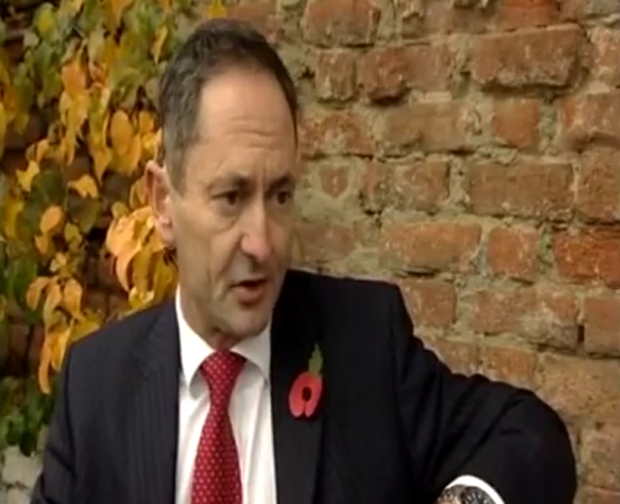
David Gale on the BBC’s Sunday Politics Show (Image: UKIPDerby/YouTube)
In 2012 the Student Union at the University of Derby banned David Gale, UKIP’s candidate for Police and Crime Commissioner, from taking part in a Q&A session at the university. The Union has a no platform policy for “individual(s) who they believe to be a member of a group with racist, fascist or extremist views”, a category the Union believed was applicable to UKIP . UKIP leader Nigel Farage weighed in on the issue at the time, saying: “It is frightening that a Derby student body is so frightened of free speech and public opinion.”
5) George Galloway
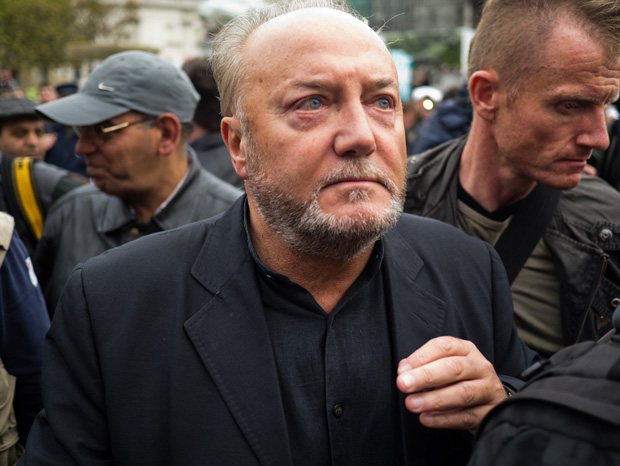
George Galloway attends an anti-war rally in 2011 (Image: Paul Soso/Demotix)
In March, George Galloway was set to speak at an event organised by the University of Chester Debating Society. However, the invitation was revoked by the Student Union, acting in line with the NUS’ No Platform policy on Galloway. This move came after the Respect Party MP was involved in a string of controversial incidents, including refusing to debate with an Israeli student at an Oxford University panel discussion. Galloway’s camp have called the policy “idiotic, anti-democratic and politically-motivated”.
6) Julie Bindel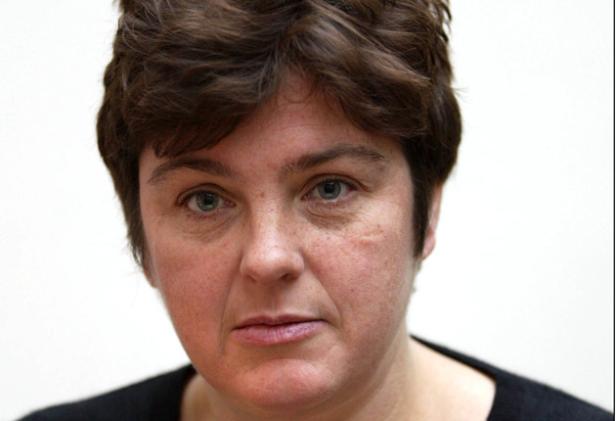
In September, the Debating Union at Manchester University (MDU) invited feminist writer and campaigner Julie Bindel to speak at their discussion on pornography. A number of people objected due to Bindel’s reported views about transexual people, which have led to the NUS implementing a No Platform policy for her. Some transexual students and their supporters “felt Julie Bindel’s transphobic statements and views made them both unwelcome at the event, and unsafe on campus, as it seemed that transphobia was being allowed and possibly encouraged,” said Loz Webb, the university’s Trans* representative. Despite this, MDU refused to replace Bindel, though she eventually chose to drop out after receiving death threats.
This article was originally posted on 29 Nov 2013 at indexoncensorship.org