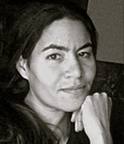
Blogger passes 40th day of hunger strike
It’s Maikel Nabil Sanad’s 26th birthday but he is in no celebratory mood. When I arrive at El Marg prison north of Cairo during visiting hours on Saturday 1 October, I can barely hide my shock at seeing his bony physique. Maikel is wearing a wrinkled blue track suit and on his head is a baseball cap worn backwards in a sign of rebellion. It is clear that Maikel is in extremely frail health. He attempts to stand up to greet me but almost immediately falls back into his chair in sheer exhaustion. That’s because today, Maikel tells me, is also the 40 day of his hunger strike — one that he had hoped would draw public attention to his plight and force the ruling military council to reconsider what he describes as the military’s “discriminatory “policies.
“I have been tried in a military court and sentenced to three years in prison on charges of spreading rumours about the armed forces and criticising the ruling military council, SCAF in my blogpost. Other high profile figures have simply been summoned by the military prosecutor for questioning for similar charges. They have had their sentences revoked,” he explains. His voice is weak and I have to lean over to hear him clearly.
Maikel, who now weighs 48kgs after shedding 12kgs as a result of his food abstinence — has languished behind bars since the 28 March 2011 when he was detained for accusing the military of having conducted virginity tests on female protesters earlier that month — a charge that a senior military general later admitted was true. He had also written on his blog that “The army and the people are not one” — a view that ran counter to the one expressed by tens of thousands of pro-democracy activists in Tahrir Square during the mass uprisings earlier this year. Chants of “The army and people are one” had echoed through Tahrir Square after it became clear that the military had chosen to side with the opposition activists –possibly even defying orders to shoot them.
Maikel is post-revolutionary Egypt’s first prisoner of conscience. He was handed the harsh jail sentence after being tried in a martial court where, according to his younger brother Mark, “eyewitnesses were barred from testifying in the case.”
After spending a fortnight in the notorious state security prison at the Hikestep, Maikel was moved to the civilian prison at el Marg where he has since languished in near solitary confinement.
“Other prisoners have been warned against talking to me. The prison guards have also been spreading rumours to turn fellow prisoners against me. They tell them I have called on Israel to prolong its occupation of Palestinian land or that I support gay rights,” he says, his voice now a soft whisper.
In a conservative predominantly Muslim society, Maikel’s unconventional religious and political views have at best, raised eyebrows or been dismissed as the hallucinations of a madman. At worst, they have earned him the ire — even hatred — of some of his fellow countrymen and provoked the wrath of the ruling military council, for Maikel is a self proclaimed atheist and liberal who supports normalisation of relations with Israel and who has called for military service to be non-compulsory.
“Many intellectuals whom I have associated with share my views but do not dare voice them publicly,” he says, shaking his head.” I do not like hypocrisy so I have openly shared my views knowing they may ruffle some feathers.”
But that is an understatement. Maikel’s refusal to go along with the flow has come at a terribly high price: not only is he serving prison time and losing his health and vitality, but he also risks death, according to a warning from doctors who believe few can survive more than forty days without food. “I’d rather die than live as a slave without dignity under an oppressive regime,” is Maikel’s explanation for refusing to end his hunger strike. He has survived on nothing more than water and a few sips of fruit juice since starting his food abstinence.
I offer Maikel a can of orange juice and urge him to take a sip. He reluctantly accepts it and I notice that his hands are as cold as ice as his fingers accidentally brush my hand. Four of his friends have joined me on the visit to lend their support and try and coax Maikell into ending his hunger strike. Like him, they are all ardent activists and revolutionaries.
” You have already made a statement. Enough Maikel. We need people like you to continue to push for change,” argues Sahar Maher, a mass communication student.
“If I die, scores of Maikels will emerge after me,” is Maikel’s stubborn response.” I have already succeeded in winning many converts. Many of my friends, my brother and my father have all become politicised.”
But his father is quick to point out that while he shares many of Maikel’s political stances, he vehemently rejects Maikel’s religious views. “We are a pious Coptic family. Maikel became an atheist when he started associating with the wrong crowd at university and this is where it has led him.”
While his religious views are not the cause of his imprisonment, they are partly responsible for the little sympathy afforded Maikel by fellow Egyptians — which is not surprising in a society where religion plays a significant role in shaping people’s lives. Maikel is disappointed by the almost complete lack of local media support which he also blames on what many in Egypt perceive as his pro-Israeli stances. He has expressed his admiration for “Israel’s democratic values and freedom of expression” — an opinion that has shocked the Egyptian public angered by Israel’s aggressive policies towards the Palestinians and the recent killing of a number of Egyptian security guards by Israeli forces near the border with Israel. In recent weeks, anti Israeli protesters have called for the dismissal of the Israeli ambassador from Egypt and an annulment of the Camp David peace accords with Israel.
Lack of local support for Maikel in his native Egypt is however compensated for by the strong show of solidarity for him by the international community. A “free Maikel Nabil page” on FaceBook currently has more than 61,400 fans from around the world and the number is steadily on the increase.
As his friends sing Happy birthday and Maikel blows out the candle on the small cake they’ve brought with them, he says that his birthday wish is for more Egyptians to read his blogs. He also yearns for his freedom “so that I can receive medical care in a proper hospital,” he says.
Maikel cites a long list of ailments including a tooth infection, scabies , low blood pressure and low sugar level. He says he is being denied the blood tests and treatment he badly needs to recover. The on-duty prison inspector Sameh Labib denies this. He insists that Maikel, like all other prisoners is getting the attention he requires at the prison hospital.
But whether or not Maikel will be released soon will be decided on the 4th of October when his appeal is scheduled. That day will also mark Maikel’s 43rd day of hunger strike. As we head out of the prison compound, Mark says “We can only hope for the best. There cannot be another Khaled Saeed. Our revolution was sparked by Saeed’s brutal killing by police officers. There cannot be others losing their lives in similar fashion in post revolutionary Egypt.”
Maikel’s lawyer Negad el Borei says he does not have high expectations from the appeal. He adds that Maikell’s imprisonment is “another black spot for the image of the SCAF.” EL Borei also regrets the lack of media attention to Maikel’s case adding that this is because of new restrictions imposed on the media by the ruling military government which are greater today than those imposed by the former regime. “The media in post revolutionary Egypt has gone as far as condoning torture which never happened under Mubarak,” he laments.
Journalist and television anchor Shahira Amin resigned her post as deputy head of state-run Nile TV on February. Read why she resigned from the “propaganda machine” here.