
Madagascar: President flees Gen Z protests but deep problems remain

Gen Z protesters in Madagascar are worried that even though President Andry Rajoelina has now fled the country, a revolution started by the nation’s youth is at risk of being hijacked and that real change will remain elusive.

In an interview with Index, one of the protest leaders, 23-year-old econometrics and statistics student Milatsara Tonie Sedrique, admitted to concerns after the military seized power, despite their promising elections within two years.

“We remain vigilant. We know that every movement can be hijacked if discipline and unity are lost. Our goal is not chaos, but a peaceful and democratic transformation of the country, led by the people, for the people,” said Sedrique.

He said the fact that some soldiers expressed sympathy with protesters, points to the reality that Madagascar citizens were experiencing similar difficulties in a sign that the Gen Z cause transcends generations.

As a former student president of his faculty at university, Sedrique naturally became one of the leading figures of the Gen Z movement, because students trusted him to represent their voices.

Protests erupted in September over frequent power and water outages and started peacefully but at least 22 protesters have now died after government buildings and politicians’ homes were attacked.

Sedrique says he was driven to act from seeing the precarious living conditions on campuses: lack of water, electricity, and material support, amidst the absence of sincere dialogue between authorities and students.

There is widespread discontent in the country and the protests were an expression of despair of young people who feel abandoned, he says.

Sedrique believes Madagascar’s problems run deeper: corruption and poor governance are holding back the country’s development. He says young people want greater transparency and fairness in public decisions.

“Our goal is not confrontation, but concrete solutions. If dialogue fails, the mobilisation will continue peacefully and with determination. It is imperative to turn this crisis into an opportunity by taking swift and concrete measures,” he added.

Another leader of the Gen Z movement, speaking on condition of anonymity, said an army takeover had not been part of the equation when they demanded Rajoelina’s resignation as they wanted democratic governance.

“We will first hold meetings to propose new strategies. Even if Rajoelina doesn’t resign, we don’t need him and his troops,” said the Gen Z campaigner.

Much has changed since 2009 when Rajoelina was first inaugurated, becoming Africa’s youngest leader.

Rajoelina, then an opposition leader, city mayor and popular DJ, assumed power following a military-backed coup that overthrew then President Marc Ravalomanana’s government.

Four years later in 2013, under a plan formulated by the Southern African Development Community regional grouping, both Rajoelina and his predecessor agreed not to stand in that year’s presidential elections. Henry Martial Rakotoarimanana Rajaonarimampianina emerged the winner in those polls.

Yet Rajoelina’s political career was far from over. In 2018 he ran for office and won a second five-year term. He was again elected in 2023, following a controversial poll.

Dr Ketakandriana Rafitoson, a Malagasy political scientist and human rights activist who serves as the global vice-chair of Transparency International (TI) and an individual member of TI Madagascar, told Index that Madagascar is entering one of its most uncertain political moments since the 2009 coup.

She believes that restoring administrative function without addressing structural corruption or accountability, effectively postpones the crisis. A military takeover is the most dangerous scenario and risks extinguishing the country’s democratic aspirations and long-term instability, she said.

The solution? A negotiated transition led by civilian and religious mediators, particularly the council of Christian churches, toward institutional reform and new elections which could preserve national unity and democratic legitimacy.

“The youth movement, led by Gen Z  and their allies has made it clear that its struggle is rooted in nonviolence and in the constitutional right to resist illegitimate authority. Their language echoes global youth-led mobilisations from Nepal to Morocco: demands for dignity, justice, and accountable governance rather than power for its own sake,” she added.

Rafitoson said for years, civic space had been shrinking, institutions hollowed out by political patronage, and public frustration was rising.

She noted that when Rajoelina confirmed in a televised address that he had left the country temporarily for “security reasons”, his message combined reassurances such as promises to fix the power grid with new generators with a narrative of personal victimhood, alleging assassination attempts and foreign plots.

” He has not offered to resign, nor acknowledged the legitimacy crisis that has eroded his authority. At the same time, his decision to grant full pardons to several high-profile detainees linked to the so-called ‘Apollo 21’ coup case appeared designed to win allies and buy time rather than to foster reconciliation,” she added.

Rafitoson told Index, “The task ahead for Madagascar’s civil society and international partners is to help channel this moment into a peaceful and constitutional resolution that honours the legitimate demands of the youth. What the country needs is not another rotation of elites but a genuine renewal of governance: one rooted in integrity, justice, and the participation of its citizens,” said Rafitoson.

But as Rajoelina continues to insist that he is still the president, questions remain over how he lost it all.

Dr Freddie Mahazoasy, a Madagascan economist, said the crisis has been cooking for a while as economic and social conditions worsened due to lack of economic vision and strategic planning on the part of the president since 2009.

Mahazoasy said the Malagasy government largely underestimated the seriousness of the economic situation which prevailed in the country after Covid-19, which should have focused all its attention.

“There was no real recovery plan implemented after the devastating pandemic. Freedom of speech was harshly restricted: journalists, Facebookers started to be imprisoned, while political rallies were forbidden and violently repressed,” he said.

He said Rajoelina also made promises that came back to haunt him as economic and social inequalities, perceived as an unacceptable social injustice, became more and more obvious to all.

He said more than 75% of the population are trapped in poverty, which is not sustainable.

Mahazoasy said, “The president made numerous ambitious promises like turning each capital city of the provinces to a place comparable to an American city like Miami, Washington or New York! In 2018, he promised to achieve in five years what has not been done in 60 years. These inflated promises created a tremendous expectation in 30 million minds which later violently blew the regime.”

The winter 2025 issue of Index on Censorship will look in depth at Gen Z protests across the world and explore young people’s concerns about freedom of expression.
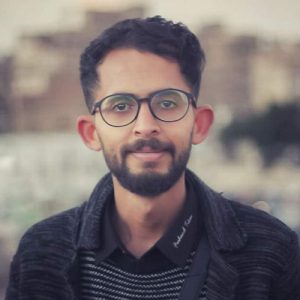
Boualem Sansal faces life imprisonment if found guilty of national security charges

In 2012, the Algerian novelist Boualem Sansal wrote an article for Index about his controversial visit to Israel, where he was inspired by an encounter with the writer David Grossman to launch the Strasbourg Appeal for Peace. 

“I muse how wonderful it would be if the writers of the world came together to fight for peace,” he wrote. The article, A Nightmare with a Happy Ending, was full of hope, despite the fatwa issued by Hamas accusing him of high treason against Islam, the Arabic nation and its martyrs for travelling to Israel. “Working for peace is a big deal,” he said. “It requires great numbers and great determination. Who knows what we will be able to achieve.” 

Twelve years later, the 75-year-old writer finds himself accused once more. On 16 November he was arrested at Algiers airport and detained by the authorities. His lawyer later confirmed he was being held on national security charges. Algerian state media said he was accused of “attacking national integrity and unity and state institutions”. Sansal faces life imprisonment if found guilty. 

French media has suggested the writer’s arrest could be connected to statements Sansal made to the far-right publication Frontières that the disputed territory of Western Sahara was historically part of Morocco. A documentary which aired on state TV in Algeria on Sunday, entitled Servants of Western and Moroccan Agendas, claimed attacks on the unity of the state were acts of terrorism. “Morality and culture have failed to educate Boualem Sansal. He is nothing but an agent under the cover of a writer,” said the documentary, according to the French newspaper, Le Figaro

An appeal in the French magazine Le Point by fellow Algerian writer Kamel Daoud sparked an international response. Writers including Annie Ernaux, Orhan Pamuk, Wole Soyinka, Salman Rushdie, Andrey Kurkov, Roberto Saviano and Alaa Al Aswany called for Sansal’s immediate release. 

Sansal has been a fierce advocate for free expression. As a consistent critic of Islamism and the authoritarian tendencies of the Algerian government, he has also made enemies. Inconveniently for his liberal supporters, Sansal has attracted support from the right in France for his stance on the so-called Islamist threat to the country. 

Dr Joseph Ford of the Institute of Languages, Cultures and Societies at the University of London told Index: “Boalem Sansal has long been a controversial figure in Algeria and increasingly in France, where some of his latest work has alluded to far right conspiracy theories regarding the so-called threat of the Islamisation of France. Nevertheless, detaining him isn’t a good look for the Algerian authorities internationally, and I would expect they’ll either have to charge him or release him soon.” 

His writings have tackled the historical horrors of his home country, including the civil war against Islamist insurgents which ended in 2002, and the bloody war of independence fought against France between 1954 and 1962. 

As Sansal’s arrest shows, this colonial legacy has left deep scars in Algeria’s national consciousness. In an essay for Index in 2011 entitled A Lesson in Tyranny, Sansal wrote on this subject: “It is because the French won the Battle of Algiers by these methods, by torturing the inhabitants of the city, sparing neither women nor children, that they lost the Algerian War. And it is because the Algerian rebels carried out terrorist attacks on civilians, including women and children, that their victory has a bitter aftertaste of defeat. They lost all notion of freedom, which led to the harshest, most miserable dictatorship imaginable.” 

The Algerian writer has been the recipient of national and international prizes including the 2012 Arabic Novel Prize, awarded by the Arab Ambassadors Council in Paris, although the 15,000 prize money was withdrawn following his visit to Israel. In the Index article later that year he justified his trip by saying: “I believe that in order to judge a country one should see it with one’s own eyes. Propaganda is not enough.” 

Boualem Sansal is one of Algeria’s most prominent and outspoken writers, who has established an international reputation for his work. Twelve years ago, he called on the writers of the world to fight for peace. Now they must come together to fight for him.

Index Index

What is the Index Index? The Index Index is a pilot project that uses innovative machine learning techniques to map the free expression landscape across the globe to gain a clearer country-by-country view of the state of free expression across academic, digital and...

Nominees for the 2022 Freedom of Expression Awards – Arts

Yemeni artist Thiyazen Al-Alawi uses his craft to shed light on the destructive situation in Yemen through street art campaigns. He hopes to inform the public of what the war has done to his homeland.
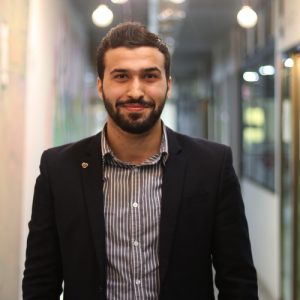
First inspired by the Arab Spring in 2011 as a teenager, Thiyazen turned to art as a form of self expression, launching his first street art campaign in 2012 as the war began. As conflict invaded every aspect of Yemeni life, he decided “every artwork is proof of their existence and continuity in life…something that gives people hope.” Thiyazen’s work aims to reflect the ugliest and truest forms of war, and its effect on real people.

Thiyazen’s latest project is a collaboration with British artist Luc Waring titled “Letters from Yemen”, a series of drawings and letters from conversations between the two about art, peace, war, and the horrors Thiyazen has witnessed himself. Inspired by a saying Thiyazen heard in his youth, the walls must do the talking when the newspapers are silent; the compiled writings and portraits raise awareness about the war in Yemen with a sensitivity and humanity only an artist and their medium can produce, eventually gaining traction and attention by the public. Due to the ongoing occupation by the Houthi militia, Thiyazen is risking his own safety as he continues to produce art.  

Thiyazen continues his work on long-term projects with the Swiss Arts Council to spread awareness about the conditions in Yemen. He also contributes to the “Yemen Peace Forum” with the Sana’a Center for Strategic Studies, writing articles and studies like “Art and Youth in Yemen” in the Journal of Transitional Justice of the University of Oxford. “I feel that I must tell the truth no matter what,” Thiyazen explains,” I could sacrifice my life for the truth. And nothing will stop me.”

Moe Moussa is a journalist, podcaster, poet, and the founder of the Gaza Poet Society. He uses various forums and mediums to amplify the voices of Palestinians.
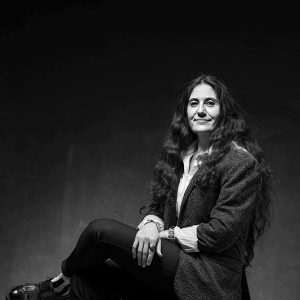
Moe began his career as a translator for international journalists in 2014. He was soon inspired to speak about the situation from his own perspective. Studying English literature in college and growing up around poetry, it was only fitting that Moe decided to use his art to bring the individual lives of people in Gaza to the international audience.

Delving into Palestinian poetry led Moe to connect online with poets all over the world. He was interested in using his skills as a poet and a journalist to share the stories of individual lives with a global audience. After realising the lack of opportunities for poets to share their work in Arabic and English, he created a space to offer an opportunity for young people to speak and find their own voice in 2018 – the Gaza Poet Society. The organisation is supported solely by donations from international poets who believe in Moe’s cause. He is at constant risk of Hamas censorship and at the will of the Gazan government to approve of civilian movement out of the country. 

Watching his family go days without water, power, and freedom of movement, Moe temporarily left Gaza for Istanbul in 2021 to continue his work more effectively. He was awarded the Times Richard Beeston Bursary in 2019 and has plans to complete his fellowship in London in 2022 following delays due to the pandemic. As the creator and host of the podcast “Gaza Guy”, he is focused on amplifying the voices of young Palestinians through poetry and fights for access to education in Gaza. Additionally, Moe has contributed to We Are Not Numbers, a site publishing stories of Palestiniain youth experiencing war. Moe recently released his debut poetry collection titled “Flamingo” and is working freelance to support the Gaza Poet Society from abroad.

Fatoş İrwen is a Kurdish artist and teacher from Diyarbakır, Turkey working with a variety of materials and techniques.
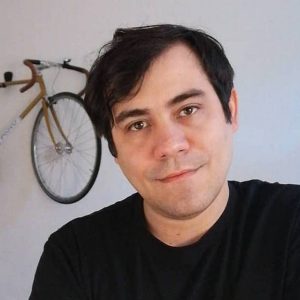
İrwen regularly uses her art to document her experiences as a Kurdish woman living in Turkey. The performance piece Füg [Fugue, 2012] documented her first experiences in police custody where she was physically and sexually abused. In 2016 İrwen was again taken into custody while boarding a domestic flight. She was charged with “resisting the police, opposition to the law against demonstrations and assemblies, propaganda for a terrorist organisation, belonging to a terrorist organisation” and sentenced to 3 years, 1 month and 15 days in prison. The charges related to a peaceful protest in 2013. 

During her imprisonment, İrwen made 1,500 works of art using materials accessible to her, including hair, tea, food, shoe polish, old textbooks and newspapers, bed sheets, laundry pegs, scarves, and mould and cigarette ashes. Among other projects, the 2019 piece titled “Gülleler” (Cannonballs) features balls crafted from the hair of inmates participating in a hunger strike. “The hunger strike was like firing a shot to the outside world,” İrwen says. After being released, İrwen collected her art pieces in her first solo exhibition titled Exceptional times which was featured at Depo in Istanbul in 2021. 

Discussing censorship by the Turkish authorities, İrwen says “this issue still continues to be the most painful issue of our lives and for which we pay a heavy price.” She is deeply committed to fighting for freedom of expression and artistic freedom. 

Due to her challenges with Turkish authorities and her identity as a Kurdish woman, İrwen has found that galleries and art spaces are sometimes reluctant to feature her work. Still, she has found success, and her work has been exhibited in Iran, Germany, Austria, Hong Kong, Iceland, France, Mexico, Iran, Morocco, Sweden, and Turkey.

Hamlet Lavastida has been described as a political activist by way of art. Lavastida uses his art to document human rights abuses in Cuba and to criticise Cuban authorities.

Lavastida pushes boundaries of censorship in Cuba and highlights the distinctly Cuban spirit of cultural resistance. His work reconstructs old Cuban political and military propaganda.

Throughout his career, Lavastida has sought to use his art to fight for transparency and freedom of speech in order to fight against the Cuban government. He sees his art as a non-violent tool to fight against the current regime. Lavastida has been involved in various protest movements in Cuba, including the 27N movement which grew out of the protests held on 27 November 2020. The movement works to bring attention to the censorship of artistic expressions in Cuba. 

In June 2021, Lavastida was arrested after returning from a residency at the Künstlerhaus Bethanien in Berlin. He was accused of ‘incitement to commit a crime’ because he suggested that other artists stamp images related to the San Isidro and 27N movements on local currency. Following his arrest, Amnesty International named him as a ‘prisoner of conscience’. Lavastida stayed in prison for 87 days. He was finally released without charges. 

Lavastida has been living in exile in Europe since September 2021. He has been warned that he will be arrested immediately if he ever tries to return to Cuba. Lavastida is deeply concerned by the situation. While has experienced threats and censorship targeting his art throughout his career, he is now experiencing threats against him as an individual. He believes this is part of a greater trend of censorship in Cuba. 

Lavastida plans to continue creating art and speaking up about the situation in Cuba.

SUPPORT INDEX'S WORK