14 May 2015 | Azerbaijan, Azerbaijan News, mobile, News
Azerbaijani journalist Idrak Abbasov’s story bears all the hallmarks of the typical forms of pressure used by an increasingly intolerant regime to silence its critics. Abbasov became a target for providing a rare critical voice in a media climate dominated by the state. As a result, Abbasov and his family faced years of pressure, ranging from harassment and threats to physical attacks. Nonetheless, he persisted in his efforts to tell the truth about the situation in his country.
In April 2012, just weeks after winning an Index on Censorship Freedom of Expression Award, Abbasov was brutally beaten by employees of the State Oil Company of Azerbaijan (SOCAR) whilst filming them demolishing houses in his village. As a result of the attack, he was hospitalised and sustained serious injuries, including broken ribs, damage to his internal organs, and injuries to his eyes. No one was ever prosecuted, and SOCAR blamed Abbasov for instigating the attack.
After the attack, the pressure continued to mount against Abbasov and his family – even his young children. Eventually, they were forced to flee the country for safety, like many other journalists, human rights defenders, and political activists, who are forming an ever-growing community of exiles.
Abbasov continues speaking out even now, drawing international attention to the situation in Azerbaijan, and trying to help his colleagues who have been jailed or otherwise targeted. Now, in the midst of an unprecedented crackdown in the country, he has written a letter to Christiane Amanpour in her new capacity as the UNESCO Goodwill Ambassador for Freedom of Expression and Journalist Safety.
In his letter, on behalf of the Sport for Rights campaign, Abbasov detailed the unprecedented human rights crackdown taking place in Azerbaijan, in particular the cases of jailed journalist Khadija Ismayilova, and human rights defender Emin Huseynov, who has been trapped at the Swiss Embassy in Baku since August 2014, facing arrest if he attempts to leave. Abbasov urged Amanpour to make a statement condemning the crackdown and calling for the release of the country’s jailed journalists and human rights defenders.
Abbasov also called on Amanpour to take steps to hold UNESCO responsible for its freedom of expression mandate with respect to Azerbaijan, and to undertake a fact-finding mission to the country. He noted that a visit by Amanpour would be timely in the aftermath of the inaugural European Games – which will take place in Baku from 12-28 June – in light of potential acts of reprisal against Azerbaijanis who speak out in the run-up to the Games.
The Sport for Rights campaign hopes that Amanpour will respond, and take action to address the serious freedom of expression violations in the country, before the situation becomes even worse. In particular, Amanpour could be a useful intermediary with Azerbaijani First Lady Mehriban Aliyeva, herself a UNESCO Goodwill Ambassador.
In the meantime, it is journalists like Idrak Abbasov and Khadija Ismayilova, and human rights defenders like Emin Huseynov, who will continue paying the price for the international community’s silence on the widespread repression being carried out by the Azerbaijani regime. They at least deserve a sporting chance.
Oslo, Norway
14 May 2015
Dear Ms Amanpour,
I am writing to you as the UNESCO Goodwill Ambassador for Freedom of Expression and Journalist Safety. Congratulations on your appointment! You may remember me from the Rory Peck Awards in 2013, where I received the Martin Adler Award for my freelance journalism in Azerbaijan. Unfortunately, the situation in Azerbaijan has drastically deteriorated since our meeting in London, and my family and I have been forced to leave the country for safety.
Now, I am writing to you with some requests from the Sport for Rights campaign, a coalition of international organisations working to promote human rights in Azerbaijan in the context of the inaugural European Games, which will take place in Baku this June. In the run-up to the Games, the Azerbaijani authorities have engaged in an unprecedented crackdown to silence all criticism and dissent.
As a result, eight journalists are now behind bars on spurious charges. One of them is prominent investigative journalist Khadija Ismayilova, whom you met when she received an award from the International Women’s Media Foundation in 2012. Khadija is now in detention, facing serious jail time on trumped-up charges of embezzlement, illegal entrepreneurship, tax evasion, abuse of power, and inciting someone to attempt suicide. Khadija has been targeted for her fearless reporting, much of which focused on corruption of Azerbaijan’s ruling elite, including President Aliyev and his family.
Five human rights defenders are also in jail on spurious charges, all strong advocates of freedom of expression. Another human rights defender, Emin Huseynov, remains trapped in the Swiss embassy in Baku, facing arrest on spurious charges of illegal entrepreneurship, tax evasion, and abuse of power. Emin has been targeted for his work as director of the Institute for Reporters’ Freedom and Safety, Azerbaijan’s leading freedom of expression advocacy organization. Emin has long been at the forefront of promoting freedom of expression and free media. He is a tireless defender of free speech, not only in his native Azerbaijan but also throughout the former Soviet Union and beyond.
Besides arrests, the authorities have stepped up other forms of pressure on journalists. Violence against journalists remains a serious problem, with complete impunity for their attackers. Harassment, threats, and intimidation are an everyday reality for critical journalists. A growing number of journalists, like me, have been forced to leave the country for safety.
In light of these and other serious problems, the Sport for Rights campaign has three requests for you. Firstly, we urge you to make an immediate statement condemning the ongoing human rights crackdown in Azerbaijan and calling for the release of the jailed journalists and human rights defenders. We have enclosed a list of their names and case details, and can provide further information as needed.
Secondly, we ask that you take steps to hold UNESCO responsible for its freedom of expression mandate with respect to Azerbaijan. Despite the alarming freedom of expression situation in the country, Azerbaijan has received nothing but praise from UNESCO. Director-General Irina Bokova has consistently failed to mention freedom of expression in her public remarks related to Azerbaijan.
Finally, we encourage you to undertake a mission to Azerbaijan to investigate the situation in the country, visit our jailed colleagues, and raise these serious issues directly with the authorities, including First Lady Mehriban Aliyeva, who is herself a UNESCO Goodwill Ambassador. This would be particularly helpful in the aftermath of the European Games, as we are worried about possible acts of retribution towards our few remaining brave colleagues in the country, as has been the case after past international events.
Thank you for considering our requests, and as ever, for your support for freedom of expression. I would greatly appreciate anything you could do to help improve the situation in my country before it gets any worse.
Sincerely yours,
Idrak Abbasov
10 Mar 2015 | mobile, News, Russia
As so often at the sessions of the United Nations Human Rights Council, some interventions by states go unnoticed.
Under the famous ceiling of room XX created by Miquel Barcel in the Palais des Nations in Geneva, the on-going session of the Council is no different. Some of those unnoticed statements deserve our attention.
One in particular.
On Thursday, 5 March, one of the United Nations’ chief human rights voices, Zeid Ra’ad Al Hussein, presented his first annual report to the council. It is his first since he took up the position of high commissioner for human rights in September 2014. From terrorism, torture and harassment of human rights defenders to the reorganisation of his office, the high commissioner’s report aims at presenting the state of human rights, the major threats against them and how he aims at building up his office to face those realities.
Al Hussein’s mandate, which Norway at the council called “an authoritative voice on human rights, built on […] repeated confirmation of its independence,” is what the Russian Federation in fact wants to silence.
Russia, which is today one of the 47 members of the council, was infuriated at the high commissioner’s statement presenting his report. It is traditional for states mentioned by international human rights mechanisms to accuse such instruments for being politicised and obeying “double standards.”
Russia went a step further by “condemning the high commissioner’s attempts to stigmatise any states for their acts or omissions in the field of human rights, even if they indeed took place.” Russia does not refer to politicisation or to attention the high commissioner would be giving to situations in certain countries only, but instead calls upon the United Nations voice for human rights to stop mentioning any country all together, whatever human rights violation took place in the country. In fact, Russia calls for the high commissioner to be silent.
Such a statement should not remain unnoticed because it sheds light on how Russia sees the international system; not one of standards and principles challenging states but rather one of obedience and muteness serving the states. The challenge Russia is facing with the high commissioner’s report is in fact a reflection of its disrespect for international law, be it in the way it has led suppression of civil society at home or its military activities in Ukraine, including the annexation of Crimea.
Because we must applaud those who stand firm for rights, we must also make sure that declarations by states who aim at silencing them do not go unnoticed. This one in particular.
This guest post was published on 10 March 2015 at indexoncensorship.org
11 Feb 2015 | Azerbaijan, Azerbaijan Statements, mobile, News, Statements
In January, Index on Censorship reported on the beginning of the trial of human rights activist Rasul Jafarov, who is being tried on spurious charges. The Azerbaijani embassy has written to Index on Censorship responding to that article. This is the Index response to the embassy.
Dear Ambassador Tahir Taghizadeh,
Thank you for your letter in response to our report on the beginning of the trial of human rights and democracy activist Rasul Jafarov.
In your letter, you wrote:
“In my country, human rights and fundamental freedoms are ensured in full compliance with the national and international commitments that Azerbaijan has subscribed to. No one is persecuted for his/her political views and activities as proved by Azerbaijan’s vibrant political process and free and diverse media.”
We beg to differ with your point of view.
Azerbaijan’s record on human rights and a free press has been discussed with great concern at the international level many times in recent years.
In March 2012, Index on Censorship joined with Article 19, Human Rights House Foundation, International Federation of Journalists, Media Diversity Institute, Norwegian Helsinki Committee, Reporters Without Borders and World Association of Newspapers and News Publishers to co-produce Running Scared: Azerbaijan’s Silenced Voices. The report opened with this stark warning: “The current state of freedom of expression in Azerbaijan is alarming, as the cycle of violence against journalists and impunity for their attackers continues; journalists, bloggers, human rights defenders and political and civic activists face increasing pressure, harassment and interference from the authorities; and many who express opinions critical of the authorities – whether through traditional media, online, or by taking to the streets in protest – find themselves imprisoned or otherwise targeted in retaliation.”
In December 2012, the Parliamentary Assembly of the Council of Europe issued a monitoring report that included the comments that the “situation with regard to basic freedoms, including freedom of expression, freedom of assembly and freedom of association is preoccupying. The committee expresses its alarm at reports by human rights defenders and domestic and international NGOs about the alleged use of so-called fabricated charges against activists and journalists. The combination of the restrictive implementation of freedoms with unfair trials and the undue influence of the executive results in the systemic detention of people who may be considered prisoners of conscience. Alleged cases of torture and other forms of ill-treatment at police stations, as well as the impunity of perpetrators, raise major concern”.
In April 2013, the Human Rights Council of the United Nations work group issued its report from Azerbaijan’s universal periodic review. Among the recommendations were suggestions for improvements on human rights and more specifically freedom of expression:
• Ensure the full enjoyment of the right to freedom of expression in line with country’s international commitments (Slovakia)
• Guarantee the rights to freedom of expression, association and peaceful assembly particularly by allowing peaceful demonstrations in line with the obligations stemming from the International Covenant on Civil and Political Rights (Switzerland);
• Put in place additional and fitting measures to ensure respect for freedom of expression and of the media (Cyprus);
• Ensure that Azerbaijani media regulations uphold diversity among media outlets, as per international standards and best practices (Cyprus);
• Expand media freedoms across print, online and, in particular, broadcast platforms, notably by ending its ban on foreign broadcasts on FM radio frequencies and eliminating new restrictions on the broadcast of foreign language television programs (Canada);
• Take effective measures to ensure the full realization of the right to freedom of expression, including on the Internet, of assembly and of association as well as to ensure that all human rights defenders, lawyers and other civil society actors are able to carry out their legitimate activities without fear or threat of reprisal (Czech Republic);
• Ensure that human rights defenders, lawyers and other civil society actors are able to carry out their legitimate activities without fear or threat of reprisal, obstruction or legal and administrative harassment (Sweden);
• Put an end to direct and indirect restrictions on freedom of expression and take effective measures to ensure the full realization of the right to freedom of expression and of assembly (Poland);
• Ensure the full exercise of freedom of expression for independent journalists and media, inter alia, by taking into due consideration the recommendations of the Council of Europe Commissioner for Human Rights (Italy);
• Ensure that journalists and media workers are able to work freely and without governmental intimidation (Germany);
• Ensure that journalists and writers may work freely and without fear of retribution for expressing critical opinions or covering topics that the Government may find sensitive (Slovenia);
• Protect and guarantee freedoms of expression and association in order to enable human rights defenders, NGOs and other civil society actors to be able to conduct their activities without fear of being endangered or harassed (France);
• Strengthen measures to guarantee a safe and conducive environment for the free expression of civil society (Chile);
• Remove all legislative and practical obstacles for the registration, funding and work of NGOs in Azerbaijan (Norway);
• Ensure that all human rights violations against human rights defenders and journalists are investigated effectively and transparently, with perpetrators being promptly brought to justice, including pending unresolved cases requiring urgent attention (United Kingdom);
• Ensure prompt, transparent and impartial investigation and prosecution of all alleged attacks against independent journalists, ensuring that
the media workers do not face reprisals for their publications (Slovakia);
Though Azerbaijan has the modern legal framework in place to respond to these suggestions from the international community, the respect for the rule of law is sorely lacking.
In October 2013, Index on Censorship published Locking up free expression: Azerbaijan silences critical voices, which described the situation in your country in the run up to the presidential elections.
We wish that was the end of the story, that our insistence that Azerbaijan respect free of expression was based on outdated information or thoroughly implemented international recommendations.
But in 2014 the assault against journalists and human rights activists accelerated with detentions of well-respected individuals with international profiles and the temerity to speak some uncomfortable truths to the government of Azerbaijan.
These are just a few of the cases against journalists and human rights activists that we follow:
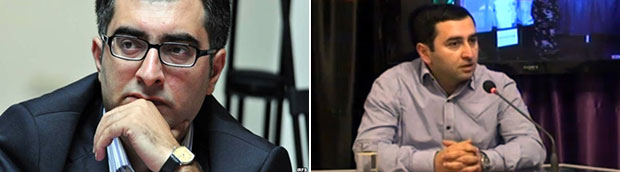
Anar Mammadli and Bashir Suleymanli
Anar Mammadli and Bashir Suleymanli — sentenced to 5.5 and 3.5 years respectively in May 2014 — are prominent human rights activists and founders of the Election Monitoring and Democracy Studies Centre. They were arrested and jailed in 2013, following outspoken criticism of presidential elections in October 2013, despite international protests. Those are the same polls that invited election observers from the OSCE found lacking. On 29 September 2014, Mammadli was awarded the Václav Havel Award for Human Rights by the Council of Europe.
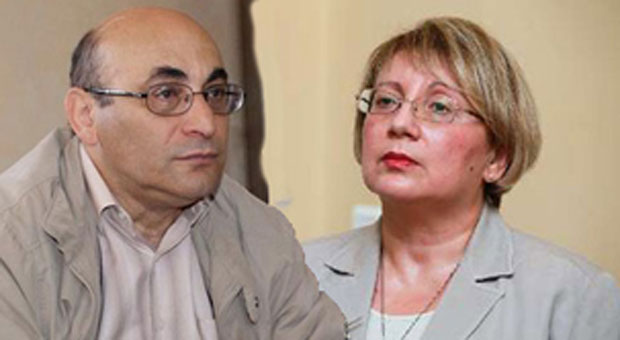
Arif and Leyla Yunus (Photo: HRHN)
Leyla Yunus — arrested 30 July 2014 — is the director of the Peace and Democracy Institute, which among other things works to establish rule of law in Azerbaijan. She has been charged with state treason (article 274 of the Criminal Code of the Republic of Azerbaijan), large-scale fraud (article 178.3.2), forgery (article 320), tax evasion (article 213), and illegal business (article 192). On 18 February, her pre-trial detention was extended for another five months. Her husband Arif Yunus was arrested 5 August 2014. Arif Yunus is facing charges of state treason and fraud. Both have had their initial three month pre-trial detentions extended.
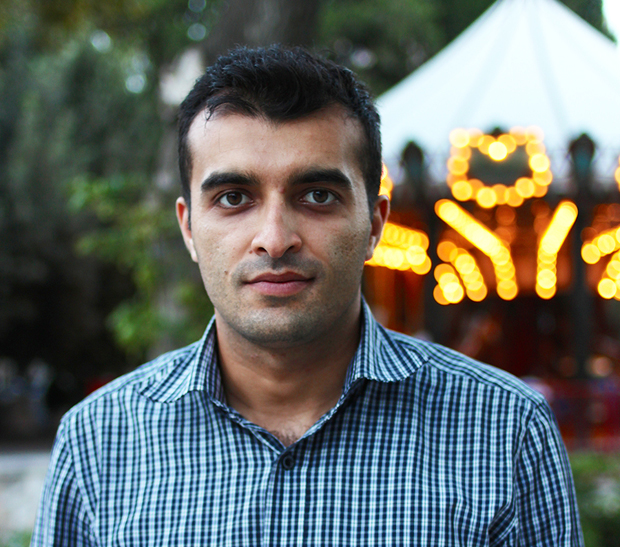
Human rights and democracy activist Rasul Jafarov (Photo: Melody Patry)
Rasul Jafarov — arrested 2 August 2014 — one of the initiators and coordinators of the campaign “Sing for Democracy” and “The Art of Democracy”, advocated for the rights of political prisoners, actively participated in the International Platform “Civil Solidarity.” He is accused of: tax evasion (Article 192), illegal business (Article 213) and malpractice (Article 308). The charges carry a possible sentence of 12 years.
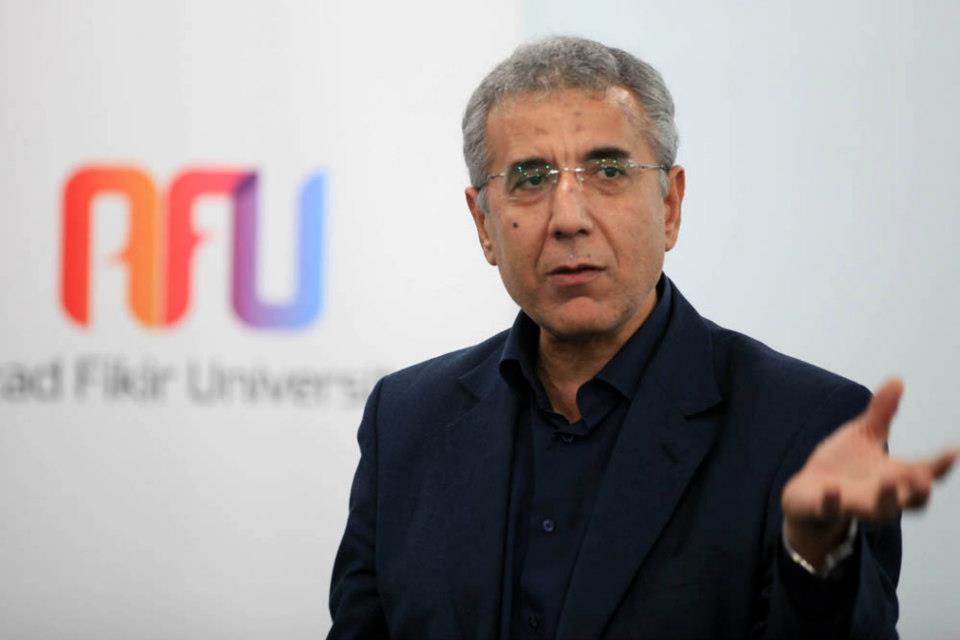
Lawyer Intigam Aliyev
Intigam Aliyev — arrested 8 August 2014 — is a human rights defender and a lawyer specialized in defending rights of citizens in the European Court of Human Rights. He is charged with Articles 213.1 (tax evasion), 308.2 (malpractice) и 192.2 (illegal business) of the Criminal Code. Index was heartened to hear that Aliyev was at least allowed to sit with his lawyers in court on Feb 3.
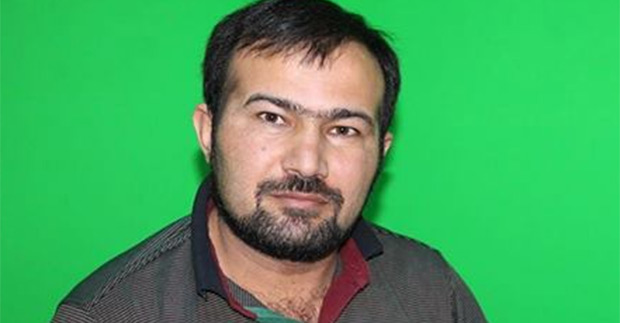
Journalist Seymur Hezi
Seymur Hezi — arrested 29 August 2014 — works for independent newspaper Azadliq and host of the news programme “Azerbaijan Hour”. He is a member of the opposition Popular Front Party. Index reported on January 29 that Hezi was sentenced to a five-year prison sentence on charges of “aggravated hooliganism” on 29 January.
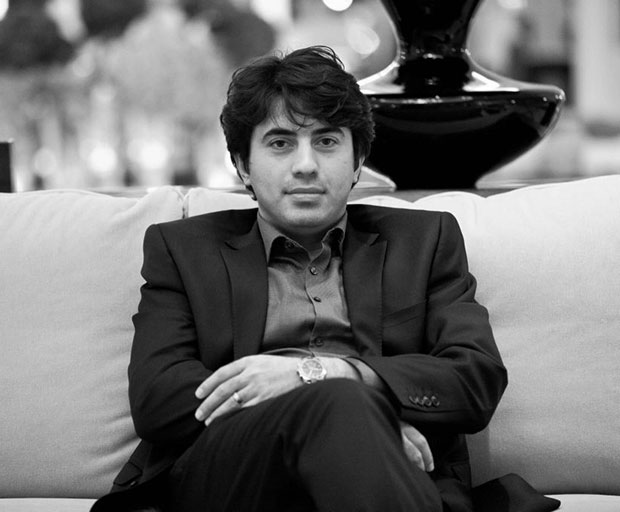
Emin Huseynov, journalist and human rights defender, director of the Azerbaijani Institute for Reporters’ Freedom and Safety (IRFS)
Emin Huseynov — went into hiding in August 2014 — is an internationally recognised human rights defender and leader of the Institute for Reporters’ Freedom and Safety (IRFS). IRFS is the leading media rights organisation in Azerbaijan and one of the main partner organisations of the Human Rights House Network in the country. Huseynov was charged with tax evasion, illegal business and abuse of authority after he went into hiding at the Swiss embassy. Florian Irminger, head of advocacy at the Human Rights House Foundation (HRHF), of which Index is a network member, called on Switzerland to continue to host Huseynov. “His location at the embassy is justified by the level of the repression in the country, the bogus charges brought against human rights defenders in Azerbaijan and the impossibility for them to defend themselves in court, due to the lack of independence of the judiciary and the harassment of their lawyers.”
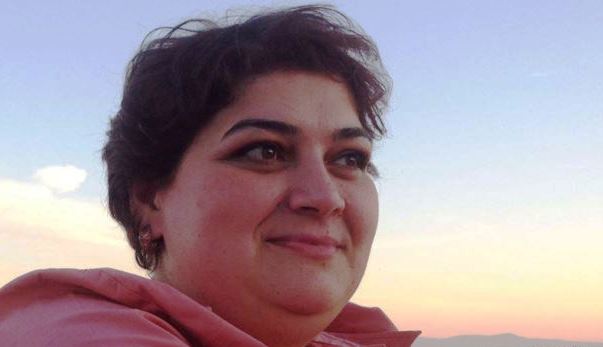
Khadija Ismayilova
Khadija Ismayilova — arrested on 5 December — is an investigative journalist and radio host who is currently working for the Azerbaijani service of Radio Free Europe/Radio Liberty. She is a member of the Organized Crime and Corruption Reporting Project. She was arrested under charges of incitement to suicide, a charge widely criticised by human rights organizations. Ismayilova is currently being supported by two petition campaigns by Index on Censorship and Reporters Without Borders. On 13 Feb, lawyer Fariz Namazly told Contact.az that new charges have been filed. According to him, Ismayilova is charged under the Article: 179.3.2 (large-scale embezzlement), 192.2.2 (illegal business), 213.1 (tax evasion) and 308.2 (abuse of power.) The charges carry a possible sentence of 12 years.
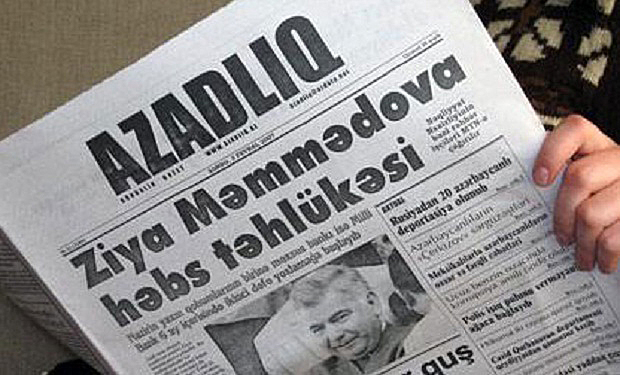
Award-winning newspaper Azadliq was forced to halt its print edition in July 2014 as its bank accounts were frozen. We reported on this in August 2014.
In September, the European Parliament adopted a resolution on the human rights situation in your country.
In November, Nils Muižnieks, the Council of Europe Commissioner for Human Rights, called his autumn 2014 mission to Azerbaijan one of the most difficult of his tenure. He wrote, “In late October I was in Azerbaijan, the oil-rich country in the South Caucasus, which just finished holding the rotating chairmanship of the 47-member Council of Europe. Most countries chairing the organisation, which prides itself as the continent’s guardian of human rights, democracy and the rule of law, use their time at the helm to tout their democratic credentials. Azerbaijan will go down in history as the country that carried out an unprecedented crackdown on human rights defenders during its chairmanship.”
You mention in your letter that individuals are not being arrested for their human rights work but it seems an astonishing coincidence that all these prominent human rights defenders should all be guilty of such an array of financial crimes. And that brings us full circle to the present. Since we received your letter, there have been several developments that we would like to brief you on:
On 29 January 2015, a provisional resolution before the CoE called attention to the cases of investigative journalist Khadija Ismayilova, human rights activist Emin Huseynov and the closure of Radio Free Europe/Radio Liberty. Further on in the resolution PACE was being asked to call on Azerbaijan to properly investigate the murders of journalists Elmar Huseynov (2005) and Rafiq Tagi (2011).
On 3 Feb, President Aliyev signed an amended media law that restricts press freedom by making it easier to shutter media outlets.
Just today, Reporters Without Borders released its World Press Freedom Index 2015, which places Azerbaijan at 162. That’s down 2 spots from last 2014.
We wish Azerbaijan’s commitment to a “free and diverse media” was more than just words and we will continue to report on these detentions – as we do globally – for as long as these words are not translated into action.
Best regards
Jodie Ginsberg
Chief Executive
Index on Censorship