19 May 2023 | FEATURED: Katie Dancey-Downs, News, Thailand, Turkey
One poll remains deadlocked while another has seen the population vote for a change of direction
It’s been a long two decades of dwindling freedoms in Turkey under Recep Tayyip Erdogan. But his control is teetering on a ledge. The election couldn’t have come at a worse time for Erdogan, with his questionable response to the earthquakes and soaring inflation winning him a fresh batch of critics. Last Sunday Turkey headed to the polls. And the winner was… nobody. With neither former Index Tyrant of the Year Erdogan nor opposition leader Kemal Kılıçdaroğlu reaching the 50% threshold needed to win the presidency, it’s back to the voting booths again.
In the week before the election, PEN Norway’s Turkey adviser shared a stack of interviews with Index, which made for sombre bedtime reading. Eleven representatives from the country’s major political parties discussed the state of free expression — or lack thereof — which Jemimah Steinfeld wrote about.
In one interview, Zeynep Esmeray Özadikti, who is a candidate for MP from Turkey’s Worker Party, wrote about the silencing of the LGBTQ+ community, hoping that if she as a trans woman is elected, it will be an important step: “In Turkey, the LGBTI+ community cannot use their freedom of expression in any way and are criminalised. Rainbow-themed products are banned, rainbow flags are seized in protests, Pride parades and indoor meetings are banned. Associations and organisations working for LGBTI+ rights are targeted and threatened.”
We could fill a whole magazine with stories about Turkey’s rocky relationship with free expression, starting with the repression of LGBTQ+ rights and Kurdish communities, and moving onto the scores of journalists who have been locked up. In our latest issue, our Turkey contributing editor Kaya Genç took a deep dive into one example of a newsroom going against the propaganda-led mainstream, Medyascope. If you want up-to-the-minute news on what’s going on in Turkey, their website is a good place to start (thank goodness for Google translate for those of us who haven’t yet set our Duolingo to Turkish).
In the run-up to the election, Turkish youth have been scouring YouTube for information that doesn’t come with a side-helping of propaganda, and the Turkish government has pulled out all the stops in silencing journalists reporting on the earthquakes, rather than focusing on… well… disaster relief. They haven’t shied away from blocking social media platforms either.
What happens next is important. If Erdogan wins, what will such a close call do to the state of Turkey’s freedoms? The first-round vote landed at 49.51% for Erdogan and 44.88% for Kılıçdaroğlu, and let’s remember who’s got the media on their side. The second round of voting is set for 28 May, and while Index would absolutely never ever back a specific candidate, we are hoping to see democracy prevail over autocracy.
Further east, and another country is undergoing a seismic change at the hands of an election held last Sunday. Where Turkey is in political limbo, Thailand is out the other side. Or is it? The country has had a military-backed government since the 2014 coup, but Sunday’s vote sent Thailand spinning off in a new direction, with the progressive Move Forward Party’s Pita Limjaroenrat likely to take the driving seat of a coalition. The party is breaking Thailand’s big taboo with plans to reform the monarchy, which is all the more poignant considering the democracy protests that started in 2020, when demonstrators asked for exactly that to happen. Under the current lese-majeste law, criticising the monarchy usually comes with a stint behind bars of up to 15 years. Thais asked for democracy. They asked for progression. They asked for the right to insult the king without spending over a decade in jail. And if all goes smoothly from here, that’s exactly what they’ll get.
But it is a big “if”. Not only will the House of Representatives (members of which were given their places through Sunday’s election) vote on who will be prime minister, so too will members of the Senate, who were selected by the military. And that’s where the story of Thailand’s democracy could come unstuck.
11 May 2023 | FEATURED: Jemimah Steinfield, News, Turkey
The country’s human rights landscape has disintegrated since Erdogan took over in 2003
Turkish citizens are heading to the polls this Sunday to vote in the most fiercely contested election in years. Recep Tayyip Erdogan, who came to power in 2003, is fighting for his political survival amid economic turmoil and wrath over the handling of the February earthquakes. He is being challenged by Kemal Kılıçdaroğlu, a retired bureaucrat who is backed by a six-party National Alliance.
One month before the elections PEN Norway’s Turkey adviser travelled to Istanbul to interview 11 representatives of the major political parties (including Erdogan’s) and question them on issues surrounding free expression in Turkey.
The interviews, which they shared with Index, are a sobering look at how Turkey’s human rights landscape has disintegrated in that time (with the exception of Bülent Turan, from Erdogan’s Justice and Development Party, who goes as far as denying that any journalist is in prison because of their work). The testimonies are tied together by common threads – what attacks have happened and how they have happened (very much over time, not linked to just one single moment or one single piece of legislation). The rule of law comes up time and again. “There is no rule of law in Turkey anymore and the independence of the judiciary has been destroyed,” Dr. Canan Kaftancıoğlu, the Istanbul regional chair of the Republican People’s Party, says bluntly.
They are, unsurprisingly, most damning of Erdogan himself. The lawyer Bahadır Erdem, vice chair of the Iyi Party, one of the most important components of the National Alliance, says Turkey is being ruled by “a one-man regime” and this “system has pushed our country into dire straits”.
But the interviews also strike a note of optimism, a sense that all is not lost. Strong grassroots organisations still exist, as lawyer Züleyha Gülüm, MP for the People’s Democratic Party, points out. And these grassroots organisations, combined with an alliance that has come together around a commitment to improve rights, mean that Turkey’s fate could all change this weekend. Bülent Kaya, legal affairs chairman of the Saadet Party, said that if the National Alliance is successful “everyone will breathe a sigh of relief”. Erdem said: “Once we amend the constitution, an independent judiciary will follow. The press will be independent. We will fully implement the freedom of opinion of individuals. People will be completely free both in social media and as an author in the works they create and write, as an artist in the films they shoot, in the works of art they act in, in the works of art they create. This is the sine qua non of democracy. It’s as natural as breathing.”
Below we share one of the interviews in full, a powerful testimony from Zeynep Esmeray Özadikti, a trans woman who is candidate for MP from Turkey’s Worker Party. She outlines the immense struggles faced by those who are LGBTQI and by women.
25 Jan 2023 | Australia, Austria, Bahrain, Belarus, Belgium, Botswana, Burma, China, Cuba, Czech Republic, Denmark, Equatorial Guinea, Eritrea, Estonia, Ethiopia, Finland, Germany, Greece, Index Index, Ireland, Laos, Latvia, Lithuania, Moldova, Netherlands, News, Nicaragua, North Korea, Norway, Portugal, Romania, Russia, Saudi Arabia, South Africa, South Sudan, Swaziland, Switzerland, Syria, Turkmenistan, United Arab Emirates, United States, Yemen
A major new global ranking index tracking the state of free expression published today (Wednesday, 25 January) by Index on Censorship sees the UK ranked as only “partially open” in every key area measured.
In the overall rankings, the UK fell below countries including Australia, Israel, Costa Rica, Chile, Jamaica and Japan. European neighbours such as Austria, Belgium, France, Germany and Denmark also all rank higher than the UK.
The Index Index, developed by Index on Censorship and experts in machine learning and journalism at Liverpool John Moores University (LJMU), uses innovative machine learning techniques to map the free expression landscape across the globe, giving a country-by-country view of the state of free expression across academic, digital and media/press freedoms.
Key findings include:
-
The countries with the highest ranking (“open”) on the overall Index are clustered around western Europe and Australasia – Australia, Austria, Belgium, Costa Rica, Denmark, Estonia, Finland, Germany, Ireland, Latvia, Lithuania, Netherlands, New Zealand, Norway, Portugal, Sweden and Switzerland.
-
The UK and USA join countries such as Botswana, Czechia, Greece, Moldova, Panama, Romania, South Africa and Tunisia ranked as “partially open”.
-
The poorest performing countries across all metrics, ranked as “closed”, are Bahrain, Belarus, Burma/Myanmar, China, Cuba, Equatorial Guinea, Eritrea, Eswatini, Laos, Nicaragua, North Korea, Saudi Arabia, South Sudan, Syria, Turkmenistan, United Arab Emirates and Yemen.
-
Countries such as China, Russia, Saudi Arabia and United Arab Emirates performed poorly in the Index Index but are embedded in key international mechanisms including G20 and the UN Security Council.
Ruth Anderson, Index on Censorship CEO, said:
“The launch of the new Index Index is a landmark moment in how we track freedom of expression in key areas across the world. Index on Censorship and the team at Liverpool John Moores University have developed a rankings system that provides a unique insight into the freedom of expression landscape in every country for which data is available.
“The findings of the pilot project are illuminating, surprising and concerning in equal measure. The United Kingdom ranking may well raise some eyebrows, though is not entirely unexpected. Index on Censorship’s recent work on issues as diverse as Chinese Communist Party influence in the art world through to the chilling effect of the UK Government’s Online Safety Bill all point to backward steps for a country that has long viewed itself as a bastion of freedom of expression.
“On a global scale, the Index Index shines a light once again on those countries such as China, Russia, Saudi Arabia and United Arab Emirates with considerable influence on international bodies and mechanisms – but with barely any protections for freedom of expression across the digital, academic and media spheres.”
Nik Williams, Index on Censorship policy and campaigns officer, said:
“With global threats to free expression growing, developing an accurate country-by-country view of threats to academic, digital and media freedom is the first necessary step towards identifying what needs to change. With gaps in current data sets, it is hoped that future ‘Index Index’ rankings will have further country-level data that can be verified and shared with partners and policy-makers.
“As the ‘Index Index’ grows and develops beyond this pilot year, it will not only map threats to free expression but also where we need to focus our efforts to ensure that academics, artists, writers, journalists, campaigners and civil society do not suffer in silence.”
Steve Harrison, LJMU senior lecturer in journalism, said:
“Journalists need credible and authoritative sources of information to counter the glut of dis-information and downright untruths which we’re being bombarded with these days. The Index Index is one such source, and LJMU is proud to have played our part in developing it.
“We hope it becomes a useful tool for journalists investigating censorship, as well as a learning resource for students. Journalism has been defined as providing information someone, somewhere wants suppressed – the Index Index goes some way to living up to that definition.”
11 Jan 2023 | Iran, News
As of last week four young men have been executed at the hands of the Iranian regime. They were arrested while participating in the recent protests sparked by the death in custody of Jina (Mahsa) Amini. After being tortured and forced to make confessions, they faced grossly unfair show trials. Without strong condemnation, this death toll will grow – there are many more who have currently been sentenced to execution. Here we remember those four who died fighting for freedom.
Mohammad Mehdi Karami
Mohammad Mehdi Karami was a 22-year-old Kurdish Iranian man From Karaj in the Alborz province of Iran. He was arrested on 5 November 2022 for allegedly killing a member of the security forces and was executed just two months later on 7 January. At the time of his death, he had been on hunger strike for four days, demanding access to his lawyer.
Mohammad was a national karate champion who had several national titles. In an interview with Etemad newspaper, his father describes Mohammad as “an athlete who constantly strived to achieve honours”. In the video, uploaded on 12 December, he pleads with authorities to release his son and recounts various attempts to contact the lawyer who was appointed to his son by the judiciary, all of which were ignored. He describes a phone conversation with Mohammad in which the young man sobbed and begged his father not to tell his mother about his sentence. “Mehdi’s mother is very attached to him,” he said. “If something happens to Mehdi, our lives will also end”.
Mohammad attempted to appeal his sentence but was denied. His father maintains that on their final phone call, his son swore to have not committed murder. The family was not allowed to see him to say goodbye before he was hanged. They camped outside the Rajai Shahr prison in Karaj. The prison guards reassured them that he was alive and well. They told the family that rumours of execution were false and to return home. Mohammad’s grave is in Eshtehard, Alborz. Mehdi Beyk, the journalist who interviewed Karami’s parents, was later arrested.
Seyed Mohammad Hosseini
Seyed Mohammad Hosseini, 39, was a worker remembered for volunteering with children by a German parliamentarian who advocated his case.
Hosseini was convicted for allegedly murdering a member of the security forces and was executed on 7 January. His lawyer, Ali Sharifzadeh Ardakani, described meeting him in prison: “He was in tears, talking about how he was tortured and beaten while blindfolded.” Ardakani previously revealed that the court had denied him access to case materials to defend his client during the entire interrogation and trial process.
Seyed Mohammad was an orphan with no immediate family to receive his body after his execution. His brother was also arrested but disappeared after release. Mohammad’s friends weren’t allowed to visit him in prison. He was buried near Mohammad Mehdi Karami’s grave in Eshtehard, Alborz. Mohammad Mehdi’s family attended Mohammad’s grave, lit candles and placed flowers there in his memory.
Majidreza Rahnavard
Majidreza Rahnavard was publicly executed on 12 December, just 23 days after his arrest.
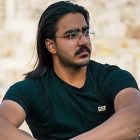
Majidreza Rahnavard. Photo: 1500tasvir_en (CC BY-SA 4.0)
He was charged with allegedly fatally stabbing two Basij militia volunteers. The 23-year-old was denied a lawyer of his choice for his trial.
The lawyer he was given did not put up a defence. Mahmood Amiry-Moghaddam, director of Norway-based Iran Human Rights, tweeted that Rahnavard was sentenced based on “coerced confessions, after a grossly unfair process and a show trial”.
Majidreza’s mother was not told about his execution until after his death. Activist collective 1500tasvir said on Twitter that the family received a telephone call from an official at 07:00 local time. They said: “We have killed your son and buried his body in Behesht-e Reza cemetery.”
In a video aired by authorities, Rahnavard appears blindfolded, surrounded by masked men. He is asked what he wrote in his will. He says: “I don’t want anyone to pray, or to cry. I want everyone to be happy and play happy music.”
Mohsen Shekari
Mohsen Shekari, 23, worked in a cafe. He was arrested on 25 September for trying to stop security forces from attacking protesters in Tehran. He was the first person to be executed by the state on 8 December after being convicted of injuring a member of Iran’s Basij militia or “waging war against God”. While authorities asserted that he wielded a machete, Shekari’s family disputed this version of events, claiming he used non-violent means to separate protesters and security forces.
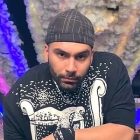
Mohsen Shekari. Photo: Unknown (CC BY 4.0).
Shekari’s uncle told The Guardian that authorities did not release his body. Other families of dead protesters have made similar statements. He said that the family had been sent to two cemeteries, but that when they arrived at the locations, they were told the body was not there. Although Mohsen’s mother saw her son the night before his hanging, she was ordered to remain silent about his fate.
Shekari’s judge had the choice to impose a lighter sentence and chose not to do so. Shekari appealed the verdict but was denied by Iran’s Supreme Court, despite the fact that he was not represented by his lawyer at the time of the appeal.
