3 Apr 2018 | News, Volume 47.01 Spring 2018
[vc_row][vc_column][vc_custom_heading text=”Women of the Wild West have been omitted from popular history and culture, but they’re finally receiving airtime, writes Jan Fox “][vc_row_inner][vc_column_inner][vc_column_text]
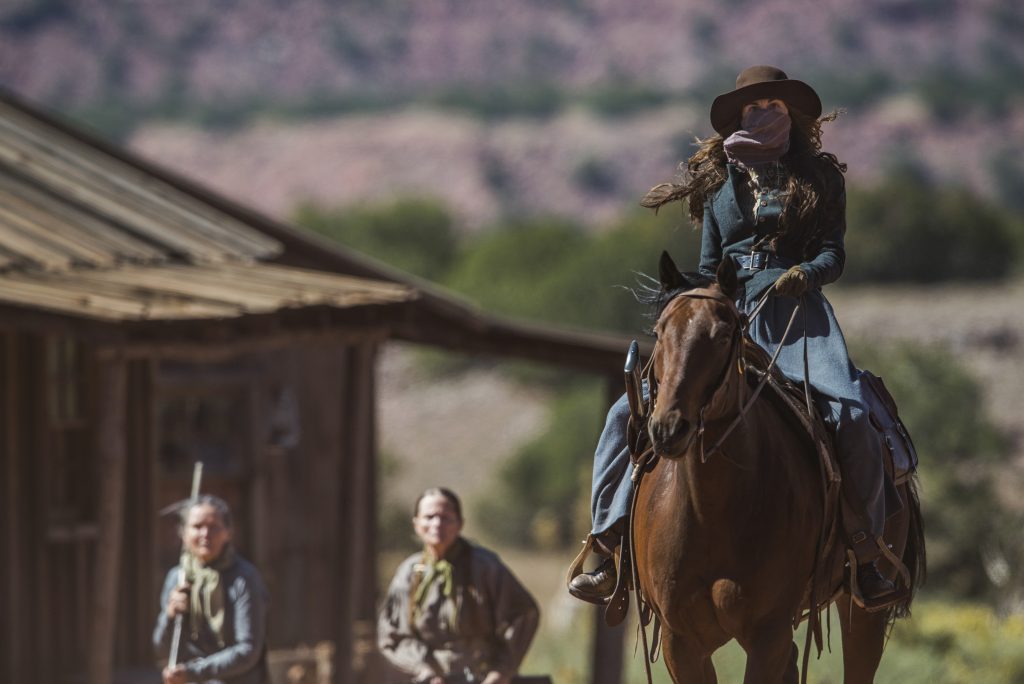
Michelle Dockery stars in Netflix’s Godless, a new show featuring the rarely seen female pioneer, Ursula Coyote/Netflix
[/vc_column_text][/vc_column_inner][/vc_row_inner][/vc_column][/vc_row][vc_row][vc_column][vc_column_text]
Netflix’s new hit show, Godless, is set in a 19th century western USA town run by women. La Belle, New Mexico, has experienced a mining tragedy, killing most of the men and putting women in charge. The cowboys are almost gone and in their place we see women brandishing guns and riding horses.
Godless turns the traditional male-dominated Western genre on its head. It has focused attention on the forgotten women who rolled across the western plains. The storyline may be fictional, but strong pioneer women playing a major part in running these frontier towns is more true to life. But often this side of the history of the west was ignored.
The term “pioneer” refers to anyone who ventured into, and settled, new lands in the USA. Starting in Jamestown, Virginia, in 1607, people moved into the country’s interior and, finally, to the west coast. This history of westward exploration has been told mostly from a male angle. Western landscapes are represented by heroic men on horseback: cowboys, cavalry officers, sharpshooting sheriffs and notorious outlaws.
“In films like Shane and other Westerns, women lack real decision-making authority, and ethnic or racial women appear as prostitutes or bad influences, if they appear at all,” said Laura Woodworth-Ney, executive vice-president and provost of Idaho State University and author of Women and the American West.
It’s definitely a case of his-story, not her-story.
In response to this, the Pioneer Woman Museum in Oklahoma was born.
“I don’t remember learning anything about these women when I was at school in the 1980s, and from the visitors we get at the museum, I don’t think student textbooks are any different today. We need to change that story,” said museum director Kelly Houston. “There were many single and widowed women who went west, but they are largely ignored by history.”
For example, after the Homestead Act of 1862, people raced to claim 160 acres of free public land. Among the biggest of these land races or “runs” in Oklahoma was the one in 1893 when more than 100,000 people showed up.
[/vc_column_text][/vc_column][/vc_row][vc_row][vc_column width=”1/4″][vc_icon icon_fontawesome=”fa fa-quote-left” color=”custom” align=”right” custom_color=”#dd3333″][/vc_column][vc_column width=”3/4″][vc_custom_heading text=”There were many single and widowed women who went west, but they are largely ignored by history” google_fonts=”font_family:Libre%20Baskerville%3Aregular%2Citalic%2C700|font_style:400%20italic%3A400%3Aitalic”][/vc_column][/vc_row][vc_row][vc_column][vc_column_text]
“Widowed or single women could take part if they were over 21. The land runs were extremely competitive and arduous. You had to line up for days, including overnight,” said Houston.
Once a starting gun was fired, people sprinted to a free lot and literally staked a claim. They then had to go to the land registry office to have it signed into their name.
“Not many people realise that women were doing this,” Houston explained.
There were other ways in which pioneer women were key to the development of new towns.
“In Oklahoma, they were the movers and shakers of society, forming clubs and organisations. They are the ones improving school lunches, starting libraries, raising money and so on, and that often gets ignored. They also set up businesses like laundries, shops and cafes,” said Houston.
Something else that gets forgotten is the vital economic role women played in the home.
“In many cases, they were vitally important to their family’s survival through the side-businesses that they ran: raising and selling chickens, making butter, taking in mending. That income could literally save a family in a bad winter if a crop failed,” Houston explained.
A lack of historical sources is a major problem in piecing together a true picture of 19th century pioneer women, explained Woodworth-Ney. “Most working-class women were illiterate at this time, and for many minority women English was not their first language. Apart from that, they would have been too busy working to write anything down. We do have some diaries and letters from lower-middle-class and educated women, including some on the Oregon Trail. In the past 20 years, women historians have been active in shining a light on these, but they are still not readily available.
“They are hard to find because of the cataloguing practices of the late 19th and early 20th centuries when items would have been filed in the archives under the husband’s name and things like diaries and letters would have been filed in the ‘family’ section of his papers and were considered far less important. So this is not so much an intentional type of censorship, but it was hiding these women.”
Elizabeth Gillan Muir, a Toronto-based author and retired lecturer, addresses some of the reasons why pioneer women preachers have been left out of history in her upcoming book, A Women’s History of Christianity. Religion was the cornerstone of life in 19th century USA, and in the great westward expansion more than 100 women preachers travelled to new towns to help “civilise” these unregulated, and often wild, frontier communities.
Although travelling evangelists were perhaps less of a problem than women preaching from the pulpit, men still saw women as a real threat in this situation,” said Muir.
“For the most part, I think why we don’t hear about these pioneer woman preachers is that when they died, their obituaries omitted any reference to preaching activity. Pliny the Elder, writing in the first century AD, said that information about women doctors was intentionally hidden so that, after they died, no one would ever know that they had lived. This is a similar thing, erasing women preachers from history.”
[/vc_column_text][/vc_column][/vc_row][vc_row][vc_column][vc_column_text]
This article is a web special ahead of the launch of the special report in Index on Censorship‘s spring 2018 issue, The Abuse of History, focusing on how history is being manipulated or censored by governments and other powers.
Look out for the new edition in bookshops
Jan Fox is the US contributing editor for Index on Censorship
[/vc_column_text][/vc_column][/vc_row][vc_row][vc_column][vc_custom_heading text=”From the Archives”][vc_row_inner][vc_column_inner width=”1/3″][vc_single_image image=”70877″ img_size=”213×287″ alignment=”center” onclick=”custom_link” link=”http://journals.sagepub.com/doi/pdf/10.1080/03064229108535157″][vc_custom_heading text=”Fear and loathing in San Francisco ” font_container=”tag:p|font_size:24|text_align:left” link=”url:http%3A%2F%2Fjournals.sagepub.com%2Fdoi%2Fpdf%2F10.1080%2F03064229108535157|||”][vc_column_text]July 1991
The law of the gun rules in Cyberspace as it did in the days of America’s ‘Wild West‘, according to American poet and internet activist John Perry Barlow in 1991[/vc_column_text][/vc_column_inner][vc_column_inner width=”1/3″][vc_single_image image=”90649″ img_size=”full” alignment=”center” onclick=”custom_link” link=”http://journals.sagepub.com/doi/pdf/10.1080/03064220008536796″][vc_custom_heading text=”Women as censors” font_container=”tag:p|font_size:24|text_align:left” link=”url:http%3A%2F%2Fjournals.sagepub.com%2Fdoi%2Fpdf%2F10.1177%2F0306422013495334|||”][vc_column_text]September 2000
Mark Kenny looks at how women’s self-censorship has a long, and in most cases, honourable history[/vc_column_text][/vc_column_inner][vc_column_inner width=”1/3″][vc_single_image image=”90965″ img_size=”full” alignment=”center” onclick=”custom_link” link=”http://journals.sagepub.com/doi/pdf/10.1080/03064229308535477″][vc_custom_heading text=”Portrait of a much abused lady” font_container=”tag:p|font_size:24|text_align:left” link=”url:http%3A%2F%2Fjournals.sagepub.com%2Fdoi%2Fpdf%2F10.1177%2F0306422013513103|||”][vc_column_text]January 1993
The politically correct establishment is coopting the feminist discourse to turn it back on the radicals says Marjorie Heins[/vc_column_text][/vc_column_inner][/vc_row_inner][vc_separator][/vc_column][/vc_row][vc_row content_placement=”top”][vc_column width=”1/3″][vc_custom_heading text=”The abuse of history” font_container=”tag:p|font_size:24|text_align:left” link=”url:https%3A%2F%2Fwww.indexoncensorship.org%2F2018%2F04%2Fthe-abuse-of-history%2F|||”][vc_column_text]The spring 2018 issue of Index on Censorship magazine takes a special look at how governments and other powers across the globe are manipulating history for their own ends
With: Simon Callow, David Anderson, Omar Mohammed [/vc_column_text][/vc_column][vc_column width=”1/3″][vc_single_image image=”99282″ img_size=”medium” alignment=”center” onclick=”custom_link” link=”https://www.indexoncensorship.org/2018/04/the-abuse-of-history/”][/vc_column][vc_column width=”1/3″ css=”.vc_custom_1481888488328{padding-bottom: 50px !important;}”][vc_custom_heading text=”Subscribe” font_container=”tag:p|font_size:24|text_align:left” link=”url:https%3A%2F%2Fwww.indexoncensorship.org%2Fsubscribe%2F|||”][vc_column_text]In print, online. In your mailbox, on your iPad.
Subscription options from £18 or just £1.49 in the App Store for a digital issue.
Every subscriber helps support Index on Censorship’s projects around the world.
 SUBSCRIBE NOW[/vc_column_text][/vc_column][/vc_row]
29 Mar 2018 | Campaigns -- Featured, Statements, Turkey Statements
[vc_row][vc_column][vc_column_text]The undersigned international press freedom groups call on Turkish authorities to immediately release the 12 printworkers and staff arrested on 28 March at the premises and print works of the newspaper Özgürlükçü Demokrasi and the further 15 staff taken into custody after home raids on the morning of 29 March 2018. Authorities must also restore control over the paper and its premises to the rightful owners.
The below-named organizations also denounce the fact that lawyers acting for those arrested have been denied contact with prosecutors or access to any written documentation in relation to the raids.
Two officials purporting to be from the Savings Deposit Insurance Fund (TMSF) are in place at the print works and premises of Özgürlükçü Demokrasi, a pro-Kurdish daily, and claim to be holding the sites until they receive further instructions. For its part, the TMSF, now part of the Ministry of Finance’s Directorate of National Estates and formerly an independent banking watchdog under the auspices of the Central Bank of the Republic of Turkey, has denied having received instructions to seize the newspaper’s assets.
According to lawyers acting for the detained printworkers and Özgürlükçü Demokrasi’s principal signatory İhsan Yaşar and Kasım Zengin the owner of Gün Printing Advertising Film and Publishing Inc, where the newspaper is printed, a press crimes investigation into the paper was opened on February 7. This was followed by a separate counter-terrorism investigation that began on March 23. It is believed that both investigations, of which no written notification has been made to the paper, are in relation to Özgürlükçü Demokrasi’s coverage of Turkey’s incursion into Afrin, northern Syria.
As the sole remaining Kurdish daily newspaper in Istanbul, Özgürlükçü Demokrasi is vital in maintaining the extremely fragile access to information that is not controlled by the state. Following the closure of other pro-Kurdish newspapers and television stations such as Azadiya Welat, IMC TV and Hayatın Sesi in 2016, Özgürlükçü Demokrasi is one of the last sources of pro-Kurdish daily printed news in Turkey.
“The Turkish authorities must halt their sustained repression of Kurdish culture and language. We are highly alarmed by the onslaught on Kurdish and pro-Kurdish media outlets and journalists that has intensified dramatically since the crackdown on freedom of expression since the attempted coup of July 2016, and now reached a new low point with this takeover of Özgürlükçü Demokrasi,” said Carles Torner, Executive Director of Pen International.
We, the signatories of this statement, strongly condemn the takeover of Özgürlükçü Demokrasi, which has taken place without any legal justification or documentation. We reject the denial of information and prosecutorial access to lawyers acting for Özgürlükçü Demokrasi’s arrested staff members.
“The government’s takeover of Özgürlükçü Demokrasi is extremely concerning,” said Joy Hyvarinen, head of advocacy at Index on Censorship, “We urge European and other governments to condemn the obliteration of free media in Turkey.”
We call for the release of the arrested staff members and printworkers and official confirmation from the TMSF of the legal status of the alleged acquisition of Engin Publishing Print Inc. — and the Gün Printing Advertising Film and Publishing Inc.
Katie Morris, Head of Europe and Central Asia Programme at Article 19 said: “The takeover of Özgürlükçü Demokrasi restricts the space for freedom of expression even further in Turkey and curtails the right of the public to access information on issues of public interest, particularly in relation to the on-going conflict in the South East of the country. We call for the authorities to cease harassing this newspaper and restore much-needed media freedom in Turkey.”
The takeover of one of the last remaining opposition newspapers follows the acquisition last week of Turkey’s largest media organization and newspaper distributor, Doğan Group, by Turkish conglomerate Demirören, whose media outlets are known for taking a pro-government stance. In the week prior to the purchase, an internet streaming bill was passed granting the Radio and Television Supreme Council (RTÜK) sweeping powers to monitor, license and block online streaming channels and news providers.
“This latest act against freedom press confirms that Erdogan wants to repress any free voice in Turkey. A firm position in Europe is needed to make pressure the Turkish government to restore the rule of law as soon as possible with the cessation of the state of emergency,” said Antonella Napoli member of Articolo 21 and coordinator of Free Turkey Media in Italy.
International Press Institute (IPI)’s Turkey Advocacy Coordinator Caroline Stockford said, “IPI strongly condemns yesterday’s raid and the government’s tactic of shutting down Özgürlükçü Demokrasi in an apparently illegal manner in order to silence dissenting voices in the run-up to the presidential elections. Despite the opportunity presenting itself at this week’s Varna summit, Europe failed again to strongly condemn Turkey’s repression of free media and free speech.”
The peoples of Turkey have a right to access informative opposition reporting in order to form a balanced opinion, especially in the lead up to an election. We call on Turkey to respect the human right to freedom of expression and to refrain from its practice of stifling all opposition media and to release the Özgürlükçü Demokrasi workers from detention.
We, the undersigned, call on European newspapers and governments to make clear statements to Turkey that access to balanced, critical reporting is essential to democracy and that the freedom of the press must be respected and maintained.
International Press Institute (IPI)
Pen International
European Centre for Press and Media Freedom (ECPMF)
The European Federation of Journalists (EFJ)
Association of European Journalists (AEJ)
Reporters Sans Frontières (RSF)
Article 19
Norwegian Pen
Index on Censorship
English Pen
Articolo 21
Committee to Protect Journalists (CPJ)
Pen Belgium/Flanders
Wales Pen Cymru
Pen Germany
Pen Club Français
Pen Suisse Romand[/vc_column_text][/vc_column][/vc_row][vc_row][vc_column][vc_basic_grid post_type=”post” max_items=”4″ element_width=”6″ grid_id=”vc_gid:1522334755757-294591af-d9eb-2″ taxonomies=”1743″][/vc_column][/vc_row]
28 Mar 2018 | Event Reports, News
[vc_row][vc_column][vc_column_text]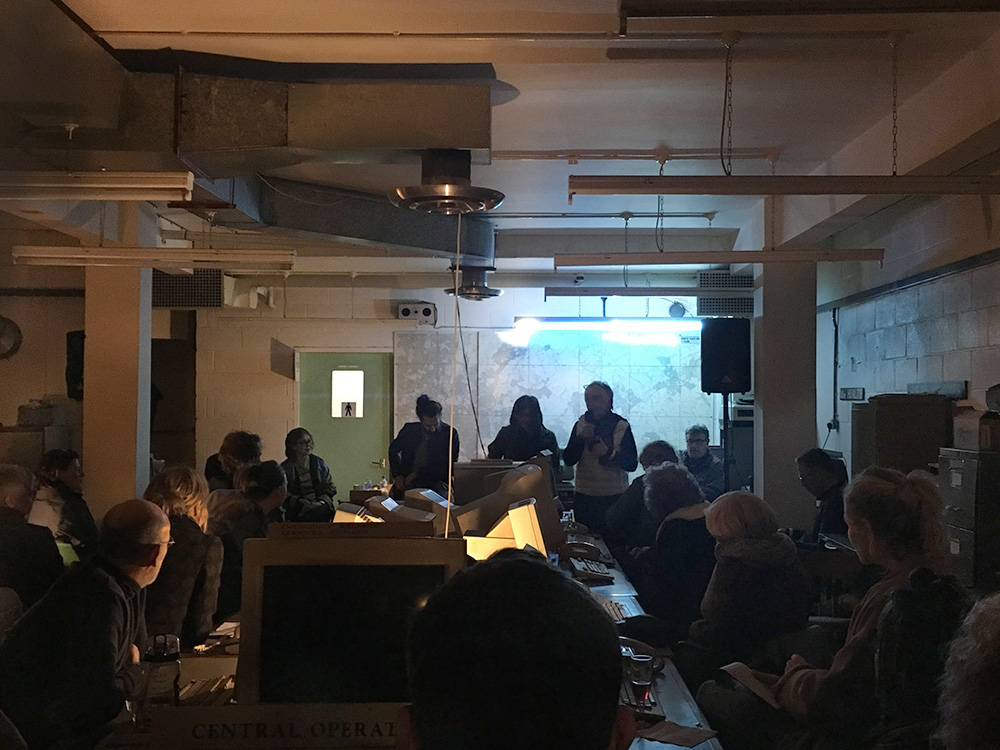
“We must distinguish the things that are intellectually dishonest and aimed at persuading, which is traditionally called propaganda, and the things where people are trying to give you general information, which doesn’t have the absolute intention of persuading you,” said The Times columnist David Aaronovitch at a panel at the Essex Book Festival.
Aaronovitch, also Index’s chair, was discussing the role of propaganda with leading expert on the darknet and technology Jamie Bartlett and Chinese-British author Xinran, who was the first woman to have a late-night radio show in China.
The panel, chaired by Index on Censorship magazine editor Rachael Jolley, was part of the festival’s Nuclear Option day at the Kelvedon Hatch Secret Nuclear Bunker, a twisted network of dimly lit hallways and musty rooms that lie beneath a field.
Around 75 attendees gathered on March 25 to listen to Index’s panel and attend other workshops, screenings and performances part of the festival. Everyone at the festival was free to roam the enormous bunker and walk amongst Cold War history.
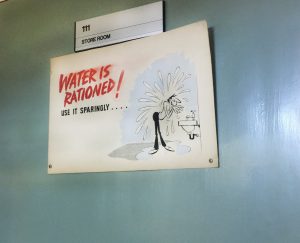
Passing signs that instructed people to “use water sparingly” and dusty machines that co-ordinated evacuation procedures, attendees eventually made their way to a desk-lamp lit room and were seated at long desks with old, monochrome computers.
Looking at the current state of propaganda, Bartlett said “everything has become more emotional and gut-driven,” adding that politics has not become as informed as people had hoped, but now become “heuristic because people are just showered with information”.
Aaronovitch called the inundation of information the “age of cacophony”.
What is emerging, according to Bartlett, is a “horrible new form of soft surveillance that has encouraged a great conformity among people”.
Xinran said China’s current propaganda, especially on social media, along with party control of education and the legal system has led to “one voice” in China, despite age gaps, class, education and geographical residence.

The author talked about her past experiences with censorship and Chinese propaganda when she worked on her radio show in China. She explained that there was a list of restrictions she had to abide by, these included never mentioning the British media, Western religions or love and relationships. The author said during her show she was able to tackle subjects that were previously taboos on Chinese radio.
“My work was stopped for three months when I spoke about homosexuality,” said Xinran. “This type of censorship was very strong until 1997, but it has now escalated to constant censorship, due to social media.”
Looking at the future of propaganda and its direction, Bartlett added that he can “see much more reliance on coercive digital types of surveillance being absolutely necessary just to maintain some type of law and order in society, especially online, which could make us a much more authoritarian society”.
This led Bartlett to predict that “already authoritarian countries are going to become much more so, and already very free countries are going to become even more free to the point where it might collapse”.
He believes we are shifting to a “Huxleyan society,” which Aaronovitch called the “algorithmic society”. Both felt one big question was, who governs the algorithms?
Aaronovitch noted that it depended on who was controlling the algorithms, saying that if the EU requested that Google to reveal its algorithms, it would be problematic; however, governmental algorithms used for policing in a democratic society were essential.
With reference to the Cambridge Analytica scandal, which was mentioned numerous times during the panel, Bartlett noted that the worry over “Cambridge Analytica’s 5,000 data points on every single American doesn’t compare to what’s coming”.
“We are going to be creating a lot more data in the future,” said Bartlett. “And it is going to be shared and it is going to be used by political actors.”
Aaronovitch advised the audience that the best way to combat propaganda is to ask yourself, “‘Am I wrong?’. The point is to ensure no one is “completely blinded by initial preferences”.
Similar to Aaronovitch’s warning to predisposed biases, Xinran calls for “independent thinking,” and equated the consumption of information with eating.
“In Chinese we say you become what you eat,” said Xinran. “And your brain is the same way. You become what you are by what you believe”.
Hats off to @EssexBookFest! An incredible day at the Secret Nuclear Bunker. Brilliant discussion with @IndexCensorship, @JamieJBartlett, @DAaronovitch, @londoninsider and #Xinran, topped off with a silent disco of music banned from Estonia, with obligatory gherkins and vodka 👍 pic.twitter.com/HVtfrVDRb1 — Radical ESSEX (@RadicalEssex) 26 March 2018
[/vc_column_text][/vc_column][/vc_row][vc_row][vc_column][vc_basic_grid post_type=”post” max_items=”4″ element_width=”6″ grid_id=”vc_gid:1522237614911-7109bbff-bdcf-1″ taxonomies=”2631″][/vc_column][/vc_row]
