5 Aug 2013 | Digital Freedom, News, Russia
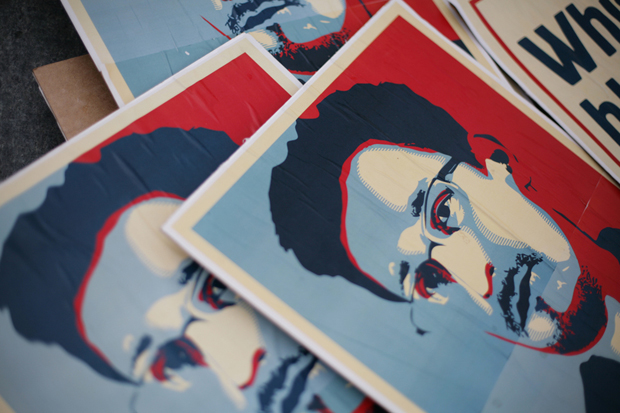
(Photo: David von Blohn / Demotix)
Открытое письмо Эдварду Сноудену
Dear Ed,
Yesterday I learned that you have managed to gain temporary asylum in Russia. Congratulations on behalf of progressive people everywhere. At last, you are safe.
Here in Russia no one would dream of harassing you for exposing the security services when they listen to telephone conversations and read others letters without a warrant. Russia, thank God, is a law-abiding State and ever since 2008 our security services have had a quite legal right to listen to whatever people are talking about on the phone and to read their e-mails.
Everyone is aware of this, and there is nothing here in Russia to expose.
While you are only just beginning to get acquainted, however, with the aspects of liberty in our society, let me give you some modest advice. Russia, It goes without saying, has its own way of doing things and it would be better if you knew about this in advance.
One, feel free to take up whatever activity you like.
This is not the USA, Ed, where exposing the activities of the government carries unpleasant consequences. There is nothing of the kind here. On the contrary, people who expose the American government are given all kinds of rewards and can enjoy a fine career, which I wish for you. I would just remind you not to forget which government you are fighting against. For were you, in the heat of the moment, to get confused about this you would have to return to a little room again (and this time, most likely, it would not be at the airport).
Two, it would be best, old chap, if you grasp from the beginning that Russia is a spiritual country.
Perhaps in the USA they taught you that Russia’s wealth lies in its oil and its timber. Well, that has long ceased to be the case. All the oil was stolen back in 2004 by Mikhail Khodorkovsky and all our forest reserves will soon have been stolen by Alexei Navalny. So today our spiritual wealth can best be expressed as “Orthodoxy, Autocracy and Populism”. Orthodoxy is a very liberal religion. You may drink alcohol, eat pork, or, like Abbot Timothy, drive your BMW roadster while under the influence – in short, do whatever you like. You mustn’t dance, that’s the main thing. Dancing is a crime. But you’re no dancer, Ed, so it’s not a problem as far as you’re concerned. Autocracy is Russia’s form of democracy. It’s very spiritual and you’ll like it. Every few years we re-elect Vladimir Putin. Putin recently caught the biggest catfish in the world. The very biggest was caught by Lukashenko. That’s all you need to know about politics in the Commonwealth of Independent States – if you don’t want to return, that is, to a little room in a hotel somewhere like Krasnokamsk. Populism: that means the national spirit and you can get acquainted with it by listening to the songs of Stas Mikhailov, though my advice to you would be, Don’t.
Three, please don’t imagine I have any objections, it’s a matter of indifference to me, but it would be better if you’re not gay. If you are, well, don’t leave the hotel. If you’re Jewish then you won’t be able to work as a rural schoolteacher. Does that strike you as silly advice? Ed, I know what I’m talking about. Take my word for it.
I hear that your defence lawyer Kucherena has given you Crime and Punishment. It’s an excellent book. Do read it, and do so BEFORE you encounter a certain middle-aged lady called Yelena Mizulina. Don’t do anything you might come to repent of later! No matter how noble the idea that guided your actions.
Lastly, a couple of practical suggestions.
Do not commit any offences when you’re out driving until you have been elected deputy of one assembly or another. Don’t waste your money buying a flat – all you have to do is become friendly with Ramzan Kadyrov. Learn to play badminton and if someone offers to help you run for Mayor of Moscow, do not agree. It’s a trap! There are three simple rules you must remember: Do not wear white, at least not when you’re near Bolotnaya Square; Don’t walk about in tight-fitting garments anywhere within sight of the State Duma; and Don’t Dance within the vicinity of a church.
Please don’t imagine that I am trying to scare you. On the contrary. You can do everything else that I haven’t mentioned above. If you want to tell lies, go ahead; if you want to steal, be my guest, thirteen years in a row: and no problem. Just remember my advice and, to be safe, don’t leave the hotel. I can’t explain – and anyway, you wouldn’t understand. It’s just better if you stay inside,
Roman Dobrokhotov / @Dobrokhotov
Note
It would take at least as many words as the author uses to decipher the allusions in this short letter. Here it’s worth noting the following.
In 2008 the various Russian security services were allowed by law to use a “technical system to support investigative activities” (its acronym is SORM) which gave them access to communication networks without seeking prior permission. Such access is now a condition of registration for any new website, and providers must foot the bill themselves for installing the necessary equipment and software. For an account of SORM in action see this link.
Why Duma deputy Yelena Mizulina, singer Stanislav Mikhailov, rural schoolteacher Ilya Faber and Abbot (higumenos) Timothy have become famous or notorious can be learned from the Internet.
The author of the letter Roman Dobrokhotov is a Moscow-based blogger, and a journalist with the internet news-site slon.ru.
In 2012 he was described by Al Jazeera in the following terms: “Roman has been arrested 120 times. His actions – part performance art, part comedy and part political statement – are daring and entertaining but his cause is deadly serious.” Dobrokhotov’s targets, according to the TV broadcaster, are “Putin, the Orthodox church and ultra-nationalists”.
— John Crowfoot is a translator and writer
5 Aug 2013 | Russia
(Photo: David von Blohn / Demotix)
Дорогой Эд!
Вчера я узнал о том, что тебе удалось все-таки получить в России временное убежище. Поздравляю тебя от лица всей прогрессивной мировой общественности. Теперь ты, наконец, в безопасности. Здесь, в России, никто и не подумает преследовать тебя за какие-то там разоблачения спецслужб, прослушивающих телефоны и читающих чужие письма без решения суда. Ибо у нас, слава богу, правовое государство – российские спецслужбы еще с 2008 года имеют полное законное право прослушивать телефонные разговоры и читать электронную почту, всем это известно и разоблачать нечего. Но пока ты только начинаешь знакомиться со всеми измерениями свободы нашего российского общества, позволь мне дать тебе пару скромных советов – как никак у нас тут в России есть своя специфика и лучше бы тебе знать о ней заранее.
Во-первых, Эд, смело занимайся любимым делом. Это в Америке разоблачать правительство было чревато неприятностями, в нашей же свободной стране ничего такого нет, даже наоборот – люди, разоблачающие американское правительство всячески поощряются и делают прекрасную карьеру. Чего я тебе и желаю. Но только призываю тебя не забывать, с каким именно правительством ты борешься. Ибо если ты в пылу эмоцией тут что-то перепутаешь, тебе придется вернуться в капсульную комнату (причем, скорее всего, даже не в аэропорту).
Во-вторых, старина, сразу бы тебе лучше усвоить, что Россия – это духовная страна. Возможно, в американской школе тебя учили, что российские богатства – это нефть и лес. Так вот это уже давно не так. Всю нефть украл Михаил Ходорковский еще в 2004 году, а намедни и вес лес украл Алексей Навальный, так что главные наши богатства нынче духовные – православие, самодержавие и народность. Православие – это очень либеральная религия, можно пить алкоголь, есть свинину, гонять в подпитии на родстере BMW с дипномерами, как игумен Тимофей – в общем, ни в чем себе не отказывай. Главное – не танцевать. Танцевать нельзя, это уголовка. Но ты же не танцор, что тебе, какая разница. Самодержавие же – это такая традиционная российская форма демократии, очень духовная, тебе понравится. Каждые несколько лет мы выбираем Владимира Путина. Владимир Путин поймал почти самого большого в мире сома. А самого-самого большого поймал Лукашенко. Это все что тебе следует знать о политике в странах СНГ. Если ты не хочешь вернуться в капсульный отель где-нибудь в Краснокаменске. Народность – это национальный дух. Ознакомиться с ним можно посредством песен Стаса Михайлова, но лично мой совет – не знакомься.
В-третьих, ты не подумай ничего такого, мне лично все равно, но все-таки лучше, если ты не гей. А если гей, то из отеля на всякий случай не выходи. А если еврей – то не становись сельским учителем. Дурацкий совет, вроде бы, да? Но я-то знаю, о чем говорю. Просто поверь.
Я слышал, адвокат Кучерена подарил тебе «Преступление и наказание» – это отличная книга, прочти ее пожалуйста ДО того как познакомишься с одной пожилой женщиной по имени Елена Мизулина. Не делай того, за что бы тебе потом пришлось раскаиваться! Какой бы благородной идеей ты ни руководствовался.
И напоследок, пару дельных советов: не нарушай правила дорожного движения пока не станешь депутатом, не трать деньги на покупку квартиры (просто познакомься с Рамзаном Кадыровым), учись играть в бадминтон, а если предложат выдвигаться в мэры Москвы – не соглашайся, это разводка! И запомни три простых правила: белого не надевать (по крайней мере не рядом с Болотной площадью), обтягивающего не носить (во всяком случае, слишком обтягивающего и рядом с Госдумой) и не танцевать (по крайней мере рядом с церквями).
Ты не подумай только, что я тебя пугаю. Наоборот же. В остальном-то у нас все можно. Хочешь ври, хочешь – воруй, хоть 13 лет подряд, никаких проблем. Просто помни мои советы. А лучше, что уж там, не выходи из этого отеля своего. Не могу объяснить. Ты не поймешь все равно. Просто – лучше не выходи.
Roman Dobrokhotov / @Dobrokhotov
5 Aug 2013 | Iran, News
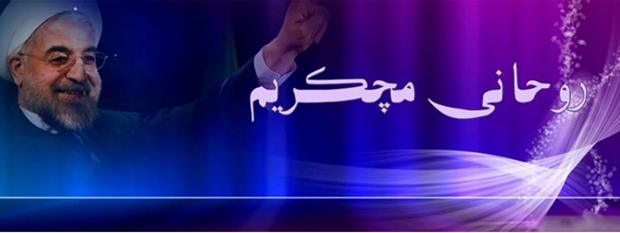
Iranians stormed the streets in celebration when his victory was announced, and this giddy optimism also permeated social media.
In the days after the election, there was an opening up of the national media, which has been steadily strangled over the past 8 years, as reporters and journalists tested the new waters to measure where the new limits of censorship have been set.
On July 23 the Iranian Students’ News Association announced Rouhani’s government may lift the filter from Facebook and other social networks, but after going viral, the article was deleted without explanation.
Iranians on social networks have started a campaign called “Rouhani, Mochakerim” [Rouhani, Thank You], a platform on which they seem to thank the new president for everything good in their everyday lives. One said, “I think Facebook needs to have a ‘Thank You Rouhani’ button” for Iranians”. Another quipped, “My phone’s had more battery life since Rouhani won the elections. Thanks Rouhani!”
Blogger Younes is very optimistic about Rouhani and hopes Iran’s relationship with other countries will be improved over the next four years. Younes described how Ahmadinejad’s foreign policies united the world against Iran. He pointed out that the invitations to Rouhani’s inauguration were sent to world leaders signalling that Iran is ready to change its position and open up dialogue with the outside.
Optimists aside, there are also those who are unsure whether Rouhani will be able to keep his promises. Twitter user thebrightriver has criticised Rouhani for the ministries he has proposed to the Parliament: “Rouhani has promised that he will create the Ministry for Women, but he hasn’t even chosen one woman as a minister! It’s good I didn’t vote otherwise I’d owe one to my conscience”.
Mohammad Hosseini Nejad argues Rouhani is not a magician, that radicalism is the biggest threat to his ability to fulfil his promises, and that his policies will only be implemented if all of the opposition factions join together to support him.
Rouhani’s victory has also created space for Iranians to publicly satirise Ahmadinejad. On Friday, Iranian Twitter users ridiculed Ahmadinejad’s government using the #AhmadiByeBye hashtag, and sent an invitation to social media users to attend Ahmadinejad’s Goodbye Party on Saturday, 3 August 2013.
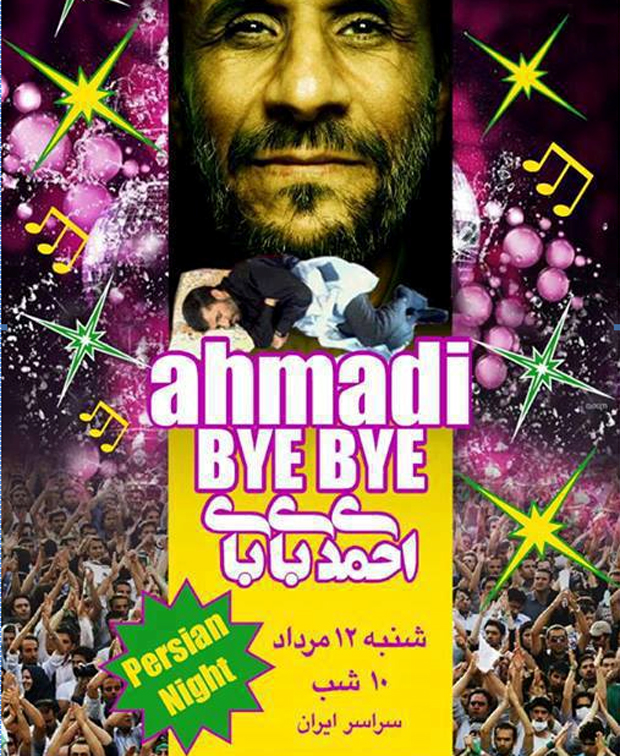
Farzad said, “Ahmadinejad has claimed that he fought economic corruption, but everyone connected with him was involved in the biggest embezzlement in Iran’s history. #AhmadiByeBye” Hooman agreed, “These 8 years have shown me how just one mistake can destroy life of an entire generation. #AhmadiByeBye”.
While the atmosphere, at least on social media, is one of optimism, Rouhani’s road ahead is tough. For the next four years he will battle against the supreme leader and the Parliament to implement some of his more ambitious promises. Despite being a figurehead for Iran when it comes to the country’s public relations, the president has relatively limited power and will struggle to liberalise the country.
This article was reported by Bronwen Robertson and Amin Sabeti of Small Media. Small Media has collaborated with the Munk School on launching ‘Rouhani Meter’, where Rouhani’s policies will be tracked across the first 100 days of his candidacy and beyond.
1 Aug 2013 | In the News
#DONTSPYONME
Tell Europe’s leaders to stop mass surveillance #dontspyonme
Index on Censorship launches a petition calling on European Union Heads of Government to stop the US, UK and other governments from carrying out mass surveillance. We want to use public pressure to ensure Europe’s leaders put on the record their opposition to mass surveillance. They must place this issue firmly on the agenda for the next European Council Summit in October so action can be taken to stop this attack on the basic human right of free speech and privacy.
(Index on Censorship)
BAHRAIN
Prominent Bahrain blogger arrested: Activist
The massive street demonstrations that roiled Brazil last month have eased but more radical groups are coming to the fore and resorting to violence.
(Strat Risks)
BRAZIL
Brazil’s social unrest easing but turning more radical
A rights activist in Bahrain says authorities have arrested a prominent blogger just days after warning of harsher measures against anti-government protesters in the violence-wracked Gulf kingdom.
(Ahram Online)
CHINA
Singer’s Arrest in China Fires Free Speech Debate
Hours after a man with long-running grievances against officialdom set off a homemade explosive at Beijing’s airport, a singer-songwriter turned to the Internet to release her own sarcastic wish list of to-be-bombed targets.
(ABC News)
China dismisses allegations over obstruction of Google’s Gmail service
Chinese authorities say Google’s claims that they are to blame for technical problems with the Gmail are ‘unacceptable’
(The Guardian)
GERMANY
How Hollywood bowed to the wishes of Hitler
A Harvard film scholar has revealed in terrifying detail how Hollywood was at the whim of the Nazis throughout the 1930s – censoring films and dropping others in a sinister collaboration with Hitler.
(The Daily Mail)
GLOBAL
The Picket Fenced Internet: Why Free Communication Is Over…If It Ever Existed?
The most harrowing realization of Edward Snowden’s NSA leaks is that the World Wide Web is no longer free.
(Huffington Post)
PAKISTAN
‘The biggest form of blasphemy we commit is to force another to live in fear’
YouTube has been blocked in Pakistan since September 2012 for hosting the “blasphemous” Innocence of Muslims film. But now the country’s parliament has been asked to define what actually constitutes blasphemy. Here are some suggestions to get them going
(Index on Censorship)
RUSSIA
Videotaped Bullying Of Gay Russian Youths Highlights Growing Homophobia
Some show youths being forced to drink urine, or having it poured over their heads. Others show young men being taunted with phallic sex toys, threatened with axes, and forced to carry wooden crucifixes.
(Radio Free Europe)
Russia’s anti-internet piracy law faces backlash
It’s championed by some as a new weapon to defend content-makers, decried by others as a blunt tool that could extend censorship of the net.
(BBC)
SOUTH AFRICA
SA’s outdated censorship legislation
Cracks cobwebbing across the broken screen of his tablet PC seem a metaphor for the stormy greeting given film maker Jahmil XT Qubeka’s third feature, Of Good Report.
(Financial Mail)
UNITED KINGDOM
Free speech is a bitter Twitter privilege
For too long the trolls have hidden behind cowardly anonymity in a virtual world they believe to be free of consequence
(The Daily Mirror)
Cameron Looks to China to Supply Europe’s First Internet Censorship Wall in Britain
So David Cameron’s government has finally laid his cards on the table. Getting the press and the public to comply with the draconian Leveson Star Chamber’s clampdown on freedom of expression and information was a hard sell, to say the least.
(21st Century Wire)
Ex-Tory treasurer Peter Cruddas wins £180,000 libel award
Billionaire businessman also awarded interim costs of £500,000 against The Sunday Times
(The Independent)
Twitter Abuse Isn’t a Censorship or Freedom of Speech Issue, It’s a Human Issue
Imagine you’re queuing up for a coffee. You order, and pull out a £10 note with which to pay. “Wouldn’t it be great to have a woman on a banknote?” you might remark as you hand it to the barista. “F*ck you, you f***ing sl*t,” he snarls back. “I’m going to wait for you outside later and rape you.” What do you do? Cry? Run away? Look around for help? Let’s say you look around for help. You turn to the woman standing next to you.
(Huffington Post)
UNITED STATES
Keller lawsuit vs. gamer EA Sports, NCAA clears major hurdle
Free speech – at least in the world of video games – took a hit Wednesday in the ongoing battle regarding player likenesses.
(CBS Sports)
No, the IRS Did Not Target Progressives Like It Targeted Conservatives
NPR’s politics blog has published a chart — compiled from a House Ways and Means staff analysis — of the different levels of IRS targeting between conservative and progressive groups. Bottom line? Far more conservative groups faced IRS scrutiny, they faced more questions, and were approved at a much lower rate than progressives. The chart is based on the IRS’s now-discredited “BOLO” (be on the lookout) lists.
(American Center for Law and Justice)
Does chief have right to post profane gun videos?
Police Chief Mark Kessler of Gilberton, Schuylkill County, has come under fire after posting profanity-laced videos on YouTube. Some have argued it’s a free-speech issue. Others have said it’s outrageous behavior for a police chief who is also a school board member. Reporter Nicole Radzievich” talks with two people with opposing viewpoints.
(The Morning Call)
Your free speech right comes with a hefty price tag these days’
They used to say freedom of the press belongs to those who can afford to own one. Perhaps, we should now say the right to exercise your free speech rights before local government agencies belongs only to those who can afford to pay for sending out public notices.
(4th ST8)
ACLU says begging is ‘free speech’
Calling the statute an infringement on free speech, the American Civil Liberties Union wants a federal judge to block police in Arizona from enforcing a law making begging a crime.
(Maricopa Monitor)
Previous Free Expression in the News posts
July 31 | July 30 | July 29 | July 26 | July 25 | July 24 | July 23 | July 22 | July 19 | July 18 | July 17 | July 16 | July 15 | July 12 | July 11 | July 10
