9 Mar 2012 | Africa, Magazine
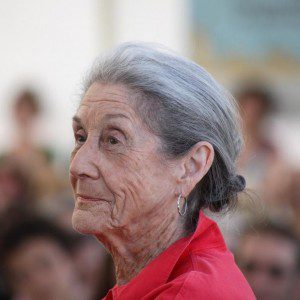 To celebrate Index’s 40th birthday, our publisher SAGE is opening the archive to the public for 40 days from 26 March. It’s a unique literary heritage, a roll-call of the greatest authors in the 20th century canon standing up for free expression.
In 1994, South African writer, activist and Nobel Prize winner Nadine Gordimer witnessed the end of apartheid in South Africa when the black population voted for the first time.
Nadine Gordimer will be speaking at the Southbank Centre on 14 March in the first of a series of events celebrating Index’s anniversary. Get tickets here.
(more…)
8 Mar 2012 | Sub-Saharan Africa
Inspired by Tupac, Public Enemy and others in the USA around 2004, a new tsunami of music crashed over hit Tanzania. Bongo Flavah: raw, real, Swahili. It spoke to people, particularly the disenfranchised 3 million who live in slums and suburbs like Temeke and Mobibo of Dar Es Salaam. Kicking out the popular Congolese Rumba, Sebene (sung mostly in Lingala, a Bantu language spoken in some areas of Africa); Bongo Flavah was R & B mixed with pop, mixed with Puff Daddy, with a dollop of gangsta speak. Young men (and a few young women) performed live. Artists such as Lady Jay Dee, Professor J, Ray C, Fid Q and Juma Nature, shook, shimmied and got down in small local beer halls. The whole business was expressive, chaotic and random, like the streets it came from. Songs were about debt, jealousy, lunacy, power failures, teen pregnancy, corruption, albino body part trafficking. Dancing was lewd, grinding, obvious, as well as highly original, eclectic and thrilling. Critics called them “tsotsi”, hooligans, vandals.
Bongo Flavah. Bongo is the Kiswahili slang word for “brain” street smart, savvy, nous — what you need to hustle a living in the sprawling capital Dar es Salaam. Bongo music is edgy, swaggering, improvised to a CD backing track, spontaneous, aspirational and above all Swahili. It is Tanzania’s wild track, it is everywhere: daladalas (cramped rickety public minivans) shops, homes, cafes and bars.
Then came Mchiriku, it’s even more rowdy sister. Its roots are in Uswahilini, the less prestigious parts of Dar-es salaam, where residents are generally considered loud and uncultured, the music cacophonous. Read poor and voiceless. When it’s recorded, it gets massive airplay, and thousands of listeners.
But there’s a less savoury side to this very male, undoubtedly anarchic and truly democratic medium: blatant misogyny, and sexual favours for access. “It’s a kind of open secret in the music business” says Ayesha*, 19, a trainee journalist at a private radio station on Zanzibar “you have to sleep with radio producers, or station owners if you want to get airplay, basically sexual favours for airtime.”
Part of the reason for this is that women — dressed in tiny tops and lycra leggings — in Bongo Flavah and Mchiriku make much of their pelvic flexibility and suppleness: there’s not much doubt what they’re showing off. The versions of female sexuality are fairly standard rap stuff.
Maya Van Lekow, an established Kenyan blues and jazz singer has been in the music business for seven years: “Yes, absolutely, the music business for women is dreadful. It’s not even challenged, it’s blatant: of course you sleep with the whomever, for a record deal, for radio play, to get an interview. It’s unquestioned. A younger singer approached me recently, she said for two years she’d not been able to get airplay, at local stations for over two years, and was forced to sleep with older station managers. She was tearful and desperate.”
Male rapper and record promoter Mzungu K’Chaa concurs: “Bongo flavah started as hip hop; it’s definitely for men only, the music industry generally is very discriminatory to women, and yes, women do have to sleep with the music producers and radio station owners to get airplay. It does need to change.”
Khadija Othman, a sexual health worker on Zanzibar works with young people. “There are two issues here, the first is that women are kept in complete ignorance about their bodies, and their rights. Even to mention a condom a woman will get beaten. The second is that men here think it’s normal for young DJ’s and radio producers to expect sex. And for women to provide sex if the man wants it. Sex is extremely secretive in our society, and until we open up, confront it, we’re going to see more problems. We really really need to talk about these things.”
Her views are shared by young journalists, Salouma* and Carla* who work in the capital, Dar. For women music journalists, or aspirant journalists, the music industry is considered a den of vice. “Our parents literally think we are whores because we work in journalism. Things are very backward here. We don’t tell them about the music bit, it would literally terrify them, and yes, we do see young women coming in off the street, with their tapes, and maybe they get a ‘boyfriend’ for a night. We just try and ignore it. We’re not senior here, we’re female, there’s nothing we can do. It’s shameful really.”
Things are slowly changing. Music creation and production was once dominated by men in Tanzania, Kenya and Zanzibar, and women rarely got actively promoted or showcased. Research is probing into the hidden, and unspoken culture of teen pregnancy and gender based violence against women and girls in Tanzania and Zanzibar. The idea that “you need to sleep with your boss” to get anywhere if you are female is being questioned. Recent figures from local NGO Tanzania Media Women’s Association (TAMWA) and United Nations Development Programme (UNDP) indicates that more that 39 per cent of women aged 15-49 have experienced physical violence in the last 12 months, One in five women have ever experienced sexual violence, and 10 per cent of women had their first sexual intercourse forced against their will.
The last year has seen a marked change in discussion and debate. These issues are finally in the public sphere. Yusuf Mahmoud, Festival Director for the Busara Festival, and President of the Indian Oceans Festival Association: “When we started in 2004, it was difficult to programme women musicians as there were so few in the region. However, looking back, it’s the women who have provided many of the highlights. We have showcased some of the best from the continent including Thandiswa (South Africa), Chiwoniso (Zimbabwe), Nyota Ndogo and Muthoni the Drummer Queen(Kenya) and Tausi Taarab (Zanzibar) — the first all-women orchestra ever in East Africa made their debut at Sauti za Busara.”
Maya Von Lekow says: “I do see myself first as a musician, an artist, but I can also be an advocate, whether for women’s rights generally: in society, in refugee camps, and in the music industry, the two are not incompatible. I can sing, and I also can talk! We’re moving on, talking about our pasts, things are changing, we’re speaking freely, it’s inspiring really!”
7 Mar 2012 | Africa, Sub-Saharan Africa
 “Slum is a tricky word. It conjures up images out of control. The threatening. The miserable. The lawless,” thus wrote Richard Swift in his article “Welcome to Squatter Town” for The New Internationalist. This publicity raised awareness of the difficulties of slum living in Kenya, but it also highlighted the negative aspects of life in these settlements. 60 per cent of people in Nairobi live in slums or informal settlements. You can’t romanticise it. There is hunger, poverty, dire sanitation and overcrowding, with around 200,000 people living in an area approximately 630 acres (similar to 630 football pitches).
But, if you look for them, there are also high expectations, enterprise and thriving creative expression.
In a small room crammed with paintings and metal sculptures partially illuminated by sunlight concentrated through two small windows, eight artists form a collective know as Maasai Mbili in one of Africa’s largest informal settlements, Kibera. The group started in 2001 when friends Otieno Gomba and Otieno Kota decided to combine forces to create a studio space. In 2003 they purchased their current building, turning what had previously been a dodgy bar into a centre of artistic expression and tolerance.
Most of the artists now affiliated with the studio started as sign writers, and in a style directly influenced from this past they create works of visual texts. It makes for hilarious and perceptive art. Otieno Gomba’s piece Save Our Souls features the tread of a running shoe and alludes to both the culture of recycling in Kibera and the depravity found there, while Ashif Malamba’s Somali Pirate series pokes fun at the media’s recent fixation with banditry on East Africa’s coastline.
Using the street as their primary inspiration, Gomba says, “It couldn’t be art if it was just eight artists locked in a room.” Their studio doors bear the word “karibu”, welcome, an open invitation to the community. The work here is not a reflection of life in Kibera, but a representation of it. From the canvases that are primed with a mixture of paint and rubble to mimic the walls of houses, to snippets of conversation overheard in bars that feature in Kevo’s paintings, this is art that is intrinsically bound up with the community in a relationship approaching symbiosis.
 As well as creating a neutral space where people can come to them, Maasai Mbili also undertake outreach programmes. Mbuthia Maina holds informal art classes for children where they can “paint what they want” and “pour out their minds”. In a country where art has been sidelined in the national curriculum, this opportunity to explore creativity in an unmediated environment carries even more importance. Not only to does it contribute to building imaginative capacity, but crucially it also provides children with a vehicle to express the issues they see around them but are powerless to control.
Maasai Mbili have created a network of influence within their community, and in the process are building consensus around the idea that there are other possibilities and futures to explore. “Mental attitudes are changing,” said Gomba, speaking of the youth who once saw their options as limited. Rather than turning to a life of petty crime, they now see art as a viable means of making a living. It is a message which is no doubt made all the more powerful because it comes from those who have grown through the same circumstances they have.
The initiative that Maasai Mbili are best known for arose out of the post-election violence of December 2007. Almost overnight, neighbours turned on each other for being from the “wrong tribe”. The death toll rose almost daily for weeks. Amidst the chaos, members of Maasai Mbili decided to use the paintbrush as their main tool in an effort to restore social cohesion. Using street art as a form of visual resistance to unfolding events, they painted Kibera’s ruins, adding colour to blackened buildings and daubing walls with the words “PEACE WANTED ALIVE”. At the time Gomba asked himself, “What is the impact of art in the community? What is the role of art in the time?” In short, how does art influence interaction with our environment, and by extension, our behaviour in it? Art For Peace was born.
Identifying children as having suffered the brunt of the trauma, Art For Peace then embarked on a series of programmes that encouraged youth to address the violence that had engulfed them through creative means. It was “a form of therapy” Gomba said, and an initiative that drew considerable media attention. In the months that followed camera crews and dignitaries flocked to see how a group of dreadlocked artists had begun to address the horrors that those most vulnerable in their community had born witness to.
 Now that the violence is over the world’s gaze has moved elsewhere, but for Maasai Mbili the work goes on as they continue to engineer positive social change through art. As Gomba aptly put it, “Art For Peace is eternal. It has no limit. It doesn’t just apply to Kenya. It has no boundaries.”
Maasai Mbili utilise art to effect lasting social change, and they have another pressing goal: to see street art recognised as a legitimate art form. “Street art is sidelined,” said Ashif, “although now there is some recognition. We want to integrate street art with gallery art.” With limited gallery space across Nairobi, compounded by high costs associated with exhibiting, this is ongoing struggle. However when they do get the chance to exhibit, their work consistently sells out. “Our perspective is unique,” Says Ashif, “it is a commentary that is social, personal, economic and political. And it is also full of humour.” Maasai Mbili opens up alternative paths of understanding and gives fleeting access into the visual culture and identity of their community in Kibera.
African Street Art deserves a place in global contemporary discourse. It has meaning beyond commoditisation and market whims. Street Art directly engages with communities through its own language. It changes behaviour and opens up new possibilities; it holds the potential to shape our society. Art — from the street to the gallery — forms an integral part of our national identity.
Musimbi King is a freelance journalist in Nairobi focusing on creative industry in Africa and the role this sector can play in promoting socio-economic growth across the continent.
5 Mar 2012 | Middle East and North Africa
Two Ramallah-based TV stations were raided by Israel Defence Forces (IDF) troops at the behest of the Israeli Ministry of Communications in the early hours of Wednesday morning.
Wattan TV station director Moammar Orabi described how the channel’s offices were entered at 2am by 30 soldiers. Their broadcast equipment, computers and administrative files were seized and four of their employees detained. All four, comprising two correspondents, one graphics technician and the head of production, were released a few hours later.
Wattan TV, owned by a group of three NGOs including the Palestinian Medical Relief Society, is a well-known leftwing channel, and frequently broadcasts coverage of the weekly protests that occur across the West Bank which often incur violent crackdowns by the IDF.
Orabi told AFP just after the raid: “it was a surprise. We still don’t know why they confiscated the equipment and shut down the station, even though we work in areas belonging to the Palestinian Authority and we have a licence from them.”
The IDF also confirmed that educational broadcaster Al-Quds TV was raided at 3am local time and had their equipment confiscated. Among the material broadcast by Al-Quds TV is Sharaa Simsim, the Palestinian version of “Sesame Street”. Neither station has been able to operate since the raid.
After pressure from a variety of news outlets including AFP and Reuters to explain the reasons behind the raids, an IDF spokeswoman later stated that both the channels, which broadcast exclusively in the West Bank, were “broadcasting illegally” as they use frequencies which she claimed “interfered with aircraft communication” at nearby Ben Gurion airport according to local news agency Ma’an.
However, Suleiman Zuheiri, Undersecretary of the Palestinian Ministry of Telecommunication in Ramallah, told Ma’an that “civil aviation waves, according to international parameters, start at 120 megahertz, while TV frequencies start at above 500 megahertz.”
The Palestinian Ministry of Telecommunication had never been informed that either station had been broadcasting potentially “disruptive” signals, and the Israeli Ministry of Communication had failed to give any advance warning that they intended to close the channels.
Furthermore, Zuheiri also underlined that both stations are registered at the International Telecommunications Union, implying they could not be broadcasting illegally.
The Palestinian Authority said on Wednesday that this action could signal the beginning of a “frequency war” with Israel. The Minister for Telecommunication and Information Technology, Abu Dakka, spoke out at a press conference in Ramallah on Thursday 1 March. Dakka said he felt that the Israeli government had conducted the raids with the express aim of seizing these frequencies for 3G and 4G phones that use the frequencies to get a television signal. In an interview with Palestine radio, his Undersecretary, Zuhairi, went further and emphasised that the recipients of the frequencies are the settlements in the West Bank, who want to receive Israeli broadcast services.
Reporters Without Borders also expressed their “deep shock” at the raid on Friday 3 March: “These arbitrary and illegal operations served yet again to intimidate Palestinian media and journalists, the victims of repeated attacks by the Israel Defense Forces. We urge the Israeli military to return the confiscated equipment and allow the two stations to resume broadcasting.”

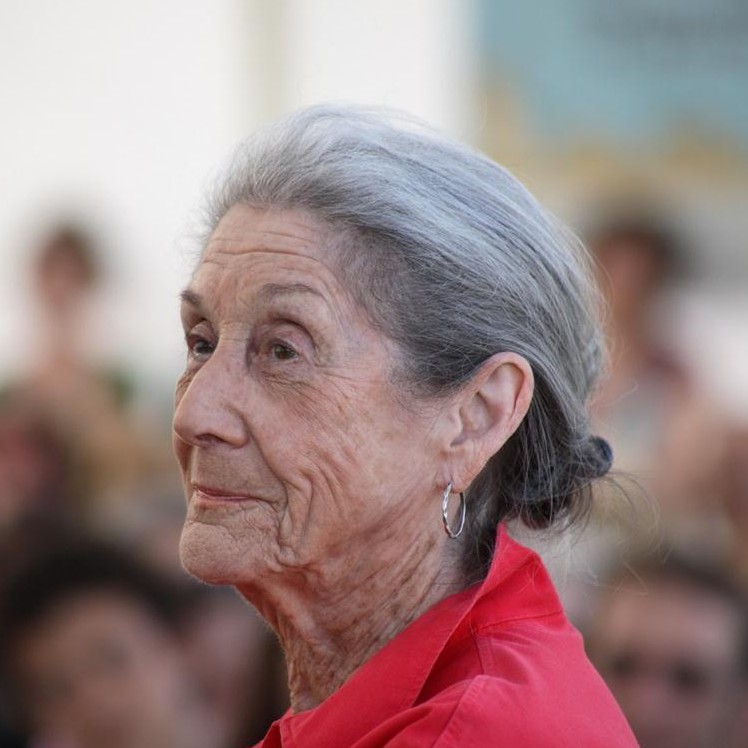 To celebrate Index’s 40th birthday, our publisher SAGE is opening the archive to the public for 40 days from 26 March. It’s a unique literary heritage, a roll-call of the greatest authors in the 20th century canon standing up for free expression.

