9 Apr 2015 | Lithuania, Mapping Media Freedom, mobile, News
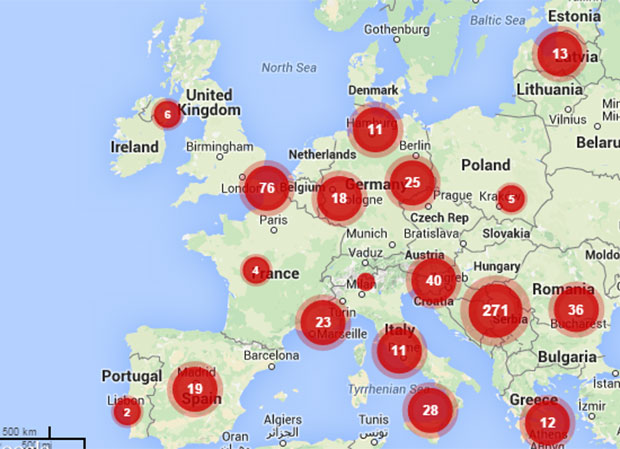
Lithuania has banned a Russian TV channel for “inciting discord, warmongering [and] spreading disinformation” according to the country’s media regulator.
RTR Planeta, the international broadcasting service for the All-Russia State Television and Radio Broadcasting Company (VGTRK), a powerful state run media empire that operates more than a dozen TV channels and radio stations, will be taken off the air after alleged “incitements to hatred” during the Sunday Evening With Vladimir Solovjev program.
“This program has repeatedly spread such information, therefore its broadcast was suspended for three months,” Birute Kersiene, a spokesperson for the Radio and Television Commission of Lithuania told AFP.
According to Euro News, which is part-owned by RTR Planeta’s parent company, VGTRK, one bone of contention was the continued presence of firebrand, ultra-nationalist Russian politician Vladimir Zhirinovsky who is know for his inflammatory statements on Solovjev’s show.
Last year he was, according to Lithuanian media reports, quoted in an interview with Rossiya 24 as saying: “The Baltic States, Poland – they are doomed. They will be swept away. Nothing will remain there. They should sober up, the leaders of these dwarf nations … Eastern European countries are exposing themselves to, shall I say, the danger of complete annihilation.”
VGTRK is run by one Oleg Dobrodeev, a staunch Putin ally who was appointed chairman in 2000, the same year Putin came to power. “Dobrodeev was one of the founding members of the independent NTV Channel, but under Putin drastically changed his attitude to independent television in Russia,” wrote Oleg Panfilov, a dissident Russian journalist in his 2005 paper titled Putin and the Press: The Revival of Soviet-style Propaganda for London based think tank The Foreign Policy Centre. “Dobrodeev started to consolidate all state provincial television and radio companies, thus creating a massive and powerful propaganda network.”
The ban is the latest move in a rapidly cooling media environment in the Baltic States, where significant numbers of Russian speakers live and whom get most of their news from Russian sources. To counter what they see as pro-Russian propaganda, the three countries – with the help of the European Union – have vowed to set up supposedly impartial Russian language TV stations.
Whilst Russia has frequently been accused by international media watchdogs for its restrictions on the freedom of the press, governments from the Baltic states have responded by threatening suspensions of TV stations and banning prominent pro-Russian journalists, politicians and even singers from entering their borders.
On 9 March a coalition of press freedom groups including the World Association of Newspapers and News Publishers and the World Press Freedom Committee decried the potential banning of Russian language TV stations in Lithuania. “While we do understand that the objection to their broadcasts is that in the current tense situation in Eastern Europe they are seen as propagandistic and polemical, we view their banning as the wrong approach to counteracting their messages,” they wrote in a letter to Lithuania’s president. “Not only is this in contradiction with Article 19 of the Universal Declaration of Human Rights and other international free speech standards, but we also consider such bans to be counterproductive.”
If any ban was put into effect, the letter continued, they “would almost inevitably be seized upon by the Russian authorities to justify bans on broadcasts by independent news media from other countries”.
But the RTR Planeta ban was confirmed anyway, causing further complications as the station is registered in Sweden, an EU state. The EU has strict rules regulating broadcast freedoms.
When contacted by the Index on Censorship before the ban was announced, the Radio and Television Commission of Lithuania stated that they had contacted their Swedish counterparts about RTR Planeta and reaffirmed their belief that RTR Planeta had broken EU broadcasting rules.
While Article 3 of the EU’s Audiovisual Media Services Directive strictly prohibits the banning of retransmitted programmes, Lithuania’s regulator pointed to Article 6, which states that EU countries must ensure no programmes “contain any incitement to hatred based on race, sex, religion or nationality.”
“It is the first time in the history of the European Union that a regulatory body has taken the decision to take the whole channel completely off-air,” the chairman of Lithuania’s media regulator, Edmundas Vaitiekunas, told Euro News. “Maybe someone will argue over the subtleties of the case, but we think that we addressed all the legal criteria.”
The ban is due to come into effect on 13 April.
This article was posted on 9 April, 2015 at indexoncensorship.org
11 Feb 2015 | Azerbaijan, Azerbaijan Statements, mobile, News, Statements
In January, Index on Censorship reported on the beginning of the trial of human rights activist Rasul Jafarov, who is being tried on spurious charges. The Azerbaijani embassy has written to Index on Censorship responding to that article. This is the Index response to the embassy.
Dear Ambassador Tahir Taghizadeh,
Thank you for your letter in response to our report on the beginning of the trial of human rights and democracy activist Rasul Jafarov.
In your letter, you wrote:
“In my country, human rights and fundamental freedoms are ensured in full compliance with the national and international commitments that Azerbaijan has subscribed to. No one is persecuted for his/her political views and activities as proved by Azerbaijan’s vibrant political process and free and diverse media.”
We beg to differ with your point of view.
Azerbaijan’s record on human rights and a free press has been discussed with great concern at the international level many times in recent years.
In March 2012, Index on Censorship joined with Article 19, Human Rights House Foundation, International Federation of Journalists, Media Diversity Institute, Norwegian Helsinki Committee, Reporters Without Borders and World Association of Newspapers and News Publishers to co-produce Running Scared: Azerbaijan’s Silenced Voices. The report opened with this stark warning: “The current state of freedom of expression in Azerbaijan is alarming, as the cycle of violence against journalists and impunity for their attackers continues; journalists, bloggers, human rights defenders and political and civic activists face increasing pressure, harassment and interference from the authorities; and many who express opinions critical of the authorities – whether through traditional media, online, or by taking to the streets in protest – find themselves imprisoned or otherwise targeted in retaliation.”
In December 2012, the Parliamentary Assembly of the Council of Europe issued a monitoring report that included the comments that the “situation with regard to basic freedoms, including freedom of expression, freedom of assembly and freedom of association is preoccupying. The committee expresses its alarm at reports by human rights defenders and domestic and international NGOs about the alleged use of so-called fabricated charges against activists and journalists. The combination of the restrictive implementation of freedoms with unfair trials and the undue influence of the executive results in the systemic detention of people who may be considered prisoners of conscience. Alleged cases of torture and other forms of ill-treatment at police stations, as well as the impunity of perpetrators, raise major concern”.
In April 2013, the Human Rights Council of the United Nations work group issued its report from Azerbaijan’s universal periodic review. Among the recommendations were suggestions for improvements on human rights and more specifically freedom of expression:
• Ensure the full enjoyment of the right to freedom of expression in line with country’s international commitments (Slovakia)
• Guarantee the rights to freedom of expression, association and peaceful assembly particularly by allowing peaceful demonstrations in line with the obligations stemming from the International Covenant on Civil and Political Rights (Switzerland);
• Put in place additional and fitting measures to ensure respect for freedom of expression and of the media (Cyprus);
• Ensure that Azerbaijani media regulations uphold diversity among media outlets, as per international standards and best practices (Cyprus);
• Expand media freedoms across print, online and, in particular, broadcast platforms, notably by ending its ban on foreign broadcasts on FM radio frequencies and eliminating new restrictions on the broadcast of foreign language television programs (Canada);
• Take effective measures to ensure the full realization of the right to freedom of expression, including on the Internet, of assembly and of association as well as to ensure that all human rights defenders, lawyers and other civil society actors are able to carry out their legitimate activities without fear or threat of reprisal (Czech Republic);
• Ensure that human rights defenders, lawyers and other civil society actors are able to carry out their legitimate activities without fear or threat of reprisal, obstruction or legal and administrative harassment (Sweden);
• Put an end to direct and indirect restrictions on freedom of expression and take effective measures to ensure the full realization of the right to freedom of expression and of assembly (Poland);
• Ensure the full exercise of freedom of expression for independent journalists and media, inter alia, by taking into due consideration the recommendations of the Council of Europe Commissioner for Human Rights (Italy);
• Ensure that journalists and media workers are able to work freely and without governmental intimidation (Germany);
• Ensure that journalists and writers may work freely and without fear of retribution for expressing critical opinions or covering topics that the Government may find sensitive (Slovenia);
• Protect and guarantee freedoms of expression and association in order to enable human rights defenders, NGOs and other civil society actors to be able to conduct their activities without fear of being endangered or harassed (France);
• Strengthen measures to guarantee a safe and conducive environment for the free expression of civil society (Chile);
• Remove all legislative and practical obstacles for the registration, funding and work of NGOs in Azerbaijan (Norway);
• Ensure that all human rights violations against human rights defenders and journalists are investigated effectively and transparently, with perpetrators being promptly brought to justice, including pending unresolved cases requiring urgent attention (United Kingdom);
• Ensure prompt, transparent and impartial investigation and prosecution of all alleged attacks against independent journalists, ensuring that
the media workers do not face reprisals for their publications (Slovakia);
Though Azerbaijan has the modern legal framework in place to respond to these suggestions from the international community, the respect for the rule of law is sorely lacking.
In October 2013, Index on Censorship published Locking up free expression: Azerbaijan silences critical voices, which described the situation in your country in the run up to the presidential elections.
We wish that was the end of the story, that our insistence that Azerbaijan respect free of expression was based on outdated information or thoroughly implemented international recommendations.
But in 2014 the assault against journalists and human rights activists accelerated with detentions of well-respected individuals with international profiles and the temerity to speak some uncomfortable truths to the government of Azerbaijan.
These are just a few of the cases against journalists and human rights activists that we follow:
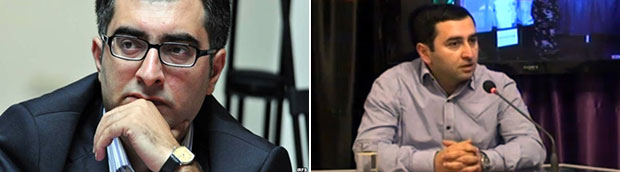
Anar Mammadli and Bashir Suleymanli
Anar Mammadli and Bashir Suleymanli — sentenced to 5.5 and 3.5 years respectively in May 2014 — are prominent human rights activists and founders of the Election Monitoring and Democracy Studies Centre. They were arrested and jailed in 2013, following outspoken criticism of presidential elections in October 2013, despite international protests. Those are the same polls that invited election observers from the OSCE found lacking. On 29 September 2014, Mammadli was awarded the Václav Havel Award for Human Rights by the Council of Europe.
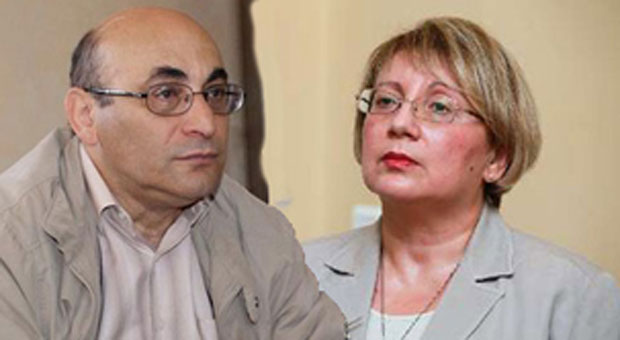
Arif and Leyla Yunus (Photo: HRHN)
Leyla Yunus — arrested 30 July 2014 — is the director of the Peace and Democracy Institute, which among other things works to establish rule of law in Azerbaijan. She has been charged with state treason (article 274 of the Criminal Code of the Republic of Azerbaijan), large-scale fraud (article 178.3.2), forgery (article 320), tax evasion (article 213), and illegal business (article 192). On 18 February, her pre-trial detention was extended for another five months. Her husband Arif Yunus was arrested 5 August 2014. Arif Yunus is facing charges of state treason and fraud. Both have had their initial three month pre-trial detentions extended.
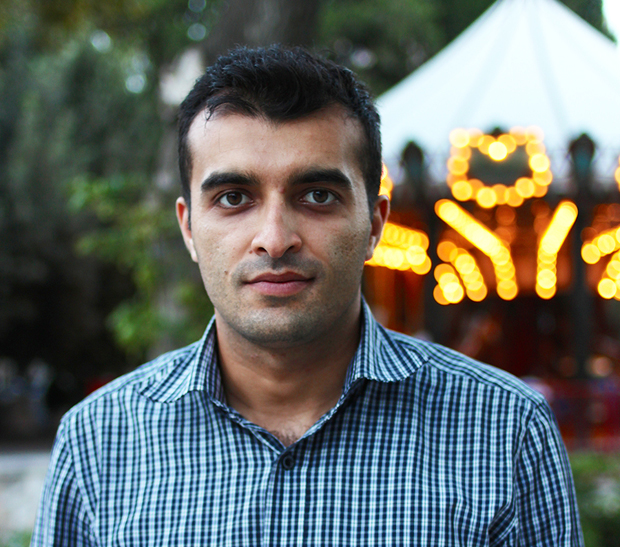
Human rights and democracy activist Rasul Jafarov (Photo: Melody Patry)
Rasul Jafarov — arrested 2 August 2014 — one of the initiators and coordinators of the campaign “Sing for Democracy” and “The Art of Democracy”, advocated for the rights of political prisoners, actively participated in the International Platform “Civil Solidarity.” He is accused of: tax evasion (Article 192), illegal business (Article 213) and malpractice (Article 308). The charges carry a possible sentence of 12 years.
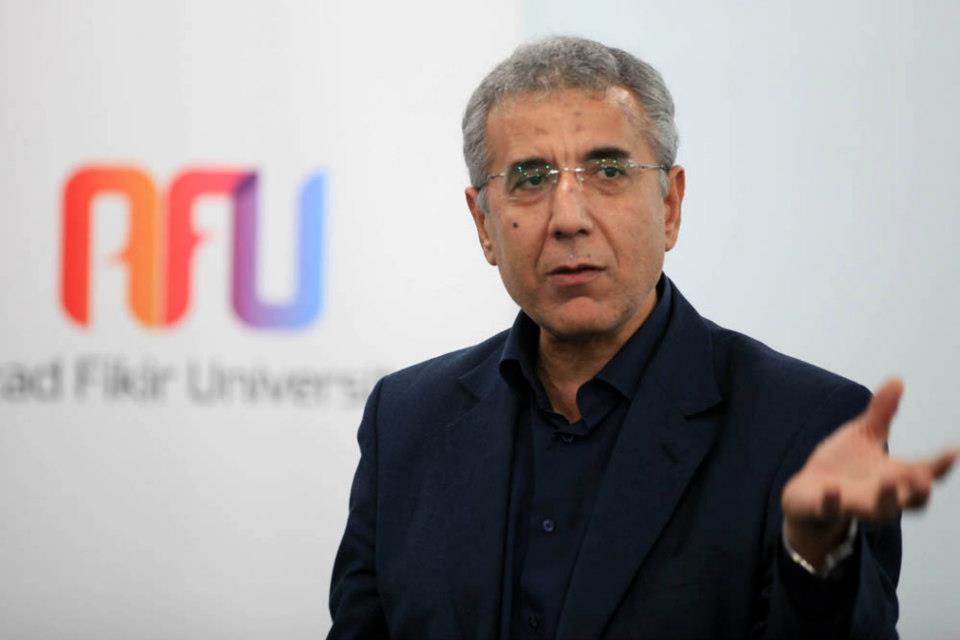
Lawyer Intigam Aliyev
Intigam Aliyev — arrested 8 August 2014 — is a human rights defender and a lawyer specialized in defending rights of citizens in the European Court of Human Rights. He is charged with Articles 213.1 (tax evasion), 308.2 (malpractice) и 192.2 (illegal business) of the Criminal Code. Index was heartened to hear that Aliyev was at least allowed to sit with his lawyers in court on Feb 3.
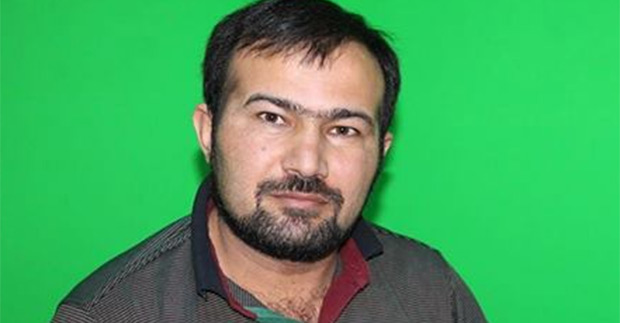
Journalist Seymur Hezi
Seymur Hezi — arrested 29 August 2014 — works for independent newspaper Azadliq and host of the news programme “Azerbaijan Hour”. He is a member of the opposition Popular Front Party. Index reported on January 29 that Hezi was sentenced to a five-year prison sentence on charges of “aggravated hooliganism” on 29 January.
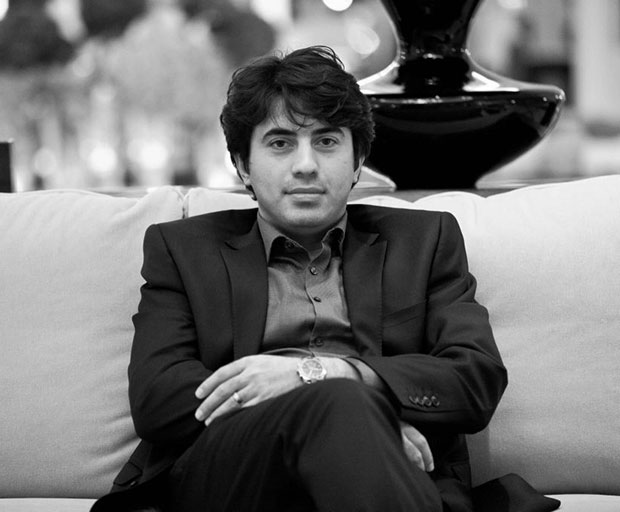
Emin Huseynov, journalist and human rights defender, director of the Azerbaijani Institute for Reporters’ Freedom and Safety (IRFS)
Emin Huseynov — went into hiding in August 2014 — is an internationally recognised human rights defender and leader of the Institute for Reporters’ Freedom and Safety (IRFS). IRFS is the leading media rights organisation in Azerbaijan and one of the main partner organisations of the Human Rights House Network in the country. Huseynov was charged with tax evasion, illegal business and abuse of authority after he went into hiding at the Swiss embassy. Florian Irminger, head of advocacy at the Human Rights House Foundation (HRHF), of which Index is a network member, called on Switzerland to continue to host Huseynov. “His location at the embassy is justified by the level of the repression in the country, the bogus charges brought against human rights defenders in Azerbaijan and the impossibility for them to defend themselves in court, due to the lack of independence of the judiciary and the harassment of their lawyers.”
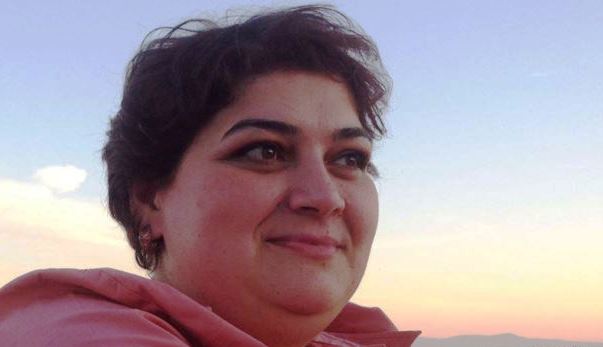
Khadija Ismayilova
Khadija Ismayilova — arrested on 5 December — is an investigative journalist and radio host who is currently working for the Azerbaijani service of Radio Free Europe/Radio Liberty. She is a member of the Organized Crime and Corruption Reporting Project. She was arrested under charges of incitement to suicide, a charge widely criticised by human rights organizations. Ismayilova is currently being supported by two petition campaigns by Index on Censorship and Reporters Without Borders. On 13 Feb, lawyer Fariz Namazly told Contact.az that new charges have been filed. According to him, Ismayilova is charged under the Article: 179.3.2 (large-scale embezzlement), 192.2.2 (illegal business), 213.1 (tax evasion) and 308.2 (abuse of power.) The charges carry a possible sentence of 12 years.
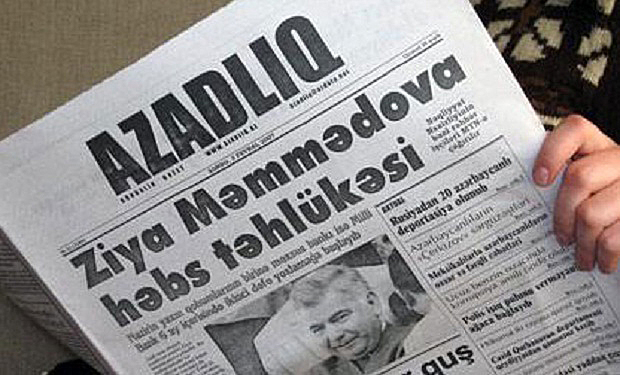
Award-winning newspaper Azadliq was forced to halt its print edition in July 2014 as its bank accounts were frozen. We reported on this in August 2014.
In September, the European Parliament adopted a resolution on the human rights situation in your country.
In November, Nils Muižnieks, the Council of Europe Commissioner for Human Rights, called his autumn 2014 mission to Azerbaijan one of the most difficult of his tenure. He wrote, “In late October I was in Azerbaijan, the oil-rich country in the South Caucasus, which just finished holding the rotating chairmanship of the 47-member Council of Europe. Most countries chairing the organisation, which prides itself as the continent’s guardian of human rights, democracy and the rule of law, use their time at the helm to tout their democratic credentials. Azerbaijan will go down in history as the country that carried out an unprecedented crackdown on human rights defenders during its chairmanship.”
You mention in your letter that individuals are not being arrested for their human rights work but it seems an astonishing coincidence that all these prominent human rights defenders should all be guilty of such an array of financial crimes. And that brings us full circle to the present. Since we received your letter, there have been several developments that we would like to brief you on:
On 29 January 2015, a provisional resolution before the CoE called attention to the cases of investigative journalist Khadija Ismayilova, human rights activist Emin Huseynov and the closure of Radio Free Europe/Radio Liberty. Further on in the resolution PACE was being asked to call on Azerbaijan to properly investigate the murders of journalists Elmar Huseynov (2005) and Rafiq Tagi (2011).
On 3 Feb, President Aliyev signed an amended media law that restricts press freedom by making it easier to shutter media outlets.
Just today, Reporters Without Borders released its World Press Freedom Index 2015, which places Azerbaijan at 162. That’s down 2 spots from last 2014.
We wish Azerbaijan’s commitment to a “free and diverse media” was more than just words and we will continue to report on these detentions – as we do globally – for as long as these words are not translated into action.
Best regards
Jodie Ginsberg
Chief Executive
Index on Censorship
21 Jan 2015 | Azerbaijan, Azerbaijan Letters, Campaigns, Germany, Statements
Chancellor Angela Merkel
Bundeskanzleramt
Willy-Brandt-Straße 1
10557 Berlin
Madam Chancellor,
As members of the international NGO coalition ‘Sport for Rights’ we are appealing to you to make human rights a central subject in your meeting next Wednesday, 21 January 2015, with president Ilham Aliyev of Azerbaijan.
In recent years, space for political activity and for civil society and journalism in Azerbaijan has gradually been curtailed, and the last six months in particular have witnessed a severe and unprecedented crackdown, with dozens of civil society activists and journalists serving or awaiting sentencing. The country’s most prominent investigative journalist and a number of leading human rights defenders are in prison, punished for their criticism of government policies. Sham charges such as ‘tax evasion’ are used to justify the criminalization of fundamental rights and freedoms.
The ‘Sport for Rights’ coalition has been established to raise this issue in the context of the forthcoming international sporting events to be hosted by Azerbaijan. Against a backdrop of systematic state-sponsored repression, these events will fail to reflect the spirit in which they were established. The next major sporting event is the Baku European Games, designed and regulated by the European Olympic Committees, scheduled for June 2015. A policy shift by the Azerbaijan towards an open society is urgently required if these Games are to be a success. Human rights defenders and journalists must be released, and we urge you to emphasize this point in your conversations with President Aliyev.
This issue is all the more important given that Azerbaijan is a member of the European community of nations: the country is a member of the Council of Europe (CoE), and part of the EU’s Eastern Partnership Initiative. By ratifying the European Human Rights Convention, Azerbaijan has made a commitment under international law to respect the fundamental freedoms contained therein. CoE officials have repeatedly called attention to Azerbaijan’s failure to uphold these freedoms for its citizens. In his retrospective on 2014, Nils Muiznieks, the CoE Human Rights Commissioner, declared:
One of the most difficult situations I have observed is in Azerbaijan, where the authorities are engaging in a systematic crackdown on human rights defenders, media professionals and civil society partners of the Council of Europe. The number of those in detention there or in exile continues to grow.
President Aliyev may point to token releases that take place from time to time – but please remember that not only are these rare, they are issued only after innocent people have served time in prison, losing months and years of their lives for exercising their basic rights to freedom of expression and association.
Among those unjustly arrested or convicted in 2014 are:
- Anar Mammadli and Bashir Suleymanli, co-founders of the Election Monitoring and Democracy Studies Centre – Mammadli and Suleymanli were arrested on 16 December 2013 and then sentenced to 5.5 and 3.5 years respectively in May 2014, following outspoken criticism of Azerbaijan’s presidential elections in October 2013. On 29 September 2014, Mammadli was awarded the Václav Havel Award for Human Rights by the Parliamentary Assembly of the Council of Europe.
- Leyla Yunus, Director of the Azerbaijan Institute of Peace and Democracy – Yunus was arrested on 30 July2014, and has remained in pre-trial detention since then, despite serious concerns about her health. She was awardedthe 2013 Theodore Hecker Award in Esslingen-am-Neckar “for her self-sacrificing contribution to the protection of human rights and civil freedoms in Azerbaijan.” Her husband Arif Yunus, Head of the Department of Conflict and Migration Institute of Peace and Democracy in Azerbaijan, Ph.D., a historian specializing in conflict studies, was arrested on 6 August 2014.
- Rasul Jafarov, one of the initiators and coordinators of the “Sing for Democracy” (2012) and “Art for Democracy” (2013) campaigns – Jafarov was arrested on 2 August2014 and has remained in detention since. His trial began on 15 January 2015.
- Intigam Aliyev, human rights defender and lawyer – Aliyev was has been in detention since his arrest 8 August 2014. In his capacity as a lawyer he has specialized in defending rights of citizens in the European Court of Human Rights. At the time of his arrest, he was dealing with over 100 cases pending before the Court.
- Khadija Ismayilova, investigative journalist; radio host for Radio Free Europe/Radio LibertyAzerbaijani service; member of the Organized Crime and Corruption Reporting Project – Ismayilova was arrested on 5 December 2014.
We ask you to unequivocally remind Azerbaijan of its obligations under the European Convention on Human Rights. Azerbaijan’s partners should insist that this terrible stainon the country’s human rights record is removed before Baku plays host to the European Games, and that these people be released immediately and unconditionally. Full execution of European Court of Human Rights should also be requested from Azerbaijan in this regard, aiming at amending legislation criminalising human rights defenders in line also with recommendations of the CoE Venice Commission.
We sincerely hope that we can count on your principled leadership on this urgentmatter. We thank you for your attention to the concerns set forth herein.
NGO coalition “Sport for Rights”, including:
- Centre for Civil Liberties (Ukraine)
- Helsinki Foundation for Human Rights (Poland)
- Index on Censorship (Great Britain)
- International Partnership for Human Rights (Belgium)
- Netherlands Helsinki Committee (The Netherlands)
- Norwegian Helsinki Committee (Norway)
- People in Need (Czech Republic)
- Platform (Great Britain)
- Youaid Foundation (Poland)
- A group of civil society activists from Azerbaijan who wish to remain anonymous out
of concern for the security of their family members
12 Nov 2014 | Azerbaijan, Azerbaijan News, Azerbaijan Statements, Campaigns, Statements
Mr Ilham Aliyev
President of the Republic of Azerbaijan
Azerbaijan Avenue 7
1005 Baku
Republic of Azerbaijan
Fax: +994124923543 and +994124920625
Email: [email protected]
Mr President,
As the Chairmanship of the Council of Europe by the Republic of Azerbaijan draws to a close, we, the undersigned members and partners of the Human Rights House Network (HRHN) and the South Caucasus Network of Human Rights Defenders, call upon the Azerbaijani authorities, through you, Mr President, to put an end to the unprecedented repression against civil society. We call upon you to immediately and unconditionally release all civil society actors currently detained due to their engagement in human rights work and for raising critiques against Azerbaijan’s authorities, including and especially human rights defenders Leyla Yunus and her husband Arif Yunus, Rasul Jafarov, and Intigam Aliyev. Anar Mammadli and Bashir Suleymanli must also be released, as their detention is solely due to their monitoring of elections in the country, including the latest Presidential election of 9 October 2013.
This summer, one after the other, the main leaders of civil society were arrested. Many others decided to flee the country, rather than facing court hearings, of which the outcome is well known in advance. Few others have been forced into hiding in the country.
Leader of the Legal Education Society, human rights lawyer Intigam Aliyev was sentenced on 8 August 2014 to pre-trial detention for 3 months on the same charges as those held against human rights defenders Rasul Jafarov, who was arrested on 2 August 2014 for tax evasion, illegal business and abuse of authority. On similar charges, Leyla Yunus, and her husband, Arif Yunus, were arrested on 30 July and 5 August 2014 respectively. Charges of State treason are additionally held against Leyla Yunus. Furthermore, the lawyers of Leyla Yunus and Intigam Aliyev were called as witnesses against their clients and hence bared from being their defendants. Very few lawyers agree to take up politically charged cases in Azerbaijan, a country in which the Bar Association is controlled by the Ministry of Justice and has disbarred lawyers such as Intigam Aliyev himself.[1] On 6 November 2014, the lawyer of Leyla Yunus, Alaif Hasanov, was sentenced to 240 hours of community service due to his public statements about the detention conditions of his client. Leyla Yunus has indeed faced psychological and physical abuses in detention, from detainees and from prison officials.
Earlier this year, the regional civil society leader Hasan Huseynli was sentenced to 6-years imprisonment[2] and the leaders of the only independent election monitoring organisation in the country, Anar Mammadli and Bashir Suleymanli, were sentenced to respectively 5 years and 6 months and 3 years and 6 months imprisonment.
Facing investigations and charges, many other human rights defenders fled the country or are in hiding from authorities, as they know they will not enjoy a fair hearing in court.
The authorities have also targeted other respected human rights voices in the country, such as the Institute for Reporters’ Freedom and Safety (IRFS), a leading media rights NGO in the country. IRFS’ leader, Emin Huseynov, is well known and an internationally recognised human rights defender, facing similar charges as the other human rights defenders. On 5 November 2014, the 67-year old mother of human rights defender Gulnara Akhundova was summoned to the Office of the General Prosecutor. She was extensively interrogated about her daughter’s human rights activities. Following this interrogation, the Office conducted a search in the apartment registered as Gulnara Akhundova official address in Baku, which is her mother’s apartment. The few other independent voices left are also facing investigations and can be arrested at any given time.
On 10 November 2014, the blogger Mehman Huseynov, brother of Emin Huseynov and also an IRFS employee, was stopped and interrogated at the Baku Airport and later released. He was arrested in relation to an on going investigation against him, based on which he was issued a travel ban.[3] He is still not allowed to leave the country.
On 5 November 2014, the Nakhchivan City Court decided to end the investigation into Ilgar Nasibov. On 21 August 2014, Ilgar Nasibov was beaten in the office of the Democracy and NGO’s Development Resource Center in Nakhchivan. He suffered multiple fractures and injuries and to date remains in dire need of treatment. In an often-used strategy against critical voices, the police filed a lawsuit against him on charges of deliberately inflicting serious damage to health (article 127.1 of the Criminal Code of the Republic of Azerbaijan). We believe Ilgar Nasibov should be compensated for the pain he suffered and immediately provided with adequate medical support.
Politically motivated detentions of activists of the youth opposition movement NIDA must also end, as well as those of inter alia journalists Rauf Mirkadirov and Hilal Mammadov[4] and political activist Tofiq Yaqublu. On 30 October, the opposition journalist Khalid Garayev was sentenced to 25 days in detention on charges of hooliganism and disobedience to the police.
All of those human rights defenders are respected internationally and received various recognitions. Those do not protect them from the repression, just as the worrying health condition of a few does not deserve any special treatment in the eyes of the authorities. We are also extremely worried to hear that the heath conditions of Leyla Yunus and Intigam Aliyev have greatly deteriorated. We believe that the conditions of their detention have had a detrimental effect on their health, as it appears that both have still not been provided adequate health care to address their respective illnesses. Intigam Aliyev has recently complained of increasing pain and Leyla Yunus is suffering a severe diabetics.
Repression of civil society: systemic problem remaining unaddressed
Unlike claims made internationally, Azerbaijan is not “on a journey towards human rights, to which it is committed.”[5] For a few years, Azerbaijan has repeatedly and by various international mechanisms been called upon to reform its legislation to prevent any crackdown on civil society.
In 2009 already, the United Nations Human Rights Committee expressed its concern over the “extensive limitations to the right to freedom of expression of the media, the closure of independent newspapers, and the removal of licences to broadcast locally for a number of foreign radio stations. It also remains concerned at reports of a pattern of harassment and criminal libel suits or hooliganism charges against journalists.”[6] The Committee was indeed shedding light on a wave of repression against media workers in the country, which included also the banning of foreign media, such as Voice of America and the Azerbaijani coverage of the British Broadcasting Corporation.
Another wave of repression then touched upon the presence of international non-governmental organisations in Azerbaijan. In July 2009, the Azerbaijani authorities made amendments to the Azerbaijani NGO Law, which state that registration of foreign NGOs in Azerbaijan “is processed based on the agreement signed with the organisations”. It followed with the adoption of the new decree of 2011, with the aim to set criteria for concluding such agreements. Based on that legislative evolution, on 10 March 2011, authorities ordered the Human Rights House Azerbaijan (HRH Azerbaijan) to cease all activities in Azerbaijan until concluding an agreement with the authorities. In an opinion on the legislation, the European Commission for Democracy through Law (Venice Commission) comes to the conclusion that the 2009 amendments to the Azerbaijani NGO law and the 2011 decree setting new requirements for foreign NGOs overturn the efforts to meet international standards and mentioned the registration of foreign NGOs among the most problematic aspects.[7]
Instead of committing to the Venice Commission’s findings, and to the execution of so many judgements of the European Court of Human Rights on freedom of expression and association, Azerbaijan continued to adapt its legislation affecting human rights defenders and their NGOs. As the Human Rights House Foundation (HRHF) highlighted in its intervention at the United Nations Human Rights Council on 10 September 2014, several United Nations independent experts have repeatedly called for a revision of Azerbaijan’s legislation regulating the registration and funding of non-governmental organisations, declaring them as contrary to international human rights law and the standards in regard to the right to freedom of association.
The legislation became the pretext to arrest independent human rights defenders and to freeze the bank accounts of dozens of other NGOs.[8] When repeatedly questioned on Azerbaijan’s record at the Parliamentary Assembly of the Council of Europe (PACE) on 24 June 2014, you have argued, Mr President, that the country has no political prisoners, basically aiming at saying that actions are taken within national legislation by an independent judiciary. The notion of “arbitrary detention” lato sensu can however also arise from the law itself or from the particular conduct of government officials. A detention, even if it is authorized by law, may still be considered arbitrary if it is premised upon an arbitrary piece of legislation or is inherently unjust, relying for instance on discriminatory grounds. United Nations and Council of Europe mechanisms and experts have repeatedly underlined that Azerbaijani legislation violates the country’s international obligations and standards, and hence the practices of authorities in applying such law is in violation to international human rights law, to which Azerbaijan says it is committed to.
It is in the backdrop of these repressive policies that you, Mr President, accepted to reestablish a working group on political prisoners under the auspices of the Council of Europe. The composition of the group discussing the issue is of great concern, given the fact that many of those independent human rights defenders who in the past worked on the issue of political prisoners are now behind bars, especially Leyla Yunus and Rasul Jafarov, who from prison on 8 August consolidated a list of 98 people detained on politically motivated charges.
Council of Europe chairmanship and reprisal against human rights defenders
The interrogation and search that took place following Gulnara Akhundova’s participation in a hearing of PACE’s Committee of Legal Affairs is a clear example of reprisal against human rights defenders perpretrated by Azerbaijani authorities. Another case of reprisal against those participating in events of international organisations is the harassment of investigative journalist Khadija Ismayilova.[9] Most recently, she was recently arrested on charges of criminal defamation but later released. Leyla Yunus, Intigam Aliyev, Rasul Jafarov and Emin Huseynov are also well known names to the Council of Europe. They cooperate with its institutions, met the Secretary General at various occasions and provide information to the office of the Commissioner for Human Rights and to PACE rapporteurs. In June 2014, when you, Mr President, addressed PACE, Emin Huseynov, Rasul Jafarov and Intigam Aliyev together organised a side-event in Strasbourg, critical of the Azerbaijani human rights record. Previously already Azerbaijani authorities proved using reprisal against those raising human rights violations in Strasbourg: the order to HRH Azerbaijan to seize all activities followed the side-event organised at the January 2011 session of PACE by HRH Azerbaijan.
The rotating chairmanship of the Council of Europe, which Azerbaijan assumed for six months, is thought of as an occasion given to each of the Council’s 47 members to act as a role model in the implementation of European human rights law. It is a unique chance to prove a country’s commitment to the very spirit of the Council of Europe, its “devotion to the spiritual and moral values which are the common heritage of [Europe’s] peoples and the true source of individual freedom, political liberty and the rule of law, principles which form the basis of all genuine democracy” as stated in the Statute of the Council of Europe of 5 May 1949, to which Azerbaijan adhered. Instead, during the chairmanship of the Council of Europe, Azerbaijan embarked on an unprecedented repression of civil society.
Any country chairing the world’s strongest regional human rights protection mechanism has a duty to show good faith in the implementation of the its judicial mechanism; Azerbaijan has instead appealed one of the strongest judgements issued by the European Court of Human Rights on the pre-trial detention of Ilgar Mammadov, Chairman of the Republican Alternative Movement (REAL). In its judgement of 22 May 2014, the Court found that the criminal procedure against him is retaliation to critical public statements he made. In a rare move by the Court, it found a violation of Article 18 of the Convention for the Protection of Human Rights and Fundamental Freedoms, which obliges States to act in good faith and prohibits them from restricting rights for purposes other than those prescribed in the Convention. The Court’s Grand Chamber rejected Azerbaijan’s appeal, but Ilgar Mammadov remains in detention. The pre-trial detention of Ilgar Mammadov had the same justification as the one against Leyla Yunus, Arif Yunus, Rasul Jafarov and Intigam Aliyev. Recently, their pre-trial detentions were extended. Azerbaijan should instead review its policies in regard to the excessive use of pre-trial, in accordance with the Ilgar Mammadov judgement.
On 24 June 2014, you, Mr President, told PACE that “[the authorities of Azerbaijan] respect the decisions of the European Court of Human Rights.” The chairmanship of the Council of Europe by the Republic of Azerbaijan will instead remain stained with the lack of execution of the Court judgements and the mark of repression since July 2014 against Azerbaijan’s civil society.
The detention of Intigam Aliyev is a grave sign of non-cooperation with the Court. Intigam Aliyev is a prominent human rights lawyer engaged in the defense of human rights by providing legal defense, initiating strategic litigation, and training lawyers and providing human rights education. The work of Intigam Aliyev is essential in the promotion of human rights and democracy-building in Azerbaijan. He has strived for legal protection of victims of human rights violations for more than 15 years and has to date represented them in proceedings before the Court in more than 200 cases (around 40 cases are currently awaiting decision). He has succeeded in a number of cases concerning voting rights, freedom of assembly, freedom of speech and the right to a fair trial and has served as a trainer in nearly 100 training courses for judges, lawyers, journalists, and representatives of non-governmental organisations. The Committee of Ministers recently requested “detailed information on all criminal charges pending against [Intigam Aliyev],” which is indeed a sign of its dismay over this detention.[10]
As Azerbaijan’s Chairmanship of the Council of Europe draws to a close, we call upon the Azerbaijani authorities, through you, Mr President, to put an end to the unprecedented repression against civil society.
We specifically call upon you to immediately and unconditionally release all civil society actors currently detained due to their engagement in human rights activities and for raising critiques against Azerbaijan’s authorities, especially human rights defenders Leyla Yunus and her husband Arif Yunus, Rasul Jafarov and Intigam Aliyev. Anar Mammadli and Bashir Suleymanli must also be released.
We further call upon you to put an end to the harassment and attacks against human rights defenders, journalists and activists, and lift all potential charges against them, including Emin Huseynov, Mehman Huseynov and Khadija Ismayilova.
Yours sincerely,
Due to the risk of retaliation against Azerbaijani human rights defenders, we decided not to indicate the names of the Azerbaijani NGOs who worked on preparing the present letter.
Barys Zvozskau Belarusian Human Rights House in exile, Vilnius (on behalf of the following NGOs):
- Belarusian Association of Journalists
- Belarusian Helsinki Committee
- City Public Association “Centar Supolnaść”
- Human Rights Centre “Viasna”
Human Rights House Belgrade (on behalf of the following NGOs):
- Belgrade Centre for Human Rights
- Lawyers Committee for Human Rights YUCOM
- Civic Initiatives
- Helsinki Committee for Human Rights in Serbia
- Policy Centre
Human Rights House Kiev (on behalf of the following NGOs):
- Human Rights Information Centre
- Center for Civil Liberties
- Kharkiv Human Rights Protection Group
- Social Action Centre
- Ukrainian Legal Aid Foundation
Human Rights House London (on behalf of the following NGOs):
- Article 19
- Index on Censorship
- Vivarta
Human Rights House Tbilisi (on behalf of the following NGOs):
- Article 42 of the Constitution
- Caucasian Centre for Human Rights and Conflict Studies
- Georgian Centre for Psychosocial and Medical Rehabilitation of Torture Victims
- Human Rights Centre
- Union Sapari – Family without Violence
Human Rights House Oslo (on behalf of the following NGOs):
- Health and Human Rights Info
- Human Rights House Foundation
Human Rights House Voronezh (on behalf of the following NGOs):
- Charitable Foundation
- Civic Initiatives Development Centre
- Confederation of Free Labor
- For Ecological and Social Justice
- Free University
- Golos
- Interregional Trade Union of Literary Men
- Lawyers for labor rights
- Memorial
- Ms. Olga Gnezdilova
- Soldiers Mothers of Russia
- Voronezh Journalist Club
- Voronezh-Chernozemie
- Youth Human Rights Movement
Human Rights House Zagreb (on behalf of the following NGOs):
- APEO/UPIM Association for Promotion of Equal Opportunities for People with Disabilities
- B.a.B.e.
- CMS – Centre for Peace Studies
- Documenta – Centre for Dealing with the Past
- GOLJP – Civic Committee for Human Rights
- Svitanje – Association for Protection and Promotion of Mental Health
The Rafto House in Bergen, Norway (on behalf of the following NGOs):
The House of the Helsinki Foundation For Human Rights, Poland (on behalf of the following NGOs):
- Helsinki Foundation for Human Rights
About the Human Rights House Network (www.humanrightshouse.org)
The Human Rights House Network (HRHN) unites 90 human rights NGOs joining forces in 18 independent Human Rights Houses in 13 countries in Western Balkans, Eastern Europe and South Caucasus, East and Horn of Africa, and Western Europe. HRHN’s aim is to protect, empower and support human rights organisations locally and unite them in an international network of Human Rights Houses.
The Human Rights House Azerbaijan is one of the members of HRHN and served as an independent meeting place, a resource centre, and a coordinator for human rights organisations in Azerbaijan. In 2010, 6’000 human rights defenders, youth activists, independent journalists, and lawyers, used the facilities of the Human Rights House Azerbaijan, which has become a focal point for promotion and protection of human rights in Azerbaijan. The Human Rights House Azerbaijan ceased all its activities following an order of the Ministry of Justice of the Republic of Azerbaijan on 10 March 2011.
The Human Rights House Foundation (HRHF), based in Oslo (Norway) with an office in Geneva (Switzerland), is HRHN’s secretariat. HRHF is international partner of the South Caucasus Network of Human Rights Defenders and the Balkan Network of Human Rights Defenders.
HRHF has consultative status with the United Nations and HRHN has participatory status with th
[1] In 2005, Intigam Aliyev was rejected in his application for membership to the Azerbaijan Bar Association despite being completely eligible to be accepted to the Bar under the national laws. Intigam Aliyev challenged this unlawful refusal by applying to the national courts, which, however, ruled against him.
[2] We welcome the release of Hasan Huseynli following the presidential pardon of 17 October 2014 for 80 prisoners in Azerbaijan, among which were also the members of the NIDA movement, Shahin Novruzlu, Elsever Mursalli and Bakhtiyar Guliyev.
[3] Mehman Huseynov was awarded in 2013 with the Press Prize Award from Fritt Ord Foundation and the Zeit Foundation. His travel ban was issued days before he was to travel to Oslo to receive his prize. More information available at http://humanrightshouse.org/Articles/19355.html.
[4] In its opinion delivered on 27 March 2014 on the detention of Hilal Mammadov, the United Nations Working Group on Arbitrary Detention found that the charges are “based on Hilal Mammadov’s legitimate exercise of the right of freedom of expression (…) and that the violations of international law relating to the right to a fair trial are of such gravity as to give the deprivation of liberty of Hilal Mammadov an arbitrary character” (decision available in the Working Group’s report A/HRC/WGAD/2013/59). He was arrested on 21 June 2012 and sentenced to five years in prison with the accusation of “illegal selling of drugs”, “high treason”, and “incitement to national, racial, social and religious hatred and hostility”.
[5] Ambassador of the Republic of Azerbaijan to the United Kingdom Tahir Taghizadeh, in The Guardian, 6 November 2014, available at http://www.theguardian.com/world/2014/nov/06/azerbaijan-journey-towards-human-rights-committed.
[6] Concluding Observations of the United Nations Human Rights Committee to the review of the Republic of Azerbaijan, 13 August 2009, paragraph 15, UN doc. CCPR/C/AZE/CO/3.
[7] Opinion no. 636 / 2011 of 19 October 2011. More information available at http://humanrightshouse.org/Articles/17215.html.
[8] In its interim resolution CM/ResDH(2014)183 of 25 September 2014, the Committee of Ministers of the Council of Europe reiterated its concern over the arbitrary application of criminal legislation to limit freedom of expression, stating that “the present situation raises serious concerns, in particular on account of the reported recent use of different criminal laws […] against journalists, bloggers, lawyers and members of NGOs”, available at https://wcd.coe.int/ViewDoc.jsp?id=2239635&Site=CM.
[9] Most recently, harassement against Khadija Ismayilova increased, including a travel ban imposed on her. She was also excessively searched and obstructed at the airport in Baku, upon her return from a PACE session in Strasbourg, where she spoke at a side-event on 2 October 2014. More information available at http://humanrightshouse.org/Articles/20515.html.
[10] Interim resolution CM/ResDH(2014)183 of 25 September 2014, available at https://wcd.coe.int/ViewDoc.jsp?id=2239635&Site=CM.
