
Repeat after me: the BBC is a public sector broadcaster
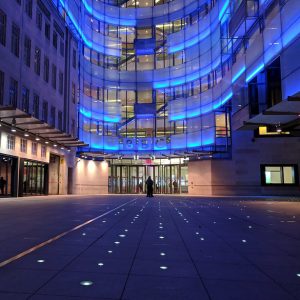
BBC Broadcasting House. Photo: James Cridland
There are some new stories that expose people’s lack of understanding of what media freedom is in a democratic society and in the midst of an apparent scandal words can get heated and people can speak out of turn without realising that they are ignorant of what they speak. We’ve all done it but in the last ten days the words of more than one British politician or commentator have made me want to throw things at the TV.
Since last week the United Kingdom has been embroiled in a row about whether or not a sports presenter – namely one Gary Lineker – had the right to challenge the actions of his government on a social media platform when not at work. The issue was actually not his words (not really), but the responsibility he had to his employer – the UK’s public sector broadcaster, the BBC.
When last Friday evening BBC management opted to remove Lineker from air over the weekend, I think it’s fair to suggest that they were ill prepared for the response from the rest of their on-air talent and many of their sports journalists and support staff who, in solidarity with Lineker, refused to work. Shows were cancelled, football commentary was unavailable and many of the most influential footballers in the UK refused to give post-match interviews to the BBC. In other words Lineker received complete support from his colleagues and the BBC reinstated him.
While this was a freedom of expression issue – once Lineker had been removed from air for sharing his views – it isn’t that element of the issue that is the focus of my blog. Although, for the record, I think that employees of the BBC who aren’t involved in news production or editorial decisions should probably be able to outline their personal views, on their personal social media pages, when not at work without it becoming a national drama.
However, it was the political pontifications that followed the internal BBC drama that I wish to write about. British parliament had a discussion on the impartiality of the BBC following on from the drama. Language is important and definitions even more so when you’re talking about issues of such importance. And both in the House of Commons and in certain media outlets the BBC suddenly was no longer a public sector broadcaster – it had become a state broadcaster.
These are two very different beasts and it’s vital that we don’t seek to conflate the two. A state broadcaster operates at the direction of the state – they promote the interests of their government and are not considered by anyone to be impartial. State broadcasters include Iran’s Press TV, Russia’s RT and China’s CGTV. This is not a model that the UK would want to or should ever seek to emulate.
The BBC is an impartial public sector broadcaster, funded by a form of hypothecated tax. The government gets to appoint the governance structure and every decade negotiate the Royal Charter – which determines the broadcasting rights of the BBC – but they have no editorial control. No programming control. No employment responsibilities. And long may that be.
We are incredibly lucky to have an impartial public sector broadcaster that can speak truth to power and they should be able to act without fear or favour within the UK. Politicians and commentators who wish to engage in discussions about the future of the BBC and any perceived impropriety or political bias should as a basic requirement be able to articulate the difference between a public sector broadcaster and a state broadcaster.
The women who paid the ultimate price
Wednesday marked International Women’s Day, an opportunity to reflect upon the role of women in society. In the midst of a war in Europe and global economic crisis it is easy to focus on the immediate, on the current existential crisis, but there is an onus on us to remember what is happening further afield.
On Wednesday for International Women’s Day I addressed students on behalf of the Anne Frank Trust. I highlighted the importance of not only telling women’s stories but also the power of amplifying their lived experiences, wherever they may be. Collectively we all made a promise that this week – and I hope in future weeks – we would seek to tell the stories of the women who have made a mark and ensure that the world knows their names.
I seek to deliver on that promise.
I am proud to be the Chief Executive of Index on Censorship, a charity which endeavours to provide a voice to the persecuted, which campaigns for freedom of expression around the world. I work daily with dissidents who risk everything to change their societies and their communities for the better. Men and women. But today I would like to highlight the names of some of those women who have paid the ultimate sacrifice in the last year for the supposed “crime” of doing something we take for granted every day – using the human right of freedom of expression.
-
Deborah Samuel – a student brutally murdered in Nigeria after being accused of blasphemy on an academic social media platform.
-
Nokuthula Mabaso – a leading woman human rights defender in South Africa and leader of the eKhenana Commune. She was assassinated outside of her home, in front of her children.
-
Shireen Abu Akleh – a veteran Palestinian-American correspondent for Al Jazeera who was killed while reporting on an Israeli raid in the West Bank.
-
Jhannah Villegas – a local journalist in the Philippines was killed at her home. The police believe this was linked to her work.
-
Francisca Sandoval – a local Chilean journalist was murdered, and several others hurt when gunmen opened fire on a Workers’ Day demonstration.
-
Mahsa Amini – a name all too familiar to us, as her murder inspired a peaceful revolution which continues to this day. Murdered by the Iranian morality police for “inappropriate attire”.
-
Oksana Baulina – a Russian journalist killed during shelling by Russian forces in the Ukrainian capital, Kyiv.
-
Oksana Haidar – a 54-year-old Ukrainian journalist and blogger better known under the pseudonym “Ruda Pani”, killed by Russian artillery, northeast of Kyiv.
-
Oleksandra Kuvshynova – a Ukrainian producer who was killed outside of Kyiv, while working with Fox News.
-
Petronella Baloyi – a South African land and women human rights defender gunned down while in her home.
-
Yessenia Mollinedo Falconi, a Mexican journalist who was the founder and editor of El Veraz. A crime and security correspondent, she received a death threat a fortnight before she was shot. She was killed alongside her colleague Sheila Johana García Olivera
-
Vira Hyrych – a journalist for Radio Free Europe’s Ukrainian service, killed by Russian shelling.
-
Yeimi Chocué Camayo – an Indigenous women’s rights activist, killed in Columbia when returning to her house.
-
Cielo Rujeles – wife of social leader Sócrates Sevillano, shot and killed alongside her husband in Colombia.
-
Luz Angelina Quijano Poveda – a delegate of the Community Action Board in Punta Betín, Colombia, murdered at her home.
-
Sandra Patricia Montenegro – a PE teacher and social leader was shot and killed in front of her students in Colombia.
-
Melissa Núñez – a transgender activist shot dead by armed men in Honduras.
-
María del Carmen Vázquez – a Mexican activist and member of the Missing Persons of Pénjamo, murdered by two men at her home in. She was looking for her son who disappeared last summer.
-
Blanca Esmeralda Gallardo – activist and member of the Collective Voice of the Missing in Puebla, who was assassinated on the side of the highway in Mexico as she waited for a bus to take her to work. She was searching for her 22-year-old daughter who vanished in 2021.
-
Yermy Chocue Camayo – treasurer of the Chimborazo indigenous reservation in Colombia, and human rights defender, killed as she headed home.
-
Dilia Contreras – an experienced presenter for RCN Radio in Columbia, shot dead in a car alongside her colleague Leiner Montero after covering a festival in a local village.
-
Edilsan Andrade – a Colombian social leader and local politician, shot and killed in the presence of one of her children.
-
Jesusita Moreno, aka Doña Tuta – a human rights activist who defended Afro-Colombian community rights. Facing threats against her life, she was assassinated whilst at her son’s birthday party.
-
Maria Piedad Aguirre – a Colombian social leader who was a defender of black communities, violently murdered with a machete; she was found at home by one of her grandchildren.
-
Elizabeth Mendoza – social leader, was shot and killed in her home in Colombia. Her husband, son and nephew were also murdered.
-
María José Arciniegas Salinas – a Colombian indigenous human rights defender, assassinated by armed men who said they belonged to the Comandos de la Frontera group.
-
Shaina Vanessa Pretel Gómez – who was known among the LGBTIQ+ community for her activism, including work to establish safe spaces for homeless people and a passion for the arts, was shot dead early in the morning by a suspect on a motorbike.
-
Rosa Elena Celix Guañarita – a Colombian human rights defender was shot while socialising with friends.
-
Mariela Reyes Montenegro – a leader of the Union of Workers and Employees of Public Services was murdered in Colombia.
-
Alba Bermeo Puin – an indigenous leader and environmental defender in Ecuador was murdered when five months pregnant.
-
Mursal Nabizada – a former female member of Afghanistan’s parliament and women’s rights campaigner murdered at her home.
This is not an exhaustive list by any stretch of the imagination. Compiling the names and profiles of women who have been killed as a result of their right to exercise freedom of expression is almost impossible, not least because of the nature of the repressive regimes which too many people live under. But every name represents thousands of others who day in, day out put their lives at risk to speak truth to power. They were mothers, grandmothers, daughters, nieces, granddaughters, sisters, aunts, friends, partners, wives.
To their families, they were the centre of the world. To us, today, their stories bring fear and inspiration in equal measure. They are heroes whose bravery we should all seek to emulate.
Bunker Cabaret: From the bomb shelters of Kyiv to Somerset House
You are handed a piece of paper as you enter the room. Move around, come up close, move away, sit down, do what you want; it instructs. All it asks is you be present together (and, naturally in the modern age, turn off your mobile phone).
Eventually everybody pulls up a chair, but the conformity of the audience doesn’t extend to the performance. A mixture of song, dance, poetry and performance art, Bunker Cabaret is a creative explosion.
Performed at Somerset House in Central London by the Hooligan Art Community, Bunker Cabaret is billed as an “exploration of love versus totalitarianism, and the personal conflicts of making art in time of war.” Formed in Kyiv in 2019, two of its male actors, Sam Kyslyi and Danylo Shramenko, developed scenes in a bomb shelter in the city, which would become the inspiration for the show. Leaving Ukraine, they were joined later by other members including Mirra Zhuchkova, who earlier escaped to Germany.
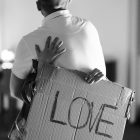
Photo by Steve Tanner
Bunker Cabaret opens with Kyslyi stood on a bed of fairy lights, interspersing elegant dancing with shadow boxing. The fusing of beauty with brutality, which one would imagine was how the seeds of the show were sown, is evident.
The audience is dropped into an animated conversation between Kyslyi and Shramenko. Almost childlike, it’s a game of “guess this noise”, which seems innocent enough until the correct answers compose of weaponry and warcraft. The lived experience of being trapped in a war zone is conveyed by the ability to note the difference in sound between a MiG-29 and a MiG-31.
A series of monologues are performed, including from Zhuchkova. Hers are dreamlike, almost abstract (and nightmarish), perhaps reflecting the pain of being torn away from home, and the hope of one day returning. The sound of fireworks punctuates the end of her final speech, with a strong, unifying gesture for each person in the audience. Kyslyi’s monologues are more real and descriptive of his experience, often resulting into a burst of song at the end.
Loud traffic passes outside the large windows of the room, where people could easily peek inside. This seems like a conscious decision, and like the instructions given at the start, the audience and environment play a part of the performance just as much as the actors in the room.
Ukrainian artists have been targeted since the Russian occupation and assault began. The attacks on Kyiv killed Artem Datsyshyn, the principal dancer of the National Opera of Ukraine, and the famous actress Oksana Shvet. Musicians, painters and photographers are among those killed so far; an attempt to erase Ukraine’s cultural and artistic contributors.
Despite being under attack, closed Ukrainian cultural institutions have started to programme again. Several branches of the National Art Gallery in Lviv reopened, as well as The Theater on Podil in Kyiv. Still, the circumstances for art and artists in Ukraine remains challenging.
Bunker Cabaret is not a conventional performance, but neither are the circumstances that brought it to Somerset House. It’s a paean to the fortitude of art in the hardest of conditions.
Bunker Cabaret is currently on a UK tour. Dates and ticket details are here.