4 Jan 2018 | Media Freedom, media freedom featured, News, United Kingdom
[vc_row][vc_column][vc_single_image image=”97191″ img_size=”full” alignment=”center”][vc_column_text]“News is something which somebody wants suppressed: all the rest is advertising.”
Variations on this quote, originally attributed to William Randolph Hearst, have echoed around newsrooms for decades, with advertising and editorial kept separate. Nowadays, though, the line is becoming more blurred for the UK’s regional media.
And it is driving journalists away from the jobs they love. One former local paper editor told Index she bowed out after commercial influence became the last straw.
“The last 10 years have seen increasing pressure from commercial departments to not use, or minimise, any story which has the potential to upset an advertiser – or even a potential advertiser,” she said. “While working as an editor I was told, in no uncertain terms, we were not to run a court story involving an advertiser breaching health and safety legislation. And that is just one example.
“My instincts were to fight every inch of the way, but the reality was that the dice were loaded in favour of those bringing in revenue, the ad team, not those irritating journalists who believed in printing news, whatever it was and whoever it involved.”
An increasing number of media CEOs have commercial roots rather than editorial backgrounds, with publishers sometimes accused of arguing that commercial needs can override journalistic integrity because advertisers pay the wages.
Print circulation is falling – as is advertising revenue. Enders Analysis predicts that by 2019, the UK newspaper industry’s revenue will be nearly £1bn a year less than in 2011, and eMarketer’s latest UK media ad-spending forecast predicted newspapers would see their income fall by 9% in 2017.
Regional papers have a smaller pool of advertisers to draw on than their national competitors, so commercial directors are keen to court businesses in the hope they may become advertisers, or to keep their budgets on par with previous years.
Reporters complain that they spend too much time rehashing press releases with little news value, and sub-editors regularly come across “stories” on commercial events with instructions not to edit them. Often, a paid-for supplement will follow, linked to an agreement for editorial coverage.
Ian Murray, executive director of the Society of Editors, says this closer relationship is important but needs to be handled with care.
“Editors left their ivory towers a few years ago now, and any editor or news editor who doesn’t understand that the continued existence of their publication is tied to its commercial success won’t last long in the job,” he said. “But whereas it is acceptable for an editor to agree to, say, a new section on a topic that will attract or support advertising, it remains their role if not their duty to ensure commercial interests do not affect genuine news reporting.”
This is a tightrope Nigel Pickover has negotiated in his four decades in the regional press. The former editor of the Ipswich Star and the Eastern Daily Press believes editorial staff need a sixth sense regarding potentially undue influence.
“If there is a newsroom campaign or a royal wedding supplement, it’s entirely appropriate to link with colleagues to see if there are commercial opportunities. Producing newspapers and websites is an expensive business,” he said.
“The biggest danger to me – in a time of tight resources and open pages – is clever PR firms delivering well-written copy, pictures and even video into the editorial system. Again, these stories must pass muster and not be used as space fillers if they are just free puffs.”
Many PR companies, aware of the muddying of the waters, see benefits for all parties.
Maw Communications has clients including GoCompare, DPD and Virgin Money. Founder Gordon Maw says it is now common to have editorial coverage, traditional adverts, sponsorship, online links and inclusion in more general features in one managed campaign rather than dealing with separate departments.
“As amazing as your story or ad is, there’s a massive chance people will miss it. But with this sharing of media, everything can be done as mini campaigns – it can go everywhere,” he said. “It’s still about the story and the message but it works in different ways.”
But while some newsdesks are instructed to blur the boundaries, Iliffe’s new Bishop’s Stortford Independent sets firm limits. News editor Sinead Corr’s brief is to provide genuine local news which inspires confidence in both readers and advertisers.
“We are trying to be independent, and you can’t be that if you are in someone’s pocket,” she said. “Our ad reps sell on the quality of our editorial content. There are no mates’ rates, no puff promises.”
She says advertisers believe too much cross-contamination can damage their brands. “People aren’t falling for it… It’s the whole ethos of trust. Adverts are placed in a context where they have credibility by association.”
But what happens if advertisers do try to call the shots? They may demand inclusion in a story or threaten to withdraw advertising if an adverse story is printed.
This is where editors have to be strong, fighting their corner if needs be and employing that “sixth sense”, says Pickover.
It is this approach which will, ultimately, benefit both commercial and editorial sides, adds Murray.
“In my experience, and through anecdotal evidence from today’s editors, they remain committed to standing up for editorial independence and integrity. Management also, I believe, understand that a publication’s integrity with both readers and then advertisers will not survive the loss of real editorial standards.”
This is good news, but it still rings hollow in the ears of journalists such as the former weekly editor, who spoke to Index, who believes the daily struggle is still real – especially for smaller publications.
“I am sure there are papers out there which take no prisoners and run stories unfettered by the chains of the ad team – and I salute them. But equally, there are also plenty of stifled editorial teams being bent by the commercial will of the ad teams – be it not running a story altogether, or over-writing some PR puff to a page lead to please an advertiser.”[/vc_column_text][/vc_column][/vc_row][vc_row][vc_column][vc_custom_heading text=”Survey: How free is our press?” use_theme_fonts=”yes” link=”url:https%3A%2F%2Fwww.indexoncensorship.org%2F2017%2F12%2Fsurvey-free-press%2F|title:Take%20our%20survey||”][vc_separator color=”black”][vc_row_inner][vc_column_inner width=”1/4″][vc_icon icon_fontawesome=”fa fa-pencil-square-o” color=”black” background_style=”rounded” size=”xl” align=”right”][/vc_column_inner][vc_column_inner width=”3/4″][vc_column_text]
This survey aims to take a snapshot of how financial pressures are affecting news reporting. The openMedia project will use this information to analyse how money shapes what gets reported – and what doesn’t – and to advocate for better protections and freedoms for journalists who have important stories to tell.
More information[/vc_column_text][/vc_column_inner][/vc_row_inner][vc_separator color=”black”][vc_row_inner][vc_column_inner width=”1/2″][vc_single_image image=”81193″ img_size=”full” alignment=”center” onclick=”custom_link” link=”https://www.indexoncensorship.org/2017/12/jean-paul-marthoz-commercial-interference-european-media/”][/vc_column_inner][vc_column_inner width=”1/2″][vc_column_text]
Commercial pressures on the media? Anti-establishment critics have a ready-made answer: of course, journalists are hostage to the whims of corporate owners, advertisers and sponsors. Of course, they cannot independently cover issues which these powers consider “inconvenient”.[/vc_column_text][/vc_column_inner][/vc_row_inner][vc_separator color=”black”][vc_row_inner][vc_column_inner width=”1/2″][vc_single_image image=”96949″ img_size=”full” alignment=”center” onclick=”custom_link” link=”https://www.opendemocracy.net/openmedia/mary-fitzgerald/welcome-to-openmedia”][/vc_column_inner][vc_column_inner width=”1/2″][vc_column_text]
Forget fake news. Money can distort media far more disturbingly – through advertorials, and through buying silence. Here’s what we’re going to do about it.
This article is also available in Dutch | French | German | Hungarian | Italian |
Serbian | Spanish| Russian[/vc_column_text][/vc_column_inner][/vc_row_inner][vc_separator color=”black”][/vc_column][/vc_row][vc_row][vc_column][vc_custom_heading text=”Don’t lose your voice. Stay informed.” use_theme_fonts=”yes”][vc_separator color=”black”][vc_row_inner][vc_column_inner width=”1/2″][vc_column_text]Index on Censorship is a nonprofit that campaigns for and defends free expression worldwide. We publish work by censored writers and artists, promote debate, and monitor threats to free speech. We believe that everyone should be free to express themselves without fear of harm or persecution – no matter what their views.
Join our mailing list (or follow us on Twitter or Facebook) and we’ll send you our weekly newsletter about our activities defending free speech. We won’t share your personal information with anyone outside Index.[/vc_column_text][/vc_column_inner][vc_column_inner width=”1/2″][gravityform id=”20″ title=”false” description=”false” ajax=”false”][/vc_column_inner][/vc_row_inner][vc_separator color=”black”][/vc_column][/vc_row][vc_row][vc_column][vc_basic_grid post_type=”post” max_items=”12″ style=”load-more” items_per_page=”4″ element_width=”6″ grid_id=”vc_gid:1515055423699-6d3c86d3-086a-2″ taxonomies=”8996″][/vc_column][/vc_row]
2 Jan 2018 | Journalism Toolbox Spanish
[vc_row][vc_column][vc_custom_heading text=”Puede que en Estados Unidos estén aún acostumbrándose a sus «fake news», pero los bielorrusos llevan años lidiando con la táctica de las noticias fabricadas, relata Andrei Aliaksandrau.”][vc_row_inner][vc_column_inner][vc_column_text]
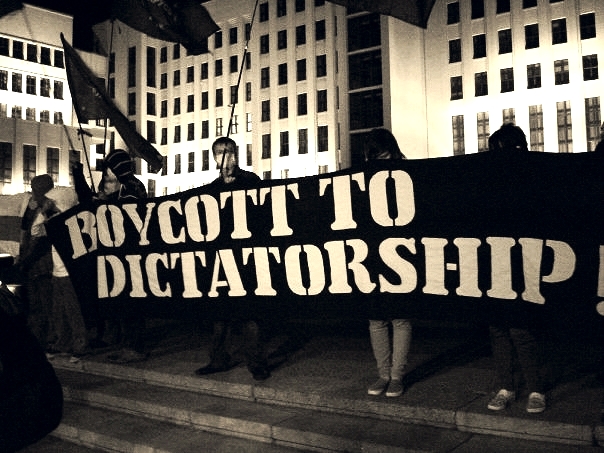
Las fuerzas especiales rodean a manifestantes en Minsk (Bielorrusia) tras las elecciones fraudulentas de 2010, Isabel Sommerfeld/Flickr
[/vc_column_text][/vc_column_inner][/vc_row_inner][/vc_column][/vc_row][vc_row][vc_column][vc_column_text]
En Bielorrusia, inventar noticias no es una novedad. Una historia que consistía en imágenes espantosas de manifestantes armados con cócteles molotov y otros objetos recorrió en abril los canales de televisión y periódicos del estado. Los manifestantes, afirmaban los reporteros, pertenecían a la Legión Blanca, cuyos miembros presuntamente buscaban encender en Minsk una revuelta similar a la de las protestas del Euromaidán, que se extendieron por toda Ucrania en 2013 y 2014 y contribuyeron a la crisis de Crimea.
Curiosamente, los productores y reporteros de estos vídeos y artículos eran anónimos. No había ni títulos ni firmas, ni tampoco pruebas de que la Legión Blanca, que existió en su día, hubiera llevado a cabo operación alguna en los últimos años. También es curioso que ni la policía ni las fuerzas de seguridad quisieran responder a las preguntas de periodistas y ciudadanos sobre el caso.
Resulta que la historia era una invención con envoltorio de noticia, un fragmento retorcido de la realidad, emitido para sembrar el miedo y el pánico en la sociedad. El mensaje era: No salgáis a las calles a protestar. Quienes lo hacen socavan la paz y la estabilidad.
Se trata de una táctica habitual que lleva años dándose en Bielorrusia, donde las noticias reales se reprimen y proliferan las falsas. Es una estrategia de uso muy extendido en este momento, siendo 2017 testigo de las protestas más intensas que ha visto el país en años, y a las que el gobierno ha respondido con brutalidad.
Bastante próspera bajo el régimen soviético, Bielorrusia sufrió un declive financiero tras la caída de la URSS. En medio del desconcierto económico y político, Alexander Lukashenko llegó al poder. El presidente sigue aferrado a él 23 años después, debido en gran medida a un estricto control de los medios de comunicación. Los ataques a la prensa, a blogueros, a escritores y a periodistas independientes se perpetúan al mismo tiempo que continúan las actividades de la extensa máquina propagandística del estado.
Los informativos de los canales nacionales de televisión —y no hay ningún canal nacional que no sea propiedad del estado— siguen un patrón simple a la par que persuasivo: aquí va una noticia sobre el presidente; aquí está saludando a un embajador extranjero y dando un discurso sobre el papel especial que desempeña Bielorrusia en la estabilidad y la paz mundial; aquí está reunido con el ministro del interior y haciendo una declaración sobre la importancia de preservar la estabilidad y la paz en la sociedad; aquí está gritando al consejo de ministros que tienen que hacer lo que haga falta para seguir sus sabias ideas por el bien del pueblo (por no hablar de la paz y la estabilidad); aquí está visitando la fábrica de una pequeña ciudad hablándoles a los obreros cual padre bondadoso, diciéndoles que él proveerá.
Tras media hora con cosas así, le llega el turno a un caleidoscopio de imágenes del resto del mundo: proyectiles cayendo sobre Ucrania; bombas destruyendo un hospital sirio; algún presidente raro haciendo declaraciones absurdas al otro lado del océano; un terrorista haciendo estallar otra ciudad europea; refugiados, inundaciones, recesiones, gobiernos que colapsan.
Y, después, una historia de niños felices en una guardería bielorrusa. Más imágenes de un país pacífico guiado por un sabio líder que se erige como el último bastión de felicidad, la última isla de estabilidad en un mundo violento.
[/vc_column_text][/vc_column][/vc_row][vc_row][vc_column width=”1/4″][/vc_column][vc_column width=”3/4″][/vc_column][/vc_row][vc_row][vc_column][vc_column_text]
Pero hay otros tipos de programas en la televisión nacional. Los emiten cuando las autoridades empiezan a notar que la imagen de «paz y estabilidad» que proyectan contradice a la otra realidad: la que la gente ve en las calles y en el trabajo, en las tiendas y en el transporte público, en hospitales y escuelas; la realidad de la vida fuera de la matriz de la propaganda del estado.
A comienzos de 2017, miles de personas de todo el país salieron a la calle a manifestarse. Las protestas fueron provocadas por un nuevo decreto presidencial, el tercero, que multa a quienes no puedan demostrar tener un trabajo o fuente de ingresos oficial. Lo han apodado el decreto «del parásito social». Existe un antiguo término soviético, tuniejadcy, cuyo significado oficial es «parásito»: el «parasitismo» estaba considerado delito en la era soviética, pues se esperaba que todo el mundo trabajase para construir «la sociedad utópica comunista». He aquí una innovación bielorrusa: en lugar de subvencionar a los parados, el gobierno ha decidido multarles.
El decreto solo fue el detonante. La verdadera razón de las protestas es la profunda crisis económica que asola el país. Resulta que la «estabilidad» bielorrusa se trata en realidad de un estado de coma. Nuestra economía, fundamentada en la industria, es herencia de la era soviética y nunca ha pasado por reformas. Estas habrían conllevado la privatización, la modificación de leyes para asegurar garantías al capital, la independencia del poder judicial y un parlamento electo en condiciones, en lugar de uno puesto a dedo por el presidente. Estos pasos, de haberlos seguido, habrían socavado profundamente el régimen autoritario.
Así pues, la economía del país ha llegado hasta hoy sin mayores alteraciones. Durante casi dos décadas se benefició del petróleo y el gas que llegaban baratos de Rusia, así como de préstamos que el Kremlin se podía permitir debido a los altos precios del petróleo y a la necesidad de contar con un aliado cerca. La relación se ha enfriado desde entonces, en parte por la oposición de Bielorrusia a la anexión rusa de Crimea.
La gente comenzaba a notar las dificultades económicas, especialmente en las ciudades pequeñas. Entonces fue cuando llegó el impuesto del «parásito social», que desató las protestas. La gente salió a las calles de Bielorrusia por primera vez desde 2011; en algunos pueblos, no lo hacían desde la década de 1990.
Las movilizaciones recibieron una dura respuesta. La policía arrestó a cientos de personas, a pesar de la naturaleza totalmente pacífica de las manifestaciones. Durante los acontecimientos de Minsk de marzo de 2017, las fuerzas antidisturbios actuaron con brutalidad y arrestaron a alrededor de mil personas. Algunas de ellas eran transeúntes detenidos por error. Otros, periodistas con acreditación en regla.
Aliaksandr Barazenka, cámara del canal Belsat TV, fue detenido durante las protestas del 25 de marzo de 2017 en Minsk. Existe un vídeo de él gritando «¡Soy periodista!» a matones uniformados, que lo agarran y lo meten a rastras en un furgón policial. Más tarde, en el juzgado, los agentes antidisturbios dijeron que Barazenka había estado jurando en público. El juez no prestó la más mínima atención a las claras discrepancias entre sus declaraciones. Barazenka fue condenado a 15 días de detención administrativa, que pasó en huelga de hambre en un centro de detención. Se dieron muchos más ejemplos como estos durante la primavera de 2017. Pero estas historias nunca salen por la televisión estatal.
Pese a todo, aún quedan medios independientes, de un modo u otro, en Bielorrusia. Todavía hay algún periódico no perteneciente al estado, alguna publicación digital que muestra lo que está pasando. Hay blogueros y redes sociales. De hecho, cuando los medios nacionales transmitieron el montaje de los cócteles molotov, emergió un vídeo en internet que revelaba que no había ni policía ni supuestos delincuentes, solo una furgoneta y un puñado de operadores de cámara de la televisión del estado.
Por mucho que se estén contando las historias del periodista Barazenka y de otros manifestantes detenidos, desgraciadamente la realidad delirante y violenta de la televisión nacional prevalece. «Las palabras de los medios están devaluadas. A las autoridades ya no les interesa lo que sabemos ni lo que pensamos sobre ellas», afirmó Viktar Martinovich, escritor bielorruso de éxito, en el Belarus Journal. «Ya no les hace falta público. Están solos. Creen que son lo bastante poderosos, que son eternos. Y nos faltan las palabras para demostrar que se equivocan».
Aquí hay uno que cree que encontraremos las palabras.
[/vc_column_text][/vc_column][/vc_row][vc_row][vc_column][vc_column_text]
Andrei Aliaksandrau es un periodista afincado en Minsk, Bielorrusia. Es editor del Belarus Journal.
Este artículo fue publicado en la revista de Index on Censorship en verano de 2017.
Traducción de Arrate Hidalgo.
[/vc_column_text][/vc_column][/vc_row][vc_row content_placement=”top”][vc_column width=”1/3″][vc_custom_heading text=”100 years on” font_container=”tag:p|font_size:24|text_align:left” link=”url:https%3A%2F%2Fwww.indexoncensorship.org%2F2017%2F12%2Fwhat-price-protest%2F|||”][vc_column_text]Through a range of in-depth reporting, interviews and illustrations, the summer 2017 issue of Index on Censorship magazine explores how the consequences of the 1917 Russian Revolution still affect freedoms today, in Russia and around the world.
With: Andrei Arkhangelsky, BG Muhn, Nina Khrushcheva[/vc_column_text][/vc_column][vc_column width=”1/3″][vc_single_image image=”91220″ img_size=”medium” alignment=”center” onclick=”custom_link” link=”https://www.indexoncensorship.org/2017/12/what-price-protest/”][/vc_column][vc_column width=”1/3″ css=”.vc_custom_1481888488328{padding-bottom: 50px !important;}”][vc_custom_heading text=”Subscribe” font_container=”tag:p|font_size:24|text_align:left” link=”url:https%3A%2F%2Fwww.indexoncensorship.org%2Fsubscribe%2F|||”][vc_column_text]In print, online. In your mailbox, on your iPad.
Subscription options from £18 or just £1.49 in the App Store for a digital issue.
Every subscriber helps support Index on Censorship’s projects around the world.
 SUBSCRIBE NOW[/vc_column_text][/vc_column][/vc_row]
2 Jan 2018 | Journalism Toolbox Russian
[vc_row][vc_column][vc_custom_heading text=”Когда американцы только начинают вникать в понятие «дезинформация», белорусы имеют дело с этим приемом уже многие годы, пишет Андрей Алиаксандрау”][vc_row_inner][vc_column_inner][vc_column_text]
Вооруженная милиция окружила протестующих в Минске, Беларусь, по итогам выборов в 2010, после заявлений про сфальсифицированные результаты , Isabel Sommerfeld/Flickr
[/vc_column_text][/vc_column_inner][/vc_row_inner][/vc_column][/vc_row][vc_row][vc_column][vc_column_text]
Ложные новости появились в Беларуси давно. В апреле на телеканалах и в газетах вышел сюжет – ужасающие фотографии протестующих с коктейлями Молотова и другими видами оружия. Демонстранты, за информацией репортажей, были частью Белого Легиона, члены которого, якобы хотели разжечь восстание в Минске наподобие протеста Евромайдан, который распространился в Украине в 2013/2014 и способствовал Крымскому кризису.
Интересно то, что у этих репортажей не было авторства. Там вообще не было ни названия, ни подписи, ни свидетельств того, что Белый легион, который существует, действовал на каком-нибудь уровне в последние несколько лет. Интересно, что и полиция, и силы безопасности не дали ответы на запросы от журналистов и общественности об этом деле.
Этот сюжет, как выяснилось, был просто подделан, подкинут под видом новостей, как часть извращенной реальности, которая транслировалась, распространяя страх и панику в обществе. Послание населению – не выходите на улицу и не протестуйте. Те, кто это делает – подрывает мир и стабильность.
Это типичная тактика, которая проводится в Беларуси годами – реальные новости подавляются, а поддельные процветают. Эта тактика используется в настоящее время, поскольку в 2017 году начались самые интенсивные протесты в стране, с применением насилия со стороны правительства.
В составе Советского Союза Беларусь была достаточно процветающей. Но когда СССР распался, Беларусь перешла в экономический спад. В разгар экономических и политических потрясений пришел к власти Александр Лукашенко. Президент Лукашенко сохраняет свою власть уже 23 года. В значительной степени, это объясняется его строгим контролем средств массовой информации. Нападения на свободу прессы, блоггеров, независимых писателей и журналистов ведутся параллельно с обширной деятельностью государственной пропагандистской машины.
Программы новостей по государственным телевизионным каналам, и нет национальных телевизионных каналов, помимо государственных, применяют простую, но убедительную схему: здесь начинаются новости о президенте; здесь он приветствует иностранного посла и выступает с речью о той особой роли, которую Беларусь играет в обеспечении стабильности и мира во всем мире; здесь он встречается с министром внутренних дел, с тем чтобы сделать заявление о важности сохранения стабильности и мира в обществе; здесь он кричит Кабинету министров, что им придётся сделать все возможное для того, чтобы следовать его мудрым идеям в интересах народа (не говоря уже о мире и стабильности). Он приезжает на фабрику в маленьком городе, разговаривает с рабочими, как заботливый отец, и говорит им, что он будет обеспечивать их. Через полчаса, после этого, наблюдается калейдоскоп картинок из остальной части мира: снаряды, падающие на Украину; бомбы, разрушающие госпиталь в Сирии; какой-то странный Президент делает несколько бредовых заявлений через океан; террорист, который взорвал еще один город в Европе; беженцы, наводнения, спады, развал правительств.
А потом рассказ о счастливых детях в белорусском детском саду. Еще несколько образов мирной страны, возглавляемой мудрым лидером, который остается последней надеждой на счастье, последним островом стабильности в мире с применением насилия.
Но существуют и другие виды программ по государственному телевидению. Они выводятся в эфир, когда власти начинают чувствовать, что “мир и стабильность”,
[/vc_column_text][/vc_column][/vc_row][vc_row][vc_column width=”1/4″][/vc_column][vc_column width=”3/4″][/vc_column][/vc_row][vc_row][vc_column][vc_column_text]
может позволить себе из-за высоких цен и необходимости в соседнем союзнике. Но сегодняшние отношения охладели, отчасти из-за того, что Беларусь выступила против аннексии Крыма в России. Люди заметили экономические трудности, особенно в малых городах. Затем появился налог на социальных паразитов, который действовал в качестве триггера для протестов. С 90-х годов люди впервые вышли на улицы Белоруссии с 2011, или даже в некоторых небольших городах с 1990 года.
Ответ был суровым. Сотни людей были задержаны полицией, несмотря на абсолютно мирный характер их протестов. Во время событий в Минске, в марте 2017, полиция по беспорядкам применяла жестокую силу, арестовали около тысячи человек. Некоторые были случайными прохожими. Некоторые из них были журналистами с законными документами.
Аляксандр Баразенка, оператор Белсат ТВ-канала, был задержан вовремя протеста, 25 марта 2017, в Минске. Есть видео о том, где он кричал головорезам, которые схватили его и тащили в полицейский фургон “Я – журналист!”. Позднее в суде сотрудники полиции, которые принимали участие в операции, сказали, что Баразенка использовал нецензурную лексику на публике. Судья не уделил никакого внимания конкретным несостыковкам в деле. Баразенка был приговорен к 15 дням административного ареста и провёл их в тюрьме, где объявил голодовку. Весной 2017 года можно проследить много похожих примеров. Но это те истории, которых никогда не покажут на государственном телевидении.
В Беларуси по-прежнему существуют некоторые формы независимых средств массовой информации. По-прежнему существуют негосударственные газеты и электронные публикации, которые рассказывают о том, что происходит. Есть блоги и социальные сети. На самом деле, когда государственные СМИ транслировали сцену с коктейлями в “Молотова”, видеозапись в Интернете показала, что там не было ни полицейских, ни предполагаемых преступников, просто фургон и куча государственных телевизионных камер. Рассказы журналиста Баразенка и других задержанных протестующих стают известными. Но, к сожалению, бред злобной пропаганды преобладает.
“Новости от средств массовой информации обесценены. Власти больше не заинтересованы в том, что мы знаем и думаем о них, “написал Виктар Мартинович, известный белорусский писатель, в Белорусском Журнале. “Им больше не нужна публика. Они сами по себе. Они думают, что они достаточно сильны и вечны. И у нас не хватает слов, чтобы доказать, что они ошибаются. “
Я верю – мы найдем эти слова.
[/vc_column_text][/vc_column][/vc_row][vc_row][vc_column][vc_column_text]
Андрей Алиаксандрау — журналист с Минска, Беларусь. Он редактор Белорусского Журнала
[/vc_column_text][/vc_column][/vc_row][vc_row content_placement=”top”][vc_column width=”1/3″][vc_custom_heading text=”100 years on” font_container=”tag:p|font_size:24|text_align:left” link=”url:https%3A%2F%2Fwww.indexoncensorship.org%2F2017%2F12%2Fwhat-price-protest%2F|||”][vc_column_text]Through a range of in-depth reporting, interviews and illustrations, the summer 2017 issue of Index on Censorship magazine explores how the consequences of the 1917 Russian Revolution still affect freedoms today, in Russia and around the world.
With: Andrei Arkhangelsky, BG Muhn, Nina Khrushcheva[/vc_column_text][/vc_column][vc_column width=”1/3″][vc_single_image image=”91220″ img_size=”medium” alignment=”center” onclick=”custom_link” link=”https://www.indexoncensorship.org/2017/12/what-price-protest/”][/vc_column][vc_column width=”1/3″ css=”.vc_custom_1481888488328{padding-bottom: 50px !important;}”][vc_custom_heading text=”Subscribe” font_container=”tag:p|font_size:24|text_align:left” link=”url:https%3A%2F%2Fwww.indexoncensorship.org%2Fsubscribe%2F|||”][vc_column_text]In print, online. In your mailbox, on your iPad.
Subscription options from £18 or just £1.49 in the App Store for a digital issue.
Every subscriber helps support Index on Censorship’s projects around the world.
SUBSCRIBE NOW[/vc_column_text][/vc_column][/vc_row]
20 Dec 2017 | Mapping Media Freedom, Media Freedom, media freedom featured, News
[vc_row][vc_column][vc_column_text]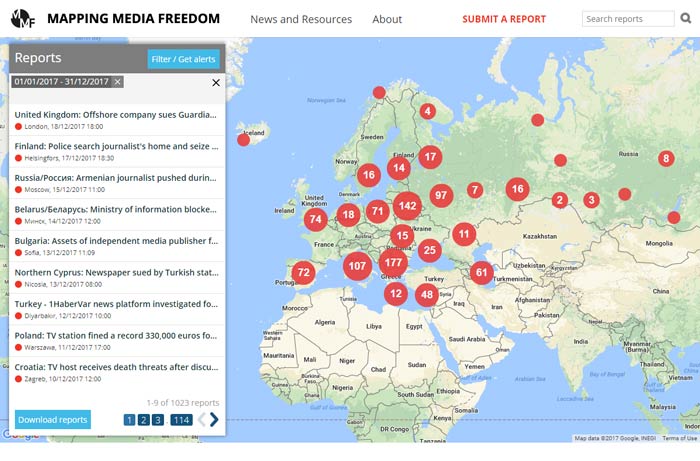 This year saw 1,035 media freedom violations reported to Index on Censorship’s Mapping Media Freedom, a project that monitors media freedom in 42 countries, including all EU member states. To highlight the most pressing concerns for press freedom in Europe, Index’s MMF correspondents discuss the violations that stood out most.
Russia / 197 verified reports in 2017
“In November Russia adopted a new restrictive law against foreign media. It allows recognising foreign media as foreign agents, which makes them subjects of numerous additional checks and obliges them to mark the content as produced by a foreign agent. The vague and ambiguous wording means it applies to many outlets – from established media to email newsletters. Which media will be recognised as foreign agents will be decided by Russian Ministry of justice. However, US media such as Voice of America or Radio Free Europe/Radio Liberty have already received warnings about possible restrictions on their work in Russia.” — Ekaterina Buchneva
Turkey / 132 verified reports in 2017
“Although 155 journalists are currently imprisoned in Turkey — almost all of them on trumped-up charges — the trial of journalist Nedim Türfent, who reported on security operations in Turkey’s Kurdish regions, is by far the worst violation as open experiences of torture at the hands of police officers were recounted by at least a dozen people in the case. This violation shows that torture is making a comeback in Turkey.” — Barış Altıntaş
More on Nedim Türfent’s case.
Belarus / 92 verified reports in 2017
“The mass detention of journalists on Freedom Day in March was indicative of the Belarusian authorities’ campaign launched in 2017 on preventing journalists from performing their professional duties. The situation was provoked by mass protests across Belarus against introducing presidential decree on “social parasites”, which imposes a tax on the unemployed amid increasing economic crisis. The authorities have shown their real attitude to freedom of speech through real hunting on independent journalists and bloggers that are blocked from access to information, detained, jailed, and fined.” — Volha Siakovich
Spain / 66 verified reports in 2017
“The referendum on the independence of Catalonia, north-east of Spain, provoked an avalanche of incidents against reporters. On 1 October 2017, on the day of referendum considered illegal by the Spanish Constitutional Court, various journalists were assaulted during police intervention in polling stations. Spanish public television RTVE was biased in favour of Spanish unity while Catalan public television TV3 was biased in favour of the independence. In the aftermath of the referendum, many reporters on the ground suffered insults and assaults usually during street rallies. Unionist protesters used to insult and assault Catalan media. Catalunya Radio glass door was smashed and TV3 car window broken. Catalan protesters chanted “Spanish press manipulators” during Spanish televisions live coverage and Crònica Global website headquarters vandalised with spray paints and posters. The Catalan political question brought a wave of intimidation against journalists, never seen in such numbers and scale in recent years.” — Miho Dobrasin
Italy / 57 verified reports in 2017
“In 2017 Italian journalists experienced a high level of conflict with the judiciary. Journalists are constantly possible targets of law enforcement raids, also in breaching the privacy of journalists’ sources. In July, Il Fatto Quotidiano journalist Marco Lillo’s house was searched because he published a scoop concerning the investigation on people close to Matteo Renzi, prime minister at time time, for a case of corruption at the most important contracting authority in Italy: Consip. Last but not least, Il Sole 24 Ore journalist Nicola Borzi had seized his computer and archives by the law enforcement because he revealed a “secret of State”, without any formal charge against the journalist. These events show how hard is making scoops in Italy. Moreover, journalists are constantly targeted with lawsuits, frequently used as threats against freelancers. Nowadays the big unsolved issue for Italian journalism is at court.” — Lorenzo Bagnoli
France / 54 verified reports in 2017
“In February, presidential candidate Fillon smeared media outlets who covered alleged corruption case. This was an important moment in the treatment of the media in France. When accused of corruption, conservative presidential candidate François Fillon refused to step down and chose to attack the media and journalists. Journalists covering his campaign saw their working conditions deteriorate and had supporters insulting and attacking them.” — Valeria Costa-Kostritsky
Azerbaijan / 47 reports in 2017
“While there on-going violations of press freedom in Azerbaijan such as the jailing of journalists, office raids, bogus charges and other forms of persecution of journalists, I chose the blocking of opposition and independent news websites in March because it is a sign of further deterioration of media freedom in Azerbaijan. If before there were deliberate slowdowns or DDoS attacks, changes in legislation give full authority to the government institutions wanting to shut down or limit access to the flow of independent and alternative news.” — Arzu Geybullayeva
Croatia / 33 verified reports in 2017
“In September, around 20 members of the Autochthonous Croatian Party of Rights (A-HSP), a far-right political party, which is led by Drazen Keleminec, burned a copy of weekly newspaper Novosti, regional broadcaster N1 reported. This is another example where nationalistic and conservative narratives are endangering media freedom. In this particular case a right-wing political party is targeting the others, in this case the others is an ethnically and linguistically minority weekly, describing them as enemies of the state. The widespread narrative that has resulted in several severe media freedom infringements in this EU country.” — Ilcho Cvetanoski
Macedonia / 27 verified reports in 2017
“During the April’s storming of the Assembly building in the capital Skopje, 23 media workers were physically assaulted, threatened or barred from reporting at the scene. This case perfectly exemplifies what happens when political elites intentionally demonize and dehumanize media workers that are critically observing theirs work by describing them as traitors and foreign mercenaries. In the eyes of the common people, they instantly became a legitimate target. This is a widespread trend in Southeast Europe.” — Ilcho Cvetanoski
Bosnia and Herzegovina / 21 verified reports in 2017
“The case of Dragan Bursac is one of the many cases in Southeast Europe where journalists/media workers are threatened/attacked for challenging the mainstream nationalistic narrative. Namely, he was critical on the fact that a military leader, accused of committing war crimes, crimes against humanity and genocide by the International Criminal Tribunal for the former Yugoslavia (ICTY), is celebrated as a hero by the politicians and media.” — Ilcho Cvetanoski
Germany / 20 verified reports in 2017
“It is extremely concerning that journalists were assaulted and intimidated when reporting on protests in Hamburg. Journalists are there to do their job and it is important that they are able to tell the world what is happening at protests such as the ones in Hamburg.” – Joy Hyvarinen
Hungary / 20 verified reports in 2017
“There is an important change of tactics regarding censorship and defaming independent media in Hungary: instead of attacking the outlets critical to the government, the vast pro-government media started smearing individual journalists, trying to intimidate and discredit the few critical voices who are left in Hungary.” — Zoltan Sipos
Romania / 16 verified reports in 2017
“The national news agency AGERPRES might lose its independence after a draft law enabling the political majority to dismiss the director-general was passed by the chamber of deputies in Romania. If passed in the senate as well, such a provision would have the same impact as on the management of the Romanian Radio Broadcasting Corporation (SRR) and the Romanian National Television Corporation (SRTV): following each election, the SRR and SRTV administration boards can be dismissed before the end of their mandates to reflect the new political forces.” — Zoltan Sipos
United Kingdom / 17 verified reports in 2017
“In the United Kingdom, after the Grenfell tower fire, which claimed 71 deaths, Kensington and Chelsea council tried to ban journalists from attending their first council meeting. Five media organisations had to challenge this legally to gain access. This was a very important case illustrating how difficult it was to gain access and to expect accountability from the organisation which ran the council block.” — Valeria Costa-Kostritsky
Sweden / 15 verified reports in 2017
“The systematic campaign to smear and misrepresent journalists by Granskning Sverige was symptomatic of a wider attack on the legitimacy of liberal and left media by Sweden’s far-right movement, but the campaign detailed by the reporters at the Eskilstuna-kuriren newspaper was orchestrated and unlike anything seen before in the country.” — Dominic Hinde
Greece / 13 verified reports in 2017
“In February 2017, two journalists were harassed by far-right wing protesters, preventing refugee children from attending classes. This is very important, because it shows that although Greece’s economic and refugee crisis seem to have calmed down in the last year, the support for far-right wing organisations doesn’t show any sign of shrinking. This also concerns journalists in Greece, whose safety is in danger every day.” — Christina Vasilaki
The Netherlands / 12 verified reports in 2017
“The Netherlands is considered to be one of the countries where media freedom is widely protected. However, cases like the rape threats levelled at a journalist in May show that media workers are subjected to all sorts of threats. In this case it were rape threats by a popular right-wing weblog. This creates an atmosphere in which it’s conceived normal to use comments and social media to discredit and threaten a journalist. It also highlights the dangers and risks that female journalists face.” — Mitra Nazar
Bulgaria / 11 verified reports in 2017
“In November, it became known that members of an organised crime group from Vratsa planned to murder Zov News website publisher Georgi Ezekiev. The increase of violent incidents and serious threats towards journalists in 2017 is alarming in Bulgaria, a country that already has the worst press freedom status in the European Union.” — Zoltan Sipos
Serbia / 11 verified reports in 2017
“Serbia’s free media had a dark year with many incidents, threats and violence coming towards them. In May, journalists were assaulted during clashes at the presidential inauguration. This is just one of many cases, but it clearly demonstrates just how critical the state of the media is because they happened during the presidential inauguration. The assaults were committed by supporters of the government with a lot of police around. The impunity these assaulters meet is worrying for the lack of condemnation by authorities and the message they clearly want to send to critical journalists.” — Mitra Nazar
Malta / 8 verified reports in 2017
“The most worrying incident regards the murder of anti-corruption, investigative journalist Daphne Caruana Galizia. While this murder gripped the attention of international media and European authorities including the European Commission and Parliament, it is still shocking for every journalist that in a democratic, EU country, journalists’ lives could be in danger because they are doing their job, exposing high-level corruption in political, business and criminal elites.” — Christina Vasilaki
Kosovo / 6 verified reports in 2017|
“Kosovo’s media have been shaken up by two attacks on Insajderi investigative journalists. Insajderi is home to the best investigative journalists in the country, covering corruption and crime topics that nobody else dares to touch. Journalist Parim Olluri was beaten up outside his home in Pristina on 16 August. He needed medical assistance in a hospital. Nobody has been held responsible for the attack. Two months later, his colleague Vehbi Kajtazi was hit on the head in a cafe in downtown Pristina on 13 October. One person was arrested on the spot. We are talking about two violent incidents to Insajderi journalists within a period of three months. This shows that Kosovo’s journalists continue to face violence, even in very public places like cafe’s and neighbourhoods they live. For this reason there are just a few brave journalists who dare to touch sensitive topics, which is a worrying sign for the future of journalism and truth finding in the youngest country in Europe.” — Mitra Nazar
Montenegro / 6 verified reports in 2017
“Attack on journalist’s property is one of most common ways of intimidation. This is not only case for Montenegro, but also for all other countries in the region. What is striking is that intentional setting on fire of journalist’s vehicles is one of most common ways of limitation of media freedom in Montenegro. In recent years there have been several burnt vehicle in this small EU candidate country.” — Ilcho Cvetanoski
Portugal / 5 verified reports in 2017
“Similarly to what’s happening in other countries, Portugal has seen a rise of questioning towards journalism, those who work in the media industry and their work. Besides motivating a new and stimulating debate between journalists and their readers/viewers/listeners, this has also opened the gates to instances of abuse, cyberbullying and slander. The most significant example of that is that of Público’s journalist Margarida Gomes, whose work ethic was put in question by Facebook groups and public officials, who both used false information regarding her personal life to denigrate her work.” — João de Almeida Dias
Latvia / 3 verified reports in 2017
“In Latvia it was a quiet year for press freedom. However, the sudden and swift dismissal of Sigita Roķe, the head of public service Latvian Radio for alleged economic irregularities was seen as a pretext for dismissing her for efforts to disengage the radio from sponsorship agreements with the city of Ventspils, whose politically influential mayor has is on trial for money laundering and corruption. The dismissal raised questions about the political neutrality of Latvia’s media watchdog, the National Electronic Mass Media Council.” — Juris Kaza
Ireland / 3 verified reports in 2017
“Compared to the long list of countries in Europe where it is getting progressively dangerous for reporters to do their work, the situation in Ireland is relatively benign. There are renewed concerns over source protection, and the strict libel regime. However, the most serious concern is regarding media ownership. Index on Censorship published a detailed report on this in August 2017. One significant media takeover – Independent News and Media buying up Celtic Media – fell through after the Government ordered a statutory investigation following objections.” — Flor Mac Carthy
Estonia / 3 verified reports in 2017
“In March, journalists for Estonia’s largest daily in circulation Postimees, sent a letter to the owners and managers to complain about interference with editorial freedom. This event is a disturbing example of the interference attempts from media owners and advertisement department that had grown to the level that journalists of a daily, that prides itself with a long history and high-quality content, had to resort to an unprecedented united protest letter to fight it. Interference in journalistic decision making and content from outside or inside sources is in general the worrisome threat.” — Helle Tiikmaa
Belgium / 2 verified reports in 2017
“In Belgium, a journalist who had published a story on surveillance in Bruxelles’ metro was interrogated on her sources by the police, in clear breach of the principle of sources confidentiality. The case also reminds us of the risk for journalists covering surveillance.” — Valeria Costa-Kostritsky
Denmark / 2 verified reports in 2017
“The killing of Kim Wall by the inventor and entrepreneur Peter Madsen was a headline news event around the world. Stabbed to death and dumped at sea whilst interviewing Madsen on board his home-built submarine, her body was recovered after an extensive marine search. Although not typical of any wider trend, her murder was so brutal it raised significant questions about the safety and ethics of female freelancers working alone without support or safeguards.” — Dominic Hinde
Finland / 2 verified reports in 2017
“In March the Finnish government introduced restrictive changes to the functioning of the public broadcasting company Yle, which entailed putting the state-owned company more firmly under politicians’ decision-making power. The proposal was driven by the True Finns, a nationalist party that have repeatedly complained about Yle’s liberal views and non-sceptical approach to ‘multicultural Finland’. In the official briefing, stated the following: “The proposal is to strengthen the role of the Administrative Council so that they can decide on Yle’s journalistic strategy and regulate the permanent expert consultation process”. The council referred is mainly composed of politicians. — Katariina Salomäki
Iceland / 1 verified report in 2017
“Iceland has been rocked by political scandals and collapsing governments twice in the space of a year. In October it came to light that the prime minister had used financial confidentiality legislation to stop the investigative newspaper Stundin from publishing details of his offshore financial dealings in the run-up to the 2008 financial crash. Iceand’s main newspaper Morgunbladid is controlled by another former Prime Minister, also a member of the powerful Icelandic independence party, and Stundin has consistently sought to expose the Icelandic financial and political elite where other titles have remained silent.” — Dominic Hinde[/vc_column_text][/vc_column][/vc_row][vc_row][vc_column][vc_custom_heading text=”Mapping Media Freedom” use_theme_fonts=”yes” link=”url:https%3A%2F%2Fmappingmediafreedom.org%2F%23%2F|||”][vc_row_inner][vc_column_inner width=”1/4″][vc_icon icon_fontawesome=”fa fa-times-circle” color=”black” background_style=”rounded” size=”xl” align=”right”][/vc_column_inner][vc_column_inner width=”3/4″][vc_column_text]
Since 24 May 2014, Mapping Media Freedom’s team of correspondents and partners have recorded and verified more than 3,700 violations against journalists and media outlets.
Index campaigns to protect journalists and media freedom. You can help us by submitting reports to Mapping Media Freedom.[/vc_column_text][/vc_column_inner][/vc_row_inner][vc_separator color=”black”][/vc_column][/vc_row][vc_row][vc_column][vc_custom_heading text=”Don’t lose your voice. Stay informed.” use_theme_fonts=”yes”][vc_separator color=”black”][vc_row_inner][vc_column_inner width=”1/2″][vc_column_text]Index on Censorship is a nonprofit that campaigns for and defends free expression worldwide. We publish work by censored writers and artists, promote debate, and monitor threats to free speech. We believe that everyone should be free to express themselves without fear of harm or persecution – no matter what their views.
Join our mailing list (or follow us on Twitter or Facebook) and we’ll send you our weekly newsletter about our activities defending free speech. We won’t share your personal information with anyone outside Index.[/vc_column_text][/vc_column_inner][vc_column_inner width=”1/2″][gravityform id=”20″ title=”false” description=”false” ajax=”false”][/vc_column_inner][/vc_row_inner][vc_separator color=”black”][/vc_column][/vc_row]
